Space Stories: More Quality Control Issues at Boeing, Blue Origin’s Planned Lunar Landing, and Citizen Scientists Assisting with Exoplanet Research

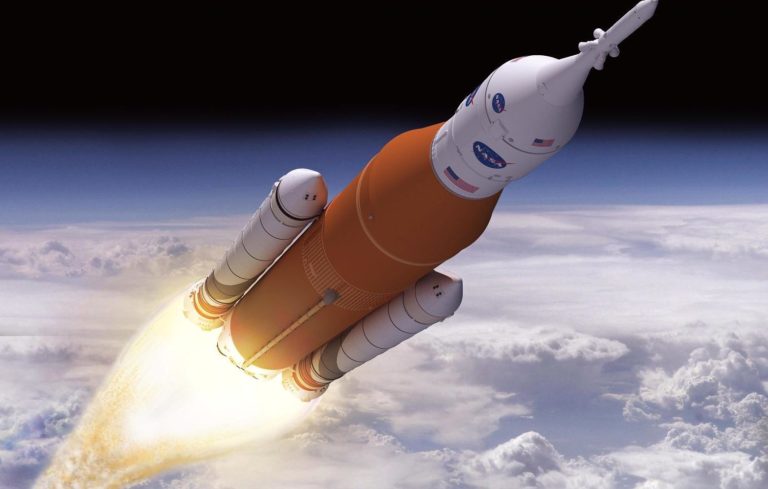
Image (Credit): Artist’s rendering of the SLS in flight. (NASA)

Here are some recent stories of interest.

NBC NewsNASA Inspector General Gives Damning Assessment of Boeing’s Quality Control in New Report

The report, released Thursday by NASA’s Office of Inspector General, calls into question Boeing’s standards and quality control for its part in NASA’s efforts to return astronauts to the moon. In NASA’s development of its next-generation megarocket, known as the Space Launch System, it gave Boeing the contract to build the rocket system’s powerful upper stage. But according to the report, Boeing’s quality control systems fall short of NASA’s requirements, and some known deficiencies have gone unaddressed. What’s more, the workers on the project are not, as a whole, sufficiently experienced or well trained, according to the inspector general.

Space NewsNASA Payload to Fly on First Blue Origin Lunar Lander Mission

A NASA payload will hitch a ride to the moon on Blue Origin’s first lunar lander mission, scheduled to launch as soon as next March. In an Aug. 6 procurement filing, NASA revealed it selected Blue Origin to fly a camera system to study how engine plumes interact with regolith at south polar regions of the moon, collecting data to support future crewed landing missions. The payload, called Stereo Cameras for Lunar Plume Surface Studies (SCALPSS), will fly through NASA’s Commercial Lunar Payload Services (CLPS) program.

NASAHow NASA Citizen Science Fuels Future Exoplanet Research

NASA’s upcoming flagship astrophysics missions, the Nancy Grace Roman Space Telescope and the Habitable Worlds Observatory, will study planets outside our solar system, known as exoplanets. Over 5,000 exoplanets have been confirmed to date — and given that scientists estimate at least one exoplanet exists for every star in the sky, the hunt has just begun. Exoplanet discoveries from Roman and the Habitable Worlds Observatory may not be made only by professional researchers, but also by interested members of the public, known as citizen scientists.
Space Stories: A Polish Astronaut Heads to ISS, Two Astronauts Are Missing from Church, and Deadly Red Dwarves

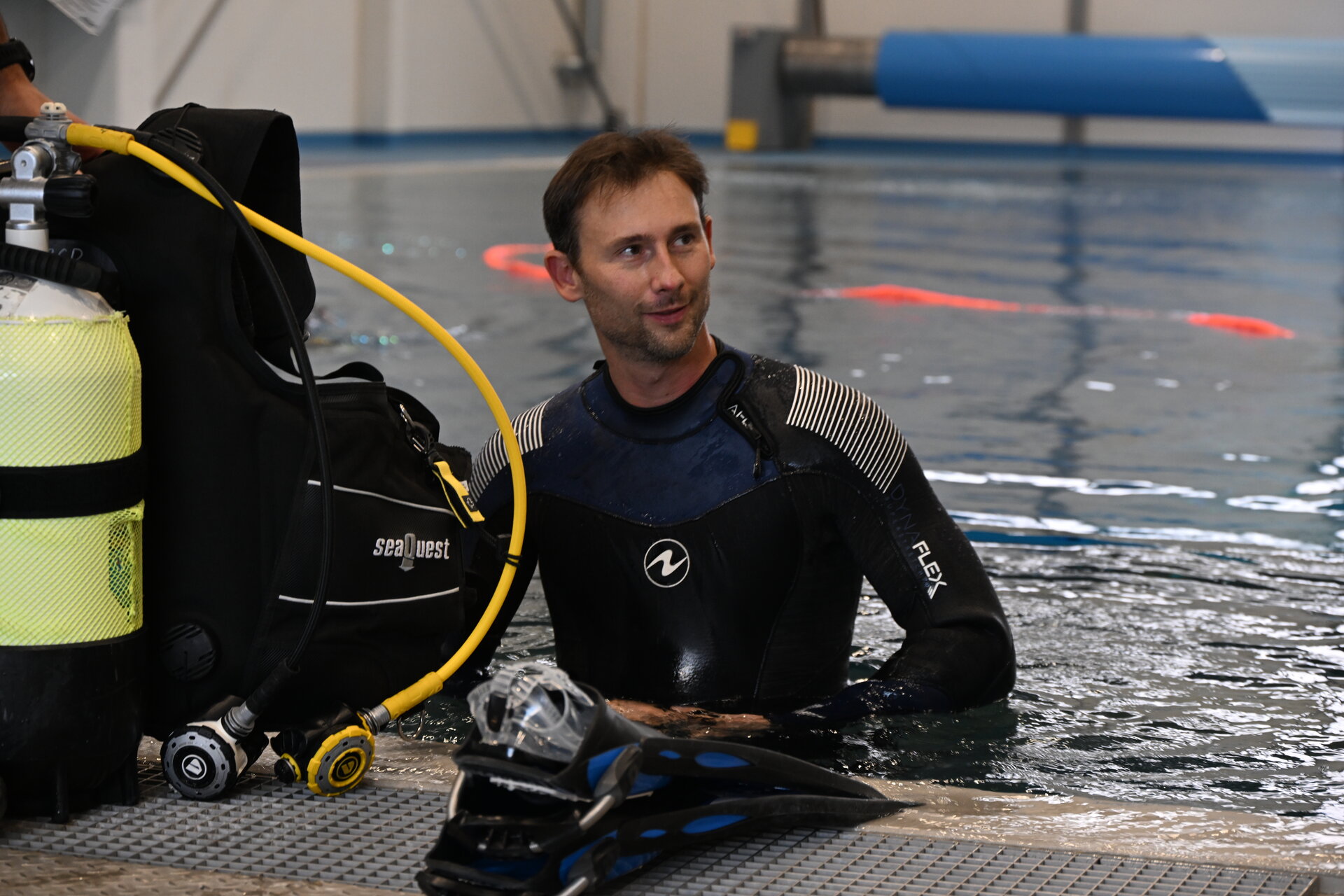
Image (Credit): Sławosz Uznański in ESA’s Neutral Buoyancy Facility. (ESA)

Here are some recent stories of interest.

European Space Agency (ESA)Sławosz Uznański from Poland Will fly to International Space Station on Rourth Axiom Space Mission

Axiom Space announced that it is partnering with India, Hungary, and with Poland through ESA to send three national astronauts to the International Space Station on Axiom Mission 4 (Ax-4). ESA project astronaut Sławosz Uznański has been assigned as mission specialist under the command of Axiom Space’s Chief Astronaut Peggy Whitson...The other two Ax-4 crew members are pilot Shubhanshu Shukla from India, and mission specialist Tibor Kapu from Hungary.

Associated PressOne Church, Two Astronauts. How a Texas Congregation is Supporting its Members on the Space Station

there’s no way on Earth for NASA astronauts Barry “Butch” Wilmore and Tracy Dyson to show up at Providence Baptist Church. They’re in space, orbiting the planet. More specifically, these two members are working on the International Space Station together...Dyson’s six-month mission isn’t scheduled to end until September, but Wilmore and his fellow NASA test pilot, Suni Williams, should have been back weeks ago. They are staying longer than expected following thruster failures and helium leaks on Boeing’s inaugural crew flight for its Starliner capsule. Wilmore and Williams have said they are confident the capsule will return them home safely; engineers are still poring over Starliner test data.

University of CambridgeAstronomers Uncover Risks to Planets that Could Host Life

Astronomers have discovered that red dwarf stars can produce stellar flares that carry far-ultraviolet (far-UV) radiation levels much higher than previously believed. The discovery suggests that the intense UV radiation from these flares could significantly impact whether planets around red dwarf stars can be habitable…According to researchers, UV radiation from stellar flares can either erode planetary atmospheres, threatening their potential to support life, or contribute to the formation of RNA building blocks, which are essential for the creation of life.

Space Stories: Good Time to View the Heavens, Nearby Super-Jupiter, and Spotting Deepfakes

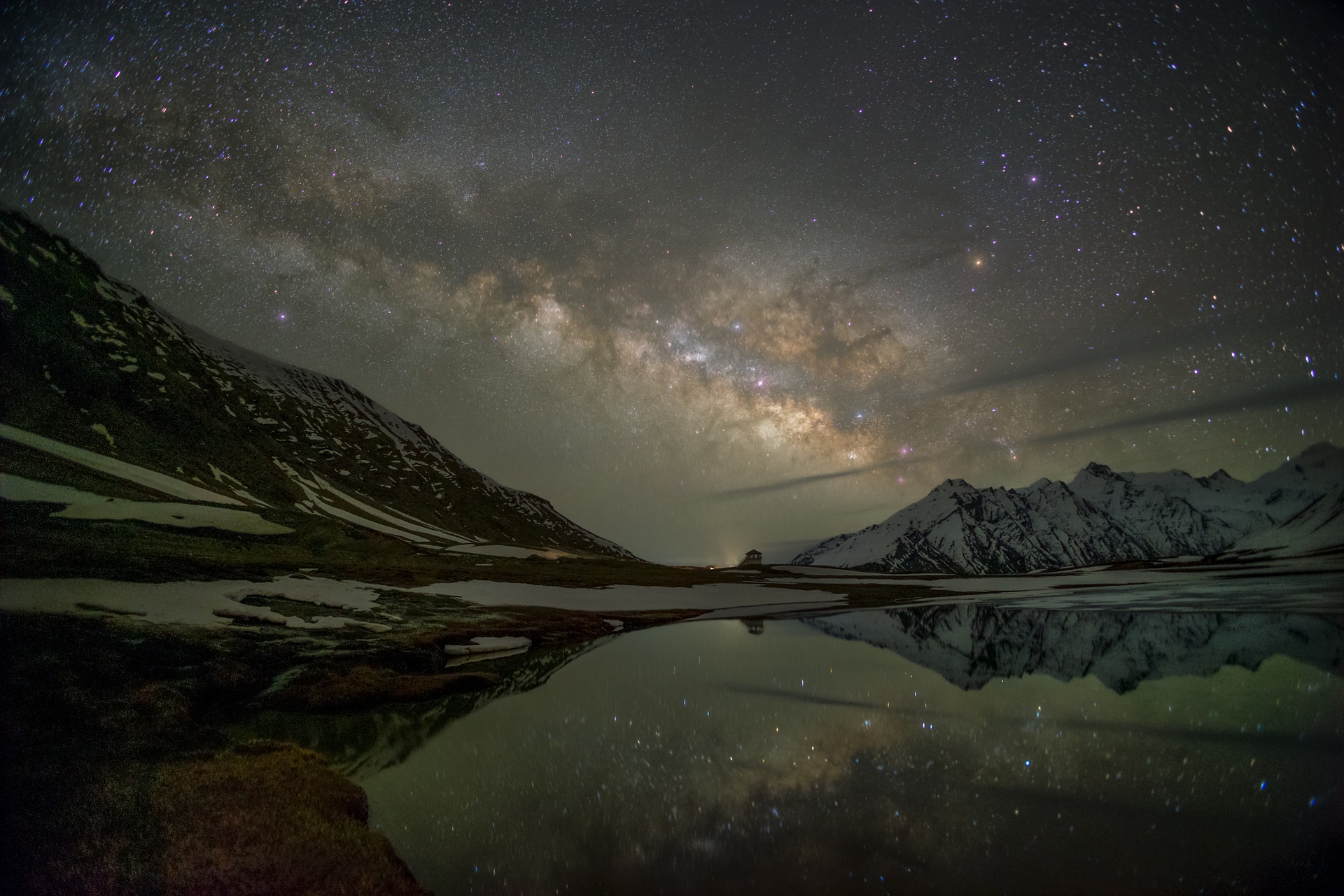
Credit: Vikash Kr Singh from Pixabay

Here are some recent stories of interest.

Live ScienceWhy the 1st Week of August is the Best Time to See ‘Shooting Stars’ and the Milky Way — No Telescope Required

The arrival of August means two things for stargazers — “shooting stars” and the Milky Way. In 2024, you can see both at the same time if you know exactly where and when to look…This month, there’s a new moon on Aug. 4, which will keep the post-sunset sky dark until about Aug. 8. That makes the first week of August ideal for spotting “shooting stars” — while you also look for the Milky Way. True darkness won’t come until midnight for most of the Northern Hemisphere, but look to the southeast after dark, and you’ll have a chance of seeing the Sagittarius arm of the Milky Way arching across the night sky.

Max Planck Institute for AstronomyWebb Images Nearest Super-Jupiter, Opening a New Window to Exoplanet Research

Using the James Webb Space Telescope (JWST), an MPIA-led team of astronomers imaged a new exoplanet that orbits a star in the nearby triple system Epsilon Indi. The planet is a cold super-Jupiter exhibiting a temperature of around 0 degrees Celsius and a wide orbit comparable to that of Neptune around the Sun. This measurement was only possible thanks to JWST’s unprecedented imaging capabilities in the thermal infrared. It exemplifies the potential of finding many more such planets similar to Jupiter in mass, temperature, and orbit. Studying them will improve our knowledge of how gas giants form and evolve in time.

NatureAI ‘Deepfake’ Faces Detected Using Astronomy Methods

Researchers are turning to techniques from astronomy to help spot computer-generated ‘deepfake’ images — which can look identical to genuine photographs at first glance. By analysing images of faces using methods that are usually used to survey distant galaxies, astronomers can measure how a person’s eyes reflect light, which can reveal telltale signs of image manipulation.

Space Stories: Starliner Still Stuck, Space Walks Nixed, and ISS Artifacts Being Considered

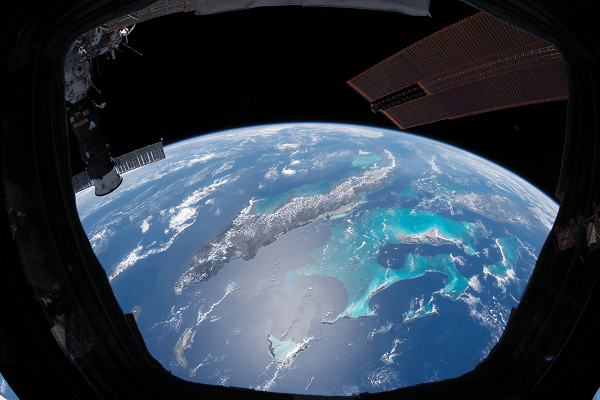
Image (Credit): Photo of the Islands of the Caribbean Sea itaken by an astronaut from inside the Cupola on the International Space Station. (NASA)

Here are some recent stories of interest related to the International Space Station (ISS).

WFLA.com: Astronauts Remain in Space as Boeing’s Starliner Mission Exceeds 45-day Window at ISS

Two astronauts aboard Boeing’s Starliner remain stuck in space as the mission exceeded its 45-day battery window being docked at the International Space Station. The capsule, which arrived at the space station on June 6, was initially approved to stay for up to 45 days but with no return date set, the astronauts’ stay has been “extended indefinitely,” NBC affiliate WESH reported. NASA and Boeing said the capsule’s batteries are performing well despite the extended stay. Tuesday marked 47 days since they’ve been at the ISS.

Space.comNASA delays ISS Spacewalks Indefinitely to Investigate Spacesuit Coolant Leak

NASA says its next spacewalk will be delayed indefinitely until engineers understand more about what caused a coolant leak on June 24. Tracy Dyson, a NASA astronaut, had a brief spacesuit leak a month ago while still in the hatch of the International Space Station (ISS). She and Mike Barrett had just opened the door for a 6.5-hour spacewalk for maintenance activities, when showers of ice particles erupted from a spacesuit connection to the ISS. The spacewalk was suspended, but the astronauts were never in any danger, NASA has emphasized.

Collectspace.com: NASA Looking at What Artifacts to Save from ISS Before 2030 Demise

Two years after stating there were no plans to save artifacts from the destructive end of the International Space Station (ISS), NASA is now in the early stages of identifying what small parts of the orbiting laboratory to preserve. Agency officials on Wednesday (July 17) shared the preliminary details during a media briefing about the space station’s end of life in 2030 and the selection of SpaceX to build the vehicle that will move the massive complex out of orbit such that it mostly burns up in Earth’s atmosphere and plunge any surviving fragments into a remote area of the ocean.

Space Stories: Redefining Planets, Second Thoughts About Crashing the ISS, and NASA Preparing for Artemis II

Credit: AdisResic at Pixabay

Here are some recent stories of interest.

Space.com: What Exactly is a Planet?’ Astronomers Want to Amend the Definition

Three astronomers last week proposed expanding the official definition of a planet to encompass worlds orbiting stars other than our own, a nuance not currently included in the formal definition of the term established in 2006 by the International Astronomical Union, or IAU. If the trio’s new definition pans out, thousands of celestial bodies across the universe could be confirmed as formal planets.

Forbes: U.S. Plan To Crash Space Station Is Condemned By Space Agency Leaders

An American plan to destroy the International Space Station by propelling it to burn through the atmosphere, and then crashing it into the Pacific Ocean, would rob citizens of the future of one of civilization’s greatest technological masterworks, and should be halted, say one-time leaders of NASA and of the European Space Agency. NASA’s draft blueprints to send the ISS on a peacetime kamikaze mission, to explode on impact with Antarctic waters, would obliterate a pole star of human ingenuity, says Jean-Jacques Dordain, Director General of the European Space Agency when the ISS was being built and expanded.

NASA: NASA Barge Preparations Underway for Artemis II Rocket Stage Delivery

Team members are installing pedestals aboard NASA’s Pegasus barge to hold and secure the massive core stage of NASA’s SLS (Space Launch System) rocket, indicating NASA barge crews are nearly ready for its first delivery to support the Artemis II test flight around the Moon. The barge will ferry the core stage on a 900-mile journey from the agency’s Michoud Assembly Facility in New Orleans to its Kennedy Space Center in Florida…Measuring 212 feet in length and 27.6 feet in diameter, the core stage is the largest rocket stage NASA has ever built and the longest item ever shipped by a NASA barge.