Space Stories: Fewer Eyes on Asteroids, Volunteer Martians Released, and Russians Plans for a New Space Station

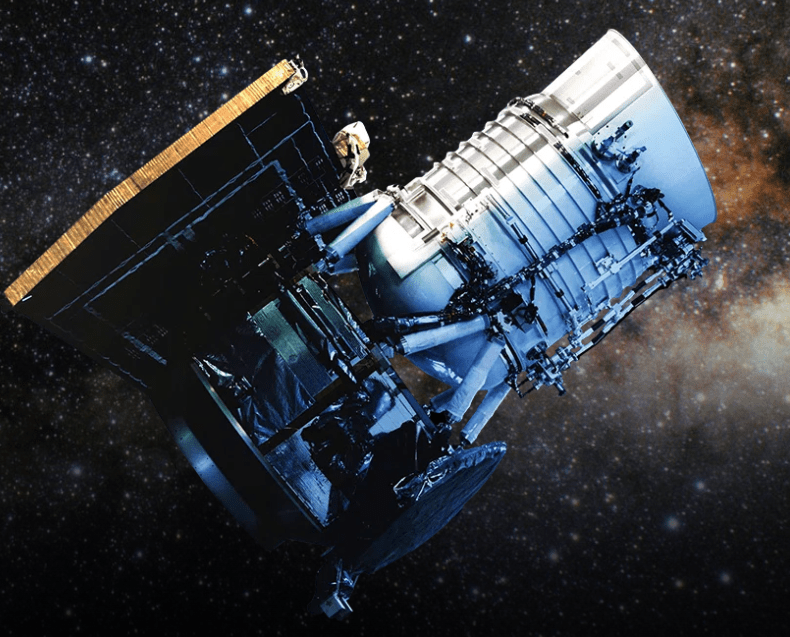
Image (Credit): NEOWISE space telescope. (NASA)

Here are some recent stories of interest.

Flying Magazine: NASA’s Asteroid, Comet Hunting Telescope Set to Retire at End of Month

A NASA space telescope designed to “hunt” asteroids and comets that could pose a threat to life on Earth and orbiting spacecraft will soon burn up in orbit. In late 2024 or early 2025, the agency’s Near-Earth Object (NEO) Wide-field Infrared Survey Explorer—or NEOWISE—is expected to come home in pieces following the conclusion of its second mission later this month…However, NASA has a replacement lined up: the Near Earth Object Surveyor (NEO Surveyor), set for a 2027 launch. The infrared space telescope is the first to be designed specifically for hunting large numbers of NEOs in and around Earth orbit. It has a baseline development cost of $1.2 billion to which NASA committed in 2022.

NPR: Volunteers Who Lived in a NASA-created Mars Replica for Over a Year Have Emerged

Four volunteers who spent more than a year living in a 1,700-square-foot space created by NASA to simulate the environment on Mars have emerged. The members of the Crew Health and Performance Exploration Analog mission — or CHAPEA — walked through the door of their habitat at NASA’s Johnson Space Center in Houston on Saturday to a round of applause…Haston and the other three crew members — Anca Selariu, Ross Brockwell and Nathan Jones — entered the 3D-printed Mars replica on June 25, 2023, as part of a NASA experiment to observe how humans would fare living on the Red Planet.

Reuters: Russia Plans to Create Core of New Space Station by 2030

Russia is aiming to create the four-module core of its planned new orbital space station by 2030, its Roscosmos space agency said on Tuesday. The head of Roscosmos, Yuri Borisov, signed off on the timetable with the directors of 19 enterprises involved in creating the new station. The agency confirmed plans to launch an initial scientific and energy module in 2027. It said three more modules would be added by 2030 and a further two between 2031 and 2033.
Space Stories: Moss for Mars, Martian Space Rocks, and a Red Planet Practice Habitat

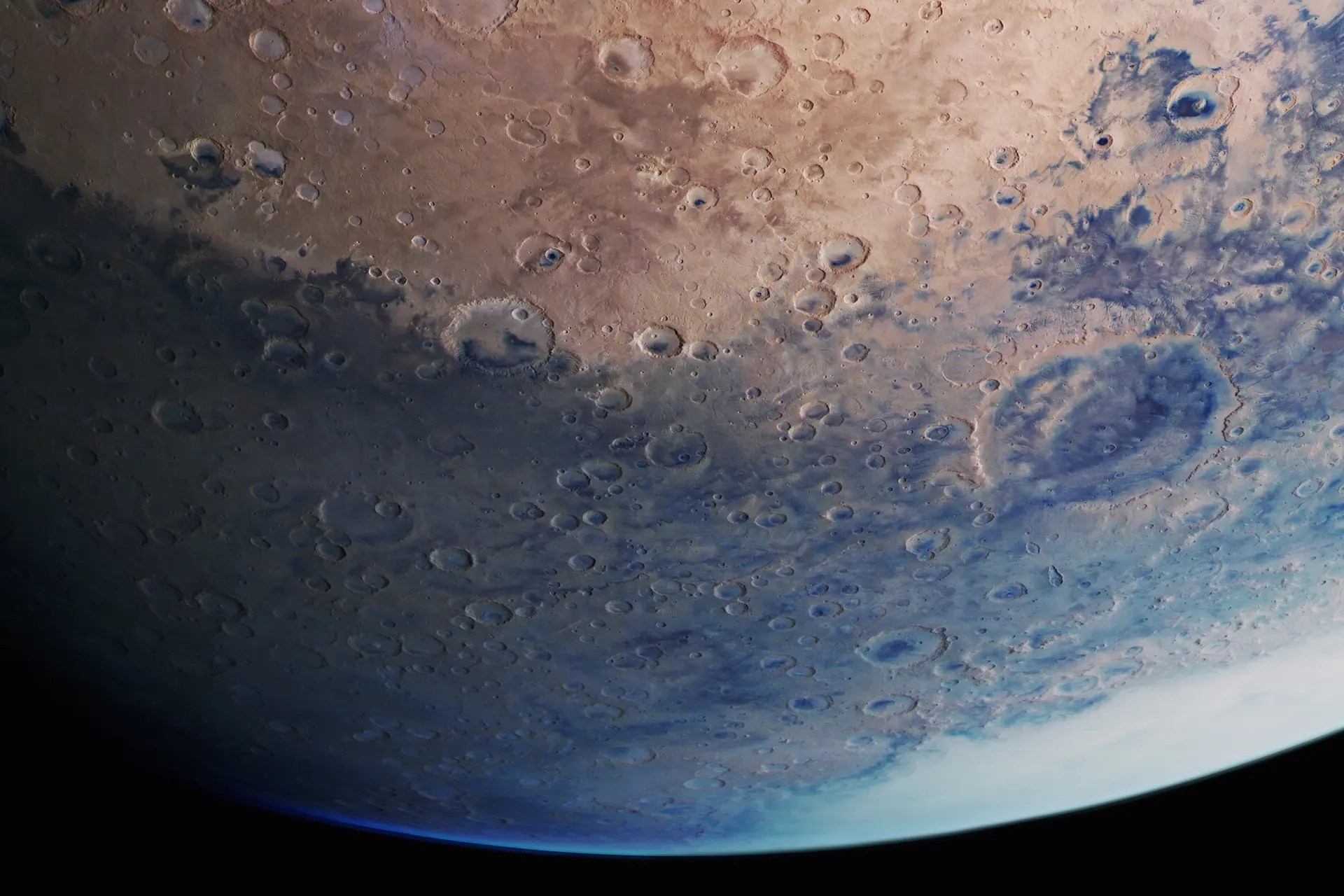
Image (Credit): A detailed view of the Martian surface. (ESA/DLR/FU Berlin)

Here are some recent Mars-related stories of interest.

The Guardian: Scientists Find Desert Moss ‘That Can Survive on Mars’”

While Matt Damon relied on potatoes cultivated in crew biowaste to survive in the hit film The Martian, researchers say it is a humble desert moss that might prove pivotal to establishing life on Mars. Scientists in China say they have found Syntrichia caninervis – a moss found in regions including Antarctica and the Mojave desert – is able to withstand Mars-like conditions, including drought, high levels of radiation and extreme cold.

CNN: Mars Gets Hit by Hundreds of Basketball-size Space Rocks Every Year

Hundreds of basketball-size space rocks slam into Mars each year, leaving behind impact craters and causing rumblings across the red planet, according to new research. Mission planners could use the revelations, recorded in data collected by a now-retired NASA mission, as they determine where to land future robotic missions as well as astronaut crews on the red planet. NASA’s InSight mission ended when the stationary lander lost a battle to an accumulation of Martian dust on its solar panels in December 2022, but the wealth of data the spacecraft collected is still fueling new research.

UPI: Crew Inside NASA’s Mars Habitat Simulator to Exit After More Than a Year

The first volunteer crew, to live for more than a year inside NASA’s Mars habitat at the Johnson Space Center in Houston, will exit the simulated Red Planet ground mission on Saturday…The crew entered CHAPEA on June 25, 2023, and enacted Mars mission operations, including virtual reality “Mars-walks” while growing and harvesting vegetables to supplement their shelf food. They also spent their time maintaining equipment while being tested with stressors, including isolation and communication delays with Earth.

Space Stories: Truncated Artemis III Mission, Origins of a Local Galaxy, and Chandra X-ray Observatory Exoplanet Efforts

Image (Credit): The launch of a Starship. (SpaceX)

Here are some recent stories of interest.

Ars Technica: As NASA Watches Starship Closely, Here’s What the Agency Wants to See Next

NASA and SpaceX are planning for the possibility of modifying the Artemis III mission. Instead of landing on the Moon, a crew would launch in the Orion spacecraft and rendezvous with Starship in low-Earth orbit. This would essentially be a repeat of the Apollo 9 mission, buying down risk and providing a meaningful stepping stone between Artemis missions. Officially, NASA maintains that the agency will fly a crewed lunar landing, the Artemis III mission, in September 2026. But almost no one in the space community regards that launch date as more than aspirational. Some of my best sources have put the most likely range of dates for such a mission from 2028 to 2032. A modified Artemis III mission, in low-Earth orbit, would therefore bridge a gap between Artemis II and an eventual landing.

Sci.News: Astrophysicists Offer Explanation for Origin of One of Milky Way’s Largest Satellites

The satellite galaxy Crater II (or Crater 2) of the Milky Way is located approximately 380,000 light-years away from Earth in the constellation of Crater. This galaxy is extremely cold and exceptionally diffuse, and has low surface brightness. According to new research, Crater II exists thanks to a self-interacting dark matter.

Harvard-Smithsonian Center for Astrophysics: Coming in Hot: NASA’s Chandra Checks Habitability of Exoplanets

Using NASA’s Chandra X-ray Observatory and ESA’s (European Space Agency’s) XMM-Newton, astronomers are exploring whether nearby stars could host habitable exoplanets, based on whether they emit radiation that could destroy potential conditions for life as we know it. This type of research will help guide observations with the next generation of telescopes aiming to make the first images of planets like Earth. A team of researchers examined stars that are close enough to Earth that future telescopes could take images of planets in their so-called habitable zones, defined as orbits where the planets could have liquid water on their surfaces. Any images of planets will be single points of light and will not directly show surface features like clouds, continents, and oceans. However, their spectra — the amount of light at different wavelengths — will reveal information about the planet’s surface composition and atmosphere.

Space News: Extending Hubble’s Life, Another Step for the Habitable Worlds Observatory, and Asteroid Breakups

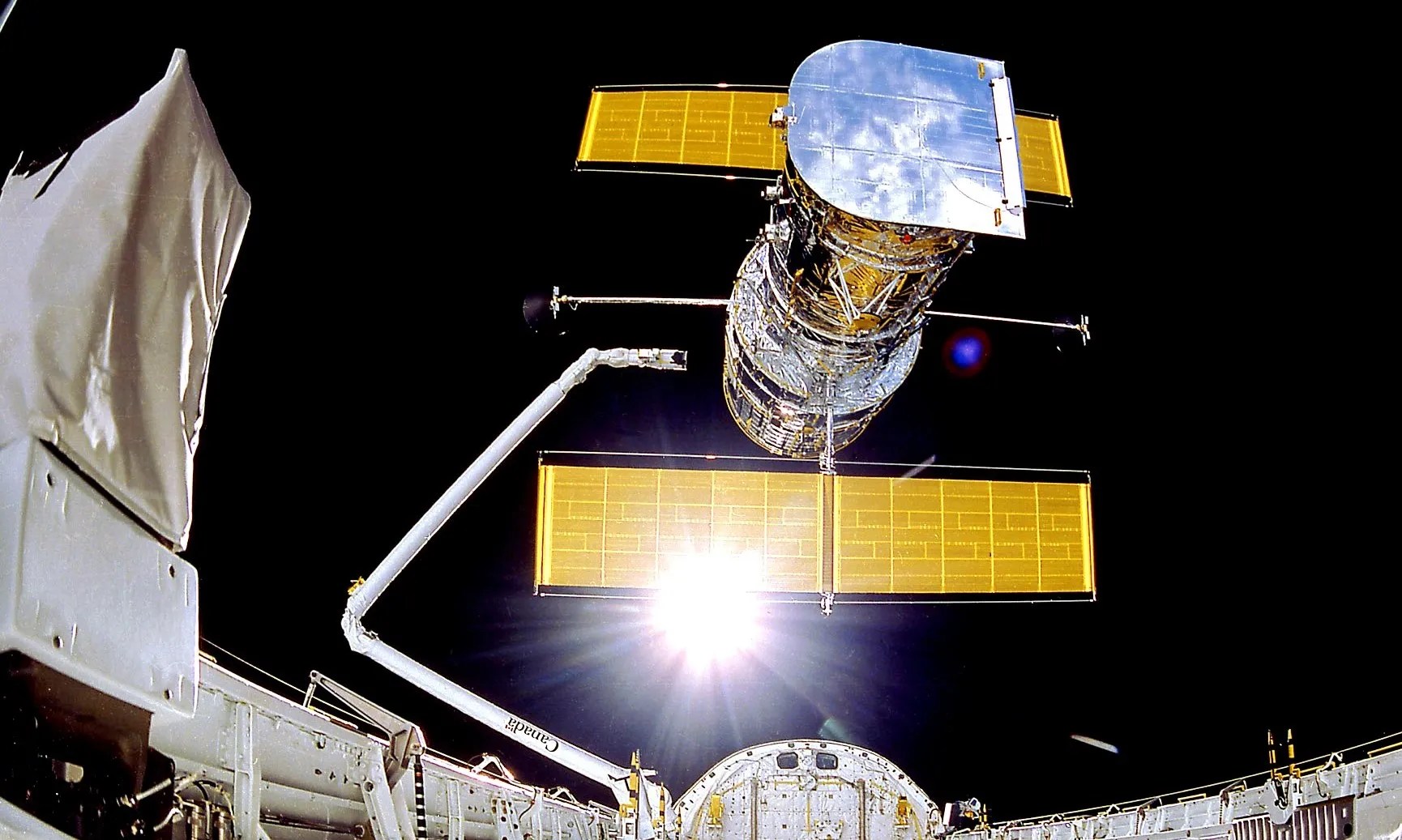
Image (Credit): The deployment of the Hubble Space Telescope on April 25, 1990 from the space shuttle Discovery. (NASA/Smithsonian Institution/Lockheed Corporation)

Here are some recent stories of interest.

NPR: Hubble will Change How it Points, But NASA Says ‘Great Science’ will Continue

The Hubble Space Telescope is suffering the kinds of aches and pains that can come with being old, and NASA officials say they’re shifting into a new way of pointing the telescope in order to work around a piece of hardware that’s become intolerably glitchy. Officials also announced that, for now, they’ve decided not to pursue a plan put forward by a wealthy private astronaut who wanted to go to Hubble in a SpaceX capsule, in a mission aimed at extending the telescope’s lifespan by boosting it up into a higher orbit and perhaps even adding new technology to enhance its operations.

NASA: NASA Awards Advance Technologies for Future Habitable Worlds Mission

NASA announced Friday it selected three industry proposals to help develop technologies for future large space telescopes and plan for the agency’s Habitable Worlds Observatory mission concept, which could be the first space telescope designed to search for life outside our solar system. The mission would directly image Earth-like planets around stars like our Sun and study their atmospheres for the chemical signatures of life, as well as enable other investigations about our solar system and universe. NASA is currently in the early planning stages for this mission concept, with community-wide working groups exploring its fundamental science goals and how best to pursue them. The agency is also in the process of establishing a Habitable Worlds Observatory Technology Maturation project office at NASA’s Goddard Space Flight Center in Greenbelt, Maryland.

Southwest Research Institute: Flyby of Asteroid Dinkinesh Reveals a Surprisingly Complex History

When NASA’s Lucy spacecraft flew past the tiny main belt asteroid Dinkinesh last November, the Southwest Research Institute-led mission discovered a trough and ridge structure on the main asteroid as well as the first-ever-encountered contact binary satellite. The flyby data of this half-mile-wide object revealed a dramatic history of sudden breakups and transformation. Scientists think a big chunk of Dinkinesh suddenly shifted, excavating the trough and flinging debris into its vicinity. Some materials fell back to the asteroid body, forming the ridge, while others coalesced to form a contact binary satellite known as Selam. The complex shapes show that Dinkinesh and Selam have significant internal strength and a complex, dynamic history.

Space Stories: OSIRIS-APEX Survives Sun Flyby, Nearby Exoplanet May Be Habitable, and More Rogue Planets Rolling About

Here are some recent stories of interest.

NASA: NASA’s OSIRIS-APEX Unscathed After Searing Pass of Sun

Mission engineers were confident NASA’s OSIRIS-APEX (Origins, Spectral Interpretation, Resource Identification – Apophis Explorer) spacecraft could weather its closest ever pass of the Sun on Jan. 2, 2024. Their models had predicted that, despite traveling 25 million miles closer to the heat of the Sun than it was originally designed to, OSIRIS-APEX and its components would remain safe. The mission team confirmed that the spacecraft indeed had come out of the experience unscathed after downloading stored telemetry data in mid-March. The team also tested OSIRIS-APEX’s instruments in early April, once the spacecraft was far enough from the Sun to return to normal operations. 

USA Today: NASA Discovers Potentially Habitable Exoplanet 40 Light Years from Earth

NASA announced the discovery of a planet 40 light years from Earth that orbits every 12.8 days and is possibly even habitable. Gliese 12 b is a “super Earth exoplanet” that is nearly the same size as Earth or slightly smaller, according to a NASA news release. Exoplanets are planets outside of our solar system, NASA’s website says. “We’ve found the nearest, transiting, temperate, Earth-size world located to date,” Masayuki Kuzuhara, a project assistant professor at the Astrobiology Center in Tokyo, said in a statement. “Although we don’t yet know whether it possesses an atmosphere, we’ve been thinking of it as an exo-Venus, with similar size and energy received from its star as our planetary neighbor in the solar system.”

Phys.org: Starless and Forever Alone: More ‘Rogue’ Planets Discovered

The Euclid space telescope has discovered seven more rogue planets, shining a light on the dark and lonely worlds floating freely through the universe untethered to any star. Without being bound to a star, as the Earth is to the sun, there are no days or years on these planets, which languish in perpetual night. Yet scientists believe there is a chance they could be able to host life—and estimate there may be trillions dotted throughout the Milky Way.