Space Stories: Gas Giant Exoplanet Found Orbiting Alpha Centauri A, New Jesuit Heads Vatican Observatory, and Crew-10 Mission Astronauts Return from ISS

Image (Credit): Alpha Centauri. (NASA)

Here are some recent space-related stories of interest.

Astronomy.com: Webb Telescope Discovers Potential New World in Neighboring Star System

A team of astronomers has found evidence of a candidate gas giant planet orbiting Alpha Centauri A, a Sun-like star in the closest stellar system to our own. Initial observations hinting at the planet’s existence were made in August 2024 using data from the James Webb Space Telescope (JWST). The Alpha Centauri system is located just 4 light-years from Earth. The findings, detailed in two papers accepted for publication in The Astrophysical Journal Letters, could represent a major milestone. As Charles Beichman of NASA’s Jet Propulsion Laboratory noted in a JWST news release, “With this system being so close to us, any exoplanets found would offer our best opportunity to collect data on planetary systems other than our own.”

News Nation: Pope Leo Appoints New Head Astronomer to Run the Vatican Observatory

Pope Leo XIV has appointed a new head astronomer to run the Vatican Observatory, one of the oldest scientific observatories in the world. Rev. Richard D’Souza, 47, will succeed Guy Consolmagno, an American physicist who was known as the “pope’s astronomer” for ten years. Both men are members of the Jesuit Order.

ISS National Laboratory: NASA’s SpaceX Crew-10 Returns Safely After Completing Dozens of ISS National Lab-Sponsored Investigations

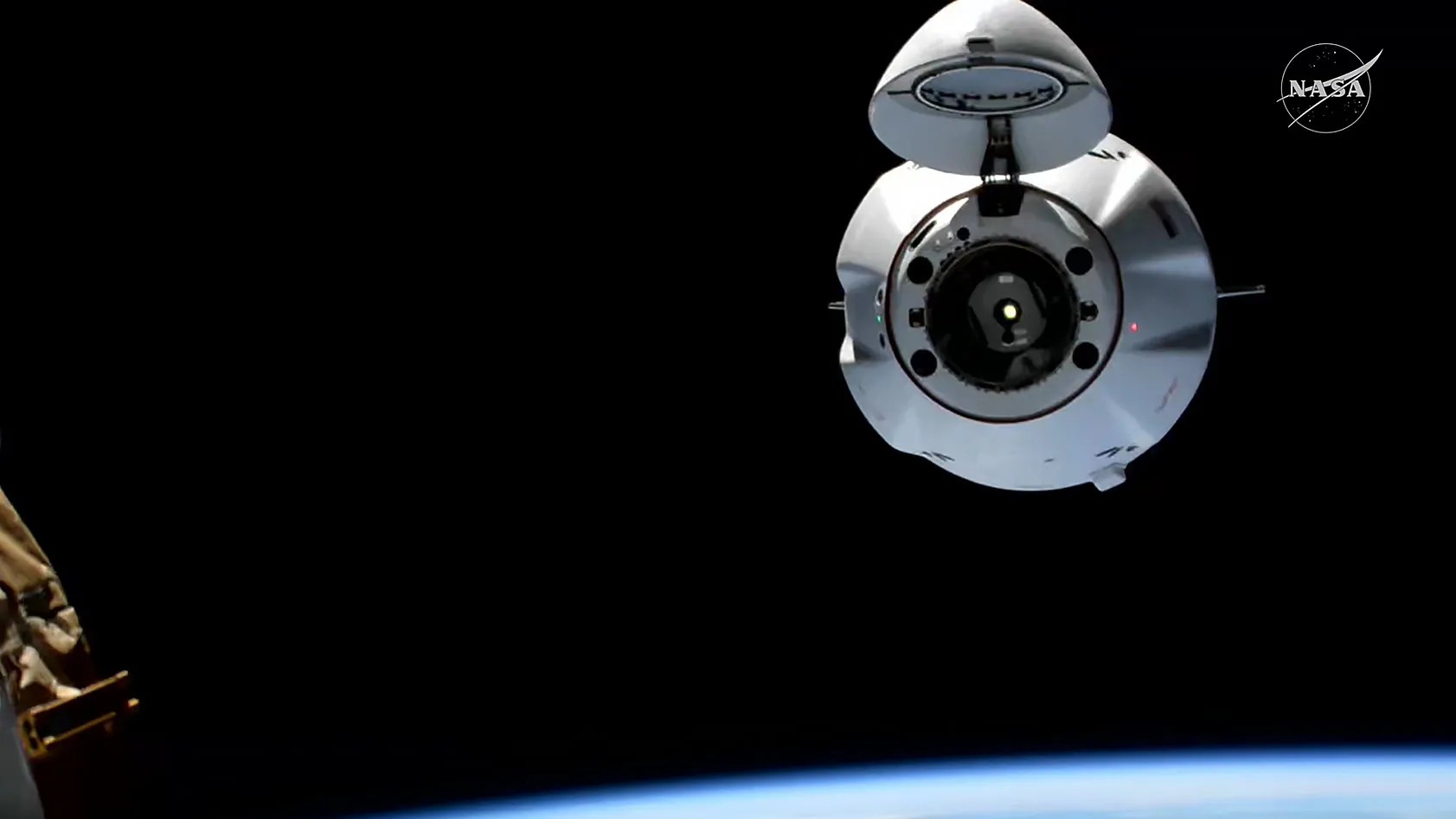
After nearly six months onboard the International Space Station (ISS), the four astronauts of NASA’s SpaceX Crew-10 mission have safely returned to Earth. This weekend’s splashdown off the coast of California concludes a long-duration science expedition that supported dozens of investigations sponsored by the ISS National Laboratory. NASA astronauts Anne McClain and Nichole Ayers, Japan Aerospace Exploration Agency (JAXA) astronaut Takuya Onishi, and Roscosmos cosmonaut Kirill Peskov played a vital role in advancing science in space, contributing to biomedical research, physical and materials sciences, technology demonstrations, and student-led experiments. Their work helped push the boundaries of discovery in low Earth orbit (LEO) The orbit around the Earth that extends up to an altitude of 2,000 km (1,200 miles) from Earth’s surface. The ISS’s orbit is in LEO, at an altitude of approximately 250 miles. to benefit life on Earth and support a sustainable and robust space economy.

Space Stories: White House Destroys Satellite, US Nuclear Reactor Proposed for the Moon, and the End of the Lunar Trailblazer Mission

Here are some recent space-related stories of interest.

Oregon Public Radio: Why a NASA Satellite that Scientists and Farmers Rely On May Be Destroyed on Purpose

The Trump administration has asked NASA employees to draw up plans to end at least two major satellite missions, according to current and former NASA staffers. If the plans are carried out, one of the missions would be permanently terminated, because the satellite would burn up in the atmosphere. The data the two missions collect is widely used, including by scientists, oil and gas companies and farmers who need detailed information about carbon dioxide and crop health. They are the only two federal satellite missions that were designed and built specifically to monitor planet-warming greenhouse gases.

CNN: NASA Wants US to be the First Nation to Put Nuclear Reactor on the Moon

Acting NASA Administrator Sean Duffy has directed the agency to fast-track plans to put a nuclear reactor on the moon. Expediting work to place a reactor on the lunar surface to help power moon exploration efforts would keep the United States ahead of China and Russia, both of which have “announced on at least three occasions” a joint effort to develop such a project by the mid-2030s, according to a directive dated July 31 and obtained by CNN.

NASA: NASA’s Lunar Trailblazer Moon Mission Ends

NASA’s Lunar Trailblazer ended its mission to the Moon on July 31. Despite extensive efforts, mission operators were unable to establish two-way communications after losing contact with the spacecraft the day following its Feb. 26 launch. The mission aimed to produce high-resolution maps of water on the Moon’s surface and determine what form the water is in, how much is there, and how it changes over time. The maps would have supported future robotic and human exploration of the Moon as well as commercial interests while also contributing to the understanding of water cycles on airless bodies throughout the solar system.

Space Stories: 25 Years of Humans on the ISS, Life in Outer Space, and Astronomical Interference

Image (Credit): NASA astronaut Mike Hopkins space-walking outside the International Space Station (ISS) on December 24, 2013. (NASA)

Here are some recent space-related stories of interest.

NASA: Celebrating 25 Years of Continuous Human Presence Aboard the International Space Station “

NASA and its partners have supported humans continuously living and working in space since November 2000. A truly global endeavor, the International Space Station has been visited by more than 280 people from 23 countries and a variety of international and commercial spacecraft. The unique microgravity laboratory has hosted more than 4,000 experiments from more than 5,000 researchers in more than 110 countries. The space station also is facilitating the growth of a commercial market in low Earth orbit for research, technology development, and crew and cargo transportation.

Max Planck Institute: The Evolution of Life May Have Its Origins in Outer Space

Using the Atacama Large Millimeter/submillimeter Array (ALMA), a team of astronomers led by Abubakar Fadul from the Max Planck Institute for Astronomy (MPIA) has discovered complex organic molecules – including the first tentative detection of ethylene glycol and glycolonitrile – in the protoplanetary disc of the outbursting protostar V883 Orionis. These compounds are considered precursors to the building blocks of life. Comparing different cosmic environments reveals that the abundance and complexity of such molecules increase from star-forming regions to fully evolved planetary systems. This suggests that the seeds of life are assembled in space and widespread.

Curtin University: Interference to Astronomy the Unintended Consequence of Faster Internet

Curtin University researchers have undertaken the world’s biggest survey of low frequency satellite radio emissions, finding Starlink satellites are significantly interfering with radio astronomy observations, potentially impacting discovery and research. Unintended signals from satellites – leaked from onboard electronics – can drown out the faint radio waves astronomers use to study the universe.

Space Stories: Watching a Newborn Planet, Investigating a Cosmic Fossil, and TRACERS to Study Magnetic Fields

Credit: Image by Yol Gezer from Pixabay.

Here are some recent space-related stories of interest.

European Southern Observatory: Astronomers Witness Newborn Planet Sculpting the Dust Around It

Astronomers may have caught a still-forming planet in action, carving out an intricate pattern in the gas and dust that surrounds its young host star. Using ESO’s Very Large Telescope (VLT), they observed a planetary disc with prominent spiral arms, finding clear signs of a planet nestled in its inner regions. This is the first time astronomers have detected a planet candidate embedded inside a disc spiral. “We will never witness the formation of Earth, but here, around a young star 440 light-years away, we may be watching a planet come into existence in real time,” says Francesco Maio, a doctoral researcher at the University of Florence, Italy, and lead author of this study, published today in Astronomy & Astrophysics.

Space.com: Astronomers Discover a Cosmic ‘Fossil’ at the Edge of Our Solar System. Is this Bad News for ‘Planet 9’?“

Astronomers have discovered a massive new solar system body located beyond the orbit of Pluto. The weird elongated orbit of the object suggests that if “Planet Nine” exists, it is much further from the sun than thought, or it has been ejected from our planetary system altogether. The strange orbit of the object, designated 2023 KQ14 and nicknamed “Ammonite,” classifies it as a “sednoid.” Sednoids are bodies beyond the orbit of the ice giant Neptune, known as trans-Neptunian objects (TNOs), characterized by a highly eccentric (non-circular) orbit and a distant closest approach to the sun or “perihelion.”

Southwest Research Institute: TRACERS Mission Prepares for Launch

NASA’s Tandem Reconnection and Cusp Electrodynamics Reconnaissance Satellites (TRACERS) mission, a collaborative effort led by the University of Iowa (UI) with substantial contributions from Southwest Research Institute (SwRI), has entered its final integration phase. NASA is set to launch TRACERS’ two satellites into low Earth orbit on July 22, 2025, from Vandenberg Space Force Base in California. The TRACERS mission will explore the dynamic interactions between the Sun’s and Earth’s magnetic fields.

Space Stories: NASA Aircraft Assist with Texas Flood, Chinese Satellites Do Something New, and Venus May be Probed by the UK

Credit: Image by Photorama from Pixabay.

Here are some recent space-related stories of interest.

NASA NASA Aircraft, Sensor Technology, Aid in Texas Flood Recovery Efforts

In response to recent flooding near Kerrville, Texas, NASA deployed two aircraft to assist state and local authorities in ongoing recovery operations. The aircraft are part of the response from NASA’s Disasters Response Coordination System, which is activated to support emergency response for the flooding and is working closely with the Texas Division of Emergency Management, the Federal Emergency Management Agency (FEMA), and the humanitarian groups Save the Children and GiveDirectly.

Newsweek: China Appears to Pull Off Satellite Feat That NASA Has Never Achieved

Two remote-controlled Chinese satellites appear to have docked in high orbit to allow refueling and servicing for the first time. The achievement, which has yet to be matched by the U.S, involved autonomous spacecraft Shijian-21 and Shijian-25, completing the task in geostationary orbit earlier this month. Geostationary orbits occur at 22,236 miles above the surface, and are typically used for communications satellites so that they can move with the rotation of the Earth. However, the high orbit and need for satellites to maintain speeds with the Earth’s rotation makes docking extremely difficult.

Royal Astronomical Society: Life on Venus? UK Probe Could Reveal the Answer

The answer to whether tiny bacterial lifeforms really do exist in the clouds of Venus could be revealed once-and-for-all by a UK-backed mission. Over the past five years researchers have detected the presence of two potential biomarkers – the gases phosphine and ammonia – which on Earth can only be produced by biological activity and industrial processes. Their existence in the Venusian clouds cannot easily be explained by known atmospheric or geological phenomena, so Cardiff University’s Professor Jane Greaves and her team are plotting a way to get to the bottom of it. Revealing a new mission concept at the Royal Astronomical Society’s National Astronomy Meeting 2025 in Durham, they plan to search and map phosphine, ammonia, and other gases rich in hydrogen that shouldn’t be on Venus.