SpaceX Rockets: The Good and Bad News

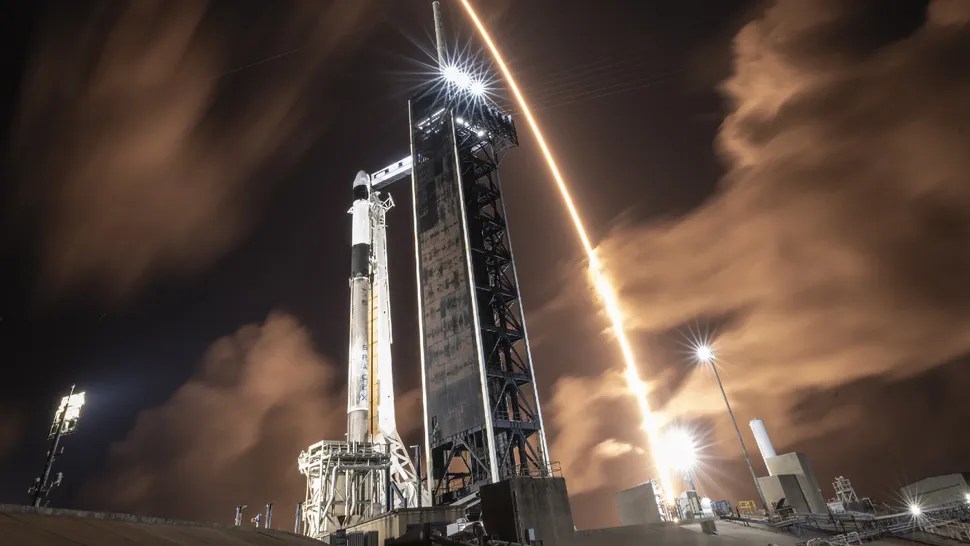
Image (Credit): Launch of a SpaceX Falcon 9 rocket on August 31, 2024. (SpaceX)

First the good news. SpaceX is able to launch its Falcon 9 rockets following a booster issue last week. That led to the immediate launch yesterday of two back-to-back launches of Starlink satellites.

Now the bad news. Russian scientists have reported that SpaceX’s second launch of its Starship rocket last November created a hole in the ionosphere. Specifically, an exploding engine generated the shock wave that created this hole. The scientists claim this is the first time a “human-caused explosion” has had this impact on the ionosphere.

This is the “plain language summary” from the Russian study:

On 18 November 2023, SpaceX launched the Starship, the tallest and the most powerful rocket ever built. About 2 min and 40 s after the liftoff, the Super Heavy engine separated from the Starship spacecraft and exploded at an altitude of 90 km. The main core Starship continued to rise to 149 km and exploded as well. The rocket launch and explosion produced an unexpected response in the ionosphere—the ionized part of the Earth’s atmosphere. The Starship flew at a velocity, exceeding the local sound speed, and generated cone-like atmospheric shock-acoustic waves. Most unexpectedly, the observed disturbances represented long and intensive multi-oscillation wave structures that propagated northward, which is unusual for disturbances driven by a rocket launch. The Starship explosion also generated a large-amplitude total electron content depletion that could have been reinforced by the impact of the spacecraft’s fuel exhaust in the lower atmosphere. This study appears to be the first-time detection of a non-chemical ionospheric hole produced by a man-made explosion.

I like the fact that Russian’s can share results in plain language. However, it is a little disturbing that we needed the Russians to fill us in on the destructive impact of the Starship rockets. Nature noted that “Ionospheric disturbances can affect not only satellite navigation but also communications and radio astronomy.”

We have seen the mess that the rockets can leave on the ground, but this is something else. We need to understand the impact of such launches and related issues if this is to become the new way of doing things. The FAA and NASA should be looking into this matter.

Space Quote: Elon Musk’s Spat Jeopardizes Starlink Operations in Brazil

“He can’t go around insulting presidents, insulting deputies, insulting the Senate, insulting the Chamber, insulting the Supreme Court. Who does he think he is?…That guy has to accept the rules of this country, and if this country made a decision through the Supreme Court, he has to comply. If it applies to me, it applies to him.”

Statement by Brazil’s President Luiz Inácio Lula da Silva regarding Elon Musk protesting the Brazilian Supreme Court’s order suspending Twitter/X nationwide. The issue relates to the spread of misinformation on Twitter/X and the company’s refusal to name a representative in Brazil. The spat is already having ripple effects on SpaceX’s Starlink operations in the country.

SpaceX Grounded Before Start of the Polaris Dawn Mission

For the second time in two months, a SpaceX Falcon 9 rocket launch has had problems, leading to a temporary grounding of the rocket by the Federal Aviation Administration. In the latest case, a rocket booster crashed into the Atlantic Ocean after a successful launch of Starlink satellites.

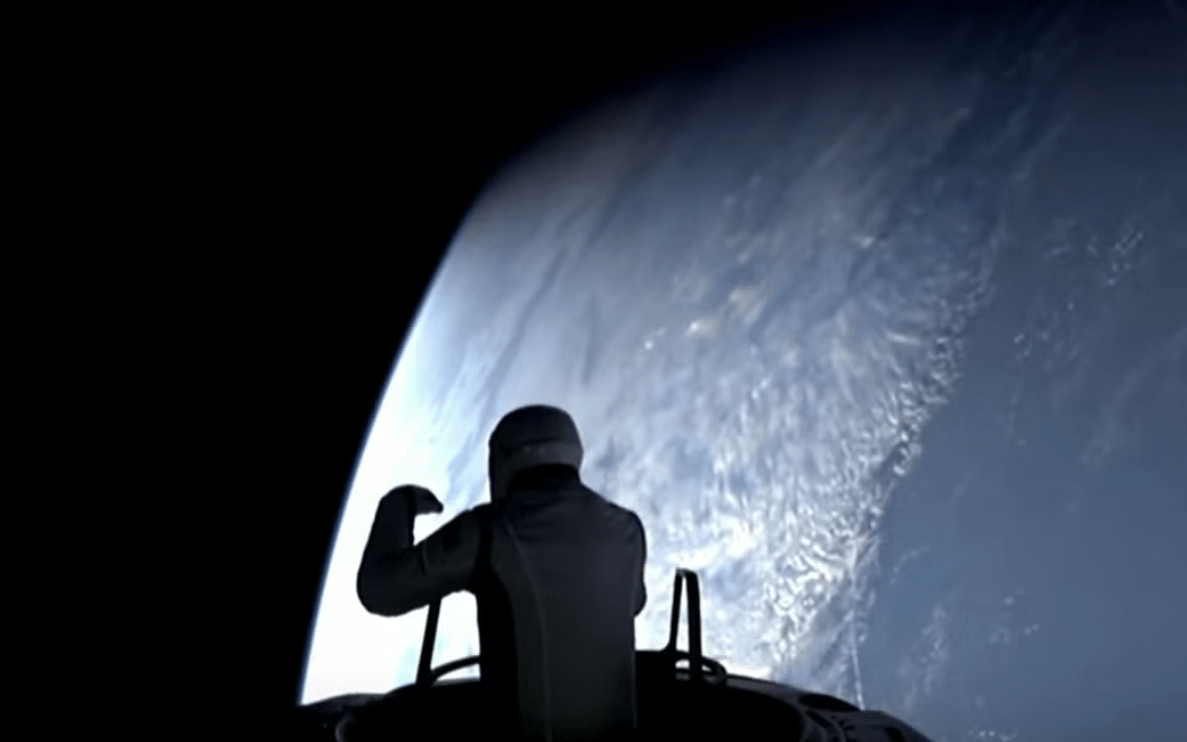
As a result of the malfunction, the privately-funded Polaris Dawn mission scheduled for this Friday will most likely need to be delayed. One of the goals for the Polaris Dawn mission is a spacewalk, which will be the first private space walk to date.

Of greater concern is the role of the Falcon 9 in upcoming International Space Station launches, be it crewed or uncrewed. With the Boeing capsule stuck at the station, SpaceX is currently the one game in town for NASA’s station needs.

Space Quote: NASA’s North Star Means Boeing Astronauts to Return to Earth on SpaceX Capsule

Image (Credit): Boeing Starliner attached to the ISS. (NASA)

“Spaceflight is risky, even at its safest and most routine. A test flight, by nature, is neither safe, nor routine. The decision to keep Butch and Suni aboard the International Space Station and bring Boeing’s Starliner home uncrewed is the result of our commitment to safety: our core value and our North Star…I’m grateful to both the NASA and Boeing teams for all their incredible and detailed work.

Statement by NASA Administrator Bill Nelson regarding NASA’s decision to return Boeing’s Starliner to Earth without astronauts Butch Wilmore and Suni Williams aboard the spacecraft. Instead the two astronauts will remain on the International Space Station (ISS) until February 2025 when they will return to Earth aboard a SpaceX Dragon capsule.

Starliner: Return Date Now 2025

Image (Credit): Boeing’s Starliner capsule viewed from the ISS. (ESA)

I did not think it could get worse, but it has. NASA has announced that Boeing’s Starliner capsule attached to the International Space Station (ISS) might not return until next year, making it an unwanted appendage on a busy space station.

At a press conference today, NASA discussed leaving the two Boeing astronauts on the ISS until February 2025 and cutting in half the planned crew for the September 24 SpaceX Dragon mission. This would keep the number of astronauts on the space station to its normal number. There was also discussion about bringing the Boeing astronauts back on another capsule if the Starliner was not ready.

This looks bad for Boeing and NASA’s commercial space efforts. Boeing does not agree with NASA’s assessment, stating in an August 2 mission update:

Boeing remains confident in the Starliner spacecraft and its ability to return safely with crew. We continue to support NASA’s requests for additional testing, data, analysis and reviews to affirm the spacecraft’s safe undocking and landing capabilities. Our confidence is based on this abundance of valuable testing from Boeing and NASA. The testing has confirmed 27 of 28 RCS thrusters are healthy and back to full operational capability. Starliner’s propulsion system also maintains redundancy and the helium levels remain stable. The data also supports root cause assessments for the helium and thruster issues and flight rationale for Starliner and its crew’s return to Earth.

All of this is happening while the ISS crew are unloading supplies from a recently arrived Northrop Grumman Cygnus cargo capsule launched over the weekend. It does make you wonder whether Grumman should be the next best hope for a crewed capsule rather than Boeing. Grumman has a proven track record of more than 20 resupply runs. Clearly, crewed capsule are different, but it is something to consider.

Sierra Space is also testing its Dream Chaser next month, which is also expected to make cargo runs to the ISS. It this another potential crew option down the road?

The purpose of commercial involvement was greater options. Let’s work on expanding those options as quickly as possible. Placing all of our eggs in the Elon Musk SpaceX basket makes me nervous as he calls for civil war in the United Kingdom.