Movie: Jodorowsky’s Dune

Image (Credit): One of the ships from Jodorowsky’s Dune drawings. (Sony Pictures Classics)

Now that Dune: Part Two is in theaters, it may be worth your time to revisit an earlier attempt to create a Dune movie by Chilean-French filmmaker Alejandro Jodorowsky Prullansky. The 2014 film, Jodorowsky’s Dune, discusses the filmmaker’s elaborate plans in the 1970s to create a 12-20 hour film covering the life of Paul Atreides. The planned combination of surrealistic art (Moebius), contemporary music (Pink Floyd), and stars (from Orson Welles to Dali) were being aligned to create something that might of been magical or just catastrophic. We will never know because the American film industry turned him down, even if they did use some of his ideas for future films such as Star Wars and Aliens.

When the film rights to Dune were sold again and Peter Lynch was given a green light to direct the film, we got the 1984 cultish mess that still haunts the streaming services. In the 2014 flim, Jodorowsky said he watched the Lynch film and was “happy because the picture was awful.’

In terms of the latest Dune films by Canadian filmaker Denis Villeneuve, in an interview Jodorowsky said he saw the trailer for the first Dune film and thought it was “well done” for standard industrial cinema, but noted that “industrial cinema is incompatible with auteur cinema.”

In my opinion, after a failure and then a flop, we are lucky to have the determination of Denis Villeneuve to finally give us a high-quality, memorable Dune. That said, it would have been fun to see Dali as the Emperor.

Study Findings: A Recently Formed Ocean Inside Saturn’s Moon Mimas

Image (Credit): Saturn’s moon Mimas and its large Herschel Crater. The moon is also referred to as the “Death Star” from Star Wars. (NASA/JPL-Caltech/Space Science Institute)

Nature  abstract of the study findings:

Moons potentially harbouring a global ocean are tending to become relatively common objects in the Solar System. The presence of these long-lived global oceans is generally betrayed by surface modification owing to internal dynamics. Hence, Mimas would be the most unlikely place to look for the presence of a global ocean. Here, from detailed analysis of Mimas’s orbital motion based on Cassini data, with a particular focus on Mimas’s periapsis drift, we show that its heavily cratered icy shell hides a global ocean, at a depth of 20–30 kilometres. Eccentricity damping implies that the ocean is likely to be less than 25 million years old and still evolving. Our simulations show that the ocean–ice interface reached a depth of less than 30 kilometres only recently (less than 2–3 million years ago), a time span too short for signs of activity at Mimas’s surface to have appeared.

Citation: Lainey, V., Rambaux, N., Tobie, G. et al. A recently formed ocean inside Saturn’s moon Mimas. Nature 626, 280–282 (2024).
https://doi.org/10.1038/s41586-023-06975-9

Study-related stories:

Movie: Rebel Moon on Netflix

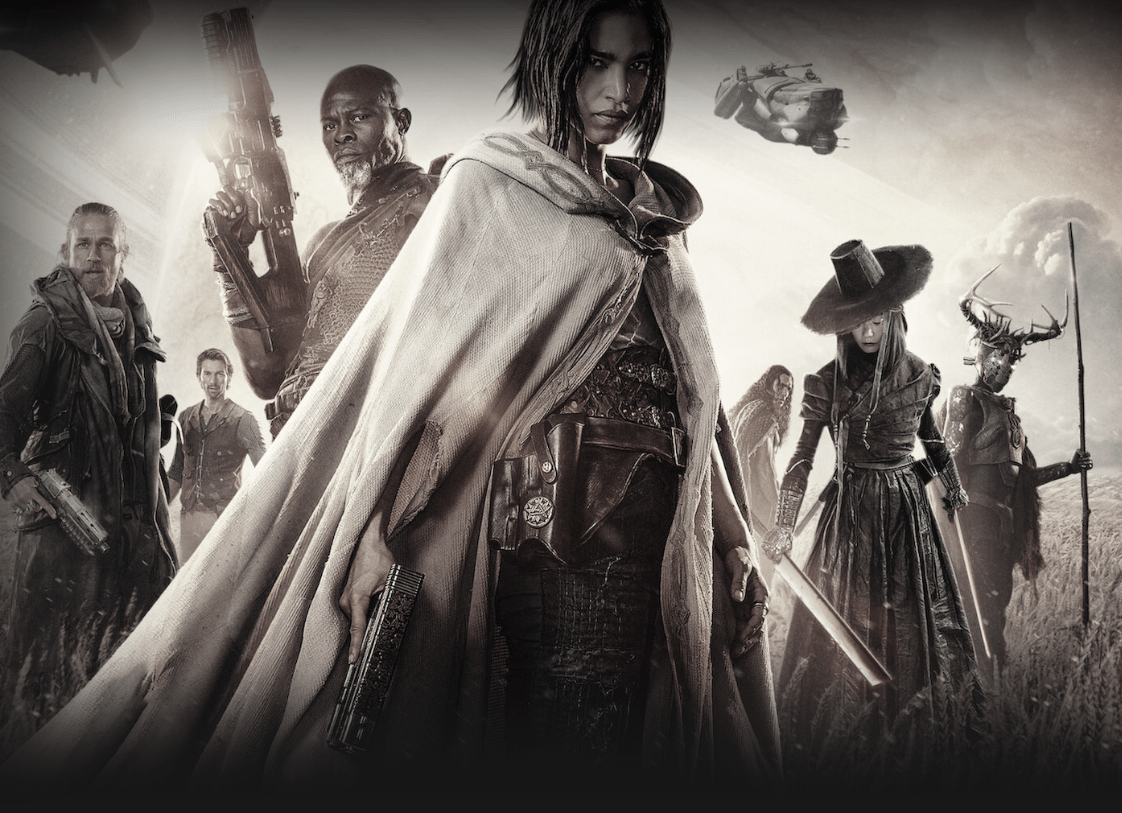
Image (Credit): Movie advertisement for Rebel Moon. (Nexflix)

In an earlier post, I mentioned those movies you don’t need to see until they come to your television. What is even easier is when they start on the television, as is the case with Netflix’s Rebel Moon.

Released in mid-December, and labeled as “Part One: A Child of Fire,” you may be witnessing the start of an interesting new series or the creation of content for it’s own sake. I have yet to decide myself.

Here is the trailer, which tells you a good part of the story. That, and this teaser from Netflix:

When the ruthless forces of the Motherworld threaten a quiet farming village on a distant moon, a mysterious outsider becomes its best hope for survival.

The movie has some decent special effects to go along with the usual well-worn tropes:

  • An empire with troublesome planets at the edges, similar to Star Wars and Foundation? Check.
  • Desert planet hosting an individual important to the empire, similar to Star Wars? Check.
  • Desert planet with wild saloons where you battle bounty hunters and hire rogue ships and pilots, similar to Star Wars? Check.
  • Confused robot not sure about its path, similar to Lost in Space? Check.
  • Ragtag band fighting evil, similar to Guardians of the Galaxy? Check.

The list could go on and on, with elements of Conan the Barbarian, Star Trek’s Borg Queen, Vikings: Valhalla, and Firefly thrown in as well. Oh yeah, and an evil empire where the officers where Nazi SS uniforms and are followed by masked religious figures similar to the ones you see in Dune.

The only redeeming portion of this film comes after the first half when the battle scenes and reincarnation of a key character provide some interesting twists. It may not save the entire effort, but it did add to the fun.

Part Two: The Scargiver will be released on April 19th. It is supposed to be the second and final episode of Rebel Moon.

Will I watch it? Probably. Am I recommending you watch it yourself? Not really, unless you need to kill a few hours. It can be interesting, if only to create your own list of well-worn tropes.

Podcast: Romans in Space

If you are searching for a good podcast to listen to on your next drive, you might enjoy a recent podcast from The Rest is History discussing the ideas of the early Roman Republic that may have informed George Lucas and his Star Wars films.

In the episode, “Romans in Space: Star Wars, Dune and Beyond…,” the narrators also discuss the influence of Rome on other popular series, from earlier stories, such as Issac Asimov’s Foundation, Frank Herbert’s Dune, and Star Trek, to more recent tales, such as Battlestar Galactica and The Hunger Games. The discussion also touches on the role of the Nazis, the American Revolution, Islam, and even the story of King Arthur in these science fiction stories.

No stone is left unturned in this 55 minute episode, with plenty of ideas to keep your head spinning and your mind guessing. After listening, I bet you will play it a second time just to be sure you took it all in (and wrote down some references you might want to research on your own).

Television: The First Season of Star Wars: Ahsoka

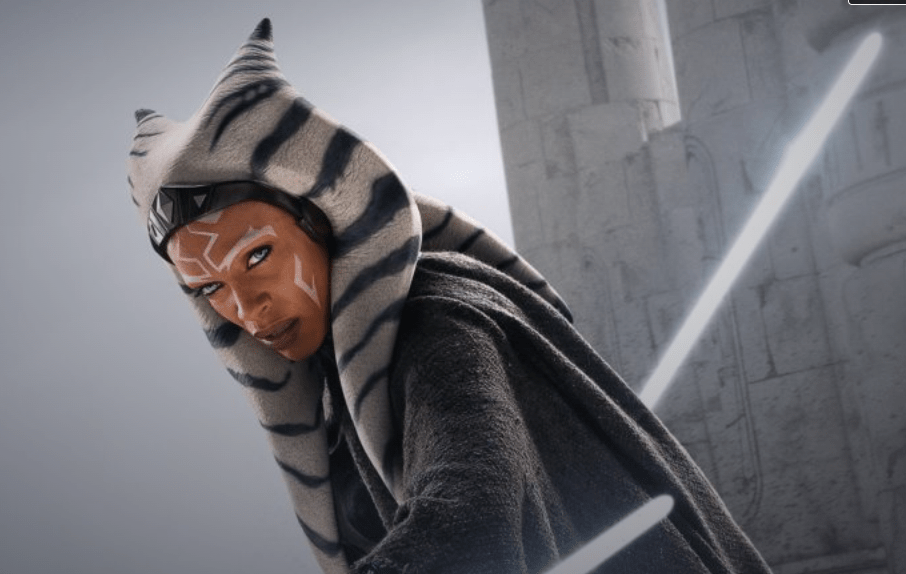
Image (Credit): The main character Ahsoka. (Disney)

So now that I have seen the full series of the Star Wars TV series Ahsoka, I can say that it was better than I expected. However, it was pretty slow all the way up until episode 6 when a another galaxy far, far away was introduced.

The first five episodes where slow, predictable, and almost had the feeling of a fan-created film. Everything from the dialogue to the uniforms to the spacecraft was odd. And creating a female-based story that merely mimics earlier tropes, such as the first episode with Ashoka playing Indiana Jones and Sabine Wren playing a disgruntled teenage (much like the younger Luke Skywalker), was a bit too much. Plus, the idea that these women were pining for a lost boyfriend (Ezra) who they needed to save was the cherry on top of a collapsing pile of mess.

The presence of Anakin Skywalker mid-series did not enhance my feelings towards the show. More than anything, I found it confusing. Why is this show trying to resurrect the reputation of a man who slaughtered children in a Jedi daycare and murdered millions by blowing up planets? Did the creators really need a cameo that bad that they would sink to that level?

Only with episode six with the Grand Admiral “Papa Smurf” Thrawn and his Macbeth-like witches did the series become interesting, though I do not know why the storm troopers were unable to wash their armor and the Imperial Star Destroyer was painted up like a hippie van. And did the creatures on the planet remind you of gentle Jawas and warlike Sand People, or is that just me?

Anyway, I will give the show another chance now that I know what is possible, though I would not say this was the strongest showing by Disney. That said, it was better than some of the other Star Wars spin-offs.

Here is my ranking of all the Star Wars live-action series to date:

  1. Andor
  2. The Mandalorian
  3. Ahsoka
  4. The Book of Boba Fett
  5. Obi-Wan Kenobi

I have many more comments about the new series, but I will leave it there. I am dropping in a few more comments I found that parallel mine to some degree.

At least we still have “Andor.”
Ben Travers, indieWire

No matter how hard it strives for widespread accessibility, it’s a sequel that will be of primary interest to established fans.
Nick Schager, The Daily Beast

At a time when audiences have thinning patience both for super-heroics and too much fan service, Ahsoka will still need to raise its game to prove it’s more than wish fulfillment for longtime Star Wars fans.
Eric Deggans, NPR