
Here are some recent stories of interest.
—NASA: “NASA’s OSIRIS-APEX Unscathed After Searing Pass of Sun“
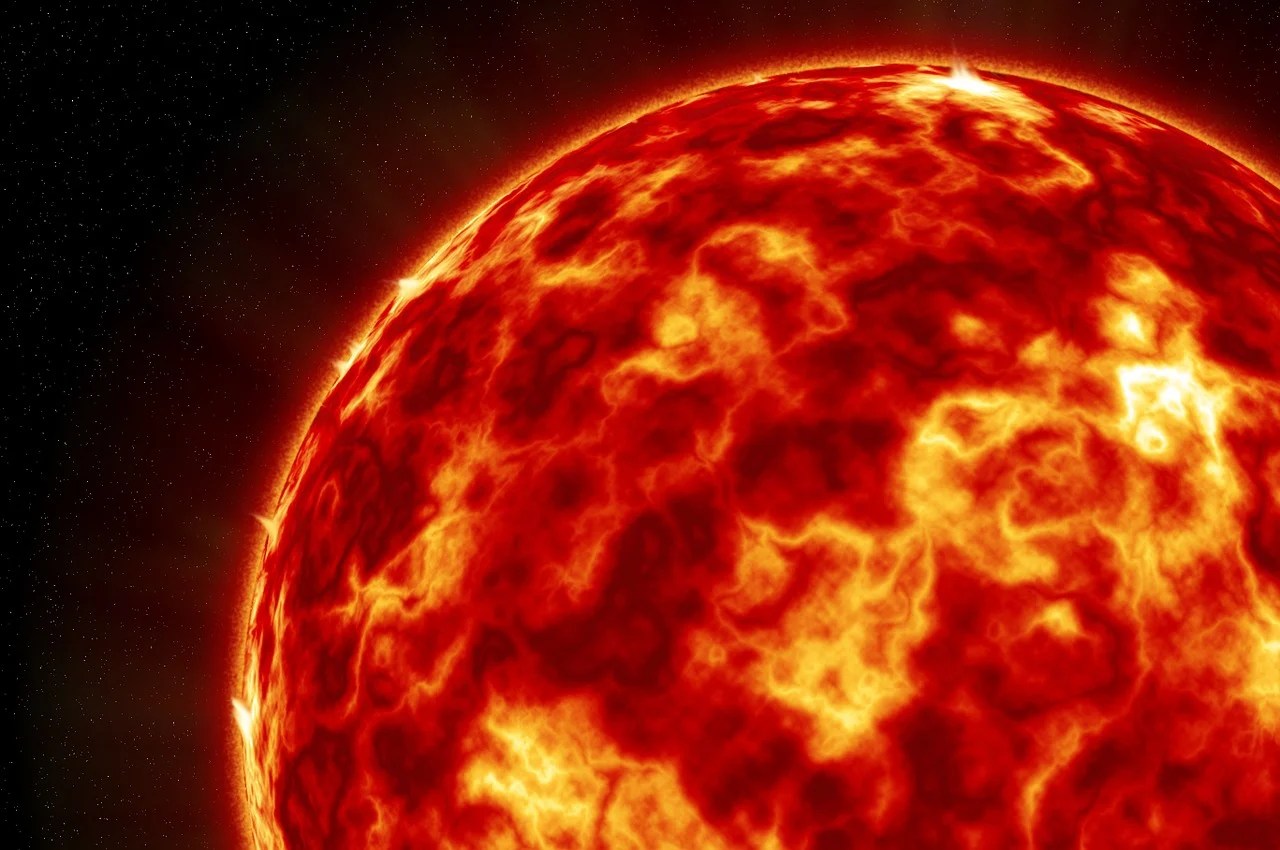
Mission engineers were confident NASA’s OSIRIS-APEX (Origins, Spectral Interpretation, Resource Identification – Apophis Explorer) spacecraft could weather its closest ever pass of the Sun on Jan. 2, 2024. Their models had predicted that, despite traveling 25 million miles closer to the heat of the Sun than it was originally designed to, OSIRIS-APEX and its components would remain safe. The mission team confirmed that the spacecraft indeed had come out of the experience unscathed after downloading stored telemetry data in mid-March. The team also tested OSIRIS-APEX’s instruments in early April, once the spacecraft was far enough from the Sun to return to normal operations.
—USA Today: “NASA Discovers Potentially Habitable Exoplanet 40 Light Years from Earth“
NASA announced the discovery of a planet 40 light years from Earth that orbits every 12.8 days and is possibly even habitable. Gliese 12 b is a “super Earth exoplanet” that is nearly the same size as Earth or slightly smaller, according to a NASA news release. Exoplanets are planets outside of our solar system, NASA’s website says. “We’ve found the nearest, transiting, temperate, Earth-size world located to date,” Masayuki Kuzuhara, a project assistant professor at the Astrobiology Center in Tokyo, said in a statement. “Although we don’t yet know whether it possesses an atmosphere, we’ve been thinking of it as an exo-Venus, with similar size and energy received from its star as our planetary neighbor in the solar system.”
—Phys.org: “Starless and Forever Alone: More ‘Rogue’ Planets Discovered“
The Euclid space telescope has discovered seven more rogue planets, shining a light on the dark and lonely worlds floating freely through the universe untethered to any star. Without being bound to a star, as the Earth is to the sun, there are no days or years on these planets, which languish in perpetual night. Yet scientists believe there is a chance they could be able to host life—and estimate there may be trillions dotted throughout the Milky Way.




 Our Awesome Universe