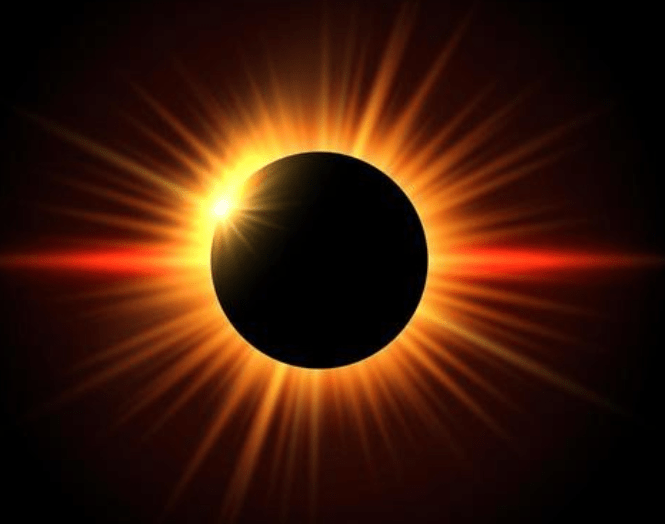
Credit: New York Department of Economic Development
This week’s image comes from the great state of New York, which is advertising the upcoming Total Solar Eclipse on April 8.
New York is one of the state’s that will experience the eclipse, and the New York Department of Economic Development is not missing the chance to ensure everyone knows this.
A handy map also provides the timing of the eclipse in each city.
Credit: New York Department of Economic Development
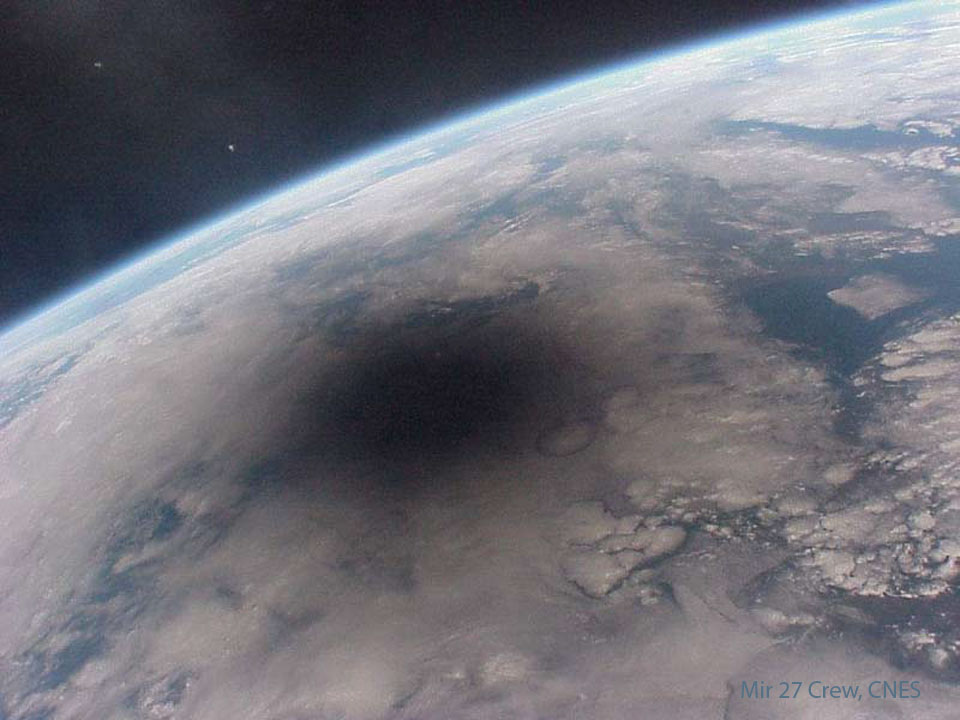
Image (Credit): A view of the Moon’s shadow on Earth during the solar eclipse on August 11, 1999. The image was captured by Russia’s Mir space station. (Mir 27 Crew)
On April 8, should you be outside staring at the Total Solar Eclipse, you may want to take a few precautions so that you can witness future eclipses as well. In other words, protect your eyes!
NASA has provided a few tips related to photographing the eclipse. Please keep all of this in mind.
For instance, NASA notes:
Looking directly at the Sun is dangerous to your eyes and your camera. To take images when the Sun is partially eclipsed, you’ll need to use a special solar filter to protect your camera, just as you’ll need a pair of solar viewing glasses (also called eclipse glasses) to protect your eyes. However, at totality, when the Moon completely blocks the Sun, make sure to remove the filter so you can see the Sun’s outer atmosphere – the corona.
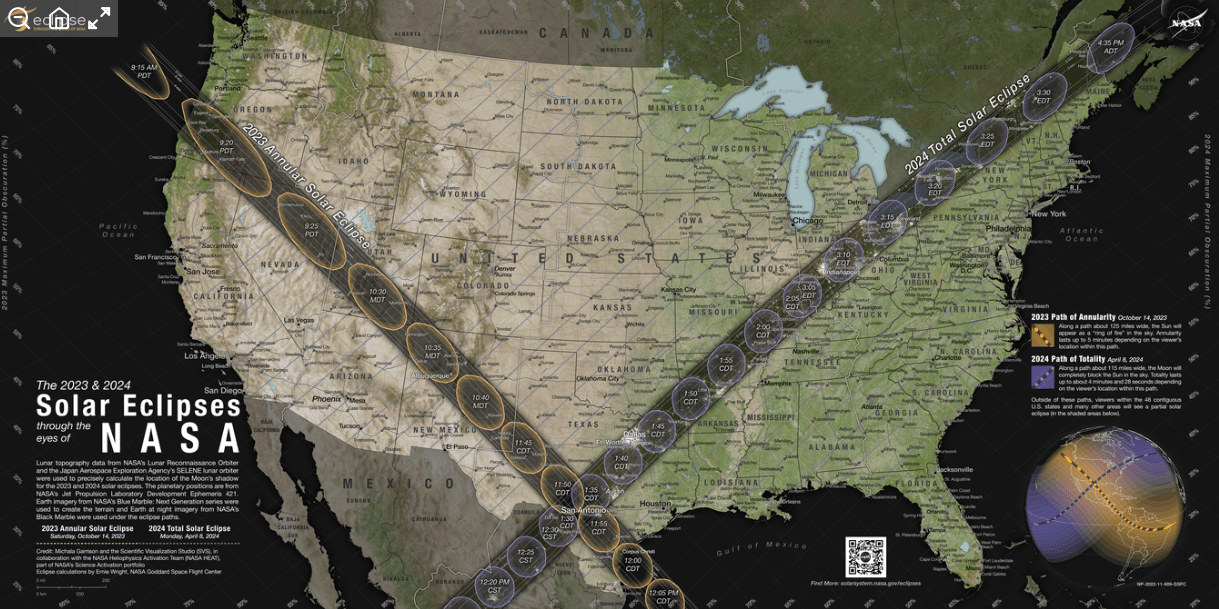
Image (Credit): A U.S. map showing the path of the Moon’s shadow during the 2023 annular solar eclipse (left side) and 2024 total solar eclipse (right side). (NASA)
If you are planning to get a good seat for the total solar eclipse on April 8, you may want to consult the NASA Solar Eclipses map (shown above) to figure our where you want to be. Hint for 2024 – California is not the place to be.
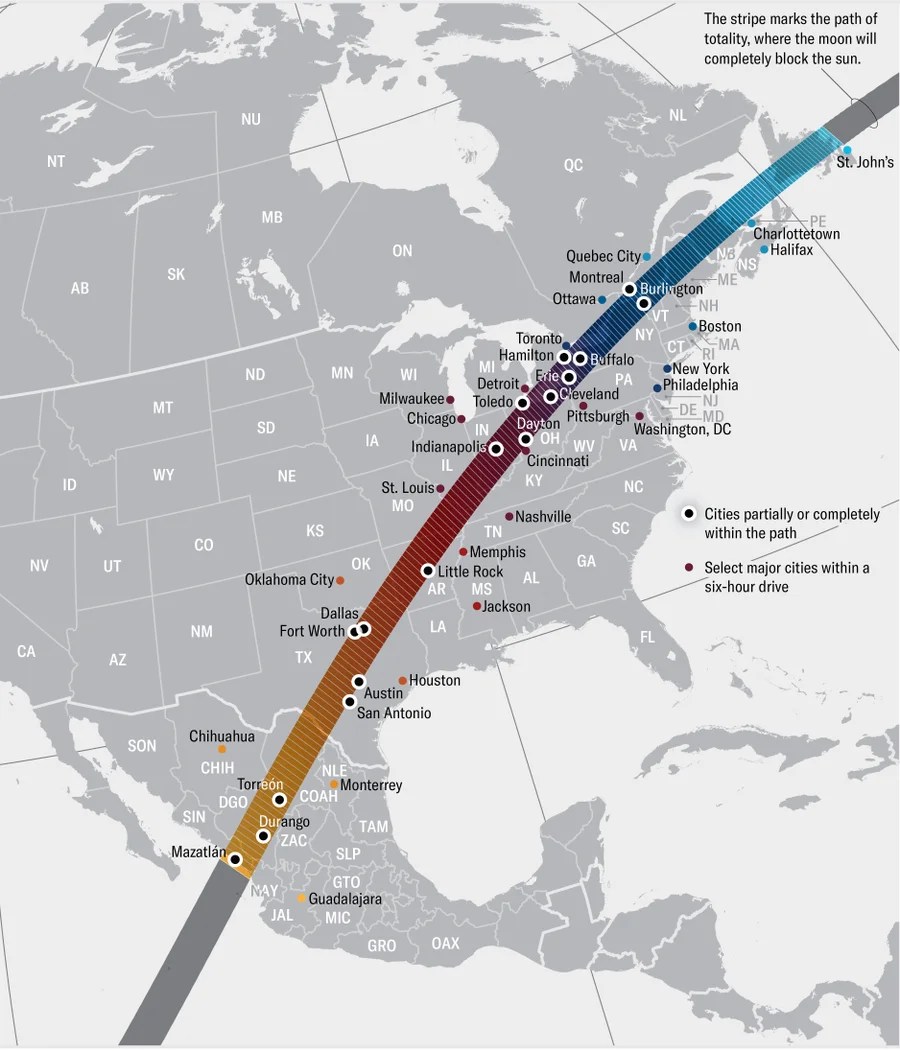
The 2024 solar eclipse map (shown below) from Scientific American magazine might also be helpful. It clearly highlights the cities that will have the best show.
Image (Credit): Map of the U.S. showing the path of the 2024 total solar eclipse on April 8. (Katie Peek/Scientific America, NASA)
What kind of ambassador, you ask? Well, NASA is looking for what are called “Partner Eclipse Ambassadors.” Volunteers for this position will assist NASA as it prepares communities for the April 2024 solar eclipse.
NASA promises the following to support volunteer ambassadors:
A supportive network of enthusiasts who regularly share eclipse support;
A partner in your community (each partnership consists of an undergraduate and an eclipse enthusiast);
Materials including solar viewing glasses, activities, handouts, and more;
Connections to local community centers reaching underserved audiences;
Regular social hours and presentations from experts in eclipses and communication; and
Opportunities to continue your journey with NASA through collaborations with partners in heliophysics, education, and communication.
You have plenty of time to prepare for this event, so check it out. You can get all of the details at this link.
Image (Credit): Lunar shadow captured on October 14, 2023. (NASA)
This image of last week’s annular solar eclipse was captured by NASA’s Earth Polychromatic Imaging Camera (EPIC) imager carried aboard the Deep Space Climate Observatory (DSCVR), which is a joint venture between NASA, NOAA, and the U.S. Air Force.
An annular eclipse occurs when the Moon passes in front of the Sun but is too far from Earth to completely obscure it. The Moon is at or near its farthest distance from Earth—known as its apogee—during an annular eclipse, making it look smaller in the sky. This leaves the Sun’s edges exposed in a red-orange ring, dubbed the “ring of fire.” A satellite caught an earthly view of the event, as the Moon’s shadow crossed North America.
NASA also provided a map showing those areas in the United States most impacted by the eclipse (shown below).
Image (Credit): Map showing the dark path of the annularity stretching across the lower 48 states from Oregon to Texas. (NASA)