Sci-Fi Quote: Expect Some Fun with Starfleet Academy

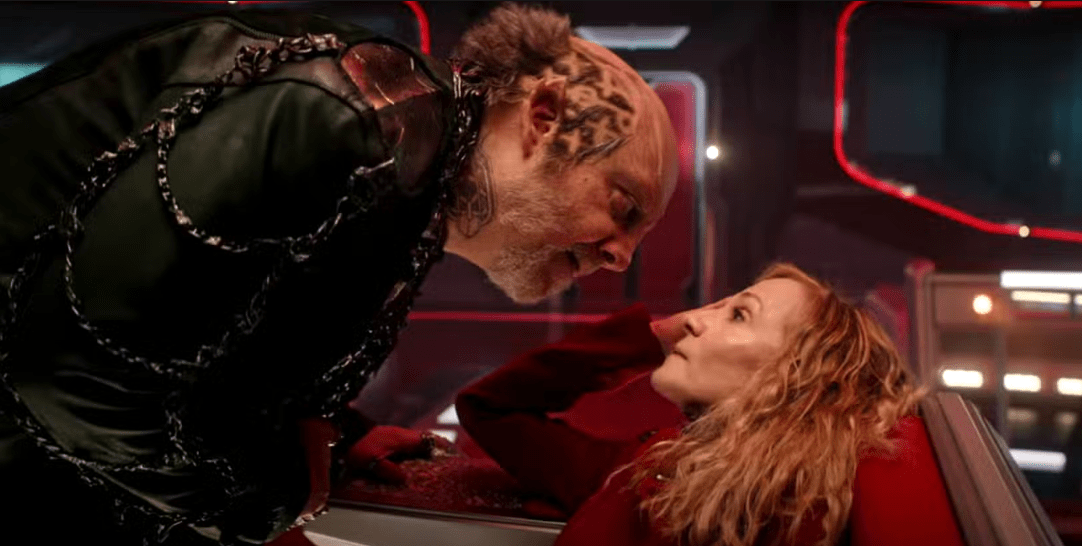
Image (Credit): Paul Giamatti and Holly Hunter in Star Trek: Starfleet Academy. (Paramount+)

“I was immediately enthralled with reading it. I wanted to see what Paul was going to do next and could I do it with him? That was an unusual opportunity that was presented.”

Statement by actress Holly Hunter (playing the part of Starfleet Academy’s chancellor) regarding actor Paul Giamatti (playing the part of Klingon and Tellarite villain Nus Braka) in the new Star Trek: Starfleet Academy television series premiering on January 15th.

Regarding the involvement of Hunter in the series, Giamatti stated to his co-star:

I had heard that you were considering the part and that was very exciting to me because I thought it was a brilliant choice…I thought this makes a lot of sense. It’s going to fit right, but it’s going to be different. And I don’t know what she’s going to do with it, but it’s going to be something great. So it was a big selling point for me.

We can only hope that the rest of us have as much fun watching the series as they did making it. The filming of season two of this new series is almost complete as well. Hopefully, the jump to a second season is not presumptuous.
Television: Pluribus and Kepler-22 b

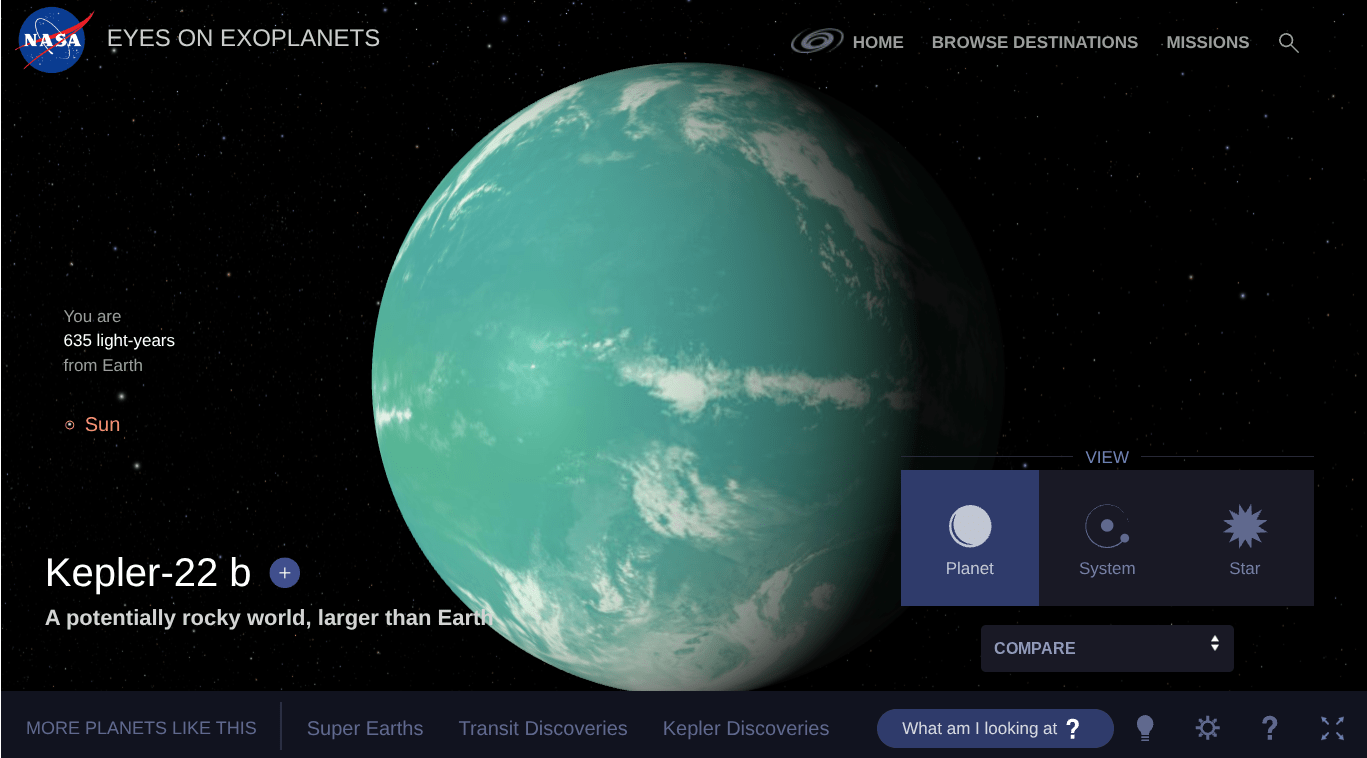
Image (Credit): NASA provide of Kepler-22 b. (NASA)

We will have to wait for season two of Apple TV’s Pluribus series before learning more about the inhabitants of the fictional Kepler-22 b, which is the source of the “virus” that turned humans in to docile livestock. In the meantime, we can look into facts about the actual exoplanet.

According to NASA, we know that Kepler-22 b is:

  • potentially a rocky world, that is larger than Earth,
  • orbits within the habitable zone of a G-type host star (similar to our sun),
  • the only exoplanet discovered around this host star to date, and
  • about 635 light-years away.

You might also remember this exoplanet from HBO Max’s series Raised by Wolves. It is the exoplanet that the main characters escape to after a brutal war on Earth. Kepler-22 b is a strange world in the series, contained odd vegetation, bottomless pits, and an acidic sea. It is not what space dreams are made of, but at least it is not sending out signals to destroy other exoplanets hundreds of light-years away.

While we may not learn anything more about Kepler-22 b from Pluribus, I suppose it may encourage a few individuals to seek out information on the Kepler mission. Who knows, it may even stimulate more interest in our SETI efforts. Then again, if this is the future of space communications, we may want to reconsider the whole enterprise.

Credit: NASA/Ames/JPL-Caltech 

Note: Under the Kepler numbering scheme, the “22” in Kepler-22 b means that it was the 22nd host star discovered, while the “b” indicates it was the first exoplanet found orbitting that host star.

Television: 2025 Was a Good Year for Sci-fi Space Shows

Image (Credit): Some of the characters from Alien: Earth. (FXNetworks)

Before the year is over, I want to highlight five sci-fi space television series that kept me entertained. I cannot do the same with sci-fi space movies because 2025 lacked exciting, well-made films.

Here are my top five sci-fi space television shows in order of preference.

  1. Andor on Disney+
  2. Alien: Earth on FX/HULU
  3. Star Trek: Strange New Worlds on Paramount+
  4. Foundation on Apple TV
  5. Murderbot on Apple TV

While Andor saw its second and last season this year, the remaining four will be returning for another season. When combined with the other new shows to premiere in 2026, such as Star Trek: Starfleet Academy, then we are looking at another good year for sci-fi space television series (assuming we do not need to wait years for the returning seasons).

I wanted to rank Murderbot a little higher, but it still lacks the energy of the books and each episode is too short to leave you satisfied. That said, it has a lot of potential and it is still a solid series.

Overall, great television made up for so-so movies in 2025.

Let’s hope some great sci-fi space movies in 2026.

Happy New Year!

Note: Apple TV’s Pluribus was not considered for this list. While it involves a “virus” from a distant exoplanet, we never learn anything about the distant civilization. Moreover, it is basically an Earth-based drama not involving any travel away from our planet.

Poll Results: Do You Believe in Aliens?

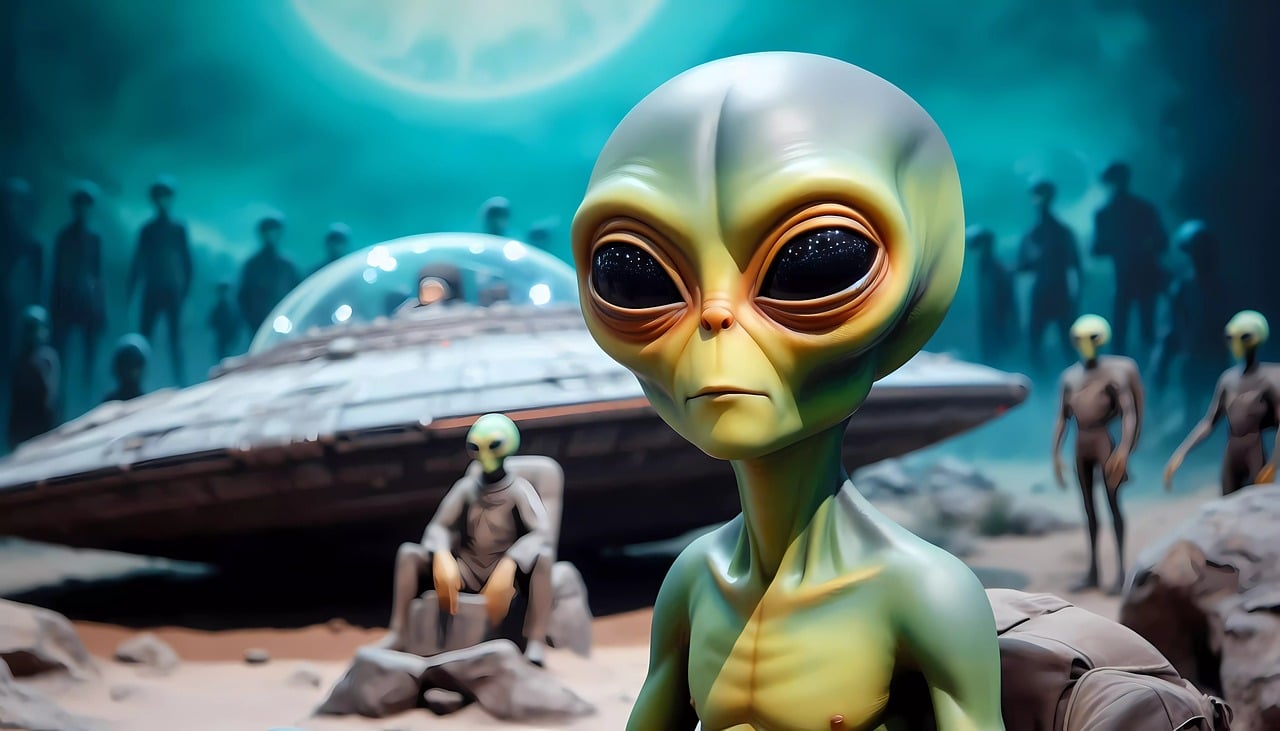
Credit: Image by myshoun from Pixabay

You might find it comforting that more Americans believe in aliens than Bigfoot. Or maybe not.

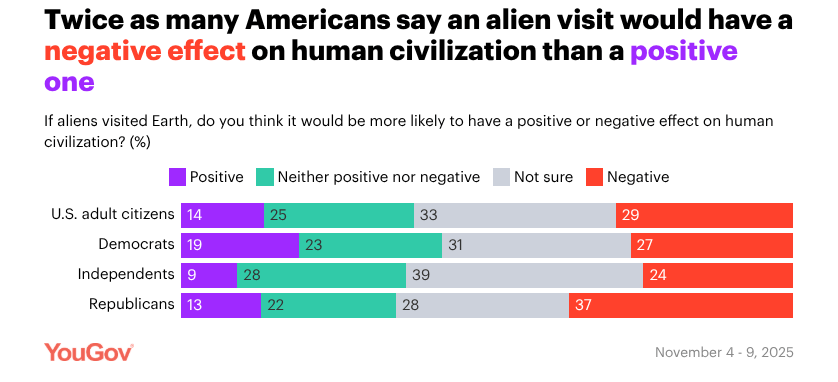
A recent YouGov poll found some interesting facts about Americans when it comes to aliens, including:

  • 56% of Americans believe aliens definitely or probably exist;
  • 47% of Americans believe aliens have definitely or probably visited Earth at some point.;
  • 29% of Americans an alien visit would have a negative effect on human civilization (see below);
  • 21% of Americans have seen something they thought was a UFO; and
  • Only 13% of Americans think the government would tell the public if it had evidence supporting the existence UFOs.

These negative feeling towards both aliens and the government seem to be reflected in most of the recent television series and movies. The new TV series Alien: Earth may be the most representative of this feeling, where the corporate tech geeks are the government and also believe they can control alien species. As with all things Alien, the mess is spectacular.

Check out the YouGov poll site for the full story.

Space Quote: Should We Worry About Space Monopolies?

Credit: Image by Jim Cooper from Pixabay

“The comparison I often like to make is with the East India Company: a private British enterprise that became so powerful it could shape the politics of nations and at times had an army twice the size of Britain’s. It began as trade; it ended in domination. Could a similar dynamic unfold locally in our solar system, where a handful of today’s tech giants and billionaires control access to orbit, communications, and eventually, extraterrestrial resources? A monopoly in space would be dangerous for humanity. The challenge is to encourage innovation and investment without ceding ownership of the cosmos to a few individuals or organisations.”

-Taken from a Guardian article titled “There’s a New Space Race – Will the Billionaires Win?” by Maggie Aderin-Pocock. One only needs to read the book series by Daniel Abraham and Ty Franck, starting with Leviathan Wakes, or watch the televised version, The Expanse, to have some idea of what the future may hold.