Executive Order to Ensure American Space Superiority

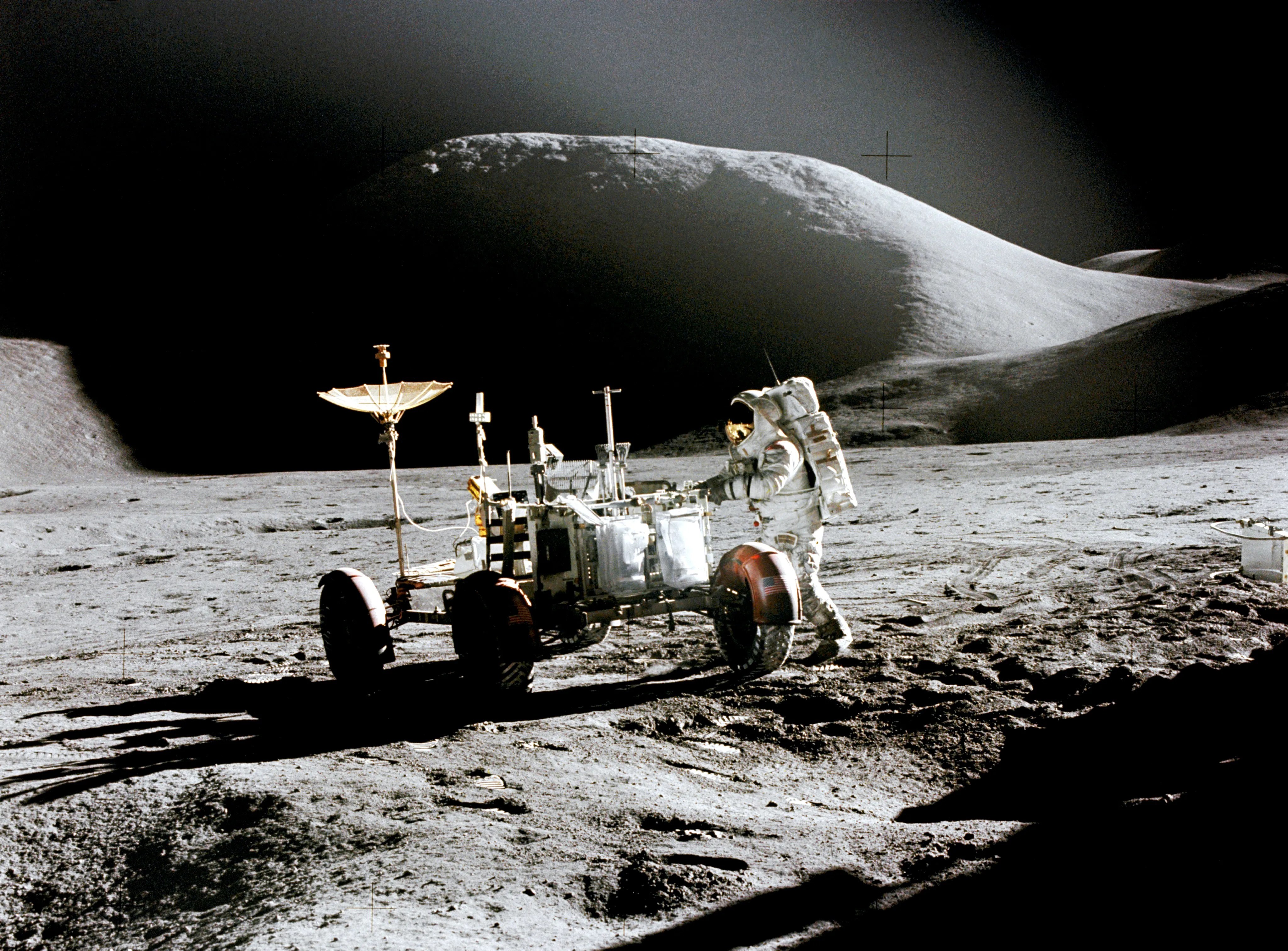
Image (Credit): Apollo Astronaut James B. Irwin, lunar module pilot, works at the Lunar Roving Vehicle during the first Apollo 15 lunar surface extravehicular activity (EVA) at the Hadley-Apennine landing site. (NASA)

Just as Jared Isaacman, NASA’s new Administrator, started to settle into his new post, the White House updated the nation’s space priorities.

A new executive order on Thursday, titled “Ensuring American Space Superiority,” provides clear goals for NASA, which includes:

  • Returning to the Moon by 2028, and the establishment of initial elements of a permanent lunar outpost by 2030;
  • Deploying of nuclear reactors on the Moon and in orbit, including a lunar surface reactor ready for launch by 2030; and
  • Spurring private sector innovation and investment by upgrading launch infrastructure and developing a commercial pathway to replace the International Space Station by 2030.

Adding nuclear reactors as its own goal seems a little odd since it could simply be wrapped into the first goal related to a permanent lunar outpost, but maybe this is just to kick regolith into the eyes of the Chinese who announced a similar intention.

Returning to the Moon by 2028 will certainly be a challenge, but luckily Administrator Isaacman is showing no favorites when it comes to meeting this goal. This week he made this statement about plans to return to the Moon:

I don’t think it was lost on either vendor that whichever lander was available first to ensure that America achieves its strategic objectives on the moon is the one we were going to go with.

His friend Elon Musk was certainly listening, but so far we have not heard him say that the new NASA Administrator has a 2 digit IQ. Of course, it has only been a few days, though the honeymoon is likely to be very short.

Final Gift Ideas: Memberships and Magazines

Okay, you are running out of time to buy the perfect gift. Yet you do not need to fret. You still have some good options for that friend or family member.

First, why not consider getting this person a membership in a space-advocacy organization. In this way, they can stay abreast of space news while also supporting an organization pushing (1) Congress for more space funding and (2) NASA in the direction of more exploration.

Here are three such organizations you can support:

All three space advocacy organizations also have great magazines for members.

And speaking of magazines, another option is to get this person an annual subscription to a space magazine. Here are some magazines covering astronomy that are worth considering.

I am not getting a red cent by endorsing any of these organizations and magazines, but it does make a lot of sense to consider these gift options. It is a quick and easy way to give a great gift while supporting those organizations that educate the public on space.

Happy shopping.

Space Quote: Another Theory Accounting for the Star of Bethlehem

Credit: Image by Vicki Hamilton from Pixabay

“A comet could stay in one place if it was basically on a ‘collision course’ with Earth,…That’s exactly what you would expect of an object that’s going to pass very, very close to the Earth.”

-Statement by Mark Matney, a planetary scientist at NASA, as quoted in Scientific American. He has proposed in his paper that the Star of Bethlehem cited in the Bible may have been a “broom star,” or comet, spotted by Chinese astronomers in 5 B.C.E. In his paper, he concludes “…it is no longer justifiable to claim that ‘no astronomical event’ could possibly have behaved in the manner described by Matthew.”

More Holiday Gift Ideas

Image (Credit): NASA Artemis Space Launch System. (Lego.com)

If you are still looking for the right gifts for that special space enthusiast, I have a few more ideas.

First, if this person likes to build things, how about something from Lego such as the NASA Artemis Space Launch System shown above?

If that is a little to much work, here are a few more suggestions:

If you are still looking after all of these options, I wish you good luck.

Credit: Vintage

Astronomy Question: The Demise of Skylab

Image (Credit): Skylab as it appeared to the final crew upon its departure. (NASA)

Two-Part Multiple Choice: 

Part 1: When the US space station Sklyab fell from the sky in 1979, what country was hit with falling debris?

    A. Argentina
    B. Australia
    C. New Zealand
    D. Papua New Guinea

    Part 2: What was the size of the fine that this country tried to impose on NASA as compensation for the falling debris?

    A. $400
    B. $40,000
    C: $4 million
    D: $14 million

    Take a guess and then check your answers by going to the “Astronomy Question Answer Sheet” page.