Is Ukraine Suggesting an End to US-Russian Cooperation in Space?

In a recent Washington Post editorial titled “How to Shut Down Putin’s War Machine,” Andriy Yermak, who is the head of the presidential office of Ukraine, states that Roscosmos should not be considered as a “neutral civilian institution.” He notes that the space agency helps to guide Russian missile strikes, so it is just another part of the military-industrial complex.

Mr. Yermak goes on to state that Roscosmos “…must be sanctioned in full and banned from cooperating with Western scientific and academic institutions.”

So how would this apply to the International Space Station (ISS), which is clearly a scientific endeavor?

Russia has already threatened to leave the ISS many times, so its departure is something that has been contemplated by the US and Russia. But here we are talking about about pushing them off the station. Will they take their components and head home? Is a partial station solely dependent on the whims of Elon Musk better than a fully-functional station with the Russians?

Of course, a hot war with Russia is something else. Recent threats by both Russia and the US regarding nuclear weapons has not been helpful, but little has really changed on the ground since the initial Russian invasion (much to President Putin’s chagrin).

It is not only Ukraine questioning the Russian presence on the station. Retired NASA astronaut Terry Virts, who served as a commander on the ISS, recently said this to Radio Free Europe:

Cooperating with the Russians on the ISS is like going on an Antarctic expedition with Nazis in 1943…It’s just morally reprehensible.

So far both nations have decided that the current arrangement is working, but that may not last forever if the current spat between the former Russian president and the current American president continue. That would be unfortunate with Russia’s program limping along and the US space program looking at drastic cuts.

The last thing we need is an empty space station orbiting the Earth as a memorial to our foolishness here on the ground.
Space Quote: ISS is Closed to Visitors at the Moment

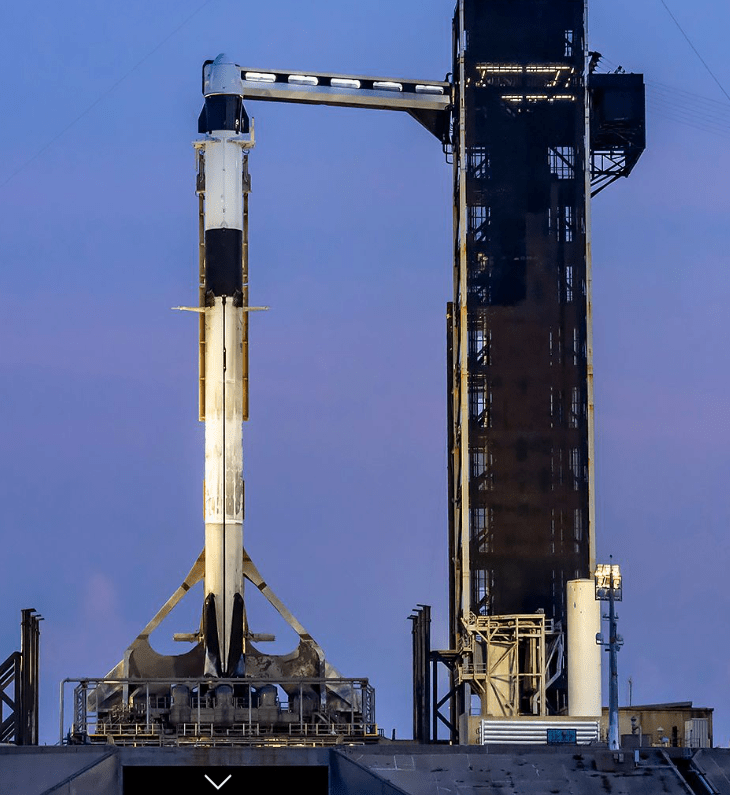
Image (Credit): Falcon 9 rocket on the lauch pad with Axiom Space’s Axiom Mission 4. (SpaceX)

“NASA and Axiom Space are postponing the launch of Axiom Mission 4 to the International Space Station. As part of an ongoing investigation, NASA is working with Roscosmos to understand a new pressure signature, after the recent post-repair effort in the aft most segment of the International Space Station’s Zvezda service module.”

Statement by NASA regarding an leak in the Russian section of the International Space Station (ISS) that has yet to be resolved. This may slow down some of the space tourism to the site, such as the already delayed Axiom Mission, but it is more important to get this right rather than risk additional lives on the station. Axiom Space stated that the launch of the mission will be no earlier than June 19.

Protect NASA Astrobiology Research

Image (Credit): Artist’s conception of a planetary lineup showing habitable-zone exoplanets with similarities to Earth, featured on the far right. (NASA/Ames/JPL-Caltech)

The astrobiology community is looking for individuals to show their support for NASA’s efforts in this area. In a white paper highlighting the benefits of astrobiology research, some of the key points are:

  • Preserve Astrobiology Leadership: Astrobiology is a pillar of NASA’s mission with a storied legacy that must be safeguarded.
  • Unprecedented Discoveries Ahead: Mars, Ocean Worlds, and exoplanet missions in the coming decades could finally answer one of humanity’s most profound questions: “are we alone?
  • Public Passion and Impact: The public passionately supports the search for life – a pursuit that inspires, unites, and advances STEM engagement.
  • NASA’s Unique Role: NASA’s unique capabilities and infrastructure position it as a leader in astrobiology, working in collaboration with U.S. academia and industry to advance this field.
  • Preserve Astrobiology at Its Peak: Astrobiology is thriving; workforce and research funding reductions must not derail our best chance to find life beyond Earth.

At a time of unprecedented threats to NASA’s program and mission, it is important to send a message to Congress and others that we have just begun to understand the universe and its potential for other forms of life, and now is not the time to back away.

The paper notes:

As NASA navigates the administration’s government-wide workforce optimization initiative, it is vital that we do not undermine astrobiology research – a field at the very heart of our agency’s purpose and future. Acting leadership has rightly stated that any reductions must align with mission needs. Few needs are more central to NASA’s science mission than understanding life’s existence beyond Earth.

The same site provides a link to an endorsement page.

I expect this is one of many initiatives to bring attention to the threats facing our space program. It is true that some efficiencies can be found in government with the right level of analysis and careful consideration of existing programs (as has been done in the past), but that is not happening right now with the random and unexplainable cuts.

U.S. Postal Service Stamps Highlight JWST Images

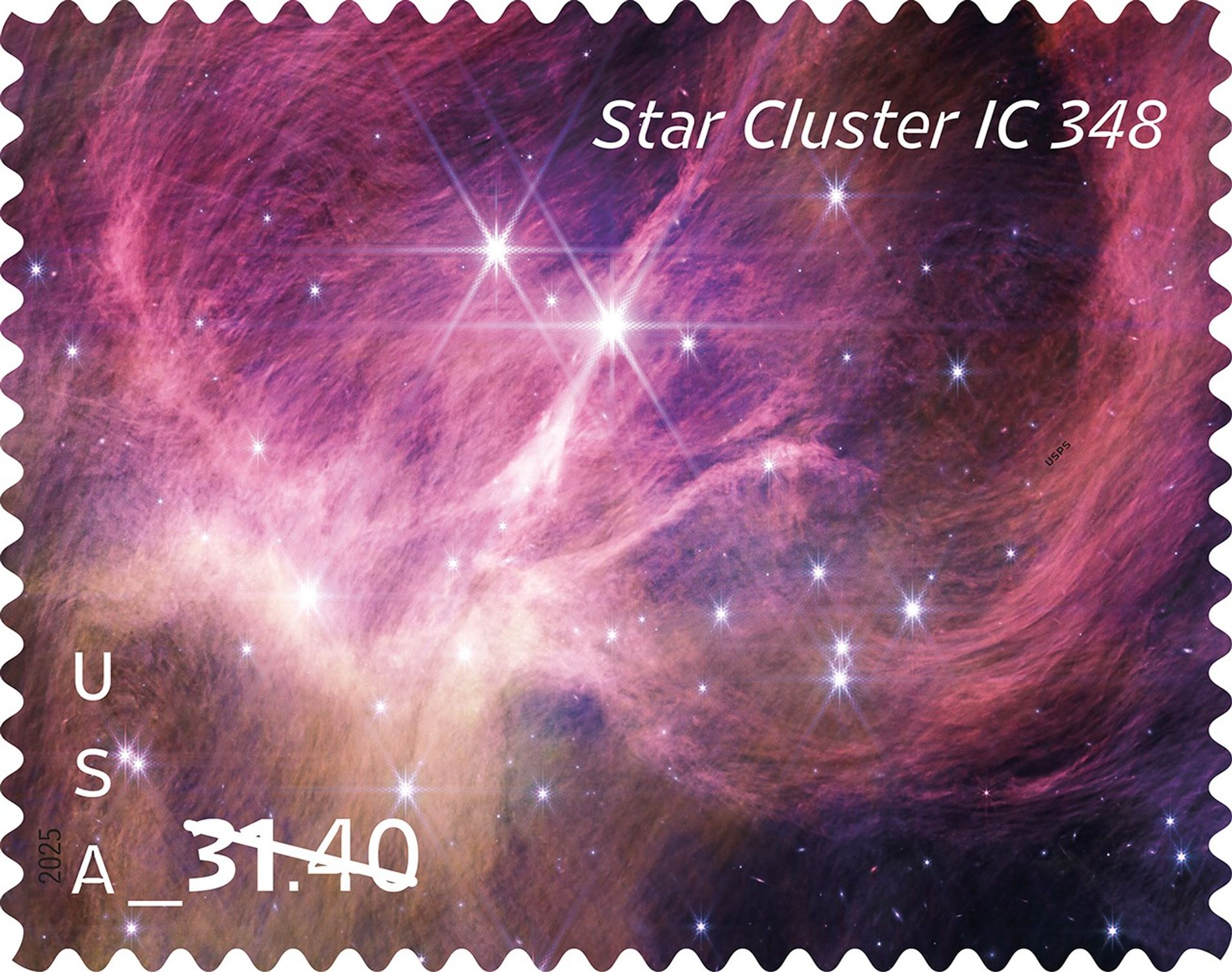
Image (Credit): The U.S. Postal Service stamp featuring an image of star cluster IC 348 from NASA’s James Webb Space Telescope. (U.S. Postal Service)

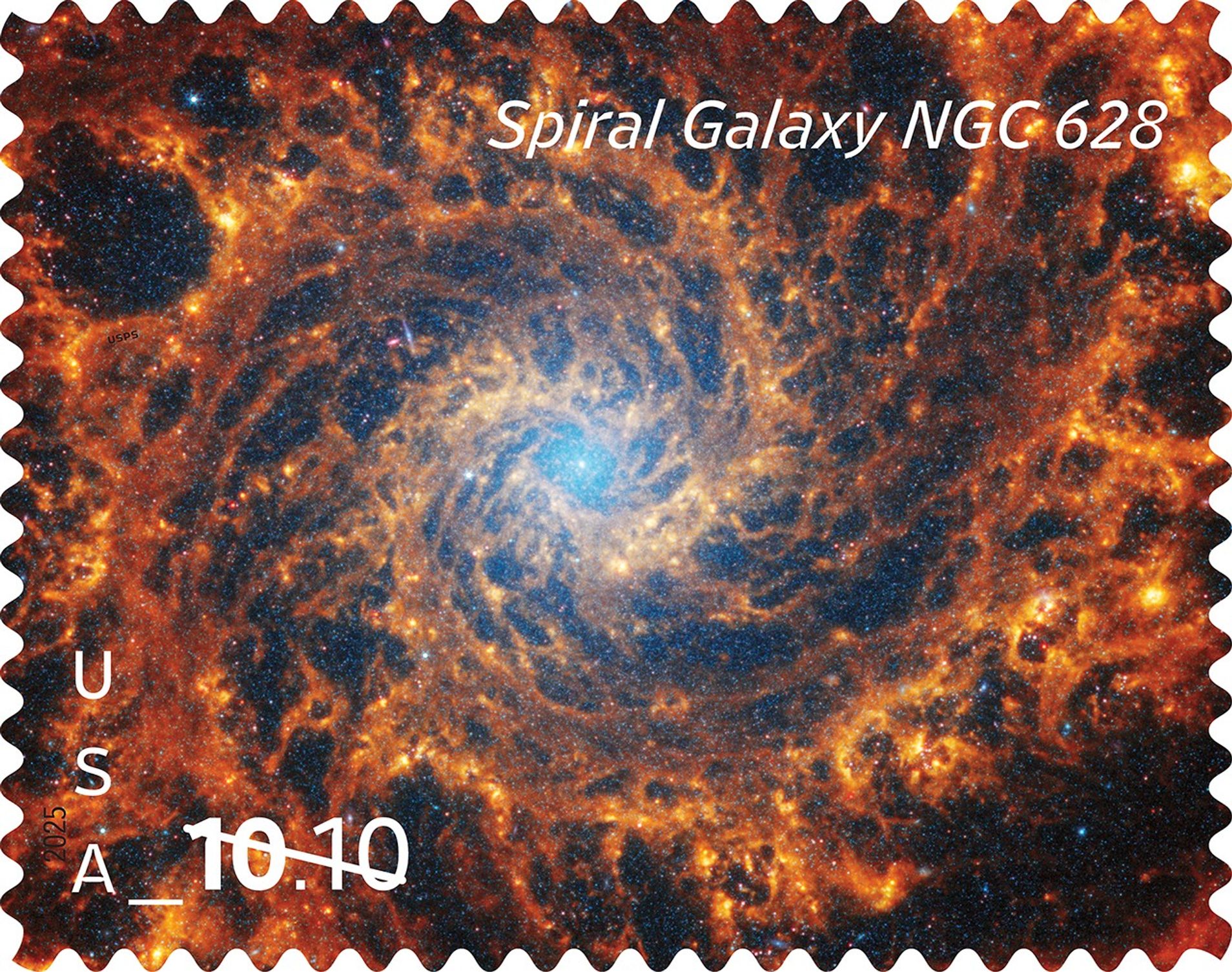
The U.S. Postal Service is honoring NASA again with a set of stamps highlighting images captured by the James Webb Space Telescope (JWST) – star cluster IC 348 (above) and spiral galaxy NGC 628 (below).

Regarding star cluster IC 348, NASA notes:

The wispy curtains filling the image are interstellar material reflecting the light from the cluster’s stars – what is known as a reflection nebula. This scene is located 1,000 light-years from Earth in the constellation Perseus.

Regarding spiral galaxy NGC 628, NASA explains:

Webb’s observations combine near- and mid-infrared light to reveal glowing gas and dust in stark shades of orange and red, as well as finer spiral shapes with the appearance of jagged edges. This galaxy is located 32 million light-years away in the constellation Pisces. 

I would have preferred these stamps were regular first class forever stamps so that they would grace personal letters and birthday cards traveling to every corner of this country, but this is a nice gesture however you look at it.

Image (Credit): The U.S. Postal Service stamp highlighting an image of the spiral galaxy NGC 628 from NASA’s James Webb Space Telescope. (U.S. Postal Service)

Movie Quote: Not Such an Alien World

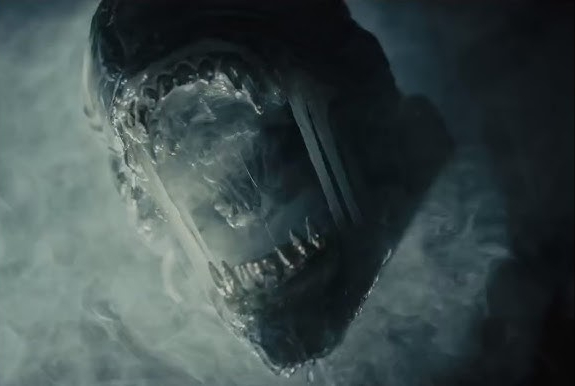
Image (Credit): A scene from the movie Alien: Romulus. (20th Century Studios)

The production design harkens back to both Scott and Cameron’s ALIEN movies. It’s a world we recognize so there’s not much new world-building except for the brief glance at an active mining colony. What’s different is the cinematography by Galo Olivares…ALIEN: ROMULUS works as a stand-alone movie, and is probably a better experience if you come in cold, without any knowledge of the franchise. ALIEN fans bring in too much baggage and rarely can we be satisfied.”

-Statement by movie critic Lupe R Haas in her recent review of the film Alien: Romulus.