The Internet Satellite Race Continues, Almost

Amazon hopes to challenge SpaceX’s Starlink system, but not just yet.

The launch planned for earlier this week place 27 internet satellites into orbit as part of Amazon’s Project Kuiper was scrubbed at the last minute. The United Launch Alliance (ULA) launch, scheduled for last Wednesday, was delayed due to bad weather.

If all goes according to plan, Project Kuiper will have about 1,600 satellites in orbit by the middle of next year. That would mean about 80 launches over that period, which seems somewhat unlikely given ongoing delays. In addition to ULA launches, Amazon is booking launches with Arianespace, Blue Origin, and SpaceX. When the project is complete, about 3,200 Kuiper internet satellites will be in orbit.

The Kuiper satellites will compete head-to-head with SpaceX’s Starlink (with its goal of 42,000 satellites) and China’s SpaceSail (with its goal of 15,000 satellites).

A new launch date for the first launch of the Kuiper internet satellites has not been announced yet.

Update: I forgot to mention another competitor – Eutelsat’s Oneweb in the European Union, which already has about 650 Internet satellites in Low Earth Orbit.

Second Update: This story, “Telecommunications Satellites and Space Exploration,” has a nice summary about how we arrived at the current moment with our satellite technology as well as what the future may hold.

Successful Launch of the CST-100 Starliner

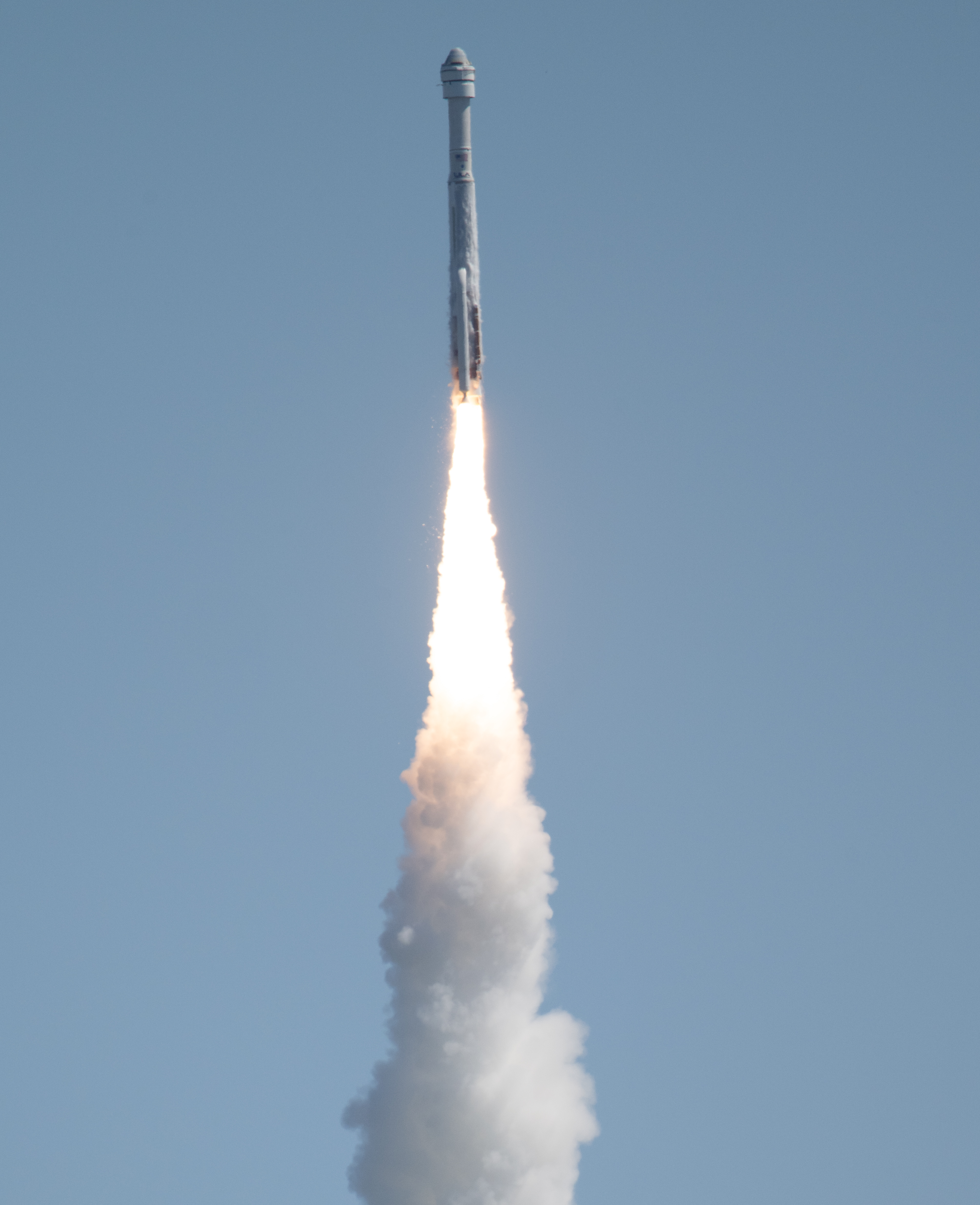
Image (Credit): The launch of Boeing’s Starliner earlier today from Cape Canaveral Space Force Station. (NASA/Joel Kowsky)

Boeing’s CST-100 Starliner launched earlier today (June 5) on a United Launch Alliance Atlas V rocket from Space Launch Complex-41 at Cape Canaveral Space Force Station in Florida.

Astronauts Butch Wilmore and Suni Williams are now safe in orbit on their way to the International Space Station (ISS). They will dock at the ISS tomorrow afternoon.

Boeing’s Starliner is the second graduate from NASA’s Commercial Crew Program, which also includes SpaceX.

You can read more about the Starliner mission and upcoming events at this NASA site.

Update: The two astronauts arrived safely at the ISS safely on Thursday (June 6), though there were some issues with the Starliner’s thrusters.

Image (Credit): Logo for NASA’s Commercial Crew Program. (NASA)

Bad News for Latest US Moon Mission

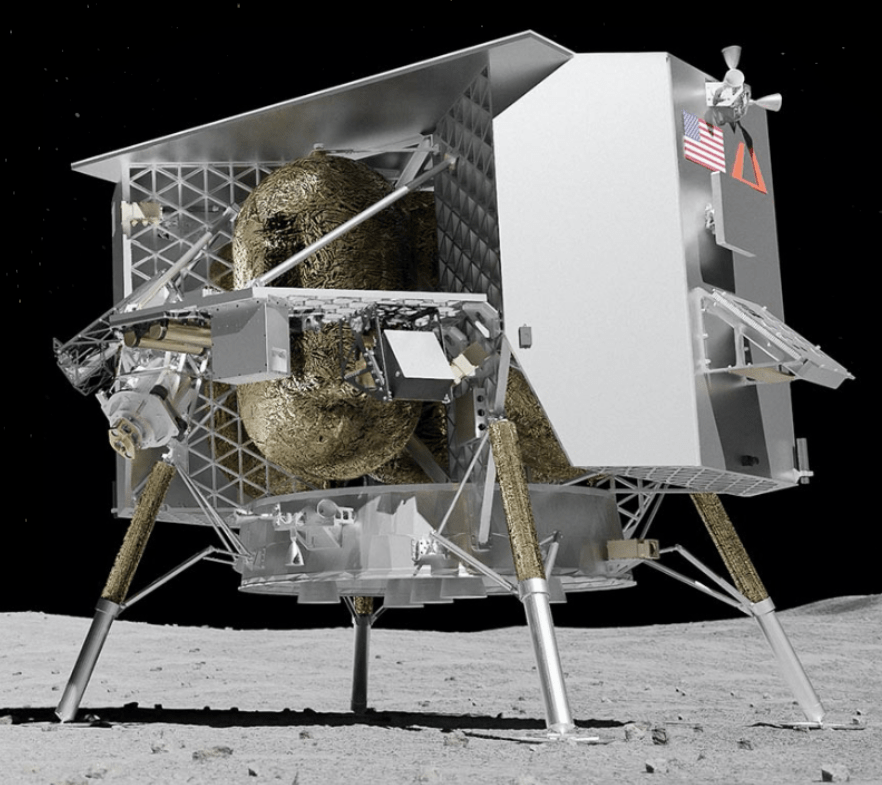
Image (Credit): Planned flight of the Peregrine lunar lander. (Astrobotic)

We started with high hopes, yet a problem has already threatened the success of Astrobotic’s mission to the Moon. Shortly after a successful lift off earlier this morning, the Peregrine lunar lander started reporting issues with its propulsion system, which impacted its ability to charge its batteries. Fortunately, the charging issue was resolved, yet the propulsion issue is still outstanding.

Astrobotic is already talking about a modified mission. Noting the loss of propellant, the company stated:

The team is working to try and stabilize this loss, but given the situation, we have prioritized maximizing the science and data we can capture. We are currently assessing what alternative mission profiles may be feasible at this time.

That sounds pretty ominous at this point when the final goal is the Moon. The US mission is starting to look like two other lunar missions that failed last year – one Japanese and one Russian – yet those happened on the Moon’s surface. If the Peregrine can stay in the Moon’s orbit then maybe it can get a few things accomplished.

If there is any good news, it is that the United Launch Alliance (ULA) Vulcan rocket appeared to operate as expected. That means the folks at ULA and Blue Origin can sleep a little better tonight.

I do not expect the Astrobotic people will have a good night’s sleep for some time.

The US Aims to be Back on the Moon Next Month

Image (Credit): Astrobotic’s Peregrine lunar lander. (Astrobotic)

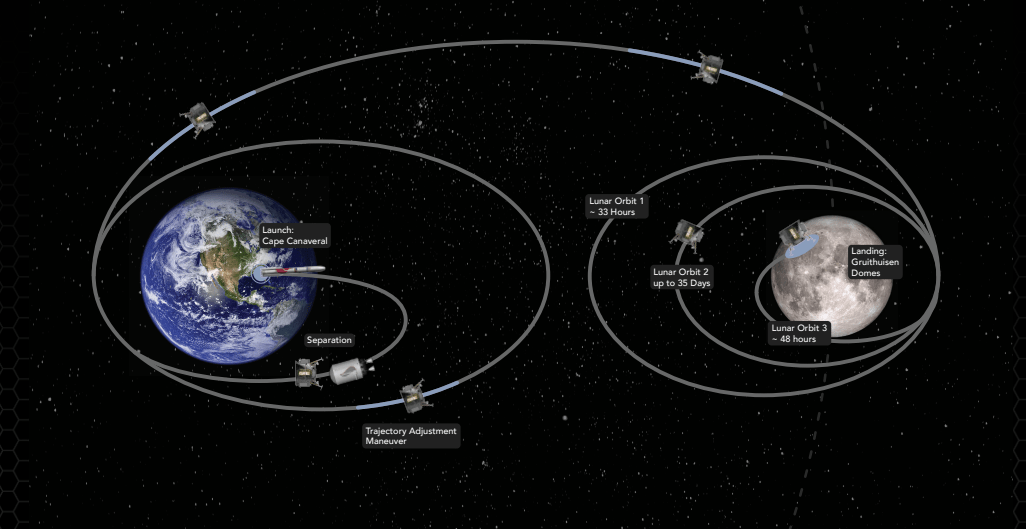
After ending launches to the Moon’s surface more than 50 years, NASA is funding a lunar mission that launches tomorrow morning. United Launch Alliance (ULA) will be using its new Vulcan rocket to launch the Astrobotic mission towards the Moon. ULA, as noted earlier, has a lot riding on this new rocket as it seeks a buyer. Blue Origin will also be watching events closely as the manufacturer of the Vulcan rocket engines.

This is a milestone for the U.S. as well as Astrobotic, which will be the first private company to reach the Moon’s surface if everything goes without a hitch. The Pittsburgh-based company plans to place its Peregrine lunar lander on the Moon’s surface at Sinus Viscositatis (Bay of Stickiness). The company notes that the Peregrine Mission One (PM1) “…is carrying 20 payloads (cargo) from governments, companies, universities, and NASA’s Commercial Lunar Payload Services (CLPS) initiative.” The NASA payloads are shown below.

The Peregrine lunar lander is not expected to land on the Moon’s surface until February 23rd. The delay will allow sufficient sunlight to be present at the landing site.

Fingers crossed that all goes well tomorrow morning.

Rocket Launches: Good and Bad News for Lunar Launches

Image (Credit): Chandrayaan-3 launch on July 14, 2023. (Aijaz Rahi/AP)

First, the good news is that India successfully launched a rocket to the Moon last Friday. The Chandrayaan-3 mission, or “moon craft,” includes an orbiter as well as a rover that will explore the southern pole of the Moon. This is India’s second attempt to land on the lunar surface after a failed attempt back in 2019.

The Indian rover is expected to land on the Moon on August 23rd. You can read more about the mission on the Indian government’s mission page.

The other rocket news involves a setback with the United Launch Alliance’s (ULA) new heavy-lift rocket. The launch of the new rocket, the Vulcan Centaur, was delayed until later this year after it was determined that “minor reinforcements” were still needed with the rocket’s upper stage. The upper stage failed back in March.

The Vulcan Centaur is the successor to ULA’s Atlas V and Delta IV rockets. It’s planned first launch includes Astrobotic’s Peregrine Lunar Lander (shown below). NASA notes that the lander’s scientific objectives for the upcoming Moon mission include:

…to study the lunar exosphere, thermal properties and hydrogen abundance of the lunar regolith, magnetic fields, and the radiation environment. It will also test advanced solar arrays. 

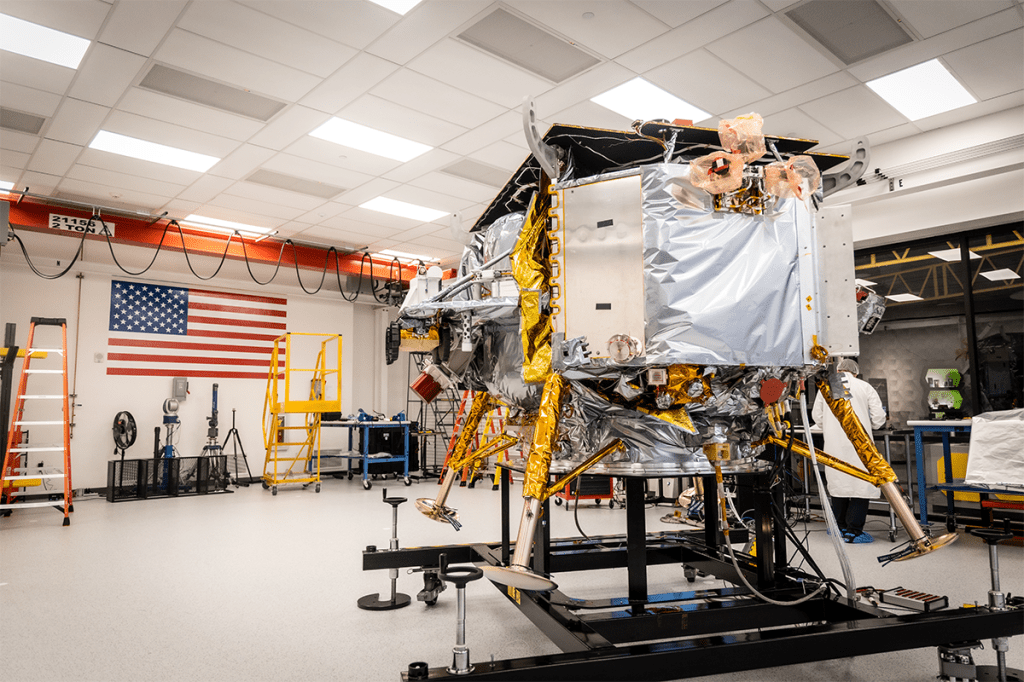
Image (Credit): Newly assembled Peregrine lunar lander being readied for its journey to Florida for integration with the Vulcan Centaur. (Astrobiotic)