Video: Plans for the First Commercial Space Station

If you are eager to understand what comes after the International Space Station (ISS), you might enjoy Vast’s video showing plans for the Haven-1 and Haven-2 missions as well as other future projects.

Vast’s Haven-1 is a single-module station expected to be launched in May 2026. Once Haven-1 is in orbit, four crew members will be launched to the Haven-1 station via a SpaceX Dragon for a two-week mission. This will be the first real test of the new commercial space station module, which is expected to stay in orbit for three years so three additional crews can visit and conduct research and even manufacture in space.

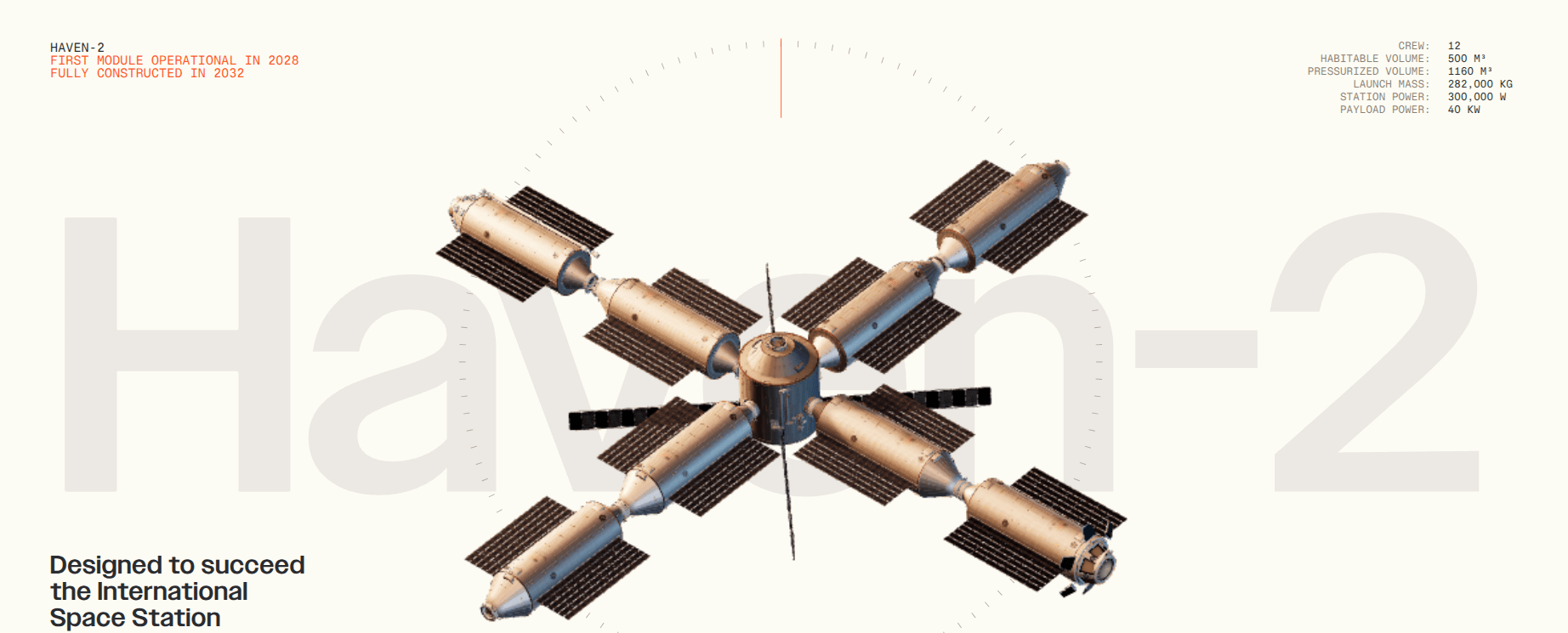
Haven-2 will follow with a larger module. The plan is to link a series of modules to create an expanded station (see image below). The construction of Haven-2 is expected to be underway while the ISS goes out of service in 2030.

Vast is one of numerous companies hoping to fill the gap left by the departing ISS. Whether it is selling seats to NASA scientists, commercial entities, or space tourists, this American company based in California sees a future in space stations.

Watching NASA on Netflix

Credit: NASA

I’m glad to hear that NASA is working with Netflix to expand the amount of space stories available to the public.

This summer Netflix will make NASA+ live programming available to its customers, meaning more of the public can watch interviews with astronauts, the launch of space missions, and the happenings aboard the International Space Station (ISS). NASA also has plenty of entertaining videos about astronomy, various space missions, and more.

For example, Netflix customers will have access to content such as the launch of Russia’s Progress 92 Cargo Craft from the Baikonur Cosmodrome in Kazakhstan to the ISS on July 3rd, as well as the docking of this cargo craft with the ISS on July 5th . Or how about NASA videos, such as “Other Worlds: Europa“?

Of course, all of this is already available to the public for free on NASA’s website, but maybe this can draw in those eager viewers searching around for something to watch and not already aware of the website.

Any attempts to bring more attention to NASA’s amazing science and ongoing discoveries is good publicity as well as great programming.

Video: Cosmic Dawn: The Untold Story of the James Webb Space Telescope

Image (Credit): Ongoing work to make the JWST a reality. (NASA)

If you are looking for some inspiration about the US space program, you might want to watch this NASA video, “Cosmic Dawn: The Untold Story of the James Webb Space Telescope.”

As the NASA site explains:

Go behind the scenes with the dedicated NASA team and its partners to uncover the untold story of the James Webb Space Telescope. “Cosmic Dawn” unveils the immense challenges, groundbreaking innovations, and extraordinary efforts behind humanity’s most powerful eye on our universe, from its complex development to its nail-biting deployment a million miles away.

This is what it takes to explore our universe, and I only hope we can continue to maintain the stamina, skills, and public support to maintain the JWST and initiate similar programs.

It may be time to write to Congress and let them know that America needs more of this grit and determination, not less.

Video: The Dark Forest

Credit: Image by Yol Gezer from Pixabay.

And now for something really different. If you are tired of national politics, maybe its time to talk about the extinction of all life in our solar system. Just for a change of topic, of course.

The Cool Worlds Lab has an interesting video titled “Why I Don’t Buy The Dark Forest Hypothesis” that picks apart this idea that technologically advanced species throughout the galaxy are hiding from one another out of the fear that once detected they may be destroyed. You may remember the term Dark Forest from a book of the same title by Chinese writer Liu Cixin.

Its a good discussion of the hypothesis, with plenty of diagrams mapping out a civilization’s decision to either reply to, ignore, or attack a newly discovered civilization trying to communicate.

I don’t want to spoil everything, but the bottom line is that it is probably too late for us to worry about this anyway. First, we have already sent out plenty of electronic messages as well as messages intended for alien civilizations. But more importantly, the James Webb Space Telescope is showing us that a silent civilization on a distant exoplanet can still be detected as we investigate that exoplanet’s atmosphere. So if a dangerous distant civilizations was seeking out other planets with life that it could destroy, the Earth has been telegraphing life for more than 3.5 billion years.

Check it out and learn more about the hypothesis and the arguments for and against it.

Video: Andor Versus Star Trek

Credit: Reason Magazine.

If you are watching the Star Wars series Andor on Disney+, you are well aware of the dark workings of the imperial bureaucracy as it crushes the spirit of its citizens.

Reason magazine, always a proponent of less government, has created a fun video that highlights the realistic nature of the bureaucracy in Andor versus the overly-optimistic Star Trek universe where competence and teamwork save the day every time.

I am not saying the Star Trek universe lacks bureaucracy. In fact, more often than not the Enterprise crew is breaking those rules to accomplish their mission. Yet the sheer incompetence of both the rebels and imperial overmasters in Andor is noteworthy, and it that way all the more human.

Take a look at the Reason video yourself and make up your own mind.

Enjoy.