Source/Credit: The telescope domes on the roof of the Vatican Observatory, at the Apostolic Palace in Castel Gandolfo from Andreas Solaro/AFP via Getty Images.
Just in case you missed it, I recommend you read NPR’s June 2021 article, “The Vatican’s Space Observatory Wants To See Stars And Faith Align.” You can read about the interplay of astronomy and the Catholic Church. For instance, did you know the idea of the Big Bang originated with a Belgian priest? Or that the Vatican Observatory coordinates with NASA on space issues?
You can learn more from the article. You might also want to visit the Vatican Observatory’s website or listen to one of the podcasts from the Observatory.
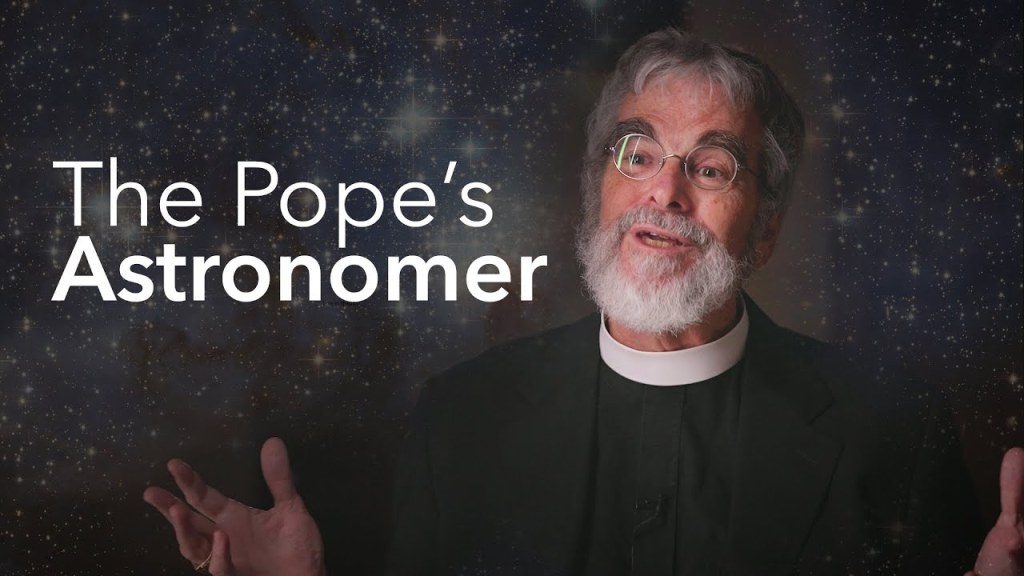
Click the image of Brother Guy Consolmagno for a video.
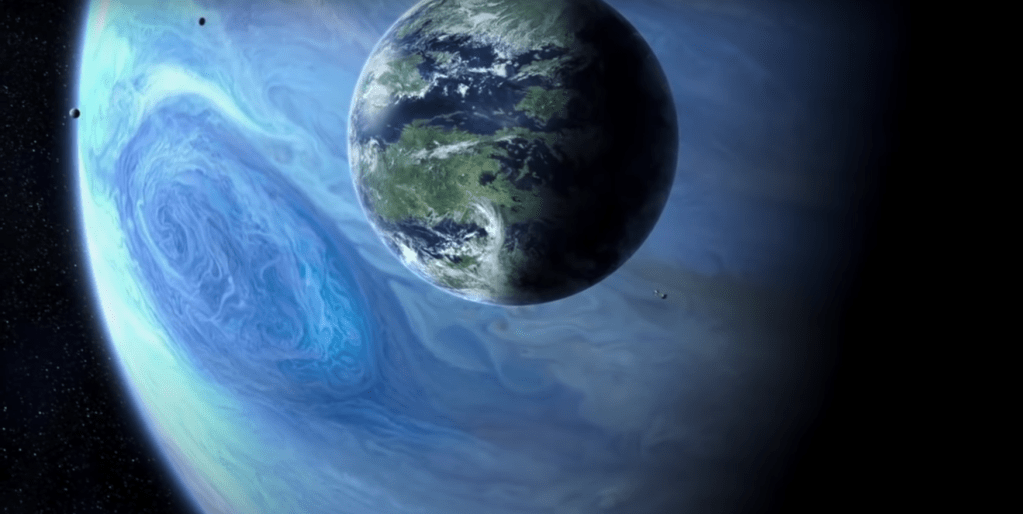
We have located exoplanets (planets around other suns) and even free-floating planets (planets without a sun), but what about exoplanet moons? A recent video from the YouTube channel Cool Worlds titled “We Discovered a New Exomoon Candidate! A Survey of 70 Cool Gas Giants,” discusses efforts by the Cool Worlds Lab to find these new moons. The Cool Worlds Lab, based at the Department of Astronomy, Columbia University, is a team of astronomers seeking to discover and understand alien worlds, particularly those where temperatures are cool enough for life, led by Professor David Kipping.
In this video, Professor Kipping discusses his lab’s discovery of exomoon Kepler-1625b-I in 2018. This is a Neptune-sized moon orbiting a Jupiter-sized planet that orbits about the same distant from its star as Earth orbits from our Sun. The video goes into the lab’s “Cool Giant Exomoon Survey” to locate additional exomoons orbiting Jupiter-sized cool giants further out from the host star. I do not want to give away the findings since you can see this for yourself, but it can be safely stated that a new exomoon candidate has been located (and shared in Nature). The exomoon’s designation is given away in the article’s title, so the secret is out.
Check out the Cool Worlds YouTube page for other fascinating videos.
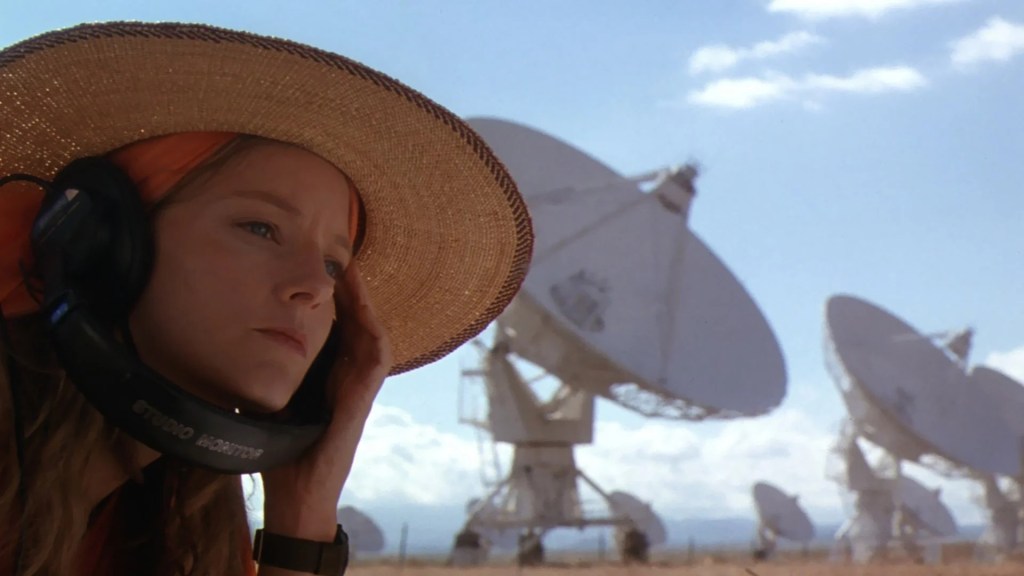
Years ago, two spacecraft exited our solar system at about 35,000 miles per hour with a message to anyone who finds them detailing our location in the galaxy, the beauty of the Earth, and our culture in terms of warm wishes, music, and natural sounds. Crafted by Carl Sagan and others, the golden discs or records placed on Voyager I and II also contains instructions on how to read the material. And thanks to the site Open Culture, we can learn more about how one would unravel these instructions. It reminds me of Jodie Foster’s character in the movie Contact as she tried to interpret signals being received from afar. I recommend you check out the two videos that are part of the “How to Decode NASA’s Message to Aliens” page.
Source: Jodie Foster in Contact from Warner Bros. Pictures.



 Our Awesome Universe