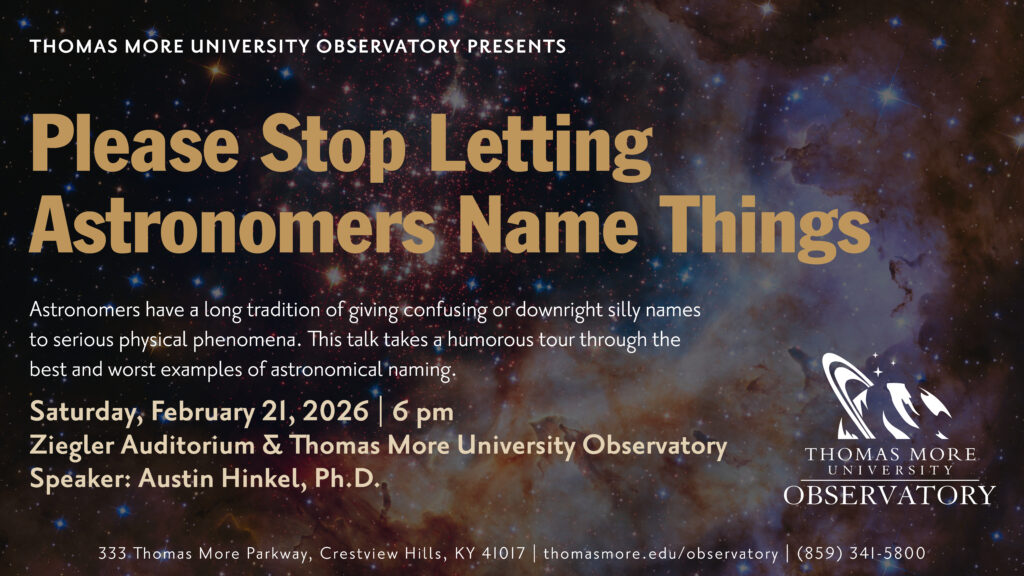
If you happen to be in Kentucky in late February, you may want to visit Thomas More University’s Observatory for a special lecture on astronomy. The lecture is titled “Please Stop Letting Astronomers Name Things,” and it will occur on Saturday, February 21st at 6pm.
Here is the write up for the talk:
From planetary nebulae to spaghettification, astronomers have a long tradition of giving confusing, misleading, or downright silly names to serious physical phenomena. This talk takes a humorous tour through the best and worst examples of astronomical naming. Along the way, we’ll see how names can clarify ideas, confuse students, and occasionally make astronomers cringe.
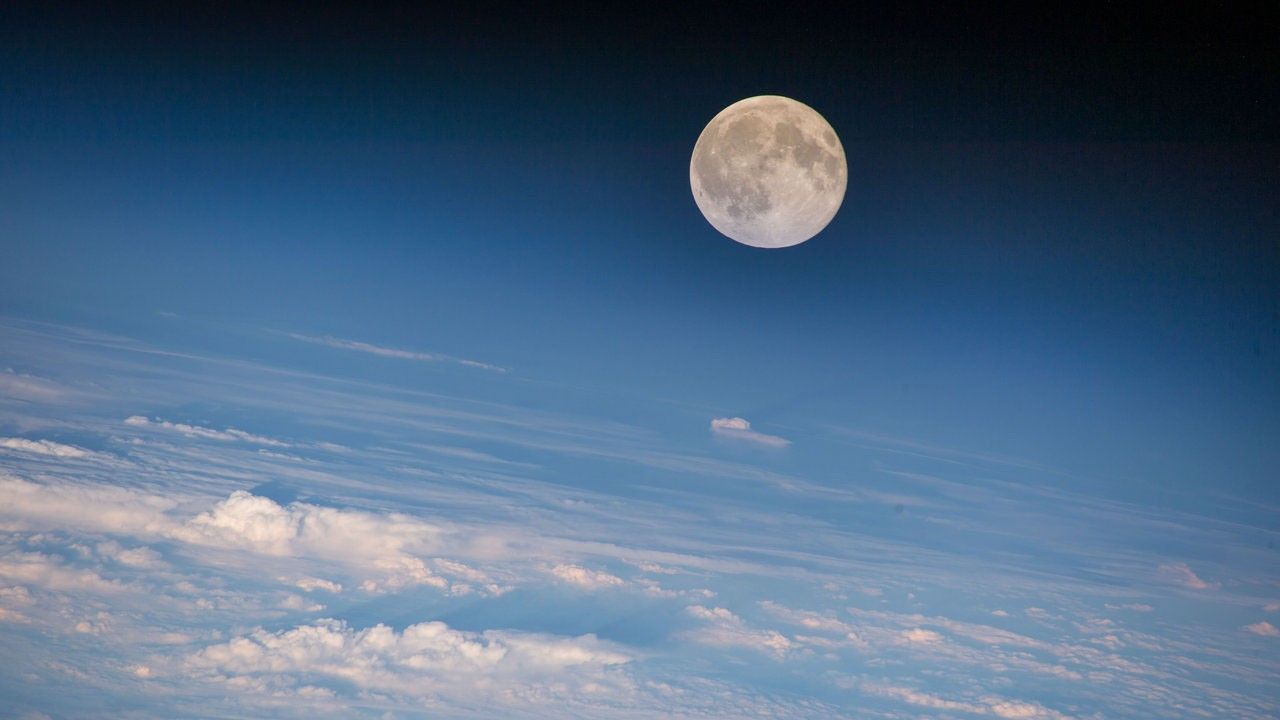
A long-standing idea in planetary science is that water-rich meteorites arriving late in Earth’s history could have delivered a major share of Earth’s water. A new study by Universities Space Research Association (USRA) and University of New Mexico argues that the Moon’s surface record sets a hard limit on that possibility: even under generous assumptions, late meteorite delivery since about 4 billion years ago could only have supplied a small fraction of Earth’s water...In a paper published in the Proceedings of the National Academy of Sciences, researchers led by Dr. Tony Gargano at USRA’s Lunar and Planetary Institute and the University of New Mexico analyzed a large suite of Apollo lunar regolith samples using high-precision triple oxygen isotopes. Earth has erased most of its early bombardment record through tectonics, and constant crustal recycling. The Moon, by contrast, preserves a continuously accessible archive: lunar regolith, the loose layer of debris produced and reworked by impacts over billions of years
The four astronauts who will soon become the first humans in more than half a century to fly on a lunar mission have begun the quarantine process – a crucial sign that NASA believes a launch could be imminent. Sequestering themselves away from others for the next several days ensures that the three Americans and one Canadian selected for a mission known as Artemis 2 are at low risk of becoming sick and jeopardizing the mission. The crew members have entered quarantine in Texas as NASA makes final preparations in Florida to ready the towering rocket that will get the mission off the ground as early as February.
The Long March 3B departed Xichang Satellite Launch Center in southwest China at 11:55 Eastern (1655 UTC) on January 16. Amateur footage confirmed the rocket left the pad on schedule. Then came silence. The China Aerospace Science and Technology Corporation (CASC) waited nearly 12 hours before acknowledging what observers already suspected. “The specific cause is under further analysis and investigation,” state media Xinhua reported…Less than 12 hours after the Long March 3B failure, Galactic Energy attempted something the company had been working toward for months: the first flight of its Ceres-2 rocket. After repeatedly postponed launch windows, the solid-fueled rocket finally lifted off from Jiuquan Satellite Launch Center at 11:08 p.m. Eastern on January 16 (0408 UTC, January 17). It didn’t work. Galactic Energy confirmed an anomaly had occurred and that investigation was underway.
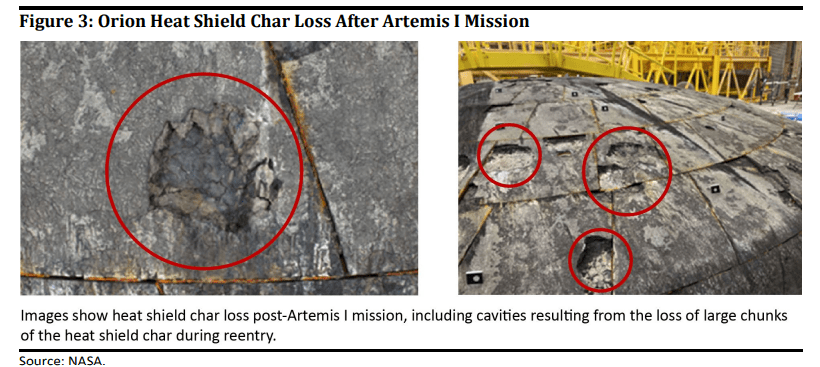
Credit: Taken from a 2024 NASA Office of the Inspector General report – NASA’s Readiness for the Artemis II Crewed Mission to Lunar Orbit (IG-24-011)
“What they’re talking about doing is crazy…We could have solved this problem way back when…Instead, they keep kicking the can down the road.”
-Statement by former astronaut Charlie Camarda, who does not believe the upcoming Artemis II mission is safe for the astronauts given his concerns about the Orion’s heat shield, as quoted by CNN. The news story cites others who state that the Orion heat shield issue has been resolved and the mission is ready to go. The Artemis II mission is set to launch as early as February 6th.
It is that time of year to look back at the science fiction movies of 2025 and determine which ones were really bad. We might as well go through this process because I cannot remember any that were really good, particularly in the area of space adventures.
You may be surprised to see a Star Trek film among the contenders, but you would not be if you actually watched it. It was an embarrassment for the franchise to show something like this. The story line made no sense, the acting was horrendous, the special effects and music were subpar, and the only words that came to mind were “Section 8,” that retired military term for those diagnosed with a psychiatric condition.
Section 31 was originally planned as a spin-off television series from Star Trek: Discovery, but instead it was released as a film. I cannot image any of this as a series. At least with a movie it is once and gone, rather than a continuing open wound.
I am just happy that the Star Trek creative team spent its time and money on the new series Star Trek: Starfleet Academy. While the new series is not perfect, it has heart and closely follows the expected story line. In the case of Section 31, I cannot remember anything that tied it to the larger Star Trek story line other than one Starfleet character who was not really much of a character at all.
Of course, one could argue that the Federation entity Section 31 was all you needed as a tie-in, but the role of this group was never properly explained within the overall Star Trek universe. Anyone wandering into this film would not understand the basics and hopefully left the room before experiencing any real brain rot.
But wait, there’s more. If you thought that actress Michelle Yeoh would save the movie, you can forget that idea. In fact, she was nominated for Worst Actress. Section 31 was also nominated for Worst Supporting Actress, Director and Screenplay.
I think it would be best if we all pretend the movie never existed and get on with our lives. Looking back is just too painful.
Image (Credit): Some of the characters from Star Trek: Section 31. (Paramount+)
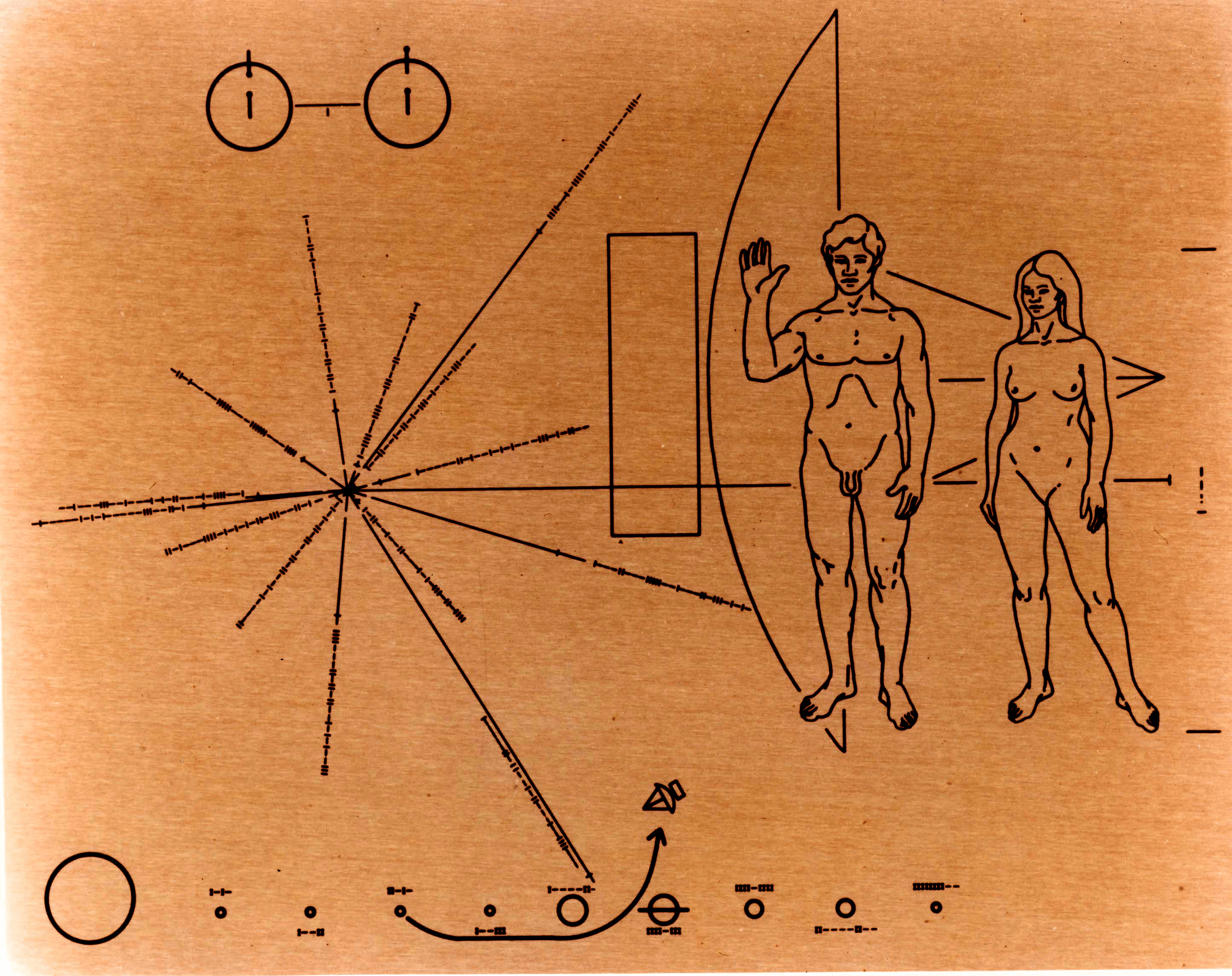
Image (Credit): The visual message on the Pioneer 10 and 11 plaques. (NASA Ames)
On this day in 2003, NASA heard its last message from Pioneer 10, the Jupiter space probe. Launched in 1972, it was the first spacecraft to cross the asteroid belt between Mars and Jupiter on its way to the outer planets. It is also one of only five spacecraft to leave our solar system.
If all goes well, in about 2 million years the Pioneer 10 spacecraft will encounter the star Aldebaran. Maybe some civilization in that solar system will be arguing about this object floating through the neighborhood the way we have argued about the origins of the interstellar object we call 3I/ATLAS.
Image (Credit): Mission patch for Pioneer 10 and 11. (NASA)




 Our Awesome Universe