The End of the Atlas V Rocket

Credit: ULA

Tomorrow’s launch of a classified US Air Force payload will be the last use of the United Launch Alliance (ULA) Atlas V rocket for such missions. It will the rocket’s 100th national security launch.

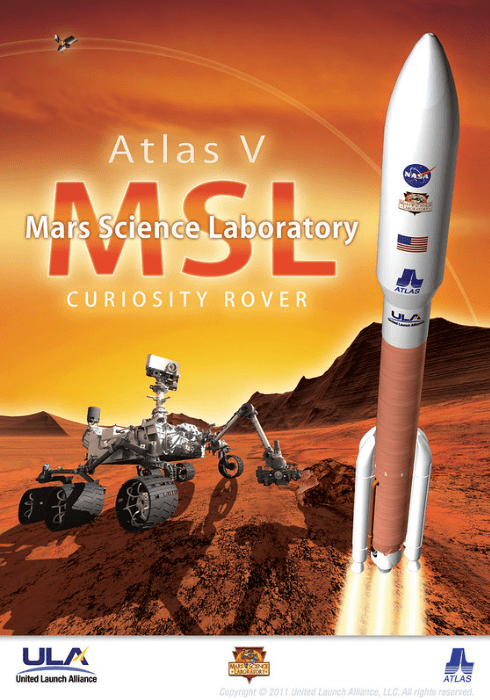
The Atlas rocket, first built in 1957, is America’s longest-serving active rocket. Over the years, the rockets have launched numerous critical government and commercial missions, including NASA missions. For instant, it sent NASA’s Curiosity Rover to Mars. Most recently it sent the Boeing Starliner to the International Space Station (now the Starliner needs to find its own way back).

More Atlas V missions are planned even with the absence of national security missions, but the ULA’s focus is turning towards its new Vulcan rocket, which is still being tested.

The era of the Atlas rocket is quickly coming to a close.

Things To Do: Maine Solar System Model

Credit: University of Maine at Presque Isle

If you are looking for something fun in a slightly cooler climate this summer, you may want to venture to the Maine Solar System Model. Its a joint science project created by the University of Maine and northern Maine communities.

Built between 1999 and 2003, this model allows you to better understand the distances between planets as you drive around the Maine countryside, starting with a model of the Sun in the north or Pluto about 40 miles to the south. You can also visit the dwarf planet Eris about 55 miles south of Pluto if you want to be adventurous.

This is much better than spotting cows or playing “I see something blue” on those longer car rides. You can learn something new while driving around a beautiful part of America.

Video: More About Rogue Planets

Credit: Image by Valentin from Pixabay

Cool Worlds Lab released another great video recently that discusses rogue planets, or planets without a host star, in a video titled “A JuMBO Mystery – This Shouldn’t Happen!

A JuMBO means Jupiter-mass binary objects, which is just part of the story in this video. The presentation starts with a finding from astronomers using the James Webb Space Telescope, who identify 520 rogue planet candidates. This is interesting in itself, but the intriguing part is that a number of these planets are found in pairs. This would not make a lot of sense if we believed these planets were once within a solar system before being pushing into space.

The video discusses the various theories explaining these JuMBOs and rogue planets in general. It also discusses the potential impact on our own solar system, such as whether we lost one of our own planets in the past and/or a nearby rogue planet (and its moons) is out there today waiting to be discovered.

As always, Cool Worlds Lab keeps astronomy even more interesting.

Space Quote: Microscopic Life on Mars?

Image (Credit): NASA’s Perseverance Mars Rover. (NASA)

“Cheyava Falls is the most puzzling, complex, and potentially important rock yet investigated by Perseverance…On the one hand, we have our first compelling detection of organic material, distinctive colorful spots indicative of chemical reactions that microbial life could use as an energy source, and clear evidence that water — necessary for life — once passed through the rock. On the other hand, we have been unable to determine exactly how the rock formed and to what extent nearby rocks may have heated Cheyava Falls and contributed to these features.”

Statement by Ken Farley, Perseverance project scientist of Caltech in Pasadena, regarding a recent finding by the Perseverance rover on Mars. The rock, labeled “Cheyava Falls,” may answer whether Mars was home to microscopic life in the distant past.

Pic of the Week: Celebrating Chandra’s 25th Anniversary

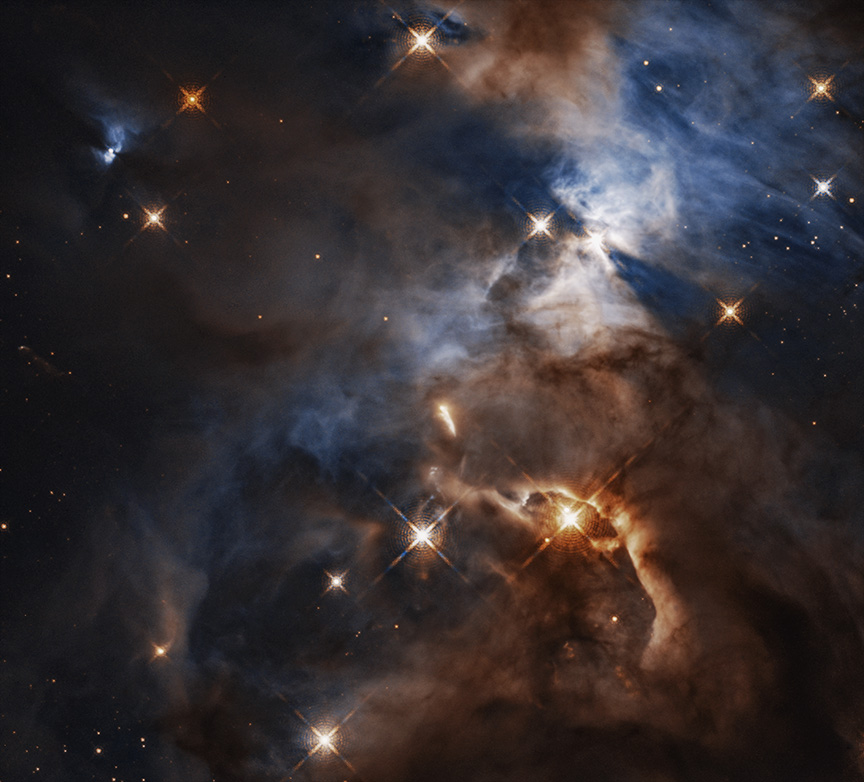
Image (Credit): Chandra X-ray Observatory image of the Bat Shadow. (X-ray: NASA/CXC/SAO; Optical: NASA/ESA/STScI; Image Processing: NASA/CXC/SAO/J. Major)

NASA’s Chandra X-ray Observatory is celebrating the 25th anniversary of the observatory, which means we get to view quite a few amazing images from over the years, such as the one above called the Bat Shadow.

Here is more from NASA on this image explaining the bat connection:

In this composite image, several pink and white stars gleam through murky cloud formations. These are young stars detected by Chandra. At our lower right, an opaque cloud resembling a veined slug rises out of a muddy brown mist. Blue and grey clouds with hints of brown stretch from our lower left, to our upper right. There, near the upper righthand corner, two long black triangles appear to burst from a central gleaming star. These triangles are in fact shadows from the young star, cast on distant blue and grey clouds. The eerie shape, reminiscent of the Batman call sign projected against a cloudy Gotham sky, has earned the phenomenon the nickname The Bat Shadow.