Podcast: Discussing the XPrize and More

A recent episode of the StarTalk podcast, “Incentivizing the Future with Peter Diamandis,” provides an interesting tale about Mr. Diamanis’s early efforts to spur space inventions through the XPRIZE Foundation as well as his current efforts to spur innovation in other areas, such as healthcare.

It was a good reminder about the start of Virgin Galactic, which began after Burt Rutan’s experimental spaceplane SpaceShipOne won the Ansari X Prize in 2004. One can quickly forget that some of the big names in new industries were piggybacking on the earlier achievements of others, such as Elon Musk buying a pre-existing Tesla company.

If you go to the XPrize Foundation page, you will see a variety of competitions underway. The latest space-related contest is the $30 million Google Lunar XPRIZE, which was

…created with two goals in mind. To spur affordable access to the moon and give space entrepreneurs a legitimate platform to develop long-term business models around lunar transportation and to inspire the next generation of scientists, engineers, space explorers and adventurers to enter the STEM fields.

As Mr. Diamandis was encouraged by contests from early last century, let’s hope other innovators and their supporters continue to carry the torch beyond this century to see what human ingenuity can create when challenged.

Another Crew Departing for the ISS

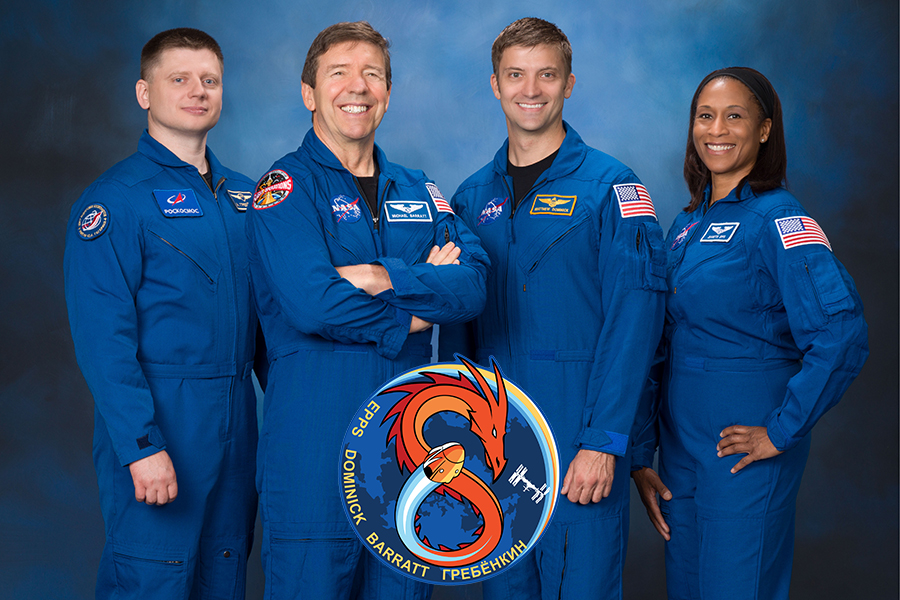
Image (Credit): The SpaceX Crew-8 (identified below) expected to depart later today. (NASA)

Later today, a SpaceX rocket with carry another crew to the International Space Station (ISS) after a few delays. The crew, shown above, consists of Alexander Grebenkin (Roscosmos), Michael Barratt (NASA), Matthew Dominick (NASA), Jeanette Epps (NASA).

The new crew will be approaching a space station already containing seven crew members as well as a module in need of repair. The Russian components of the space station have sprung a number of leaks over the past several years. The most recent appears to be a recurring oxygen leak.

To date, NASA is playing it cool, though I expect everyone on board would be happy to experience at leakless station as soon as possible. We know the ISS will not last forever, but until the day it is decommissioned it should be a safe vessel for the astronauts and cosmonauts aboard.

Update: The SpaceX launch went off without a hitch Sunday evening. The new crew on the Dragon spacecraft is expected to reach the ISS Tuesday morning.

Space Quote: The End of NASA’s OSAM-1 Project

Image (Credit): Artist’s rendering of the OSAM-1 project in action. (NASA)

“Following an in-depth, independent project review, NASA has decided to discontinue the On-orbit Servicing, Assembly, and Manufacturing 1 (OSAM-1) project due to continued technical, cost, and schedule challenges, and a broader community evolution away from refueling unprepared spacecraft, which has led to a lack of a committed partner. Following Congressional notification processes, project management plans to complete an orderly shutdown, including the disposition of sensitive hardware, pursuing potential partnerships or alternative hardware uses, and licensing of applicable technological developments. NASA leadership also is reviewing how to mitigate the impact of the cancellation on the workforce at NASA’s Goddard Space Flight Center in Greenbelt, Maryland.”

-Statement by NASA in recent communications. The project has been in development since 2015. About 450 NASA employees and contractors working on the OSAM-1 project. In an earlier report by the Government Accountability Office, the auditors noted, “OSAM-1 cost growth and schedule delays are exacerbated by poor contractor performance and continued technical challenges.”

Another Interesting Astronomy Site: Centauri Dreams

If you looking for some deep probes into astronomy studies and discussions, then you may want to visit the Centauri Dreams site. The site’s focus is about the possibility of interstellar travel at some point in the future.

Tech writer Paul Gilster has this to say about his website:

Alpha Centauri and other nearby stars seem impossible destinations not just for manned missions but even for robotic probes like Cassini or Galileo. Nonetheless, serious work on propulsion, communications, long-life electronics and spacecraft autonomy continues at NASA, ESA and many other venues, some in academia, some in private industry. The goal of reaching the stars is a distant one and the work remains low-key, but fascinating ideas continue to emerge. This site will track current research. I’ll also throw in the occasional musing about the literary and cultural implications of interstellar flight. Ultimately, the challenge may be as much philosophical as technological: to reassert the value of the long haul in a time of jittery short-term thinking.

Mr. Gilster has a way of walking you through some dense scientific papers that makes them come alive, in part by bringing in additional information and insights to make it all relatable (that is, as much as possible).

Some of his recent articles include:

Close Stellar Encounters and Earth’s Orbit: The essay notes the continual changes of stars in our neighborhood over time, including one that may venture close enough to enter our solar system’s Oort Cloud:

Stars do indeed get that close, as the example of Gliese 710 shows. If we’re patient, we can wait out the 1.3 million years it is projected for this to happen, for this star, on the borderline between M-dwarf and K-class, is headed our way from its current vantage in the constellation Serpens Cauda. As it will eventually be well inside the Oort Cloud, we can imagine quite an impact on cometary orbits and planetary ones as well over the long haul, as the paper I’m about to discuss shows.

To the Stars with Human Crews?: The essay discusses the potential role of solar sails in space travel, the ideas of both NASA’s Les Johnson and American physicist and science fiction writer Robert L. Forward, and various science fiction stories trying to envision such sails connecting humans with other planetary systems.

Alone in the Cosmos?: The essay discusses Louis Friedman’s new book Alone But Not Lonely: Exploring for Extraterrestrial Life, pulling apart various points for greater discussion.

In discussing the likelihood of finding intelligent life elsewhere, Mr. Gilster states:

The point is simply to cast something as evidently evanescent as our human culture against the inexorable backdrop of geological time. And to contrast even that with a galaxy that is over 13 billion years old, where processes like these presumably occurred in multitudes of stellar systems. What are the odds that, if intelligence is rare, two civilizations would emerge at the same time and live long enough to become aware of each other?

These are just a few of the many interesting articles that you can find on the site. Just roll through the collection of essays and I am sure you find plenty to capture your imagination for some time to come.

Pic of the Week: A Rough Moon Landing

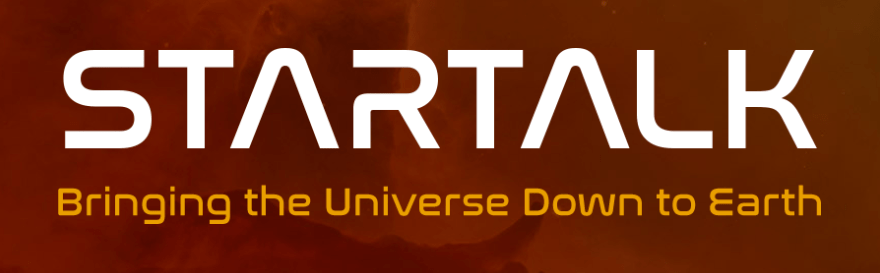
Image (Credit): An image showing the Odysseus lunar lander making first contact with the Moon. (Intuitive Machines)

This week’s image shows the Odysseus lunar lander as it is about to touch the Moon’s surface. It tipped over upon landing.

Here is the statement about the image from Initiative Machines:

This image retrieved from the lander on February 27 captures Odysseus’ landing strut during landing on February 22nd performing its primary task, absorbing first contact with the lunar surface. Meanwhile, the lander’s liquid methane and liquid oxygen engine is still throttling, which provided stability. The Company believes the two insights captured in this image enabled Odysseus to gently lean into the lunar surface, preserving the ability to return scientific data.

NASA tried to put its best spin on the science coming out of the tilted lander, which suffered solar array and communication issues related to its tilted position, stating:

Mission challenges and successes were discussed during the briefing including more than 350 megabits of science data downloaded ready for analysis. During transit, all powered NASA payloads operated and received data. During descent and landing, guidance and navigation data was collected that will help improve landing precision in the future, and all three payloads that were designed to operate on the surface have received data.

What is left unsaid is whether the data received during this landing was close to what was anticipated and necessary for future safe missions. Saying some data was received does not tell us much. Only complete and useful data really matters here. I expect more information will be shared shortly.

I have not read too much about the fate of the other commercial cargoes. I doubt they fared much better.

Fortunately, the lunar lander communicated with Earth until early this morning, outlasting earlier expectations.

Could it come alive again like the Japanese lander? We shall see. As Intuitive Machines said earlier today, “Goodnight, Odie. We hope to hear from you again.”