Space Quote: NASA Cannot Do Everything in this Budget Environment

“The current budget environment has significant implications for mission and safety risk. NASA has a very full mission plate. To the extent that their budget request is not fully funded, the leadership will need to acknowledge and make critical decisions with respect to program content or schedules, which will need to be adjusted to meet fiscal realities. Attempting to do all planned efforts on expected timelines will introduce unacceptable and unmanaged risk. The Agency will need to rely on its developed strategic vision, objectives, and architecture to establish well-defined priorities to ground its endeavors in reality – taking fully into account the risk-benefit tradeoffs.”

-Statement in the Aerospace Safety Advisory Panel’s 2023 Annual Report regarding NASA’s operating environment. One particular area of risk relates to Artemis III, which entails a crewed landing on the Moon. The report states:

In addition, prior to the Artemis III mission, NASA will need to address whatever issues arise from the Artemis II mission, including the possibilities of hardware (HW) and software (SW) changes to both the Space Launch System (SLS) and Orion. Orion flight time on Artemis III will exceed previous durations. Given that it is a new rocket, a new human capsule, and a new human spaceflight environment for this generation of NASA workers, it is not unreasonable to think that NASA will still have a great deal of discovery to do with every Artemis mission for the foreseeable future, and that both schedules and workloads will need to expand accordingly.
Commercial Benefits from the Space Program

You may have been told that the earlier space program gave us Tang and Velcro. Well, that is not really true.

For instance, Tang was already at your local supermarket back in 1959. It was not until 1962 when Tang was taken into space with John Glenn on Friendship 7 and only then did it become a “space age drink” used by the Gemini through Apollo programs.

In the case of Velcro, it was invented by a Swiss engineer who based it on burrs that clung to the fur of his dog. Later on, NASA found it to be very useful for astronauts.

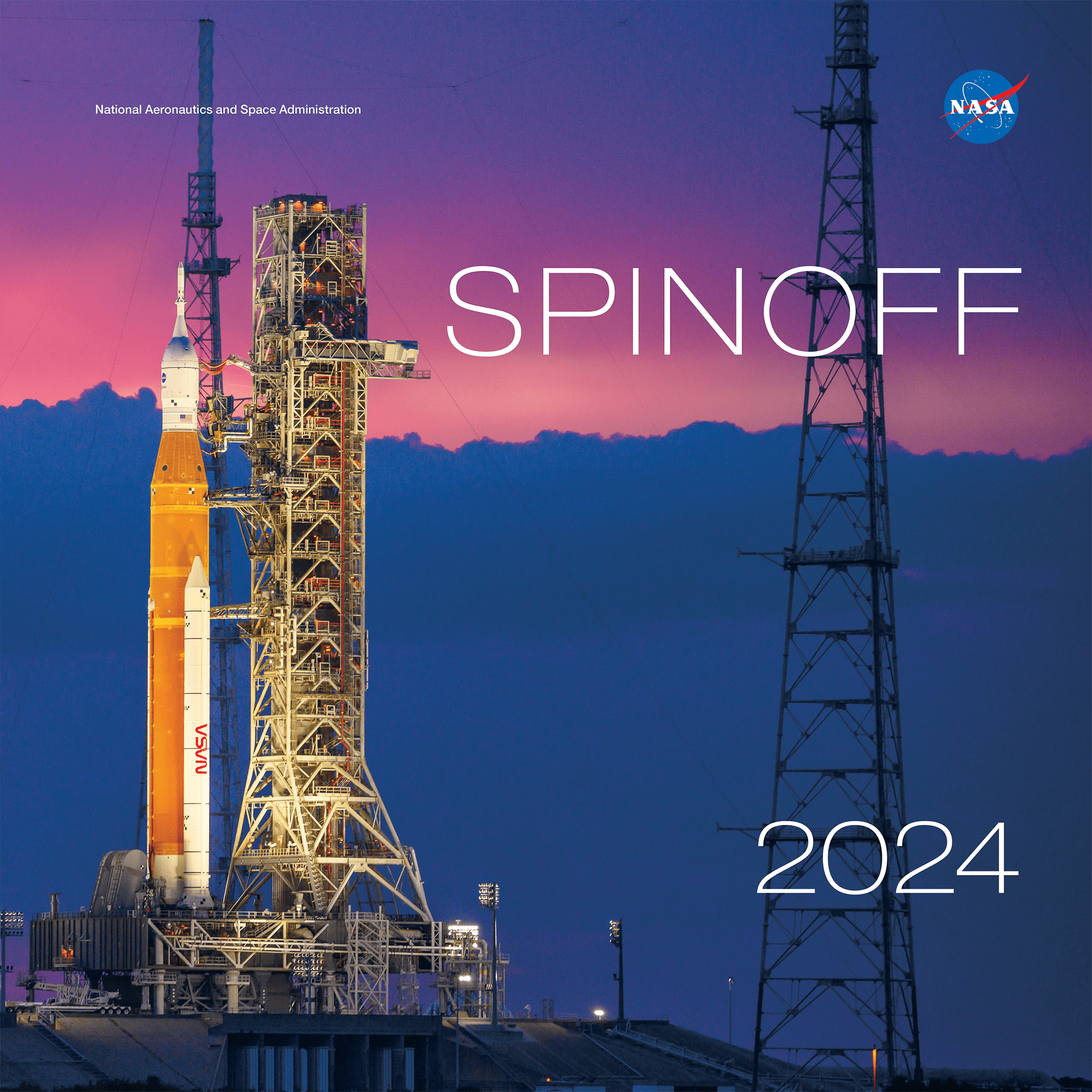
So what did NASA introduce to the world? Fortunately, NASA’s 2024 Spinoff report can provide you with plenty of answers. In an article on the report, NASA highlighted the following commercial applications of space technology:

  • Spherical “squishy” robots capable of dropping into dangerous situations before first responders enter;
  • “Digital winglets” aircraft-routing technology that’s enabling increased fuel efficiency and smoother flights;
  • Lighter, more durable disc brake designs that produce less dust than traditional disc brakes;
  • Computer software to help businesses and communities cope with and recover from natural disasters like wildfires; and
  • New 3D printing methods to additively manufacture rocket engines and other large aluminum parts.

If you go to the full report, you can find other commercial applications that are more readily relatable to your everyday, including:

  • NASA-funded molecular research enables better disease detection;
  • Radiation-resistant microbe studied in space leads to fewer wrinkles, less sun damage on Earth;
  • Technology pioneered for space plant-growth chambers cleans indoor air; and
  • Materials for coating spaceplanes maintain comfort in outerwear, sports uniforms, jeans.

Take a look at the report yourself for more examples. It is full of good stories about how the space program can assist us here on Earth.

I am sure we can find similar reports related to the defense industry, but I would prefer our goal be better products generated from a space race rather than an arms race.

Pic of the Week: Space Shuttle Finds a New Home

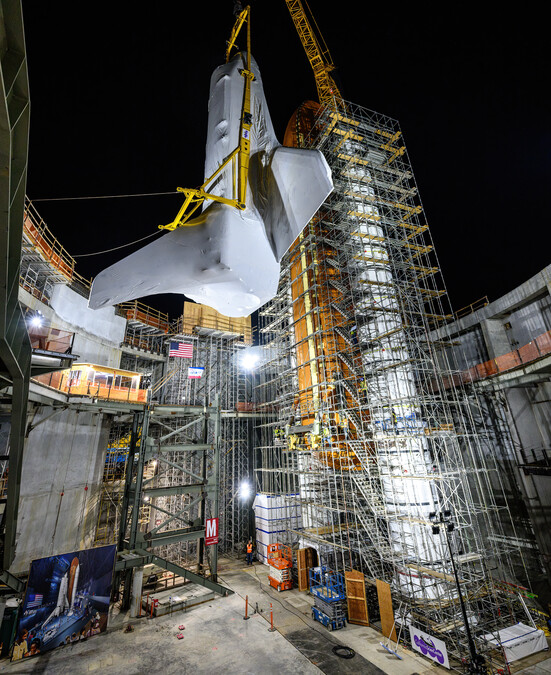
Image (Credit): Ongoing construction work assembling the Space Shuttle Endeavor and related stack elements at the planned Samuel Oschin Air and Space Center. (California Science Center)

This week’s image comes from California and shows the construction of a new giant exhibit at the future Samuel Oschin Air and Space Center. What you are seeing is a covered Space Shuttle Endeavour, which flew its final mission back in May 2011.

You can view more images and videos related to the creation of this new exhibit by visiting the California Science Center site. The site notes:

This will be the only complete stack of authentic space shuttle flight hardware in existence, making the Endeavour exhibit even more significant than before. In addition to allowing the public unprecedented, unique vantage points, this configuration retains a complete flight stack for engineers and historians to examine in the future. NASA and aerospace companies frequently visit museums to look at hardware from previous programs in order to design for the future projects.

Podcast: Romans in Space

If you are searching for a good podcast to listen to on your next drive, you might enjoy a recent podcast from The Rest is History discussing the ideas of the early Roman Republic that may have informed George Lucas and his Star Wars films.

In the episode, “Romans in Space: Star Wars, Dune and Beyond…,” the narrators also discuss the influence of Rome on other popular series, from earlier stories, such as Issac Asimov’s Foundation, Frank Herbert’s Dune, and Star Trek, to more recent tales, such as Battlestar Galactica and The Hunger Games. The discussion also touches on the role of the Nazis, the American Revolution, Islam, and even the story of King Arthur in these science fiction stories.

No stone is left unturned in this 55 minute episode, with plenty of ideas to keep your head spinning and your mind guessing. After listening, I bet you will play it a second time just to be sure you took it all in (and wrote down some references you might want to research on your own).

Northrop Grumman Cargo Ship Heads to ISS

Image (Credit): Launch of the Cygnus spacecraft earlier today on its way to the ISS. (NASA)

Earlier today, Northrop Grumman launched a resupply spacecraft via a SpaceX Falcon 9 rocket to the International Space Station (ISS). The Cygnus spacecraft is conducting its 20th mission to the station, making it reliable workhorse as NASA awaits even more commercial partners to come online.

According to NASA, the resupply spacecraft contains numerous experiments, including:

  • the first surgical robot on the space station;
  • an orbit re-entry platform that collects thermal protection systems data;
  • a 3D cartilage cell culture that maintains healthy cartilage in a lower gravity; and
  • a metal 3D printer, an autonomous semiconductor manufacturing platform.

A surgical robot you ask? You can read more about this Miniaturized In-vivo Robotic Assistant (MIRA) by visiting this Gizmodo site.