I did not follow up on yesterday’s post when Astrobotic said it was moving onto its Griffin mission. What is that?
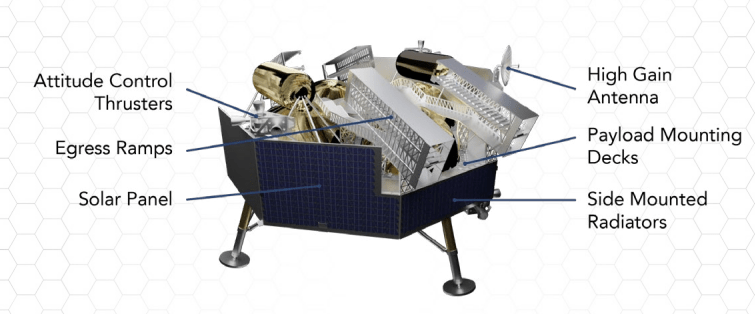
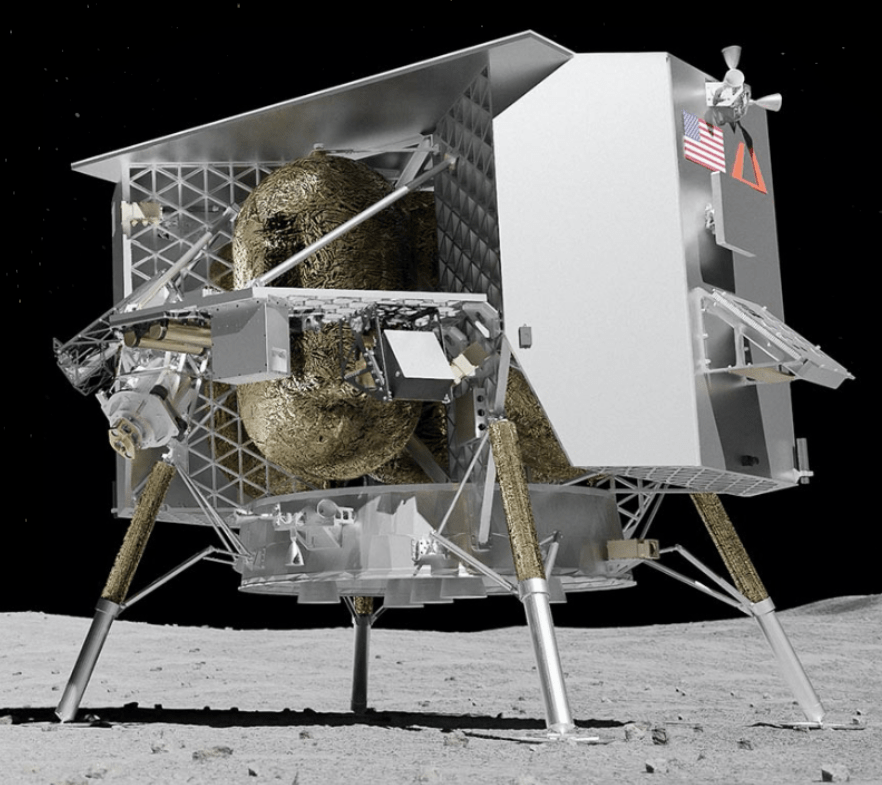
The Griffin mission involved a lunar lander as well, but this time the destination will be the Moon’s South Pole. The lander will deploy NASA’s Volatiles Investigating Polar Exploration Rover (VIPER), which will be searching for water.
The Griffin/VIPER duo was supposed to be on the Moon already, but we already know about delays. I expect the delays will only lengthen as NASA and Astrobotic try to better understand what happened earlier this week with the Peregine lunar lander. NASA does not want to lose a rover.
NASA’s launch website now still has the VIPER landing scheduled for late 2024.
You can read more about the Griffen lander specs here.
Image (Credit): Apollo 11 Lunar Module captured by NASA’s Lunar Reconnaissance Orbiter. (NASA)
NASA said we would have weeks like this one.
First we have the compromised Peregrine Lunar Lander floating in space. Astrobotic posted this update earlier today:
Given the propellant leak, there is, unfortunately, no chance of a soft landing on the Moon. However, we do still have enough propellant to continue to operate the vehicle as a spacecraft. The team has updated its estimates, and we currently expect to run out of propellant in about 40 hours from now — an improvement from last night’s estimate. The team continues to work to find ways to extend Peregrine’s operational life. We are in a stable operating mode and are working payload and spacecraft tests and checkouts. We continue receiving valuable data and proving spaceflight operations for components and software relating to our next lunar lander mission, Griffin.
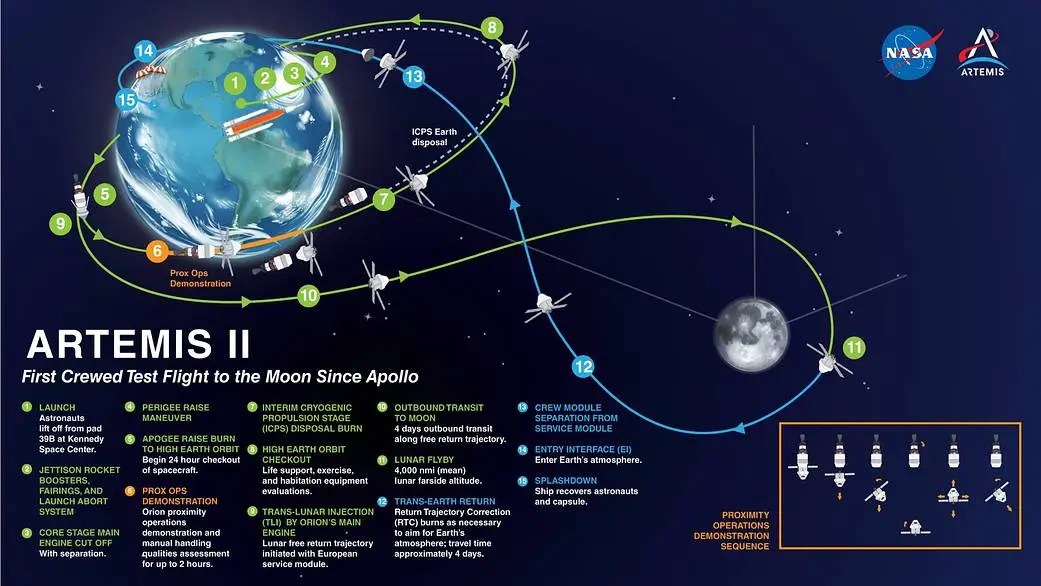
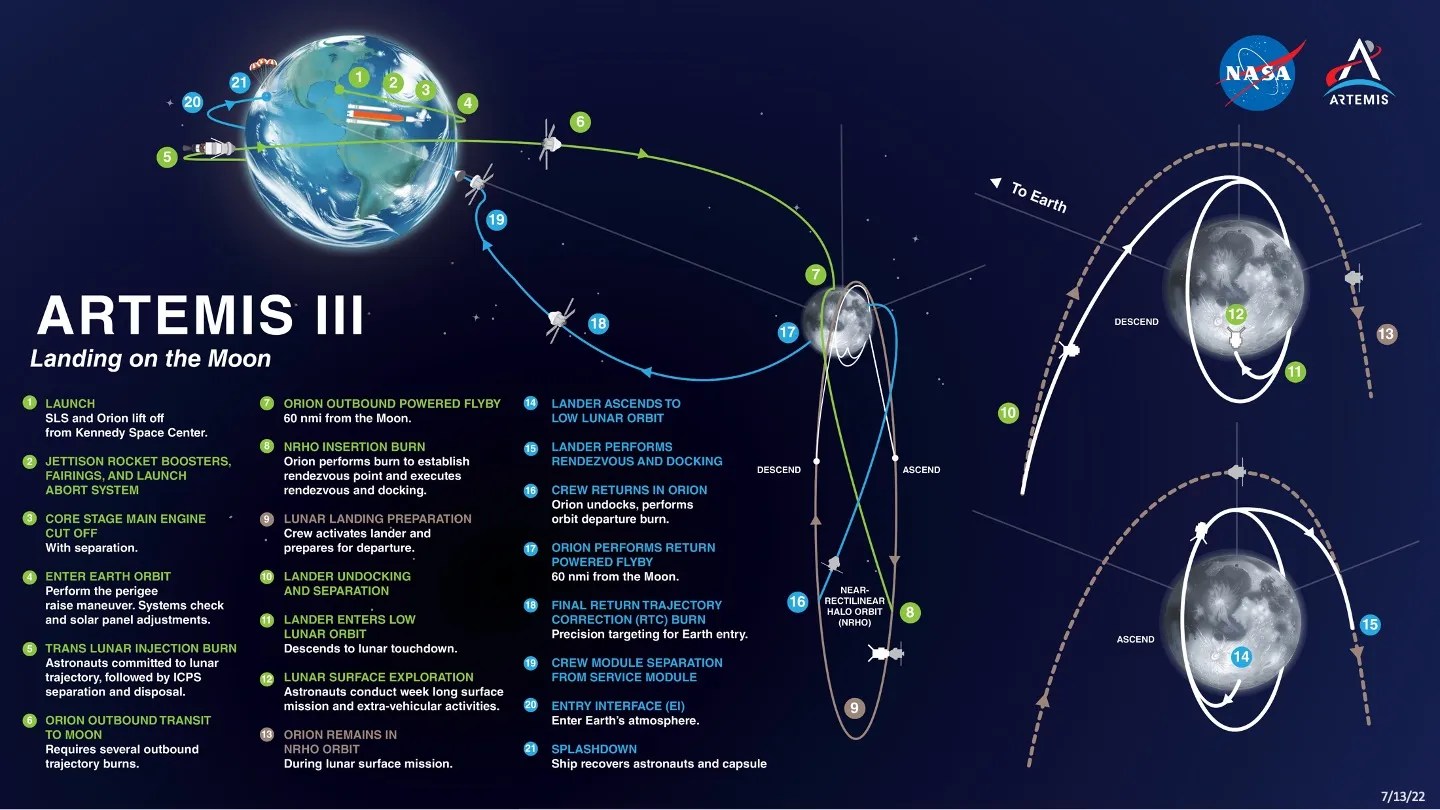
Second, we now have an official delay of the Artemis II and III missions, which is the crewed trips around the Moon and then to the surface of the Moon. NASA made the following statement:
NASA will now target September 2025 for Artemis II, the first crewed Artemis mission around the Moon, and September 2026 for Artemis III, which is planned to land the first astronauts near the lunar South Pole. Artemis IV, the first mission to the Gateway lunar space station, remains on track for 2028.
Rumors about a delay in the Artemis missions has been floating around for some time based on earlier audit reports, so this is not a big surprise. It is possible that NASA decided to dump the Artemis news this week to get everything on the table with this latest Peregrine problem rather than have two bad weeks.
You might think a company would love to be on the front page of the Wall Street Journal, and that is generally true, but not when the headline is this one: “Some Tesla, SpaceX Leaders Worried by Musk Drug Use.”
The article states:
…they fear the Tesla and SpaceX chief executive’s drug use could have major consequences not just for his health, but also the six companies and billions in assets he oversees…The world’s wealthiest person has used LSD, cocaine, ecstasy and psychedelic mushrooms…
That is not a story that investors, nor Uncle Sam, wants to be reading with the morning oatmeal.
NASA is already dealing with one Moon-size disaster today. It does not need the frat antics of a CEO to further damage the move towards a more commercial-oriented space program.
Note: The online version of the story cited above was released earlier and had a modified title.
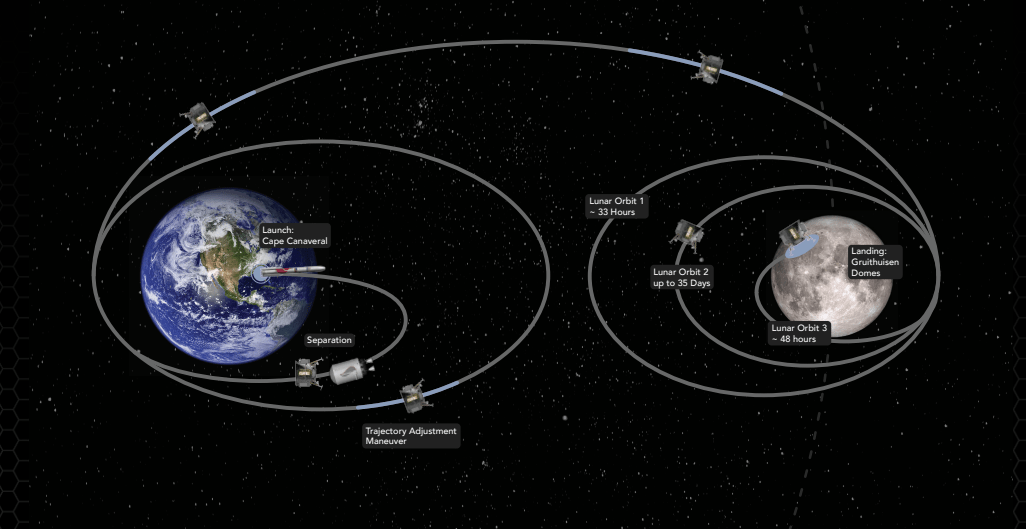
Image (Credit): Planned flight of the Peregrine lunar lander. (Astrobotic)
We started with high hopes, yet a problem has already threatened the success of Astrobotic’s mission to the Moon. Shortly after a successful lift off earlier this morning, the Peregrine lunar lander started reporting issues with its propulsion system, which impacted its ability to charge its batteries. Fortunately, the charging issue was resolved, yet the propulsion issue is still outstanding.
Astrobotic is already talking about a modified mission. Noting the loss of propellant, the company stated:
The team is working to try and stabilize this loss, but given the situation, we have prioritized maximizing the science and data we can capture. We are currently assessing what alternative mission profiles may be feasible at this time.
That sounds pretty ominous at this point when the final goal is the Moon. The US mission is starting to look like two other lunar missions that failed last year – one Japanese and one Russian – yet those happened on the Moon’s surface. If the Peregrine can stay in the Moon’s orbit then maybe it can get a few things accomplished.
If there is any good news, it is that the United Launch Alliance (ULA) Vulcan rocket appeared to operate as expected. That means the folks at ULA and Blue Origin can sleep a little better tonight.
I do not expect the Astrobotic people will have a good night’s sleep for some time.
After ending launches to the Moon’s surface more than 50 years, NASA is funding a lunar mission that launches tomorrow morning. United Launch Alliance (ULA) will be using its new Vulcan rocket to launch the Astrobotic mission towards the Moon. ULA, as noted earlier, has a lot riding on this new rocket as it seeks a buyer. Blue Origin will also be watching events closely as the manufacturer of the Vulcan rocket engines.
This is a milestone for the U.S. as well as Astrobotic, which will be the first private company to reach the Moon’s surface if everything goes without a hitch. The Pittsburgh-based company plans to place its Peregrine lunar lander on the Moon’s surface at Sinus Viscositatis (Bay of Stickiness). The company notes that the Peregrine Mission One (PM1) “…is carrying 20 payloads (cargo) from governments, companies, universities, and NASA’s Commercial Lunar Payload Services (CLPS) initiative.” The NASA payloads are shown below.
The Peregrine lunar lander is not expected to land on the Moon’s surface until February 23rd. The delay will allow sufficient sunlight to be present at the landing site.
Fingers crossed that all goes well tomorrow morning.




 Our Awesome Universe