ULA is Up for Sale

Image (Credit): ULA’s new Vulcan Centaur rocket. (ULA)

United Launch Alliance (ULA), a space rocket partnership between Boeing and Lockheed Martin, is now being offered for sale. Both Blue Origin and Cerberus are showing interest, which could upset the space business as Blue Origin takes a big step forward or Cerberus gets into the space business.

ULA, formed in 2006, has both a wealth of experience as well as the confidence of the US military, even though SpaceX has been eating into that business. ULA also has ready commercial customers, including a partnership with Amazon to launch 47 rockets to bring the Kuiper broadband constellation into orbit.

The ties to Mr. Bezos, owner of Amazon, go even deeper than that. The ULA’s new rocket, the Vulcan Centaur, will use engines built by Blue Origin, another one of Mr. Bezos’ companies. This may make a Blue Origin a natural new owner to ULA.

The potential buyers may want to wait until the test launch of the Vulcan on January 8th. At that time, the Vulcan rocket will be used to launch the Astrobotic Peregrine commercial lunar lander, the first of NASA’s Commercial Lunar Payload Services initiative designed to deliver science and technology experiments to the lunar surface.

None of this means Boeing or Lockheed Martin are moving away from space altogether. Boeing is still working on its Starliner to bring individuals and cargo to low-Earth orbit as well as its Space Launch System, which serves as the backbone of the Artemis program. Lockheed Martin will be busy as well with its Orion capsule and human landing system (with Blue Origin and Boeing as well), additional key components of the Artemis program.

Any reshuffling is okay as long as it adds to the array of commercial options for NASA. A new player like Cerberus might be welcome, but I also see some value to pushing an experienced and involved Blue Origin to the top of its game a little quicker so it can go head-to-head with SpaceX.

This should be interesting. Stay tuned.
NASA Had a Busy Year

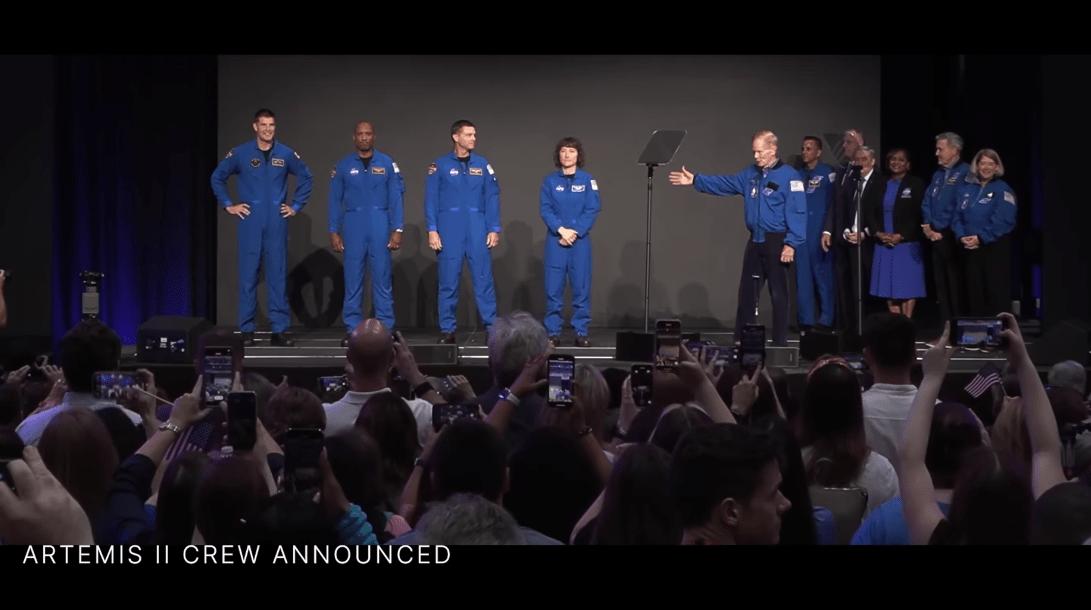
Image (Credit): The introduction of the Artemis II crew, just one of many items highlighted in NASA’s new video summarizing 2023. (NASA)

This is the time of year for lists, so I wanted to highlight one of the more important lists, at least in the opinion of this writer. That’s right, we need to remember the important space milestones from this year.

Fortunately, NASA recently summed up its successes in 2023 with a new video titled NASA 2023: Nothing is Beyond Our Reach. The video highlights many of the Agency’s accomplishments this year, including the launch of the Psyche mission, the announcement of a crew for the Artemis II mission, and the OSIRIS-REx capsule retrieval.

It is quite a list. Luckily, NASA provided a list of links so you can read more about the various efforts:

Time to read up on 2023 before we dive into more activities in 2024.

Note: You can read a more detailed list of accomplishments at this NASA site.

Holiday Wishes from the Crew on the ISS

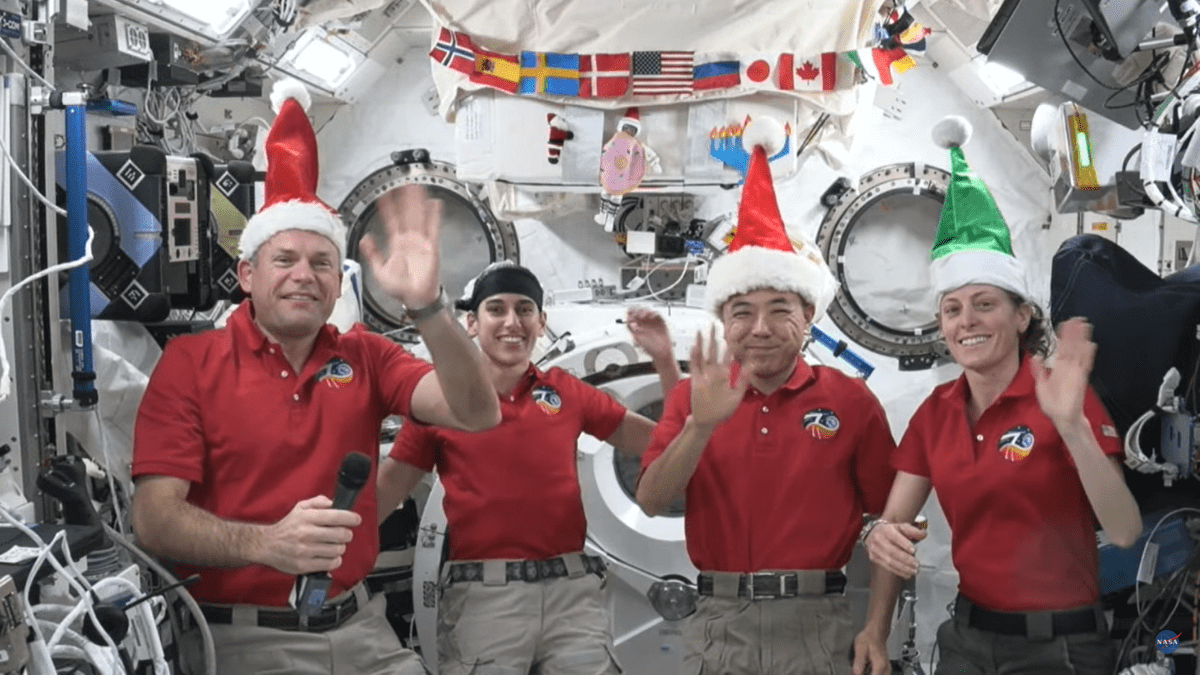
Image (Credit): Expedition 70 astronauts from left: Andreas Mogensen of ESA, Jasmin Moghbeli of NASA, Satoshi Furukawa of JAXA,and Loral O’Hara of NASA. (NASA)

You can watch a holiday video from International Space Station astronauts associated with three space programs provide greetings in three languages. They are away from family during the holidays, yet on the job to keep our space program going.

Merry Christmas from NASA

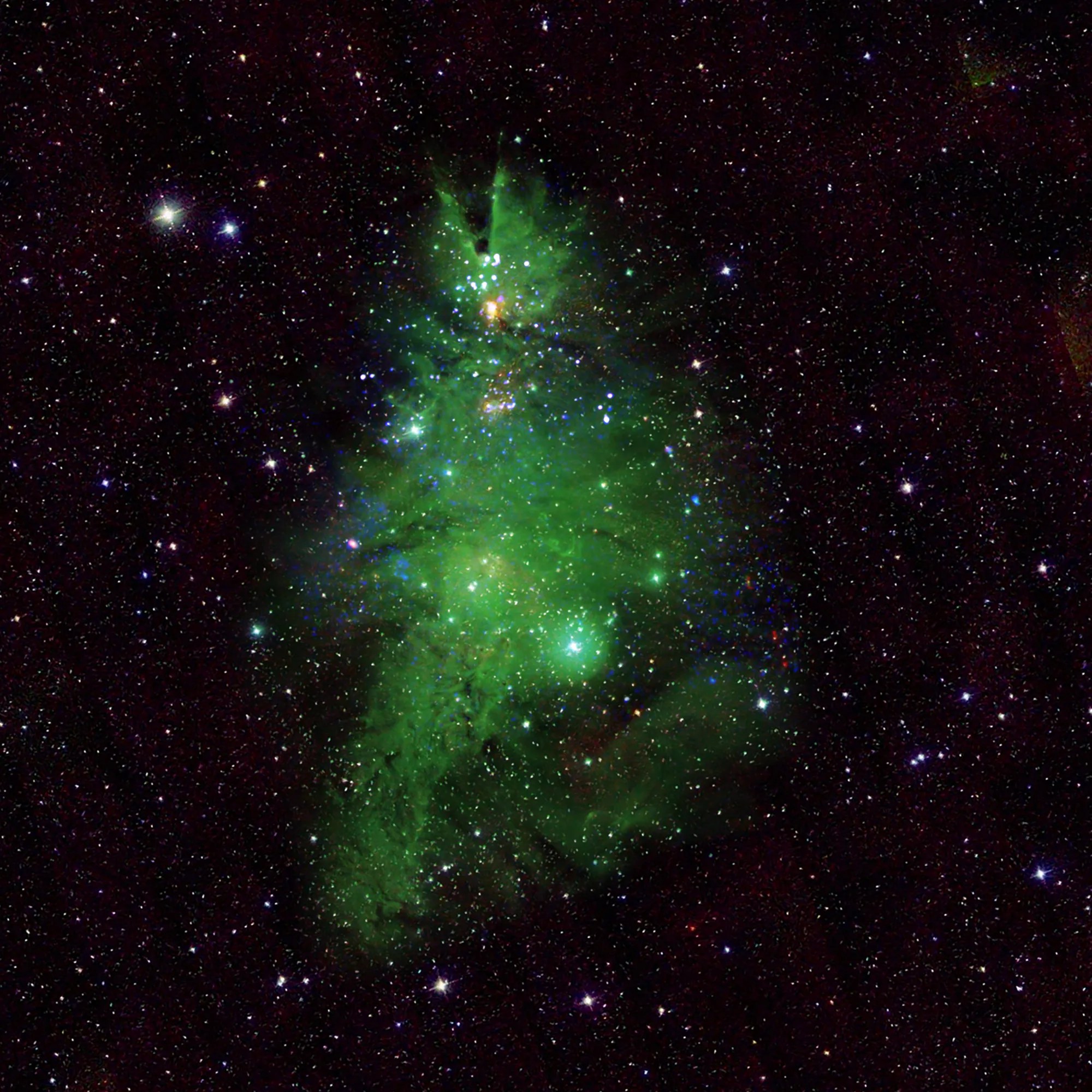
Image (Credit): NGC 2264, also known as the “Christmas Tree Cluster.” (X-ray: NASA/CXC/SAO; Optical: T.A. Rector (NRAO/AUI/NSF and NOIRLab/NSF/AURA) and B.A. Wolpa (NOIRLab/NSF/AURA); Infrared: NASA/NSF/IPAC/CalTech/Univ. of Massachusetts; Image Processing: NASA/CXC/SAO/L. Frattare & J.Major)

NASA shared this image of NGC 2264, also known as the “Christmas Tree Cluster,” to brighten everyone’s holiday.

You can read more about this image on this NASA page. You will also find an animated version of the “Tree” on the same NASA page.

Merry Christmas to all!

Martian Habitat: One More Try

The image above is one more attempt with an AI program to create a Martian habitat. As with the images in my last post, I asked the AI image program Freepik to respond to the following request: “Realist painting, surface of Mars, rocket and habitat in the foreground, ultra detailed.”

The image generated was better than either DALL-E 2 or Microsoft’s Image Creator (DALL-E 3) in terms of a semi-realistic and clearly planned habitat on Mars. Of course, an even more likely habitat would be below the surface, but I do not want to be too picky. But like the Microsoft program, Freepik added a moon that does not exist in the real world (or the real Mars, I should say).

I tried a different request to see it this would continue to happen. My request was: “Martian colony in the year 2400.” In this case, I was more satisfied with the result. In two of the four images, Freepik provided a viable habitat and did not display a moon. One of the images is displayed below. Unfortunately, the other two still has moons.

It will be hit or miss with many of these programs. You will need to know more than the program in terms of context. We are still early in the game and it is likely the AI programs will slowly remove these make-believe elements. But until then, don’t start using these images in any official publications or you will be spending a lot of time explaining yourself.