Today the House and Senate came together to agree on NASA’s FY 2026 budget, and the news could not have been better. Overall, NASA is looking at basically a flat budget (compared to a threatened 24 percent cut) with only a 1 percent cut in science funding from last year’s level (compared to the threatened 47 percent cut). The only thing left on the table – or should we say on the Martian surface – is the sample return.
Credit certainly goes to a House and Senate that showed bipartisan support for the maintenance of NASA and its missions. This should make the new NASA Administrator very happy as he tries to sort through the muck from earlier this year and find a path forward.
Now we just has to hope that this bill can get through the White House. Given that foreign policy is the preferred policy these days, and DOGE is MIA, it may actually happen.
In a recent episode of What Next: TBD, titled “Are We Over the Moon?,” the host spoke with Joel Achenbach, freelance journalist and author of an article in Slate called Moondoggle about the upcoming Artemis missions.
The discussion covers the plans for multiple missions to the Moon, the difference in generational interest, and the confusion last year about NASA’s leadership and budget that only brings up more questions.
Overall, Mr. Achenback does not believe the younger generations have much interest in a mission to the Moon. This is a scary statement at a time that NASA is fighting to remain funded and relevant.
It is a podcast (and article) with lessons for NASA’s public relations team, assuming anyone over there is interested.
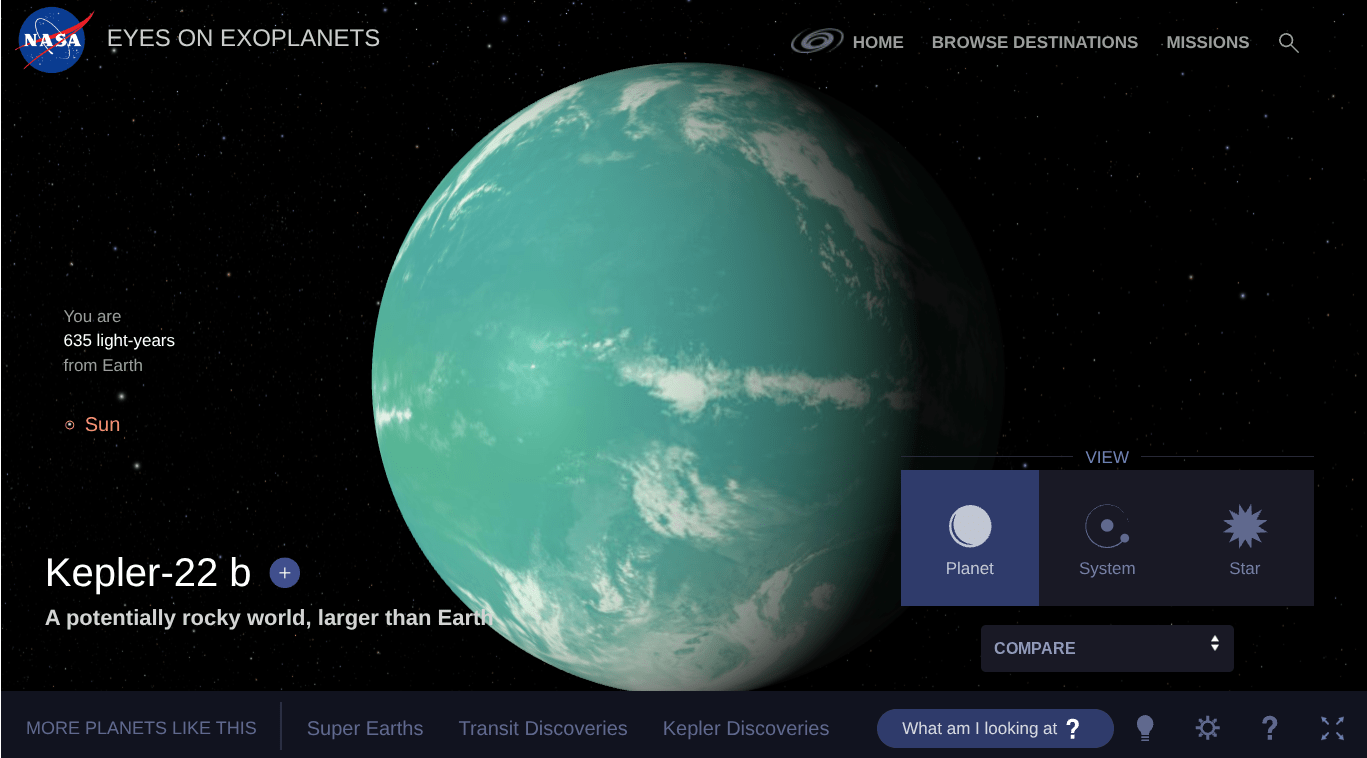
Image (Credit): NASA provide of Kepler-22 b. (NASA)
We will have to wait for season two of Apple TV’s Pluribus series before learning more about the inhabitants of the fictional Kepler-22 b, which is the source of the “virus” that turned humans in to docile livestock. In the meantime, we can look into facts about the actual exoplanet.
potentially a rocky world, that is larger than Earth,
orbits within the habitable zone of a G-type host star (similar to our sun),
the only exoplanet discovered around this host star to date, and
about 635 light-years away.
You might also remember this exoplanet from HBO Max’s series Raised by Wolves. It is the exoplanet that the main characters escape to after a brutal war on Earth. Kepler-22 b is a strange world in the series, contained odd vegetation, bottomless pits, and an acidic sea. It is not what space dreams are made of, but at least it is not sending out signals to destroy other exoplanets hundreds of light-years away.
While we may not learn anything more about Kepler-22 b from Pluribus, I suppose it may encourage a few individuals to seek out information on the Kepler mission. Who knows, it may even stimulate more interest in our SETI efforts. Then again, if this is the future of space communications, we may want to reconsider the whole enterprise.
Credit:NASA/Ames/JPL-Caltech
Note: Under the Kepler numbering scheme, the “22” in Kepler-22 b means that it was the 22nd host star discovered, while the “b” indicates it was the first exoplanet found orbitting that host star.
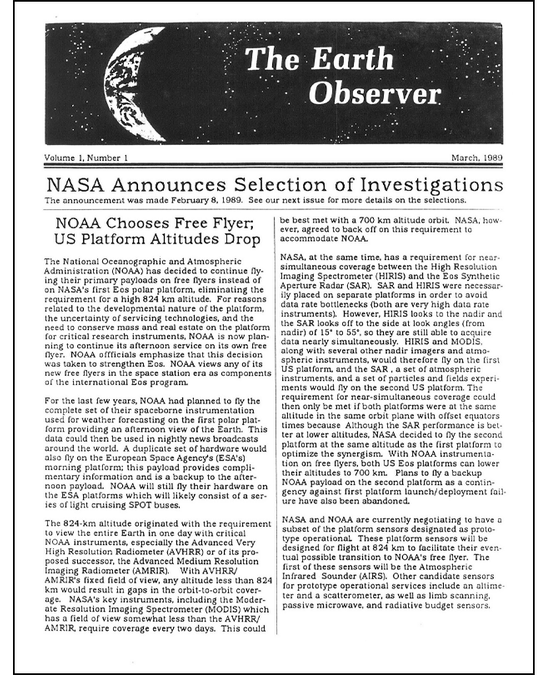
Image (Credit): The first edition of The Earth Observer from March 1989. (NASA)
While most of the press stories have been focused on this week’s closing of a NASA largest research library located at the Goddard Space Flight Center in Maryland, NASA is quietly shutting down a key news source called The Earth Observer. This newsletter was a source of information and data related to the multiple satellites surrounding the Earth and monitoring its health.
It is with a heavy heart that I announce that NASA Earth Science Communications has directed The Earth Observer to conduct an orderly shutdown of the publication. No new content will be published after Dec. 31, 2025.
This comes at a time when the White House is drastically cutting the Earth science programs at NASA, somehow assuming that if we don’t know what it happening with our planet then we do not need to worry. NASA is being told to shift its focus to other distant worlds where we will probably never go instead of helping to preserve the only world we have.
Space Dailyreported that we have already witnessing the end of three critical satellites monitoring Earth as a natural product of time – Terra, Aqua, and Aura – but they are not being replaced to keep the monitoring alive.
In the article, Space Daily noted:
Satellite aging was expected. What was not, Earth scientists say, is the policy shift coming from Washington. The FY26 presidential budget request would cut NASA’s Science Mission Directorate by nearly half, with Earth science funding falling from about 2.14 billion dollars to roughly 1.04 billion dollars, a 52 percent reduction. Commentators and advocacy groups describe the proposal as the steepest single year hit to NASA science since the post Apollo drawdown.
Shutting libraries, deleting data, and ending investments in the future will come back to bite us. Many in the world are interested in keeping this world vibrant and alive, and will do so with our without the United States. While cost-cutting can be justified if it done intelligently, the ongoing scientific suicide is something else entirely.
We’ve arranged a global civilization in which most crucial elements profoundly depend on science and technology. We have also arranged things so that almost no one understands science and technology. This is a prescription for disaster. We might get away with it for a while, but sooner or later this combustible mixture of ignorance and power is going to blow up in our faces.
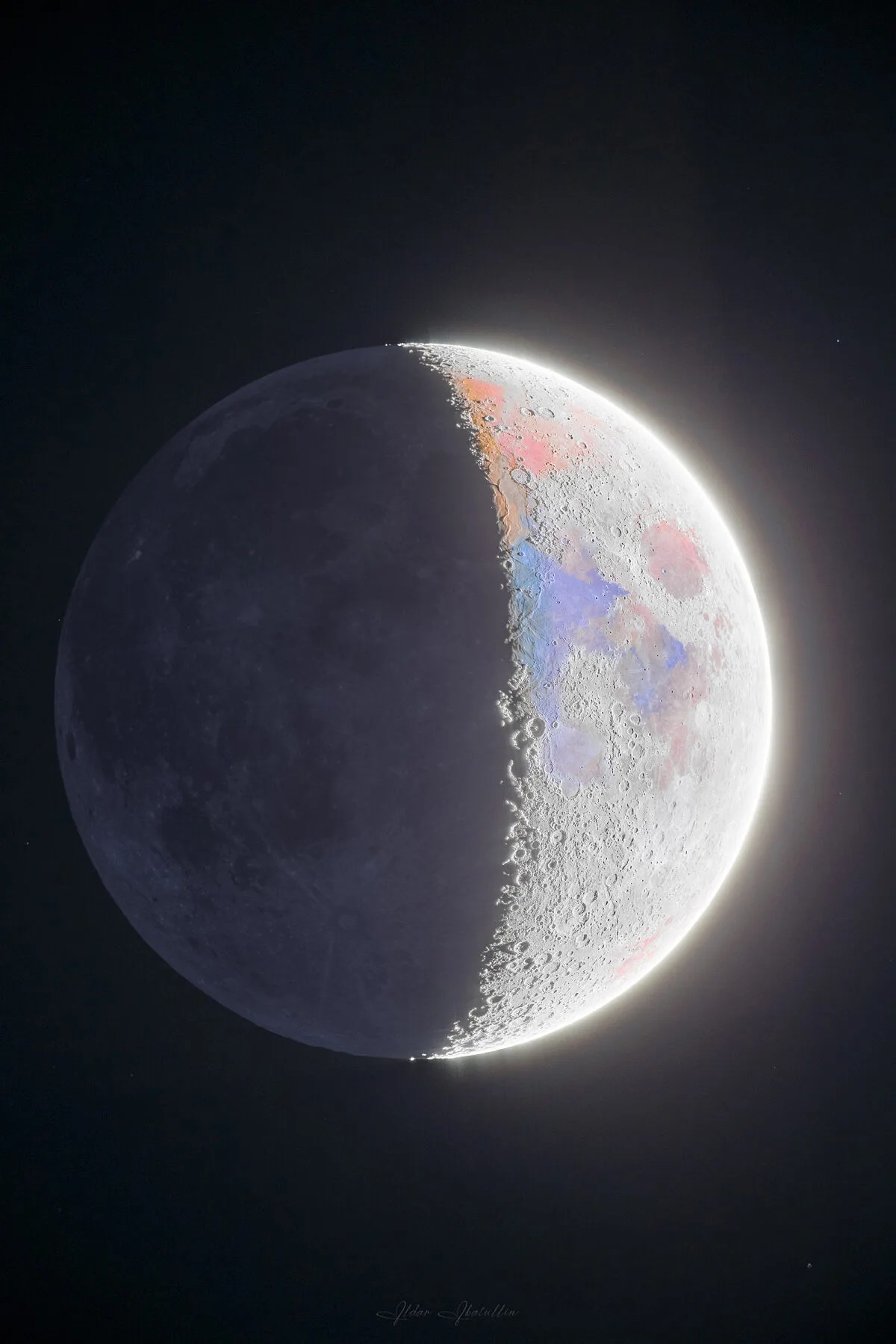
Image (Credit): Ildar Ibotullin’s “The Moon from Kyiv.” (Planetary Society)
This week’s image is from the Planetary Society’s magazine called ThePlanetary Report, which had a series of great photos in an article titled “The Year in Pictures.” This image is from 19-year-old student and amateur astrophotographer Ildar Ibatullin who lives in Kyiv, Ukraine. It is titled “The Moon from Kyiv.”
Here is the story behind the image taken from the website:
Ildar captured the photo in the midst of an air raid alert, an event that has become common in Kyiv since Russia’s invasion of Ukraine. “Even as air raid sirens sounded throughout the city,” Ildar told The Planetary Society, “I was able to document the beauty above us, creating a powerful contrast between the realities of war on the ground and the unchanging celestial landscape. I believe it demonstrates how astronomy and astrophotography can provide moments of wonder and perspective even in the most challenging circumstances.”