Space Stories: Newly Discovered Volcano on Mars, Universe’s Missing Matter Found, and Congress Expects a NASA Nominee

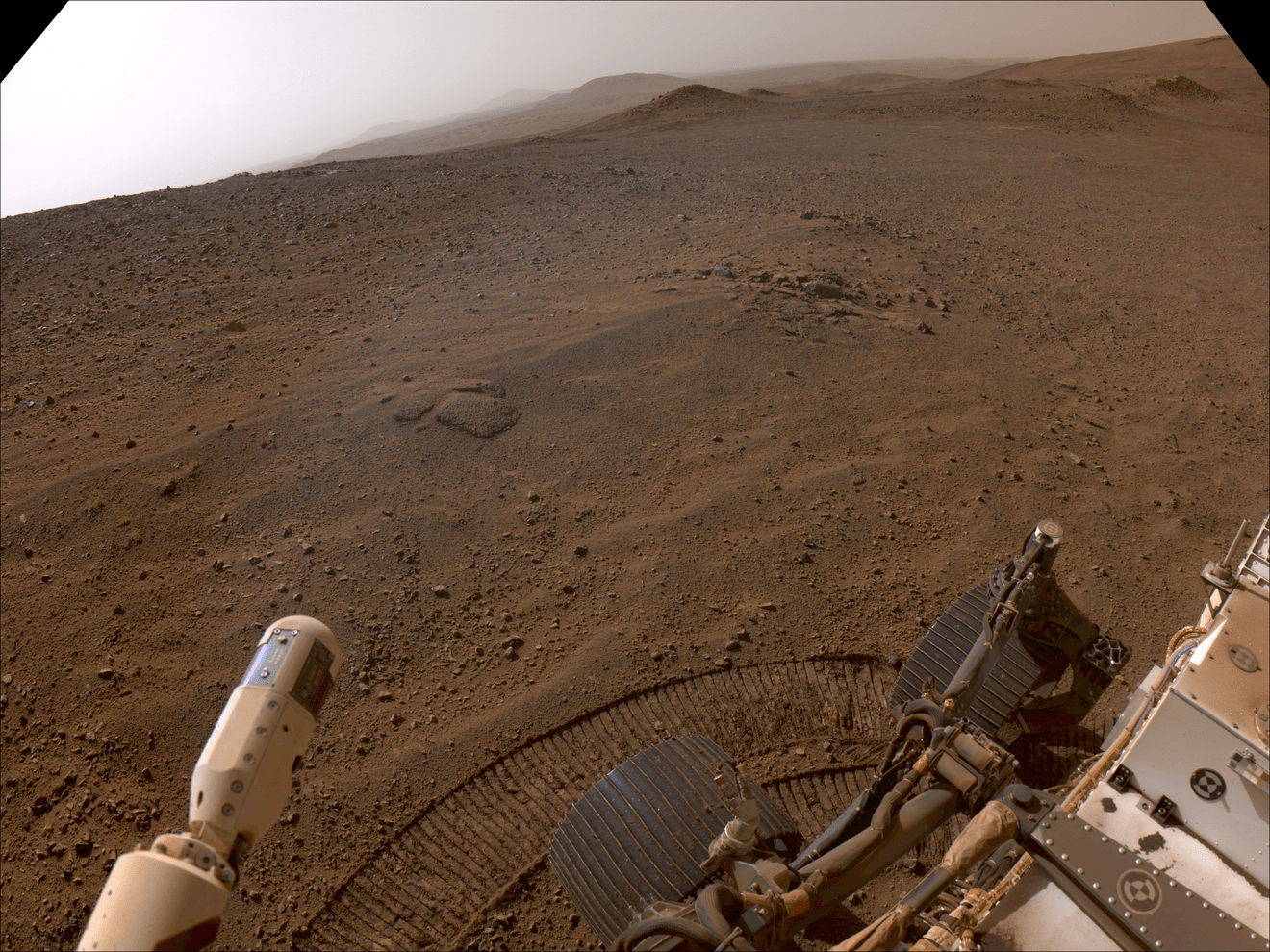
Image (Credit): View of the rim of Jezero Crater from NASA’s Perseverance Mars rover on December 10, 2024. (NASA/JPL-Caltech)

Here are some recent space-related stories of interest.

Georgia Tech: Volcano ‘Hidden in Plain Sight’ Could Help Date Mars — and its Habitability

Georgia Tech scientists have uncovered evidence that a mountain on the rim of Jezero Crater — where NASA’s Perseverance Rover is currently collecting samples for possible return to Earth — is likely a volcano. Called Jezero Mons, it is nearly half the size of the crater itself and could add critical clues to the habitability and volcanism of Mars, transforming how we understand Mars’ geologic history. The study, “Evidence for a composite volcano on the rim Jezero crater on Mars,” was published this May in the Nature-family journal Communications Earth & Environment, and underscores how much we have left to learn about one of the most well-studied regions of Mars.

Caltech: Missing Matter in Universe Found

Due to its diffuse nature, roughly half of ordinary matter in the universe went unaccounted for and had been considered “missing”—until now. In a new study in Nature Astronomy, a team of astronomers at Caltech and the Center for Astrophysics | Harvard & Smithsonian (CfA) has, for the first time, directly detected and accounted for all the missing matter. To do this, the team used brief, bright radio flashes in the distant cosmos, called fast radio bursts (FRBs), to illuminate the matter lying between the FRBs and us. “The FRBs shine through the fog of the intergalactic medium, and by precisely measuring how the light slows down, we can weigh that fog, even when it’s too faint to see,” says Liam Connor, assistant professor at Harvard and lead author of the study, who performed much of the work while a Caltech research assistant professor working with Vikram Ravi, assistant professor of astronomy at Caltech.

Space News: Members of Congress Want White House to Quickly Nominate New NASA Administrator

Members of the House and Senate called in the White House to promptly offer a new candidate for NASA administrator after the surprise withdrawal of Jared Isaacman’s nomination. In briefings organized by the Aerospace Industries Association June16, representatives of House and Senate delegations to the Paris Air Show said it was critical that the agency get permanent leadership as it deals with potential significant cuts to its budget in the coming fiscal year.


Budget Cuts: A Graphic Portrayal of the NASA Betrayal

Image (Credit): Graphic showing NASA missions either eliminated (red x) or severely cut (red !) in the most recent White House budget request. (Astronomy Magazine)

Astronomy magazine did us all a great service by clearly demonstrating the impact of the White House’s FY 2026 budget request on NASA space missions.

In a graphic covering the solar system and everything else, you can visualize for yourself the enormous impact of the proposed cuts. Very few programs are safe, including those we share with the European Space Agency (ESA) and others. In fact, only the “Biological and Physical” missions (shown in orange) seem to be mostly untouched.

For example, under “Planetary” missions (shown in purple), we see the end of:

Some of this may have made sense if there was a good discussion of existing missions and a thoughtful process to wind some of them down. But that is not how this White House works, and we are all the poorer for it.

In addition to many in NASA and the public at large, some in Congress are pushing back on these excessive losses. This is still somewhat early in the budget process for FY 2026, but did anyone really expect this to be the starting point in NASA’s budget discussions?

The greatest space agency in the world is being hacked to pieces, along with many other US scientific programs. The costs will be felt for generations to come. Just as Apollo helped to lift a nation, these cuts are designed to harm that legacy and ultimately the nation.

Note: If you cannot see the image clearly here, you can go to this link.

A Day in Astronomy: Beginnings and Ends

Image (Credit): ValentinaTereshkova just before boarding her Vostok 6 capsule. (NASA)

On this day in 1963, Valentina Vladimirovna Tereshkova from the USSR became the first woman in space. She flew solo on the Vostok 6 for three days. It was her first and last time in space. Her importance as a symbol for women and the USSR meant she would never fly again lest something happen to her.

She was quoted as saying:

They forbade me from flying, despite all my protests and arguments. After being once in space, I was desperately keen to go back there. But it didn’t happen.

On this same day in 1977, German-American Wernher von Braun passed away. As the chief designer of the Saturn rockets that took men to the Moon, he was to see all of the Apollo missions before his death.

He is also quoted as saying:

I’m convinced that before the year 2000 is over, the first child will have been born on the moon.

It is unlikely he would have believed that it would be another 50 years before we found our way back to the Moon.

Image (Credit): Braun standing next to the first stage of the Saturn V booster he helped design. (NASA)

Video: Cosmic Dawn: The Untold Story of the James Webb Space Telescope

Image (Credit): Ongoing work to make the JWST a reality. (NASA)

If you are looking for some inspiration about the US space program, you might want to watch this NASA video, “Cosmic Dawn: The Untold Story of the James Webb Space Telescope.”

As the NASA site explains:

Go behind the scenes with the dedicated NASA team and its partners to uncover the untold story of the James Webb Space Telescope. “Cosmic Dawn” unveils the immense challenges, groundbreaking innovations, and extraordinary efforts behind humanity’s most powerful eye on our universe, from its complex development to its nail-biting deployment a million miles away.

This is what it takes to explore our universe, and I only hope we can continue to maintain the stamina, skills, and public support to maintain the JWST and initiate similar programs.

It may be time to write to Congress and let them know that America needs more of this grit and determination, not less.

Space Quote: ISS is Closed to Visitors at the Moment

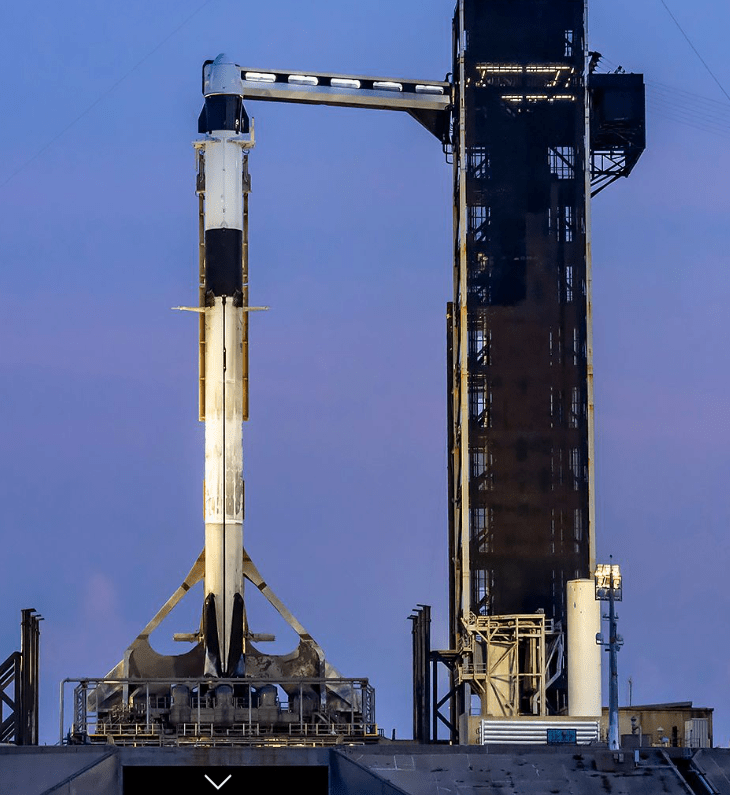
Image (Credit): Falcon 9 rocket on the lauch pad with Axiom Space’s Axiom Mission 4. (SpaceX)

“NASA and Axiom Space are postponing the launch of Axiom Mission 4 to the International Space Station. As part of an ongoing investigation, NASA is working with Roscosmos to understand a new pressure signature, after the recent post-repair effort in the aft most segment of the International Space Station’s Zvezda service module.”

Statement by NASA regarding an leak in the Russian section of the International Space Station (ISS) that has yet to be resolved. This may slow down some of the space tourism to the site, such as the already delayed Axiom Mission, but it is more important to get this right rather than risk additional lives on the station. Axiom Space stated that the launch of the mission will be no earlier than June 19.