Boeing Layoffs are Bad News for NASA’s Artemis Program

Image (Credit): Boeing’s Space Launch System. (NASA)

As if things could not get worse over at NASA, it now has to contend with Boeing’s financial problems. Boeing is considering laying off about 400 employees working on the Space Launch System (SLS), or about one third of the employees working on the system. The SLS is the backbone of the Artemis program returning the U.S. to the Moon and eventually Mars.

This follows problems last year with Boeing’s Starliner mission to the International Space Station. The two astronauts on the first manned Starliner mission are still on the station due to safety concerns about their return to Earth on the same spacecraft that brought them to the station.

None of this portends well for Boeing, NASA, or the space industry in general. This may simply throw more work towards SpaceX, making NASA more reliant on a company whose head seems more interesting in tearing down the U.S. government than focusing on the U.S. space mission. Besides, after the loss of the latest Starship, SpaceX is not in any position to replace what would be lost with the SLS. The end of the SLS may simply mean the end of any chance for the U.S. to beat China to the Moon.

This may serve the interests of Elon Musk, who always preferred going Mars, but given the lack of preparation for such a mission beyond a rocket (including lessons learned from the Artemis program), it seems even the Mars mission may be drifting into the sunset.

We need a strong NASA and clear mission priorities that are achievable in the short term. With a billionaire tourist taking over as NASA’s new leader, we need to be very careful NASA does not simply become another Dancing with the Stars for C-list celebrity wannabes.
Space Quote: Astronaut’s Comment Shows Musk’s Statement is Unnecessary Drama

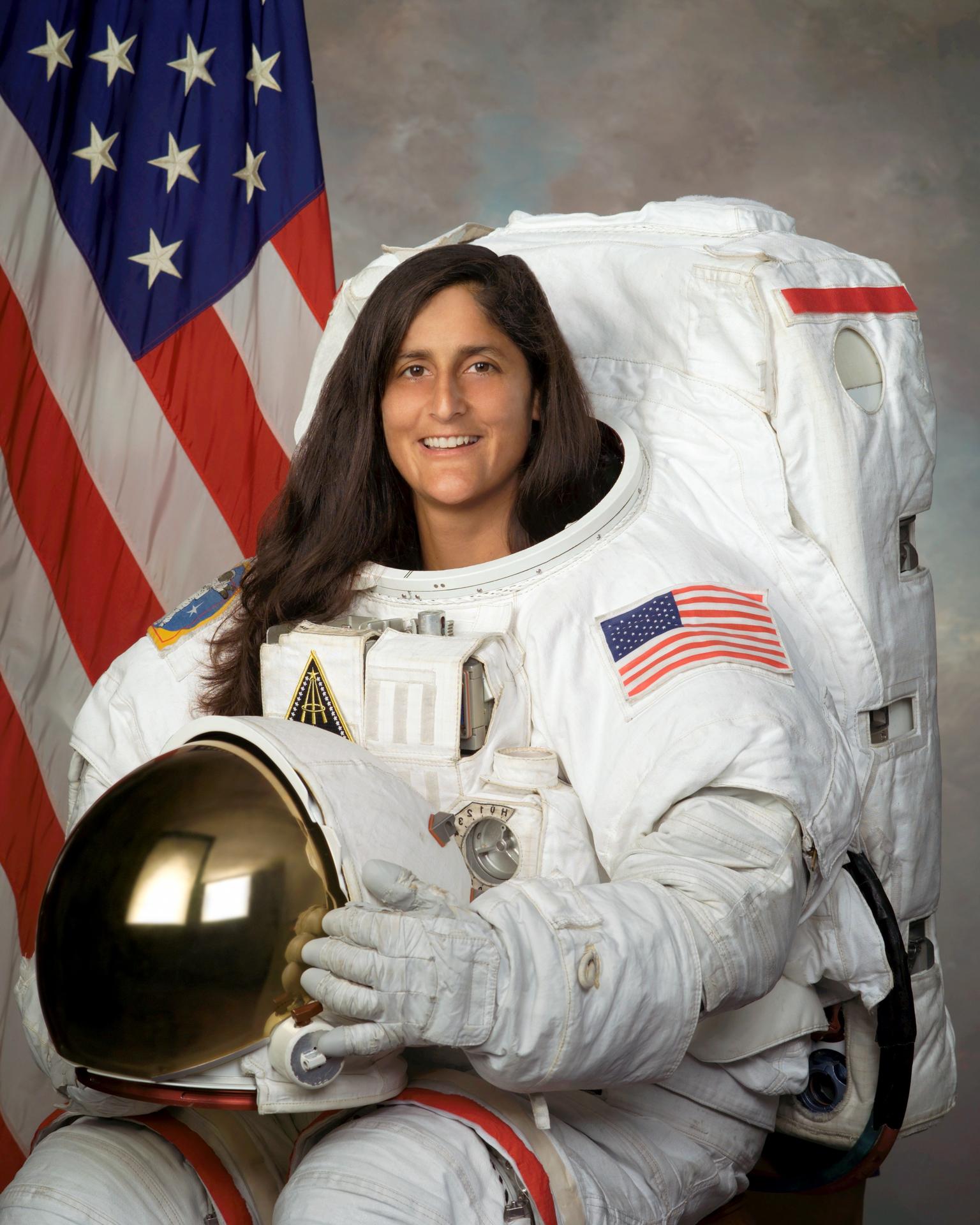
Image (Credit): NASA astronaut  Sunita Williams. (NASA)

“I don’t think I’m abandoned. I don’t think we’re stuck up here…We’ve got food. We’ve got clothes. We have a ride home in case anything really bad does happen to the International Space Station. We’re in a posture … where we have the International Space Station fully manned and doing what the taxpayers wanted, to do world-class science. And so I feel honored, like I said, to be here and a part of the team.”

-Statement by NASA astronaut Sunita Williams to CBS Evening News regarding her extended stay on the International Space Station (ISS). Her comments were in reaction to false calls about the need for an immediate return of Ms. Williams and her fellow astronaut Barry “Butch” Wilmore, who arrived at the ISS via Boeing’s Starliner and were later added to a regular NASA mission. One might think Mr. Musk is trying to make SpaceX sound indispensable while making more money off of the situation.

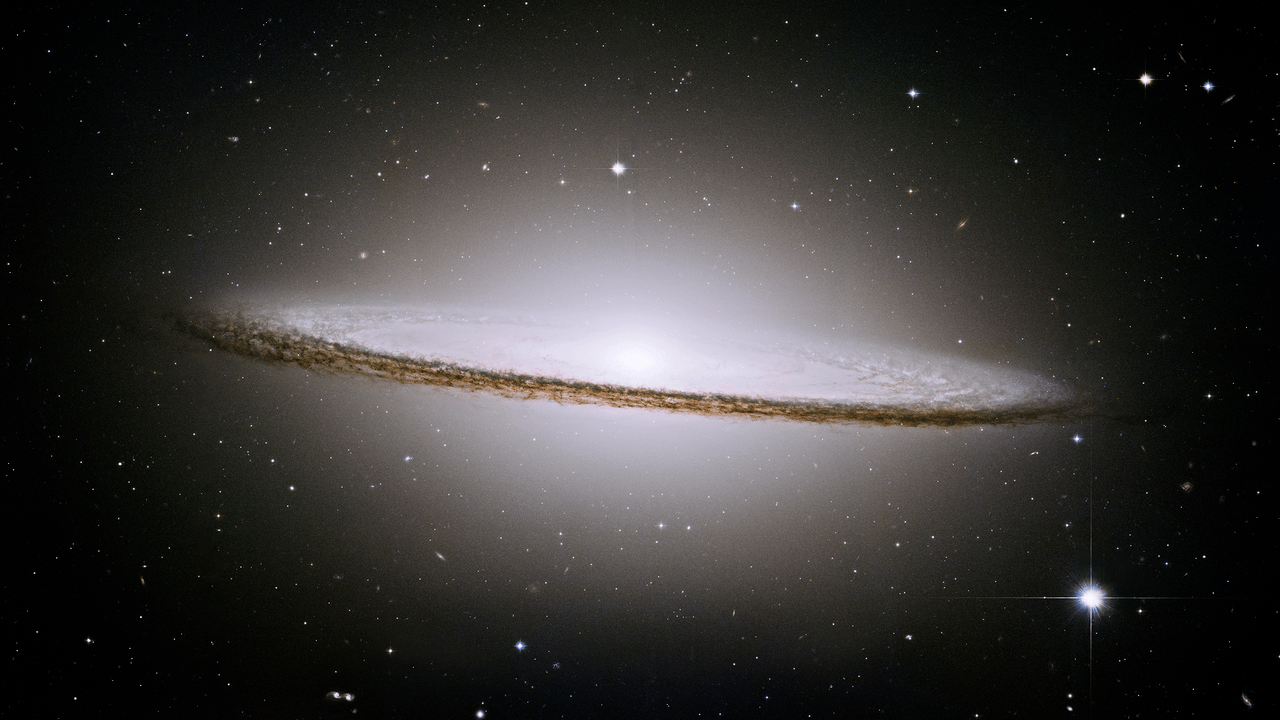
Pic of the Week: The Sombrero Galaxy

Image (Credit): Messier 104 (M104) captured by the JWST. (NASA, ESA, CSA, STScI)

This week’s image, released late last year, comes from NASA’s James Webb Space Telescope (JWST). Messier 104 (M104), called the Sombrero galaxy, shines in all its blueness. It is about 31 million light-years away. It would have been interesting to see this galaxy from above (or below, for that matter).

Here is more about the galaxy from NASA:

In Webb’s mid-infrared view of the Sombrero galaxy, also known as Messier 104 (M104), the signature, glowing core seen in visible-light images does not shine, and instead a smooth inner disk is revealed. The sharp resolution of Webb’s MIRI (Mid-Infrared Instrument) also brings into focus details of the galaxy’s outer ring, providing insights into how the dust, an essential building block for astronomical objects in the universe, is distributed. The galaxy’s outer ring, which appeared smooth like a blanket in imaging from NASA’s retired Spitzer Space Telescope, shows intricate clumps in the infrared for the first time.

Note: Below is another view of the galaxy from the Hubble Space Telescope.

Image (Credit): Messier 104 (M104) captured by the Hubble Space Telescope. (This image was created from data from HST program 9714: K. Noll, H. Bond, C. Christian, L. Frattare, F. Hamilton, Z. Levay, and T. Royle (STScI)).

Moon Rock Moves from White House

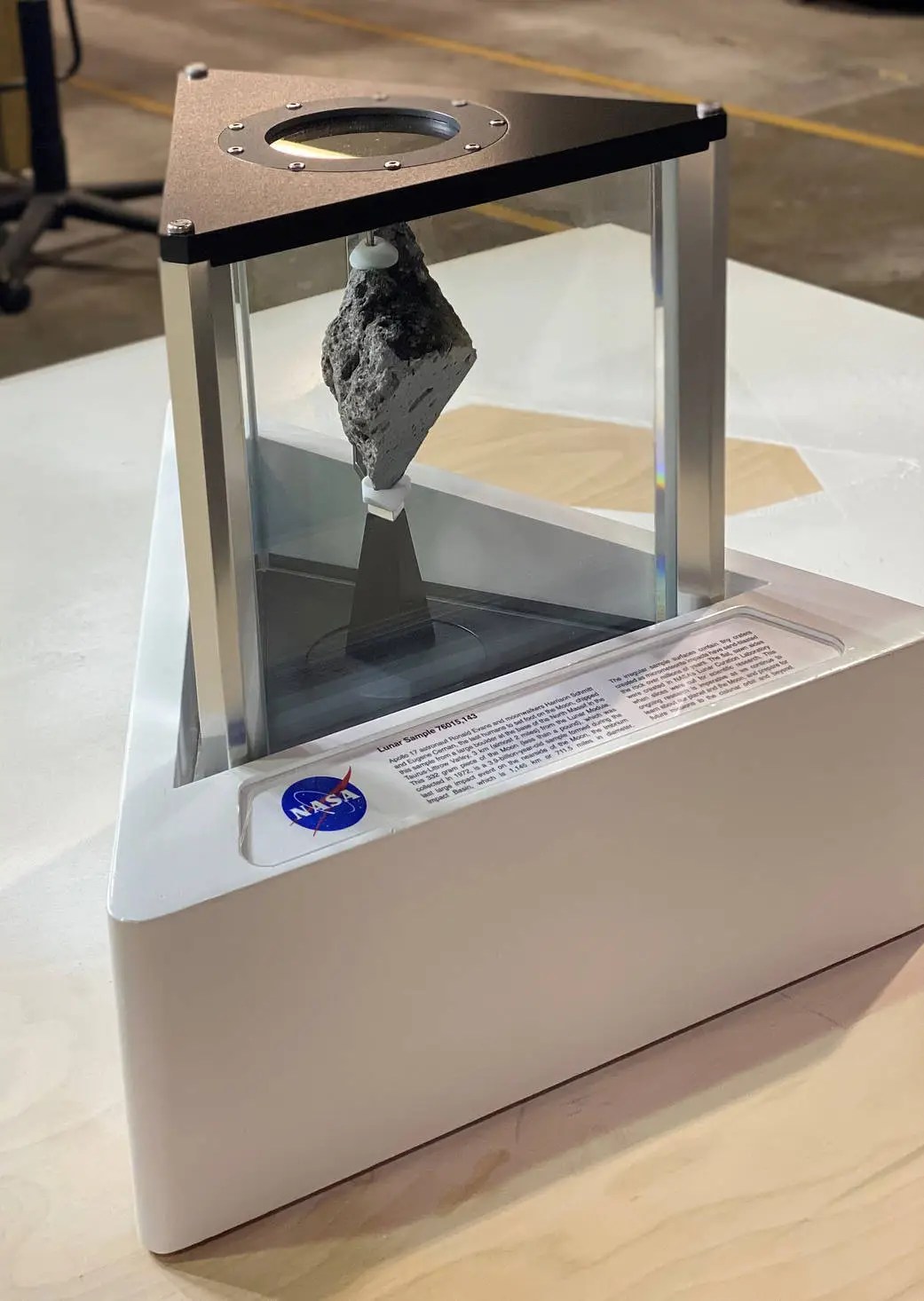
Image (Credit): Moon rock loaned to the White House by NASA. (NASA)

As the new administration decorates the White House’s Oval Office, it was determined that a lunar rock no longer needs to be present. The rock from the last Apollo mission, labeled “Lunar Sample 76015,143.” was provided to the Biden administration back in 2021 to remind him of U.S. efforts to return to the Moon.

The inscription on the Moon rock reads:

Apollo 17 astronaut Ronald Evans and moonwalkers Harrison Schmitt and Eugene Cernan, the last humans to set foot on the Moon, chipped this sample from a large boulder at the base of the North Massif in the Taurus-Littrow Valley, 3 km (almost 2 miles) from the Lunar Module. This 332 gram piece of the Moon (less than a pound), which was collected in 1972, is a 3.9-billion-year-old sample formed during the last large impact event on the nearside of the Moon, the Imbrium Impact Basin, which is 1,145 km or 711.5 miles in diameter.

The irregular sample surfaces contain tiny craters created as micrometeorite impacts have sand-blasted the rock over millions of years. The flat, sawn sides were created in NASA’s Lunar Curation Laboratory when slices were cut for scientific research. This ongoing research is imperative as we continue to learn about our planet and the Moon, and prepare for future missions to the cislunar orbit and beyond.

So does this mean the Moon is out, or did it not match the new drapes? Or is President Trump hoping to add his own Moon rock to his office after a successful Artemis mission?

It is not clear where the Moon stands in the current priorities of this White House given its ongoing efforts to push NASA employees into retirement or resignation, end scientific meetings, and eliminate all efforts at diversity at the agency.

Maybe Mars is the new target, but even that seems further off as Elon Musk burrows into government programs he know nothing about while the latest Starship disintegrated over the Caribbean.

Space missions take focus, which seems to be elsewhere at the moment.

Maybe the rock should stay in the Oval Office for the time being to remind the current administration what our country can do when it has a president with a vision that brings everyone together to accomplish an amazing task.

Space Stories: NASA Kills Student Program, NASA Science Groups Stalled, and Moon Mission Untouched So Far

Credit: Image by Maicon Fonseca Zanco from Pixabay

Here are some recent stories of interest related to changes at NASA.

Science: DEI Order Grounds NASA Program to Link Undergraduates with Mission Scientists

At NASA, officials are moving quickly to comply with President Donald Trump’s executive order directing agencies to cease funding for diversity, equity, and inclusion (DEI) programs. NASA has already informed researchers supported by one high-profile program for undergraduate students that several of the agency’s spacecraft contractors will no longer take part in the program, following the agency’s guidance. And NASA has warned the researchers that it is likely to kill grants that have already been awarded.

Space News: NASA Pauses Work of Science Groups, Citing Trump Executive Orders

NASA has directed a set of science committees to pause their work, citing recent Trump administration executive orders, a move that canceled one meeting and put planning for others on hold. NASA Headquarters sent memos Jan. 31 to the leaders of several committees, known as “analysis groups” or “assessment groups,” that provide input to the agency’s astrophysics and planetary science divisions. The memo said NASA needed to determine if the groups’ activities complied with new executive orders.

Orlando Sentinel: Despite DEI Demise, NASA Still Touts Goal to Land 1st Woman, 1st Person of Color on Moon

NASA continues to highlight goals of landing the first woman and first person of color on the lunar surface even amid the agency’s recent shutdown of diversity, equity and inclusion programs — also known as DEI — under executive orders from President Trump. “With NASA’s Artemis campaign, we are exploring the moon for scientific discovery, technology advancement, and to learn how to live and work on another world as we prepare for human missions to Mars,” reads the Artemis mission statement on NASA’s website. “We will collaborate with commercial and international partners and establish the first long-term presence on the moon. NASA will land the first woman, first person of color, and first international partner astronaut on the moon using innovative technologies to explore more of the lunar surface than ever before.” The announcement NASA would send the first woman to the moon came under Trump’s first presidency.