Space Quote: Should We Worry About Space Monopolies?

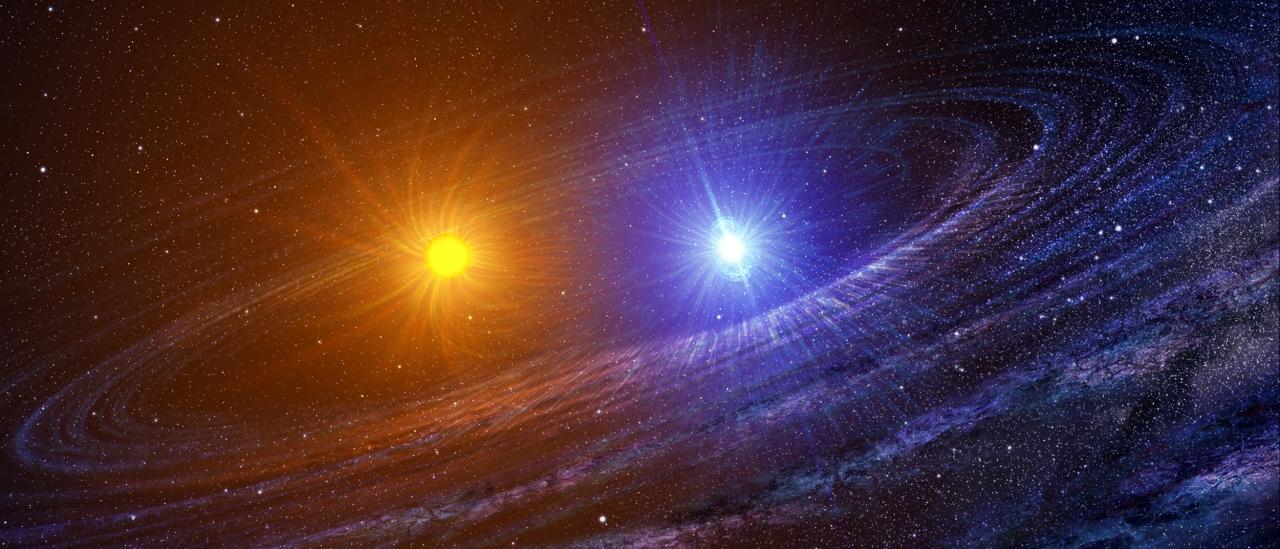
Credit: Image by Jim Cooper from Pixabay

“The comparison I often like to make is with the East India Company: a private British enterprise that became so powerful it could shape the politics of nations and at times had an army twice the size of Britain’s. It began as trade; it ended in domination. Could a similar dynamic unfold locally in our solar system, where a handful of today’s tech giants and billionaires control access to orbit, communications, and eventually, extraterrestrial resources? A monopoly in space would be dangerous for humanity. The challenge is to encourage innovation and investment without ceding ownership of the cosmos to a few individuals or organisations.”

-Taken from a Guardian article titled “There’s a New Space Race – Will the Billionaires Win?” by Maggie Aderin-Pocock. One only needs to read the book series by Daniel Abraham and Ty Franck, starting with Leviathan Wakes, or watch the televised version, The Expanse, to have some idea of what the future may hold.

Space Stories: Russia to Re-purpose ISS Section, Second Mars Probe Approaching Lifespan, and Titan’s “Oceans” More Likely Ice

Image (Credit): A portion of the International Space Station’s Russian segment is pictured with docked spacecraft including Europe’s Automated Transfer Vehicle (ATV) and the Soyuz TMA-20 crew vehicle. (NASA)

Here are some recent space-related stories of interest.

ARSTecnica: Russia is About to do the Most Russia Thing Ever with its Next Space Station

For several years now, in discussing plans for its human spaceflight program beyond the International Space Station, Russian officials would proudly bring up the Russian Orbital Station, or ROS…Oleg Orlov, director of the Institute of Biomedical Problems of the Russian Academy of Sciences, said ROS will no longer be composed of entirely new modules. Rather, its core will be the Russian segment of the International Space Station. “The Scientific and Technical Council of Roscosmos supported this proposal and approved the deployment of a Russian orbital station as part of the Russian segment of the ISS,” Orlov reportedly said.

Daily Galaxy: NASA Faces Major Setback: One Mars Orbiter Lost and Another Is Expected to Shut Down Soon!

NASA is losing critical communication links with its Mars missions. After recently losing contact with the MAVEN spacecraft, the agency faces the impending loss of the Mars Odyssey orbiter, which has been circling the Red Planet for over two decades. As both orbiters approach the end of their operational lifespans, NASA will soon have to find ways to maintain data relay capabilities for its rovers and other missions on the fourth planet.

NASA/JPL: NASA Study Suggests Saturn’s Moon Titan May Not Have Global Ocean

A key discovery from NASA’s Cassini mission in 2008 was that Saturn’s largest moon Titan may have a vast water ocean below its hydrocarbon-rich surface. But reanalysis of mission data suggests a more complicated picture: Titan’s interior is more likely composed of ice, with layers of slush and small pockets of warm water that form near its rocky core. Led by researchers at NASA’s Jet Propulsion Laboratory in Southern California and published in the journal Nature on Wednesday, the new study could have implications for scientists’ understanding of Titan and other icy moons throughout our solar system.

Study Findings: A Carbon-rich Atmosphere on a Windy Pulsar Planet

Image (Credit): Artist’s rendering of of an exoplanet orbiting a rapidly spinning neutron star called a pulsar. (NASA, ESA, CSA, Ralf Crawford (STScI))

Abstract of pre-publication study findings:

A handful of enigmatic Jupiter-mass objects have been discovered orbiting pulsars. One such object, PSR\,J2322-2650b, uniquely resembles a hot Jupiter exoplanet due to its minimum density of 1.8 g/cm^3 and its ~1900 K equilibrium temperature. We use JWST to observe PSR J2322-2650b’s emission spectrum across an entire orbit. In stark contrast to every known exoplanet orbiting a main-sequence star, we find an atmosphere rich in molecular carbon (C3, C2) with strong westward winds. Our observations open up new exoplanetary chemical (ultra-high C/O and C/N ratios of >100 and >10,000, respectively) and dynamical regimes (ultra-fast rotation with external irradiation) to observational study. The extreme carbon enrichment poses a severe challenge to the current understanding of “black widow” companions, which were expected to consist of a wider range of elements due to their origins as stripped stellar cores.

Citation: Michael Zhang et al. A carbon-rich atmosphere on a windy pulsar planet. ApJL (2025).

https://doi.org/10.48550/arXiv.2509.04558

Study-related stories:

University of Chicago – “NASA’s Webb Telescope Finds Bizarre Atmosphere on a Lemon-shaped Exoplanet”

Scientific American – “This Planet Is the Shape of a Lemon. That May Be the Least Weird Thing about It”

Space Daily – “Webb Maps Carbon Rich Atmosphere on Distorted Pulsar Planet”

Executive Order to Ensure American Space Superiority

Image (Credit): Apollo Astronaut James B. Irwin, lunar module pilot, works at the Lunar Roving Vehicle during the first Apollo 15 lunar surface extravehicular activity (EVA) at the Hadley-Apennine landing site. (NASA)

Just as Jared Isaacman, NASA’s new Administrator, started to settle into his new post, the White House updated the nation’s space priorities.

A new executive order on Thursday, titled “Ensuring American Space Superiority,” provides clear goals for NASA, which includes:

  • Returning to the Moon by 2028, and the establishment of initial elements of a permanent lunar outpost by 2030;
  • Deploying of nuclear reactors on the Moon and in orbit, including a lunar surface reactor ready for launch by 2030; and
  • Spurring private sector innovation and investment by upgrading launch infrastructure and developing a commercial pathway to replace the International Space Station by 2030.

Adding nuclear reactors as its own goal seems a little odd since it could simply be wrapped into the first goal related to a permanent lunar outpost, but maybe this is just to kick regolith into the eyes of the Chinese who announced a similar intention.

Returning to the Moon by 2028 will certainly be a challenge, but luckily Administrator Isaacman is showing no favorites when it comes to meeting this goal. This week he made this statement about plans to return to the Moon:

I don’t think it was lost on either vendor that whichever lander was available first to ensure that America achieves its strategic objectives on the moon is the one we were going to go with.

His friend Elon Musk was certainly listening, but so far we have not heard him say that the new NASA Administrator has a 2 digit IQ. Of course, it has only been a few days, though the honeymoon is likely to be very short.

Video: The Eschatian Hypothesis

Credit: Image by Jazella from Pixabay

I recommend you check out the latest Cool Worlds Labs video for an intriguing new theory about mankind’s contact with an alien civilization. British astronomer and associate professor at Columbia University David Kipping narrates this new idea, called the Eschatian Hypothesis, in his latest video titled “Our First Contact with Aliens Will Be Their Last Words.”

He discusses how the early detection of hot Jupiters dominated the early discussion about exoplanets, even though we later learned that they are found around less than 1 percent of stars with exoplanets. He attributes this to detection bias, or Malmquist bias, because they were so easy to detect. The same applies to stars in their giant phase, which represents only 1 percent of all stars but about 1/3 of the stars we can see with the naked eye.

In this sense, the first contact with an alien civilization will probably follow this pattern as well. Hence, an alien civilization in disequilibrium will become louder and thereby more detectable by us. At the same time, the more advanced civilizations in balance with nature will be harder to detect.

As a result, the Eschatian Hypothesis contends that the more detectable alien civilizations will be the less stable ones. This is certainly a unique twist on the Fermi principle.

View the video for the full story.