More Angst Regarding the International Space Station

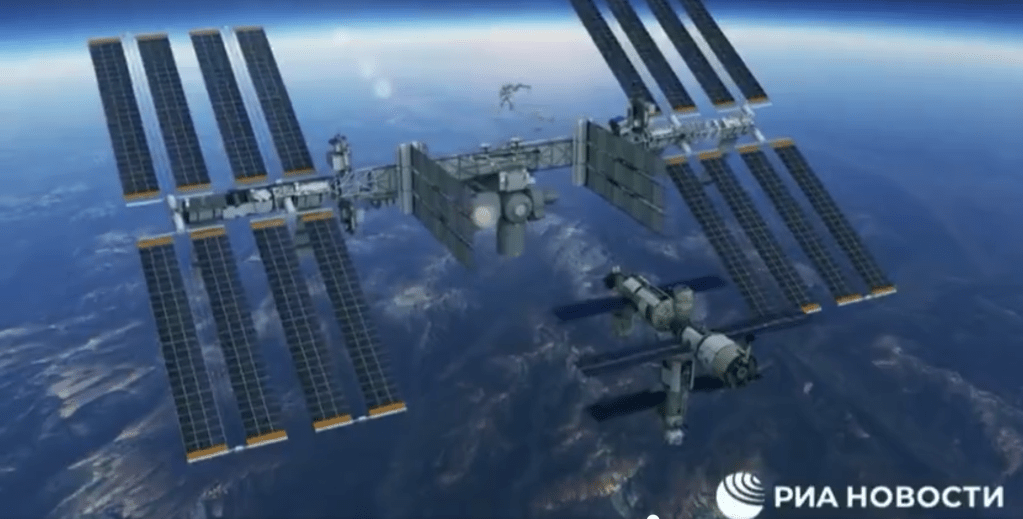
Source/Credit: Image of Russian section breaking away from the ISS from NASA Watch.

You may have already seen this ridiculous Russian video that NASA Watch shared with the world. It is very disturbing. Presumably created by the Russian space program Roscosmos, it shows the Russian portion of the International Space Station (ISS) breaking away as a result of the worldwide sanctions against the Russians for invading Ukraine. Here is the NASA Watch tweet and related video (an image of which is shown above):

Russian gov’t-controlled RIA Novosti @rianru posted a video on Telegram made by @Roscosmos where cosmonauts say goodbye to Mark Vande Hei on #ISS, depart, and then the Russian segment detaches from the rest of ISS. @Rogozin is clearly threatening the ISS program. #NASA#Ukraine

One person provided some hope among all this foolishness with this reply:

Basically all astro-/ cosmonauts said that after a couple of days in space they only see a fragile planet, and that nation states start to disappear in their minds.

And now we have former US astronaut Scott Kelly and SpaceX’s Elon Musk battling with Dmitry Rogozin, the head of Roscosmos. Scott Kelly was clear in his dislike of Rogozin’s comments about the ISS:

Maybe you could find yourself a job working at McDonalds if McDonalds still exists in Russia.

None of this is helpful when we have lives in space depending on a competent ground team. Let’s hope all these egos do not get in the way of the professionalism we expect from the US, Russia, and others with regards to the safe operation of the ISS.

Pic of the Week: Test-Bed Telescope 2

Source/Credit: Test-Bed Telescope 2 from the ESA.

This week’s photo is from the European Space Agency (ESA) and shows a recently-completed telescope in Chile designed to detect dangerous asteroids. Here is the full story:

Part of the world-wide effort to scan and identify near-Earth objects, the European Space Agency’s Test-Bed Telescope 2 (TBT2), a technology demonstrator hosted at ESO’s La Silla Observatory in Chile, has now started operating. Working alongside its northern-hemisphere partner telescope, TBT2 will keep a close eye on the sky for asteroids that could pose a risk to Earth, testing hardware and software for a future telescope network.

Podcast: The End of the World

Yes, the title is bleak, but it is worth going through this earlier podcast to ponder the future of mankind in a universe that has not shown any other inhabitants to date. Is this because of some internal or external filtering mechanism, such as nuclear war or the dangers or space travel? Is there something special about humans here on Earth? Josh Clark, who you may know from the podcast Stuff You Should Know, does a nice job narrating this inquiry. He discusses his new show here.

Here are some of the same episodes from The End of the World:

Episode 2: Great Filter

The Great Filter hypothesis says we’re alone in the universe because the process of evolution contains some filter that prevents life from spreading into the universe. Have we passed it or is it in our future? Humanity’s survival may depend on the answer.

Interviewees: Robin Hanson, George Mason University economist (creator of the Great Filter hypothesis); Toby Ord, Oxford University philosopher; Donald Brownlee, University of Washington astrobiologist (co-creator of the Rare Earth hypothesis); Phoebe Cohen, Williams College paleontologist.

Episode 7: Biotechnology

Natural viruses and bacteria can be deadly enough; the 1918 Spanish Flu killed 50 million people in four months. But risky new research, carried out in an unknown number of labs around the world, are creating even more dangerous humanmade pathogens.

Interviewees: Beth Willis, former chair, Containment Laboratory Community Advisory Committee; Dr Lynn Klotz, senior fellow at the Center for Arms Control and Non-Proliferation.

Just think of it as a long investigation of the Fermi Paradox – the conflict between the expectation that intelligent life can be found throughout the universe and the lack of any clear evidence that this is so. Are we the issue, or is it something out there?

The podcast came out in 2018 (before COVID, so the biotechnology episode missed the latest crisis), but the points in each episode remain relevant. Josh Clark gives you a lot to ponder.

Another Space Telescope is Coming: The Nancy Grace Roman Space Telescope

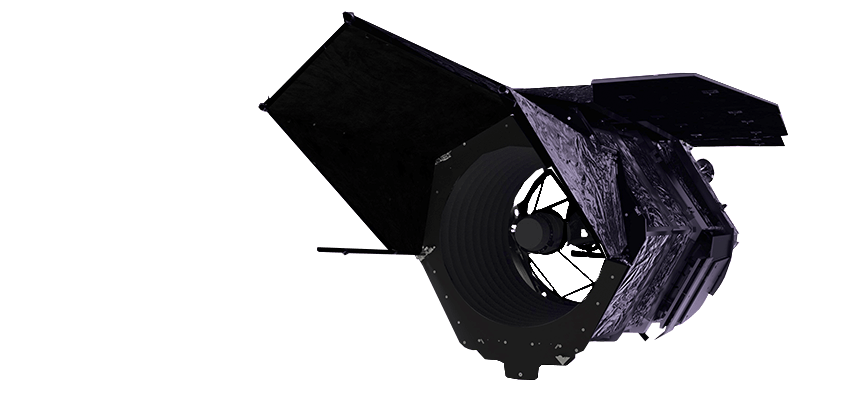
Source/Credit: Nancy Grace Roman Space Telescope from NASA.

With all the excitement about the James Webb Space Telescope coming online shortly, we do not want to forget about another space telescope in development. NASA’s Nancy Grace Roman Space Telescope, expected to be launched in 2027, will be even more productive than the Hubble Space Telescope. NASA noted the new space telescope will be:

Providing the same crisp infrared resolution as Hubble over a field of view 200 times larger, Roman will conduct sweeping cosmic surveys that would take hundreds of years using Hubble. Roman will map stars, galaxies, and dark matter to explore the formation and evolution of large cosmic structures, like clusters and superclusters of galaxies, and investigate dark energy, which is thought to accelerate the expansion of the universe.

The Nancy Grace Roman Space Telescope will also have a Coronagraph Instrument that will be able to detect more exoplanets, including smaller, rocky exoplanets similar to Earth. By using the parent star’s reflected light on a larger exoplanet, this instrument will also allow astronomers to analyze the colors of the exoplanet’s atmosphere and learn more about the content of that atmosphere (complementing other studies of large exoplanets, one of which was noted here earlier). If successful, this technology could be refined further to one day help to detect oxygen, methane, and other elements/compounds in the atmosphere of distant, Earth-sized exoplanets.

Astronomer Vanessa Bailey from NASA’s Jet Propulsion Laboratory stated:

To image Earth-like planets, we’ll need 10,000 times better performance than today’s instruments provide…The Coronagraph Instrument will perform several hundred times better than current instruments, so we will be able to see Jupiter-like planets that are more than 100 million times fainter than their host stars.

The telescope is named after Nancy Grace Roman, who was NASA’s first chief astronomer and also known as the “Mother of Hubble” for her efforts in making the Hubble Space Telescope a reality. You can read more about her here.

Local Black Hole: False Alarm

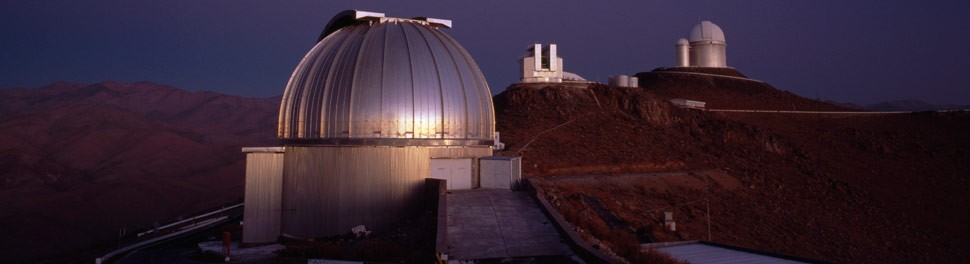
Source/Credit: MPG/ESO 2.2-metre telescope at ESO’s La Silla Observatory in Chile.

You may have remembered this NASA tweet from September 2020:

HR 6819 is the closest black hole we’ve detected so far, and it lies about 1,000 light-years away. ⚫️ Statistics say there should be one as close as 65 light-years, though we may never detect it unless it lights up!

The original European Space Agency (ESA) press release noted that an invisible object has two companion stars, one of which orbits the unseen object every 40 days. The data for this finding used the MPG/ESO 2.2-metre telescope at ESO’s La Silla Observatory in Chile.

Well, you can relax. The ESA announced last week that HR 6819 is not a black hole based on new data from ESO’s Very Large Telescope (VLT) and Very Large Telescope Interferometer (VLTI):

Our best interpretation so far is that we caught this binary system in a moment shortly after one of the stars had sucked the atmosphere off its companion star. This is a common phenomenon in close binary systems, sometimes referred to as “stellar vampirism” in the press,explains Bodensteiner, now a fellow at ESO in Germany and an author on the new study. “While the donor star was stripped of some of its material, the recipient star began to spin more rapidly.

So, mystery solved. Now we need to talk about local vampires!