KSC: Upcoming Launch Schedule & More

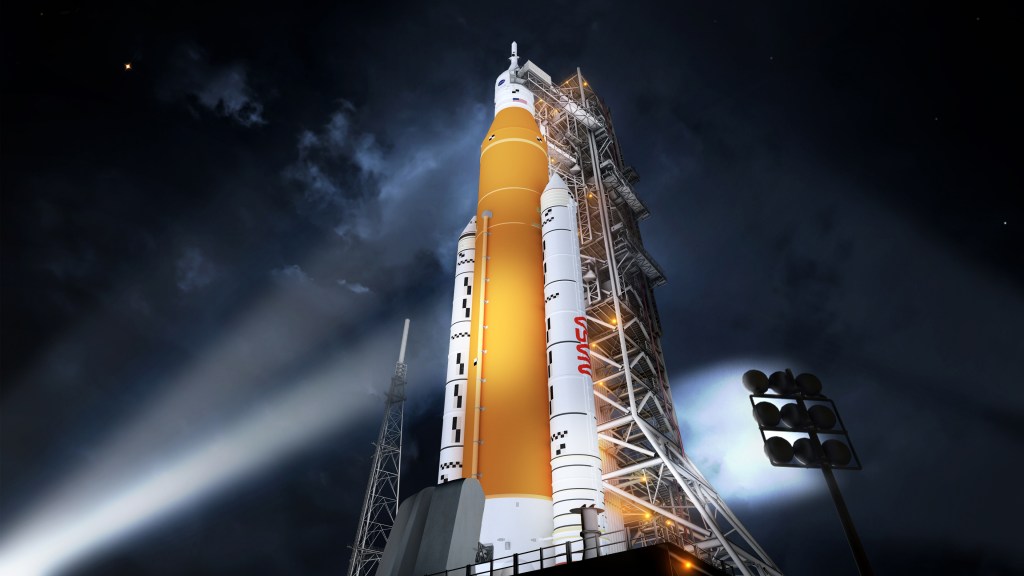
Image (Credit): The John F. Kennedy Space Center in Florida. (NASA)

If you are interested in what is being launched from the Kennedy Space Center (KSC), you can easily view this information at this website. For example, on May 19th, the Boeing CST-100 Starliner will be tested in orbit as it becomes another candidate to resupply the International Space Station. The site also highlights other interesting events and anniversaries, such as the December 7th 50th anniversary of the Apollo 17th launch.

One place holder on the KSC schedule with no clear date is the inaugural launch of NASA’s Space Launch System (SLS) rocket, the first phase of the Artemis Program. In a recent press release, NASA outlined the parameters for such a launch as well as the remaining days in 2022 that would satisfy these parameters. The four parameters are:

  1. The Moon’s position in its lunar cycle;
  2. A trajectory so Orion is not in darkness for more than 90 minutes at a time so that the solar array wings can receive and convert sunlight to electricity and the spacecraft can maintain an optimal temperature range;
  3. A trajectory that allows for the skip entry technique planned during Orion’s return to Earth; and
  4. Daylight conditions for Orion’s splashdown to initially assist recovery personnel when they locate, secure, and retrieve the spacecraft from the Pacific Ocean.  

The calendar still has plenty of possible dates. The question now is whether NASA can get all of the pieces together in time to make this happen in 2022.

Credit: NASA

Growing Options in Moon Dust

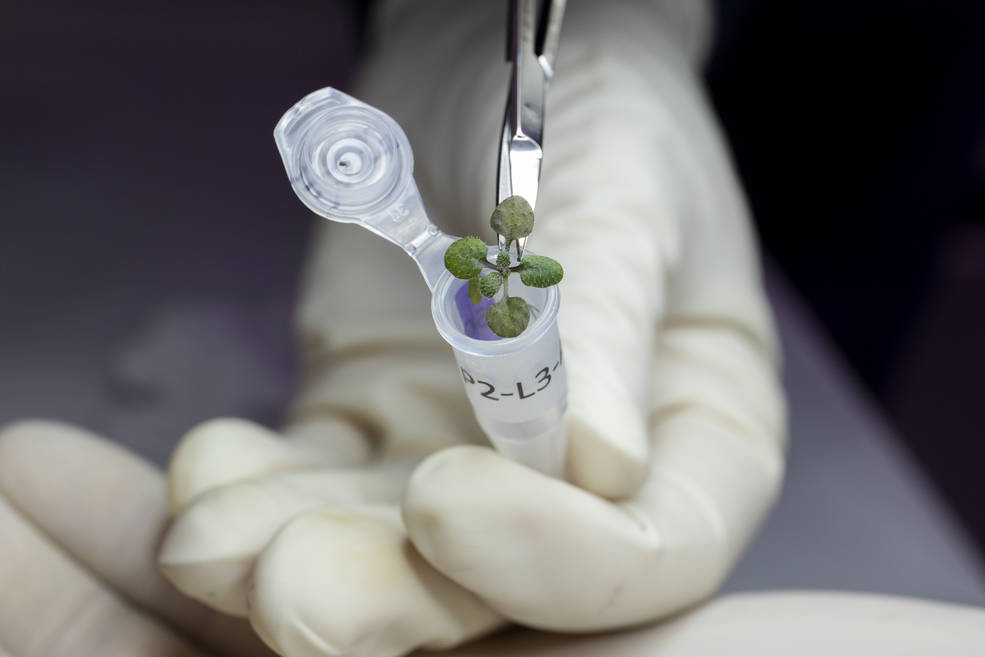
Image (Credit): Placing a plant grown during the experiment in a vial for eventual genetic analysis. (UF/IFAS photo by Tyler Jones)

Speaking of moon dust, it seems scientists have found that they can grow plants in lunar soil. This is quite a surprise given the nature of moon dust. It would seem to be an even greater feat than growing plants in Martian soil.

NASA has reported that scientists at the University of Florida have successfully grown plants in actual lunar soil from the Apollo 11, 12, and 17 missions. Only water and a nutrient solution were added to the soil before seeds were planted. Plants started to sprout in two days. After 20 days the plants were harvested and studied before they had started to flower. While the lunar soil plants were somewhat stunted and stressed, the experiment was a success.

NASA noted:

This research opens the door not only to someday growing plants in habitats on the Moon, but to a wide range of additional questions. Can understanding which genes plants need to adjust to growing in regolith help us understand how to reduce the stressful nature of lunar soil? Are materials from different areas of the Moon more conducive to growing plants than others? Could studying lunar regolith help us understand more about the Mars regolith and potentially growing plants in that material as well? All of these are questions that the team hopes to study next, in support of the future astronauts traveling to the Moon.

This is a fascinating finding if it will allow us to use the lunar surface to feed astronauts rather than bringing more material from the Earth. It is also very timely as NASA is preparing the way for human habitation on the Moon under the Artemis Program.

We wanted to learn from the Moon before pushing onto Mars. This is a clear sign that we are doing so.

Space Quote: A Mature Rocket Market?

Image (Credit): Space Launch System rocket. (NASA)

“The launch industry is at a point where the technology is so mature that it may not be necessary to have the U.S. government invest in it… It may be we’re at a tipping point with this rocket.”

-Statement by Dan Goldin, a former NASA administrator, regarding NASA’s expenditures on the Space Launch System (SLS) in a Wall Street Journal article, “NASA Is Building Moon Rockets, Maybe for the Last Time.” The SLS and Orion spacecraft are part of NASA’s Artemis Program to return astronauts to the Moon.

The Black Hole Sagittarius A*

Image (Credit): The first image of Sagittarius A*, the supermassive black hole at the center of our galaxy. (EHT Collaboration)

The Event Horizon Telescope (EHT), an array linking together eight existing radio observatories across the planet, has created the first image of the supermassive black hole at the center of the Milky Way galaxy. Named Sagittarius A* after a radio signal coming from a location in the direction of the constellation of Sagittarius (the A and * came later), the black hole is 27,000 light-years away and estimated to be four million times more massive than our Sun. The presence of the black hole was not in question, but capturing an image such as this took many years of work.

A press release from the European Southern Observatory (ESO) quoted EHT Project Scientist Geoffrey Bower from the Institute of Astronomy and Astrophysics, Academia Sinica, Taipei:

We were stunned by how well the size of the ring agreed with predictions from Einstein’s Theory of General RelativityThese unprecedented observations have greatly improved our understanding of what happens at the very centre of our galaxy, and offer new insights on how these giant black holes interact with their surroundings.

For more on the recent breakthrough, you may want to view the ESO Press Conference on the new Milky Way results from the EHT team (here on Youtube), which is followed by a public question and answer event.

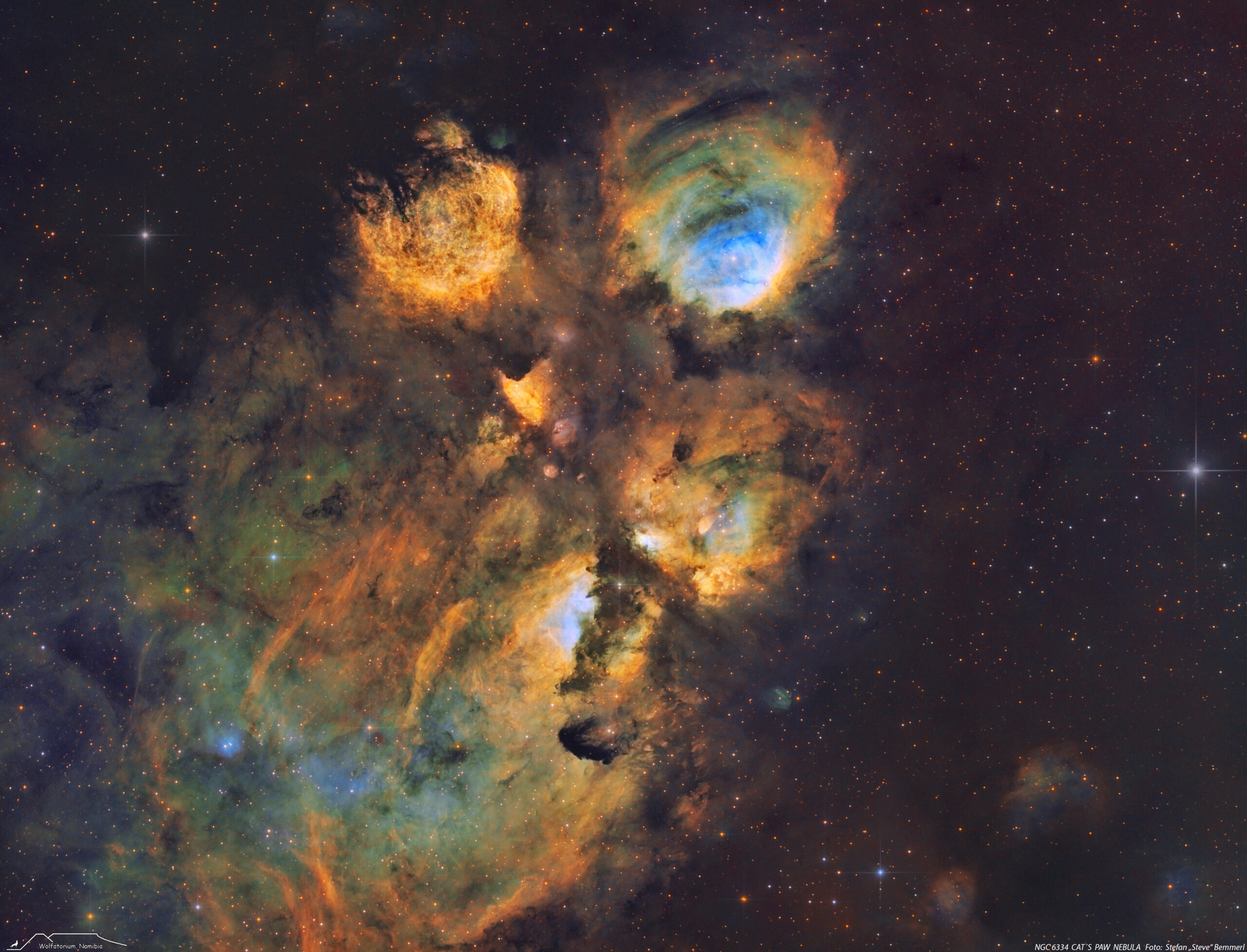
Pic of the Week: The Cat’s Paw Nebula

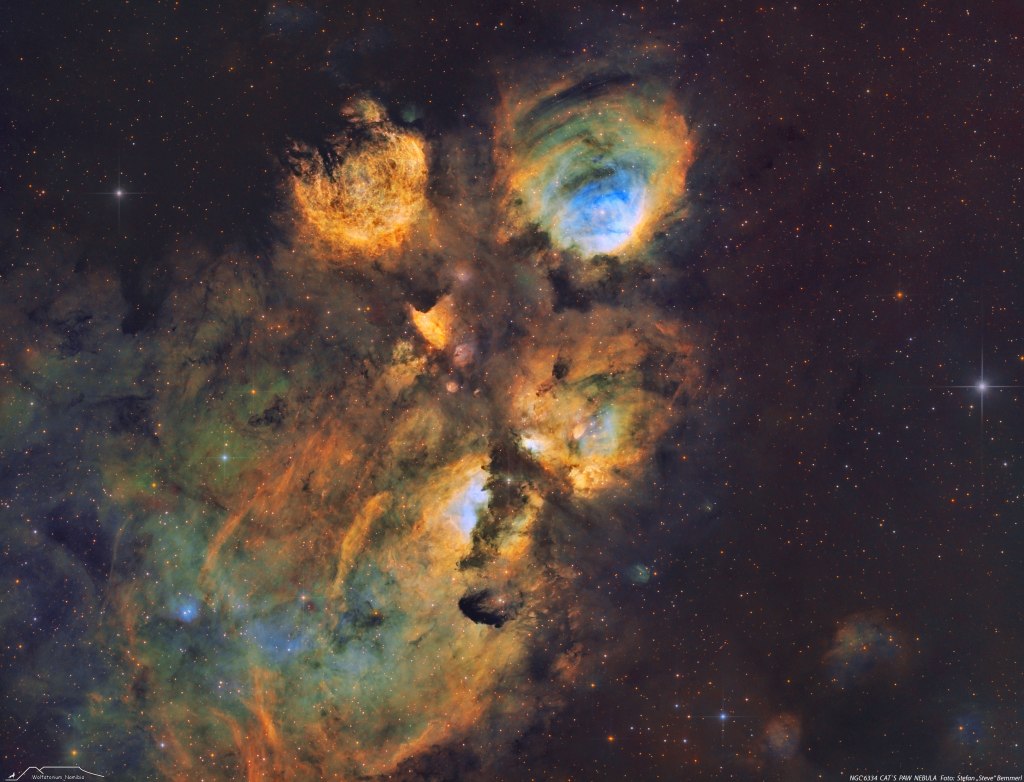
Image (Credit): The Cat’s Paw Nebula. (Stefan Steve Bemmerl & Team Wolfatorium, Hakos/Namibia)

This week’s image is from NASA’s Astronomy Picture of the Day website. It was the picture of the day for May 10, 2022. This is the story that goes with the image:

Nebulas are perhaps as famous for being identified with familiar shapes as perhaps cats are for getting into trouble. Still, no known cat could have created the vast Cat’s Paw Nebula visible toward the constellation of the Scorpion (Scorpius). At 5,500 light years distant, Cat’s Paw is an emission nebula with a red color that originates from an abundance of ionized hydrogen atoms. Alternatively known as the Bear Claw Nebula and cataloged as NGC 6334, stars nearly ten times the mass of our Sun have been born there in only the past few million years. Pictured here is a deep field image of the Cat’s Paw Nebula in light emitted by hydrogen, oxygen, and sulfur.