Do You Have Moon Dust in Your Portfolio?

Image (Credit): Moon dust on auction. (Bonhams)

With the drop in the stock market and fall of cryptocurrency, maybe it is time to expand the portfolio into some new areas. You can always consider moon dust, a small sample of which sold last month for about $500,000 when auctioned at Bonhams. The sample in question was from the Apollo 11 lunar mission

The auction house had this to say about the sample:

5 Scanning Electron Microscope (SEM) aluminum sample stubs, each topped with approximately 10 mm diameter carbon tape containing Apollo Moon dust, 4 of which with particles collected by Neil Armstrong, the first person to walk on the Moon, as part of the Apollo 11 contingency sample, July 21, 1969 and later removed by NASA from the Apollo 11 Contingency Sample Return Container (CSRC) Decontamination Bag; stubs hand numbered by NASA scientists in marker on bottom 2 through 6.

A “contingency sample” is basically an initial sample in case something happens during the mission that prevents the the full collection of material. But what is interesting here is that the contingency sample bag still contained some lunar dust when it was lost, and then it was caught up in a court case, and then sold at auction, and then inspected by NASA, who inappropriately removed the moon dust, which was eventually returned. The drama and incompetence of the US government in this case is almost worth the price of the dust. Hence, this is a unique substance in many ways, and it does make cryptocurrency sound pretty boring.

Just do not expect to see many lunar dust sales in the future. NASA is very protective of such material when it is not misplacing it.
Mars Sample Return: Do You Have Comments?

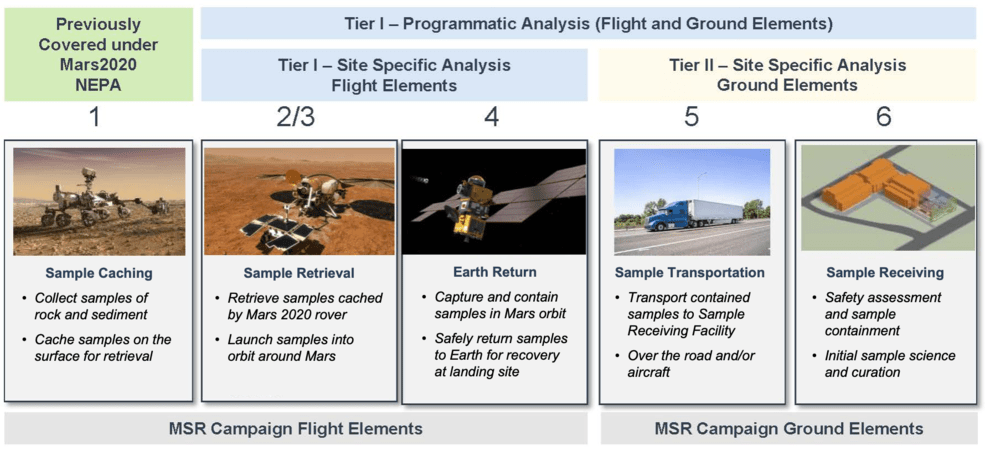
Image (Credit): Mars Sample Return campaign poster. (NASA)

NASA and the European Space Agency are still looking for comments on the process to return Martian rock samples to Earth. Of the six steps needed to collect and return the samples (see graphic above), only the first step is currently underway with the Perseverance Rover exploring Mars. Now we need to get those samples home. You have until May 15th to get comments back to NASA on this.

And what is the time frame for getting these samples back to Earth? The current goal is 2033, assuming all goes well. You may recall that China also wants to collect and return Martian samples by 2030. I expect more delays on both sides. When you add this to the race back to the Moon, the space race is getting more interesting every day.

Video: The Problem With “The Rare Earth Hypothesis”

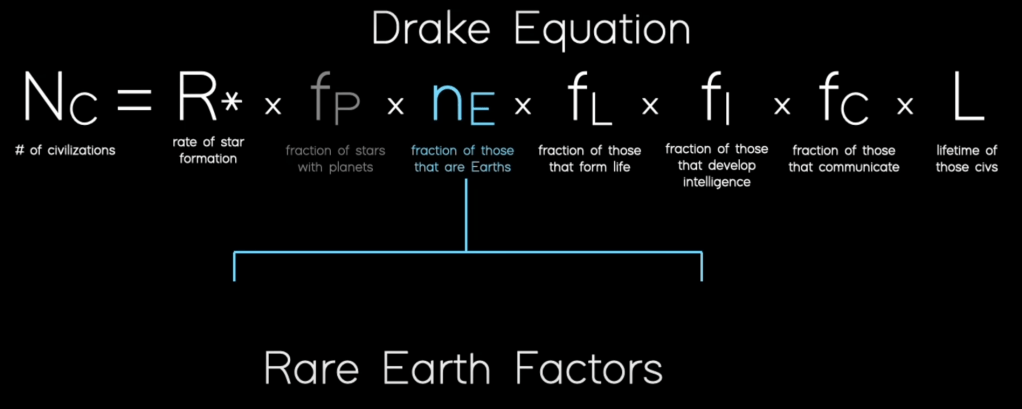
Image (Credit): Upgraded Drake Equation to account for the Rare Earth factors. (Cool Worlds Lab)

Cool Worlds Lab has another great video out, this time discussing the Rare Earth Hypothesis. This hypothesis assumes that a multitude of factors are necessary for life to develop in the universe, and the program goes deeper into a few of these factors, including the need for:

  1. A magnetosphere;
  2. Plate tectonics;
  3. A large moon;
  4. Impacts from asteroids and comets; and
  5. A Jupiter-sized planet.

The program challenges some of these factors and also highlights the need for a more open understanding of the origins of life beyond our current understanding. Basically, the conditional probably of the Drake Equation or even the modified Drake Equation unnecessarily leads one down a very narrow path.

It’s an eye-opening review of the evidence and worth watching. Check it out.

Profile: Mid-Atlantic Regional Spaceport

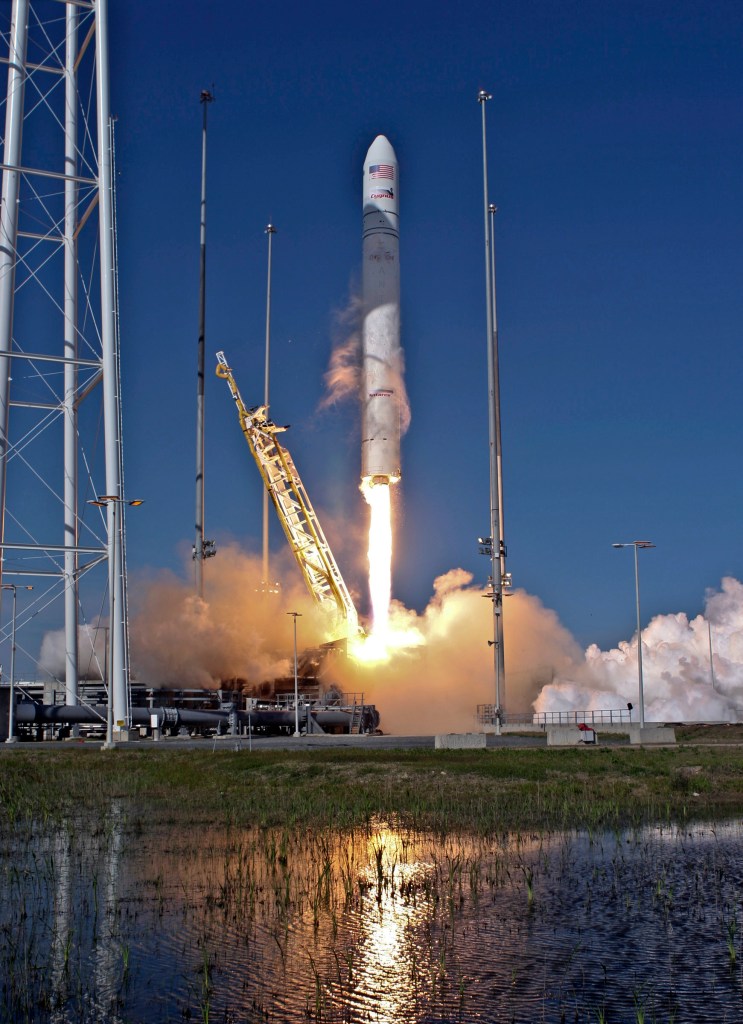
Image (Credit): Rocket being launched from Virginia’s spaceport. (Mid-Atlantic Regional Spaceport)

When you think of NASA space launches you most likely think of Cape Canaveral in Florida, but what about Virginia? The Eastern Shore of Virginia hosts the Mid-Atlantic Regional Spaceport (MARS), which is currently being used for resupply missions to the International Space Station (ISS). Created by the Commonwealth of Virginia in 1995 at the site of a World War II Navy air station, it is the only other official spaceport on the east coast.

Northrup Grumman has been using the site for various missions, including resupplying the ISS as well as other federal payloads. Orbital Sciences Corporation (now part of Northrup Grumman) launched NASA’s Lunar Atmosphere and Dust Environment Explorer (LADEE) mission from the site in 2013. In addition, last year Rocket Lab announced it planned to use MARS for launches of its new reusable Neutron rockets.

In February 2022, Northrop Grumman successfully launched its 17th ISS resupply rocket from the spaceport. The Cygnus space freighter carried needed supplies to the astronauts conducting research in orbit. The freighter will also be used to “boost” the ISS, or adjust its orbit, as noted by NASA:

This Cygnus mission is the first to feature enhanced capabilities that will allow the spacecraft to perform a reboost, using its engines to adjust the space station’s orbit as a standard service for NASA. The agency has one reboost is planned while Cygnus is connected to the orbiting laboratory. A test of the maneuver was performed in 2018 during Cygnus’ ninth resupply mission.

You may recall that such boosting is something the Russian’s claimed earlier could not occur if they abandoned the space station. Fortunately, NASA has other rocket options should they be needed. Moreover, we have additional spaceports to keep our astronauts in the sky and well supplied.

Image (Credit): Northrop Grumman’s Cygnus space freighter is pictured moments before its capture with the International Space Stations’s robotic arm in February of 2021. (NASA)

Extra: Below is a map showing the location of MARS on the Wallop Islands. The address of the facility is 7414 Atlantic Rd, Wallops Island, VA 23337.

Image (Credit): Location of MARS on the Virginia shore. (Google Maps)

Hubble and the Unexpected Asteroids

Image (Credit): This Hubble image is a mosaic of many exposures where some asteroids appear multiple times. (NASA, ESA, and B. Sunnquist and J. Mack/STScI)

The Hubble Space Telescope’s old data still holds some secrets. The European Space Agency (ESA) has reported that astronomers have found 1,031 unidentified asteroid trails in earlier data from the NASA/ESA Hubble Space Telescope. The asteroids were located by the Hubble Asteroid Hunter project, which defines the project in this way:

…we use archival images made by the Hubble Space Telescope to find asteroids observed by chance. The ESASky team compared the observation epoch and field of view of these images with the computed orbits of asteroids, to identify possible observations. The positions predicted by the algorithm, nevertheless, have some associated uncertainty because the ephemerides are not always known to great precision. This uncertainty increases with the amount of time between the last observation date and the date we predict the position for. Identifying the asteroids in the images (if present) and marking the exact position of their trail allows us to update the ephemerides and help us better characterise these objects.

More than 11,000 volunteers studied about 37,000 composite images taken by the Hubble between April 2002 and March 2021. The volunteers found about 1,000 asteroid trails, which when combined with other images spotted using artificial intelligence added to 1,701 asteroid trails. Of these, 1,031 are unidentified trails most likely associated with smaller asteroids. The analysis of these unidentified trails will continue.

This is a great example of the public assisting with astronomy and allowing for more timely results. It’s a helpful model for future astronomy endeavors.