JWST: An Early Image of Galaxies

Image (Credit): Galaxy cluster SMACS 0723. (NASA, ESA, CSA, and STScI)

Earlier today, President Biden released one of the first images (shown above) from the James Webb Space Telescope (JWSP). A full release is scheduled for tomorrow at this location: https://www.nasa.gov/webbfirstimages.

The image shows galaxy cluster SMACS 0723, which represents thousands of galaxies in a patch of sky approximately the size of a grain of sand held at arm’s length by someone on the ground.

Here is a little more from NASA on what we are seeing:

The image shows the galaxy cluster SMACS 0723 as it appeared 4.6 billion years ago. The combined mass of this galaxy cluster acts as a gravitational lens, magnifying much more distant galaxies behind it. Webb’s NIRCam has brought those distant galaxies into sharp focus – they have tiny, faint structures that have never been seen before, including star clusters and diffuse features. Researchers will soon begin to learn more about the galaxies’ masses, ages, histories, and compositions, as Webb seeks the earliest galaxies in the universe.

It’s certainly a good start. Stay tuned for more.
Video/Radio: Martian Life is “Not Bonkers”

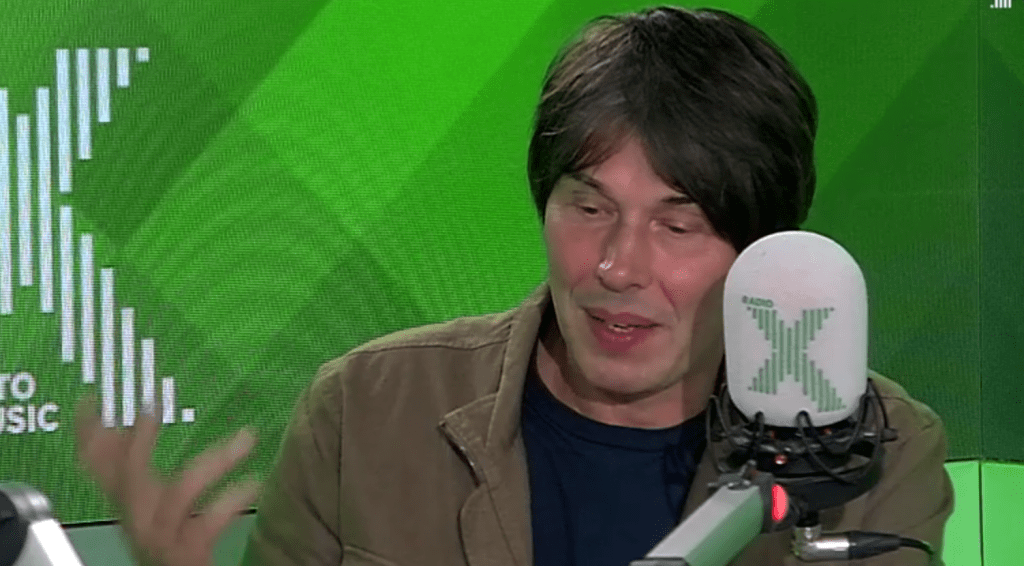
Image (Credit): Professor Brian Cox on The Chris Moyles Show. (Radio X)

Last week on the The Chris Moyles Show on Radio X, Dr. Brian Cox responded to a call in question about life on Mars. He noted that NASA’s Perseverance rover may find signs of life in an ancient river delta where it is now drilling. He said he would not be surprised if Martian microbes were located.

He also discussed plans to visit Jupiter’s moon Europa to explore its seas and look for life. Interestingly, he highlighted how Europa may contain three times as much water as can be found on the Earth. That would make it quite a rest stop for future solar system voyages.

In the end, he made it clear that finding life in our solar system is “not bonkers.” That said, he also explored the idea that we may be alone in this universe in terms of intelligent civilizations.

Space Quote: NASA Condemns Russian Political Stunt

Image (Credit): Russian cosmonauts Oleg Artemyev, Denis Matveev and Sergey Korsakov pose with a flag of the self-proclaimed Luhansk People’s Republic on the ISS in a photograph released July 4. (Roscosmos via Reuters)

“[NASA] strongly rebukes using the International Space Station for political purposes to support [the] war against Ukraine, which is fundamentally inconsistent with the station’s primary function among the 15 international participating countries to advance science and develop technology for peaceful purposes.”

-NASA statement, as quoted in the Washington Post, regarding the picture of three Russian cosmonauts on the International Space Station (ISS) holding a flag of the self-proclaimed Luhansk People’s Republic released earlier this month. Russia is probably try to clear up some earlier confusion about the colors worn by these same astronauts back in March (see below). We get it, you represent an aggressive nation preying on its neighbors.

Image (Credit): Russian cosmonauts clothing for their March arrival at the ISS . (Roscosmos)

Pic of the Week: The Durable Hubble

Image (Credit): The Hubble Space Telescope. (NASA/ESA)

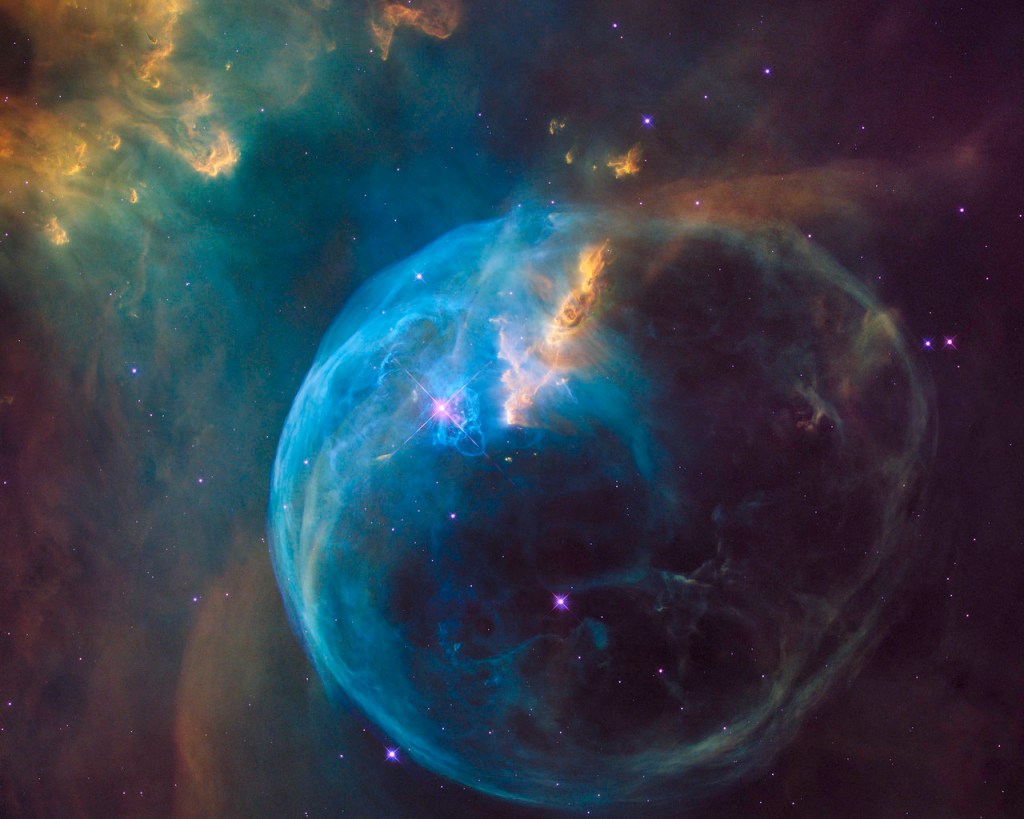
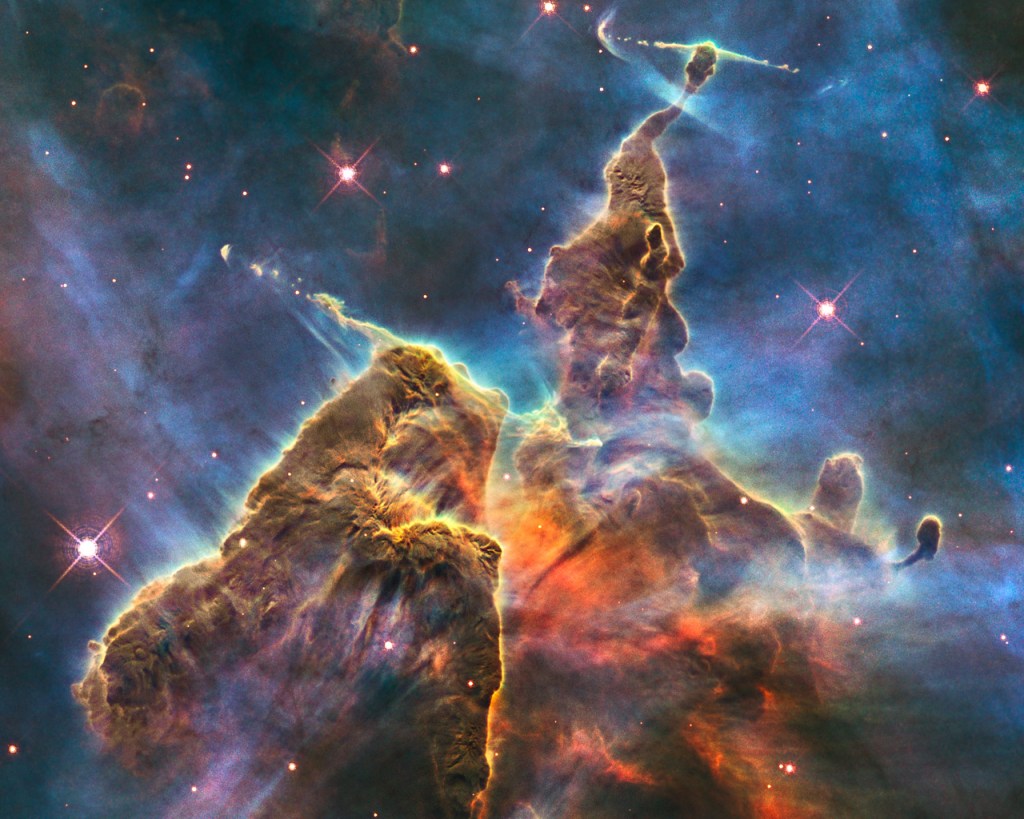
This week’s image is the Hubble Space Telescope, still going strong after more than 32 years. It left the Space Shuttle Discovery’s cargo bay on April 25, 1990. With all of the attention on the James Webb Space Telescope (JWST), it’s important to remember this dependable space telescope that brought us so many amazing images over the years, including those shown below.

Given the concern over the recent concerns about a micrometeroid impacting the JWST, let’s not forget that the Hubble had a few growing pains as well. Most importantly, it had to deal with a flawed mirror that required astronauts to visit the space telescope so they could add five pairs of corrective mirrors. More than three years had passed before the astronauts could make this correction. So the current issues with the JWST are pretty minor by comparison.

Image (Credit): The Bubble Nebula, also known as NGC 7635, located 8 000 light-years away. (NASA/ESA)
Image (Credit): A pillar of gas and clouds within the stellar nursery called the Carina Nebula, located 7500 light-years away in the southern constellation of Carina. (NASA/ESA).
Image (Credit): The planet Jupiter. (NASA/ESA)