Space Stories: Hungarians in Space, A Constantly Manned Chinese Space Station, and Lunar Water

Here are some recent stories of interest.

SpaceNews.com: “Hungary to spend $100 million on private astronaut mission to ISS

The Hungarian government plans to spend $100 million to send an astronaut to the International Space Station in two years through a deal with Axiom Space. In a presentation at the European Space Agency’s ministerial council meeting Nov. 22, Péter Szijjártó, Hungarian foreign minister, said the country was in the middle of a process to select an astronaut to fly on a month-long mission to the ISS in late 2024 or early 2025. Axiom Space announced in July it signed a memorandum of understanding with the government of Hungary regarding that country’s Hungarian to Orbit (HUNOR) program, which would fly a Hungarian astronaut to space on a future Axiom Space mission. That announcement, though, provided few details about when that person would fly.

Associated Press: “Chinese Spaceship with 3 Aboard Docks with Space Station

Three Chinese astronauts docked early Wednesday with their country’s space station, where they will overlap for several days with the three-member crew already onboard and expand the facility to its maximum size. Docking with the Tiangong station came at 5:42 a.m. Wednesday, about 6 1/2 hours after the Shenzhou-15 spaceship blasted off atop a Long March-2F carrier rocket from the Jiuquan Satellite Launch Center...The station’s third and final module docked earlier this month, one of the last steps in China’s effort to maintain a constant crewed presence in orbit.

UniverseToday.com: “Tiny Cubesat Will Shine an Infrared ‘Flashlight’ Into the Moon’s Shadowed Craters, Searching for Water Ice

A tiny spacecraft is ready to head out for a big job: shining a light on water ice at the Moon’s south pole. Lunar Flashlight is a cubesat about the size of a briefcase, set to launch on December 1 on a SpaceX Falcon 9 rocket, sharing a ride with the Hakuto-R Mission to the Moon. The tiny 14 kg (30 lb) spacecraft will use near-infrared lasers and an onboard spectrometer to map the permanently shadowed regions near the Moon’s south pole, where there could be reservoirs of water ice.

Good Article: The Old and the New in Space Telescopes

Image (Credit): Costs and timescales of past, current and future NASA missions. Cost is at launch, i.e. does not include servicing missions. Development timescale indicates time from survey recommendation to launch. For future missions, the estimated cost is a minimum, assuming immediate start and optimum budget profile. (PhysicsWorld using data taken from the NASA Astro2020 decadal survey)

The above table from a Physics World article, “‘Great observatories’ – the next generation of NASA’s space telescopes, and their impact on the next century of observational astronomy,” gives you some idea about what is already floating in space and what we hope to launch in the future.

Take a look at the article to learn more about the science and politics surrounding space telescopes and the likelihood we will see other great space telescopes like the James Webb Space Telescope in the near future.

Video: Brian Cox on Multiverses and More

Image (Credit): Dr. Brian Cox in an interview discussing multiverses. (LADbible TV)

About a month ago, English physicist Brian Cox was discussing a variety of topics in an interview on LADbible TV titled Brian Cox On The Multiverse And Life On Other Planets. You can hear Dr. Cox respond to a number of questions about the infinite universe, multiverses, finding intelligent life off planet, black holes, the end of the Earth, and even the recent DART mission. It is worth spending 23 minutes of your time listening to his answers.

For instance, he notes that it is his reasonable guess that there are no other worlds in the galaxy like ours in terms of harboring intelligent life. He points out that it took anywhere from 3.5 to 4 billion years for intelligent life to form on the Earth, which is about 1/3 the age of the universe. If we do find other life in the galaxy, he expects it to be slime and not much more. Later on, he states that not even the intelligent life on this planet would have been possible without a planet-killer asteroid taking out the dinosaurs, so it was a fluke that made way for intelligent life.

All in all, he said it is a “big ask” to expect to find other planets with intelligent life in this violent universe with a 4 billion-year chain of life uncut by events, making our civilization quite unique. Of course, earlier in the interview he also points out that there are about 2 trillion galaxies in our “small patch” of the universe, so even one intelligent planet per galaxy can amount to a lot of civilizations. Yet ever seeing or even knowing about these civilizations is something else. Add in the idea of multiverses created by endless big bangs, and the odds of intelligent life increase again within these other unknowable universes.

It’s a lot to get your heard around, though Dr. Cox has a way of making it all sound so reasonable. For that reason, I again ask you to spend 23 minutes with Dr. Cox to clear your head and make room for some new ideas.

Reason Magazine Discusses the Space Age

The December issue of Reason Magazine has plenty of fun articles on space travel, the ethics of terra-forming, science fiction books and films, and more. The magazine tends to favor privatization of just about everything, so expect some cheering for space billionaires like Elon Musk and Jeff Bezos, but overall it is a nice collection of thought-provoking articles.

Here is a sample of the articles:

Another ISS Resupply Mission Underway

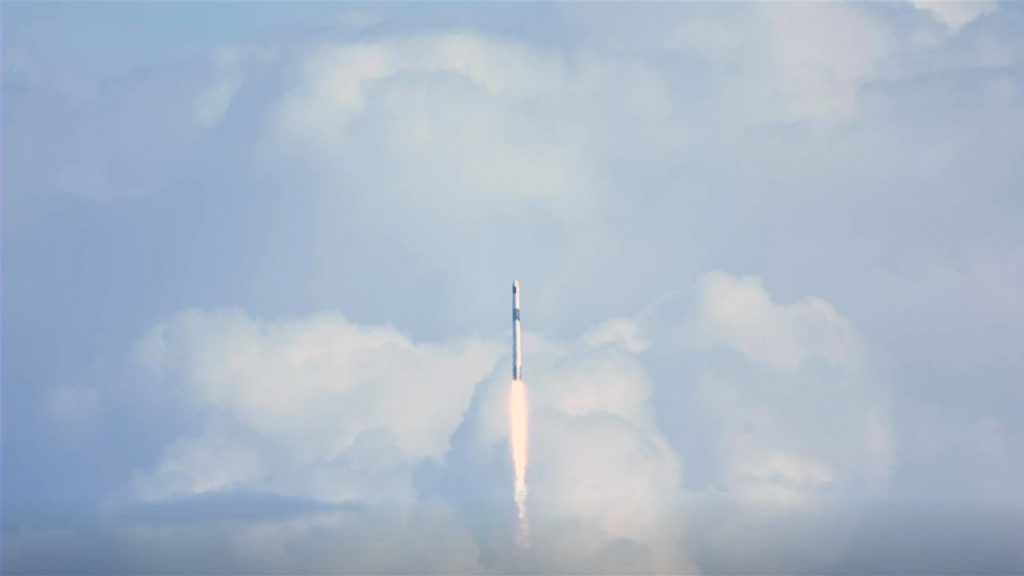
Image (Credit): SpaceX’s Falcon 9 rocket leaving NASA’s Kennedy Space Center in Florida at 2:20 p.m. EST November 26, 2022. (NASA)

Earlier today, a SpaceX rocket sent more supplies towards the International Space Station (ISS). The Falcon 9 rocket successfully sent the Dragon capsule on its way towards a rendezvous with the ISS tomorrow morning. You can read about some of the cargo here.

For example, part of the cargo will assist with the growing of dwarf tomatoes in space. Gioia Massa, NASA Life Sciences project scientist and VEG-05 principal investigator, stated:

We are testing tomatoes, looking at the impacts of light spectrum on how well the crop grows, how delicious and nutritious the tomatoes are, and the microbial activity on the fruit and plants…We also are examining the overall effect of growing, tending, and eating crops on crew behavioral health. All of this will provide valuable data for future space exploration.

Even with all of the excitement targeted at the Moon and Artemis these days, the everyday work on the ISS continues.