
Take a look at the image above. Can you determine where this image originated? Take a guess and then check your answer by going to the “Where is This? The Answer Sheet” page.

Take a look at the image above. Can you determine where this image originated? Take a guess and then check your answer by going to the “Where is This? The Answer Sheet” page.
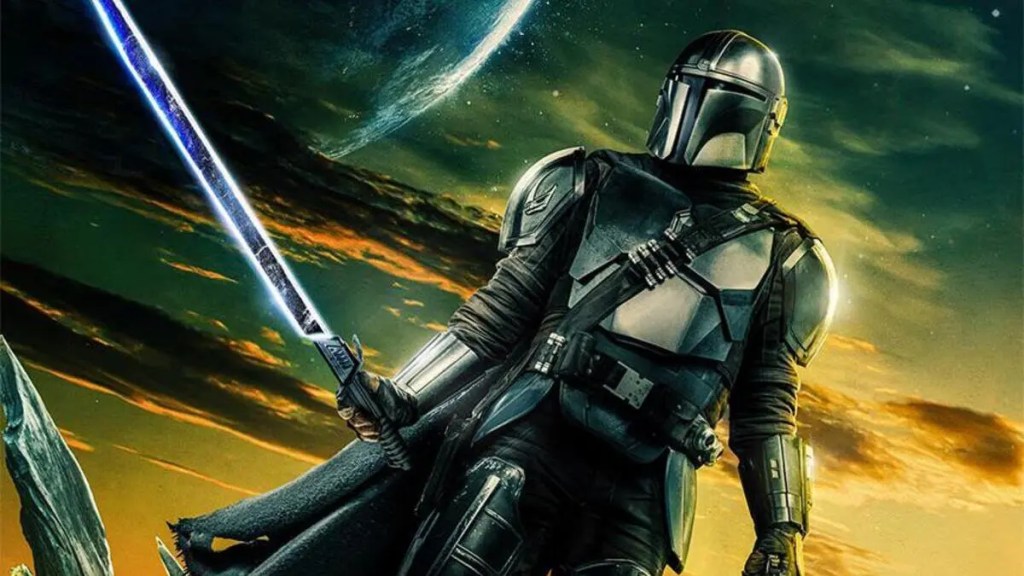
On March 1, season three of Disney’s The Mandalorian premiered. It was action-packed throughout. We had plenty of time with the main Mandalorian, Din Djar, as well as his sidekick, Baby Yoda, now known as Grogu. But if you were somewhat confused to see the two together again after the ending of season two, you are not alone. Unfortunately, Disney tried to keep another Star Wars series, The Book of Boba Fett, relevant by throwing in a few episodes with Din Djar and Grogu. I do not like these types of crossovers, and I expect others feel the same.
In those crossover episodes we learn that Din Djar needed to make amends for taking off his helmet for Grogu, and Grogu decided to abandon Luke Skywalker for his Mandalorian friend. These are key points that should have stayed within the series rather than sprinkled into other series.
But back to season three and some spoilers from the first episode, so beware. I guess I was caught up in the slow, meticulous storytelling in Andor, so the attack on the Mandalorian ceremony in the first scene rattled me awake. I asked myself, why would a diminished race of Mandalorians hold a ceremony in such a dangerous spot? Were death wishes part of the ceremony as well?
And it did not get much better from there. We then find Din Djar going back to Nevarro to reclaim an earlier killer robot for his next mission. Yet the killer robot almost killed Grogu again? Is it really that hard to find a good droid that you have to pull down a town statue and play with pieces?
But wait, there’s more. It turns out that the killer robot needs a particular part, so Din Djar shoots off with Grogu to find the piece. Yet that is not what he ultimately does (after fighting pirates, of course). Instead, he spends time with whining, helmet-less Mandalorian discussing bathing spots on Mandalore.
I think you get the point. I see a lot of action with this reunited pair but not a lot of consistency in purpose or basic logic to their approach. Again, maybe Andor took me away from the Wild West for a time and I need to get back into the spirit of things again.
So I look forward to episode two this week to see whether or not the series can find its footing again. The first two seasons had a particular magic that I hope to see again.
Update: The second episode for this season was much better than episode one and more focused. Plus, it is always fun to spend time with Amy Sedaris playing Peli Motto. Moreover, we may have a new R2D2.
Astronomy and Astrophysics abstract:
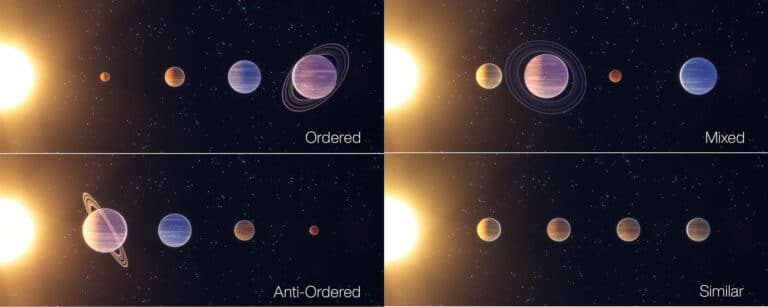
We present a novel, model-independent framework for studying the architecture of an exoplanetary system at the system level. This framework allows us to characterise, quantify, and classify the architecture of an individual planetary system. Our aim in this endeavour is to generate a systematic method to study the arrangement and distribution of various planetary quantities within a single planetary system. We propose that the space of planetary system architectures be partitioned into four classes: similar, mixed, anti-ordered, and ordered. We applied our framework to observed and synthetic multi-planetary systems, thereby studying their architectures of mass, radius, density, core mass, and the core water mass fraction. We explored the relationships between a system’s (mass) architecture and other properties. Our work suggests that: (a) similar architectures are the most common outcome of planet formation; (b) internal structure and composition of planets shows a strong link with their system architecture; (c) most systems inherit their mass architecture from their core mass architecture; (d) most planets that started inside the ice line and formed in-situ are found in systems with a similar architecture; and (e) most anti-ordered systems are expected to be rich in wet planets, while most observed mass ordered systems are expected to have many dry planets. We find, in good agreement with theory, that observations are generally biased towards the discovery of systems whose density architectures are similar, mixed, or anti-ordered. This study probes novel questions and new parameter spaces for understanding theory and observations. Future studies may utilise our framework to not only constrain the knowledge of individual planets, but also the multi-faceted architecture of an entire planetary system. We also speculate on the role of system architectures in hosting habitable worlds.
Citation: L. Mishra, Y. Alibert, S. Udry, C. Mordasini, A framework for the architecture of exoplanetary systems. I. Four classes of planetary system architecture, Astronomy and Astrophysics (Accepted December 2022).
https://doi.org/10.1126/sciadv.abn2103
Study-related stories:

I am recommending another episode from The Planetary Society’s podcast Planetary Radio. In the episode, The Canadian Lunar Rover with Peter Visscher, we get to learn more about Canada’s plans to place a rover on the Moon.
The interview is with Peter Visscher, Director of Canadensys West, which is building the rover after receiving a contract from Canadian Space Agency’s Lunar Exploration Accelerator Program. Here is a little more about the rover and the partners on the mission:
The 30-kg lunar rover will be sent to the Moon’s south pole region as early as 2026. The rover will be carrying multiple science payloads from Canada and the US. Canadensys Aerospace is leading a broad team of partners, including NASA Ames Research Center, NGC Aerospace, Maya Heat Transfer Technologies, Nokia, Bubble Technology Industries, Waves in Space, Simon Fraser University, Western University, the University of Winnipeg, l’Université de Sherbrooke, Leap Biosystems, Surrey Satellite Technology, and RF Collins. The team’s scientific investigators are among the leading lunar researchers in Canada and the US and are affiliated with the core team organizations as well as Arizona State University, Planetary Science Institute, and University of Alberta.
The rover will explore the Moon’s South Pole as it searches for water ice. Such ice has already been detected from orbit, but this mission will test the soil in the area where the water was detected. Water on the lunar surface will be of great benefit to future missions on the Moon and elsewhere – it represents not only water itself, but oxygen for breathing and hydrogen for fuel.
The objectives of the mission were recently laid out by the Canadian government:
The interview in the podcast gives you more background on the project as well as potential plans to provide the rover with its own name.
NASA is working on another rover that it plans to send to the Moon’s surface by 2024 – Volatiles Investigating Polar Exploration Rover (VIPER). I can cover that mission and other lunar missions looking for water in a later post.
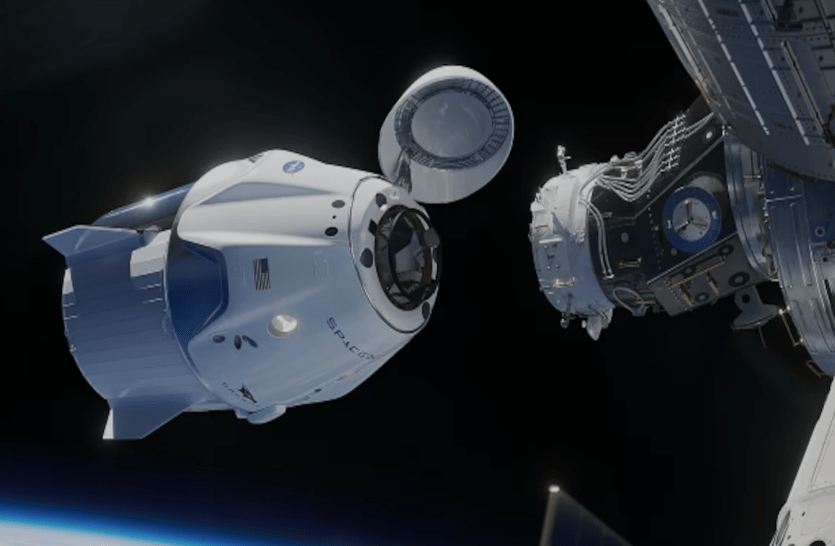
“I join the nation in congratulating Sultan al-Neyadi as he begins his pioneering mission aboard the International Space Station. His inspiring achievement is a source of great pride to the UAE and another milestone in the journey of our nation and the ambitions of our people.“
–Statement by United Arab Emirates (UAE) President Sheikh Mohamed bin Zayed Al Nahyan after the launch of the Crew-6 mission to the International Space Station (ISS), which included UAE astronaut Sultan al-Neyadi. All four members of the Crew-6 mission arrived safely at the ISS earlier today.
 Our Awesome Universe