Image (Credit): A SpaceX Falcon 9 rocket with the company’s Dragon spacecraft on top. (NASA/Joel Kowsky)
This week’s image shows the SpaceX Falcon 9 rocket and Dragon capsule awaiting the launch of the Crew-6 mission to the International Space Station. The rocket launched at 12:34 a.m. EST today from Launch Complex 39A at NASA’s Kennedy Space Center in Florida. You can read more about the successful launch here.
Elon Musk’s rocket company SpaceX was ready to try again at sending NASA’s next long-duration crew of the International Space Station to orbit on Thursday, about 72 hours after a first attempt was scrubbed due to a clogged filter in the launch system. Two NASA astronauts will be joined by a Russian cosmonaut and an astronaut from the United Arab Emirates for a six-month science mission made up of experiments ranging from human cell growth in space to controlling combustible materials in microgravity.
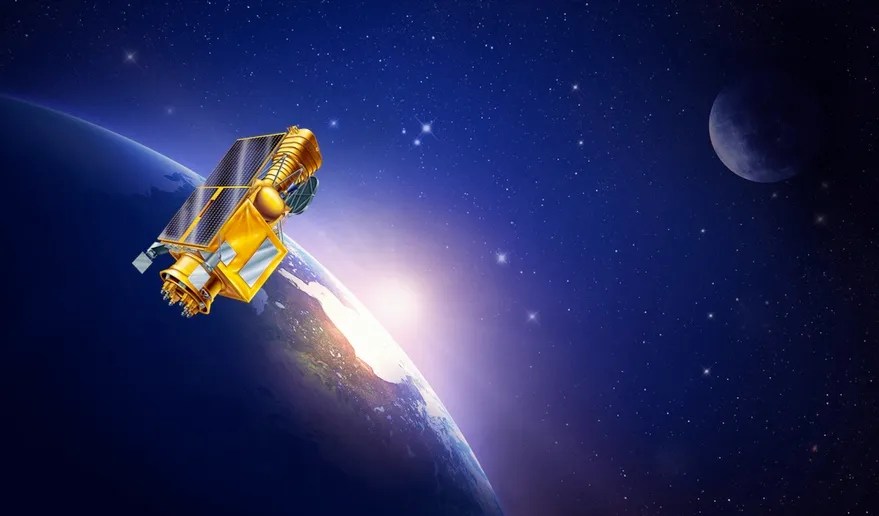
NASA will launch Israel’s first space telescope mission, the Ultraviolet Transient Astronomy Satellite (ULTRASAT). ULTRASAT, an ultraviolet observatory with a large field of view, will investigate the secrets of short-duration events in the universe, such as supernova explosions and mergers of neutron stars. Led by the Israel Space Agency and Weizmann Institute of Science, ULTRASAT is planned for launch into geostationary orbit around Earth in early 2026. In addition to providing the launch service, NASA will also participate in the mission’s science program.
Approximately 20,000 organic molecules composed of carbon, hydrogen, nitrogen, oxygen, or sulfur were found in samples returned to Earth from the asteroid Ryugu by the Japan Aerospace Exploration Agency’s Hayabusa2 mission, according to new work published in two Science papers from an international team that included Carnegie’s George Cody, Jens Barosch, and Larry Nittler. Named after a Japanese folktale, Ryugu is a near-Earth object, half a mile across, shaped kind of like a spinning top that orbits the Sun every 16 months. Hayabusa2 was the first mission to bring material back to Earth from a primitive asteroid, offering unique insight into the building blocks from which our Solar System was formed and the possible origin of organic material that contributed to Earth’s habitability.


 Our Awesome Universe