
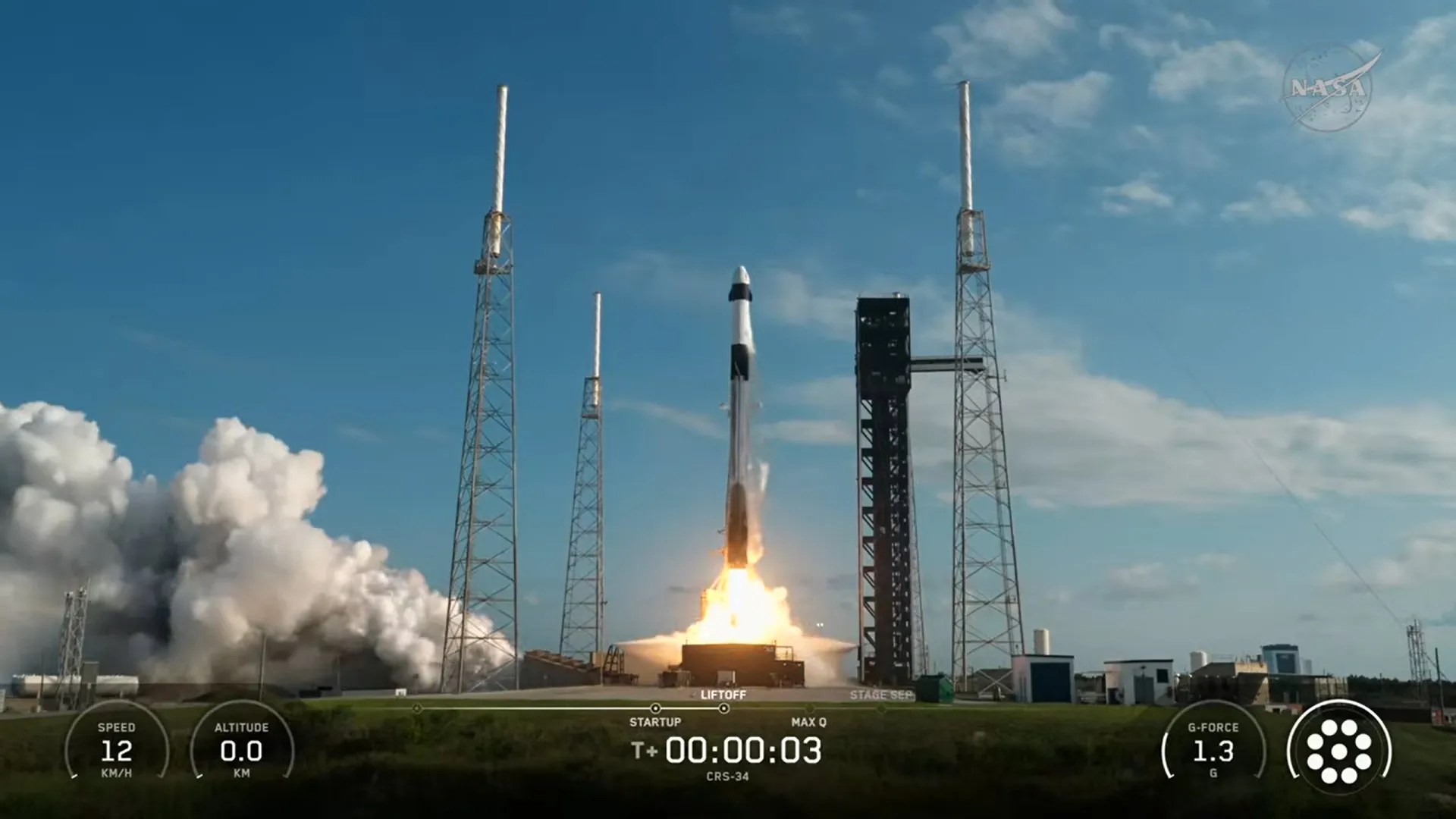
Delays abound, but at least one space mission successfully launched this week. After delays earlier this week, today the CRS-34 mission successfully launched towards the International Space Station (ISS). The Dragon capsule, carrying supplies for the Expedition 74 Crew on the station, is expected to dock with the ISS Sunday morning.
The first launch this year of the SpaceX Starship was not so lucky. While is was scheduled to launch today as well, it was delayed until Tuesday, May 19th. This will be the 12th test of the new rocket.
SpaceX has planned a long list of objectives related to the booster and rocket on this flight:
The booster’s primary test objective will be executing a successful launch, ascent, stage separation, boostback burn, and landing burn at an offshore landing point in the Gulf of America. As this is the first flight test of a significantly redesigned vehicle, the booster will not attempt a return to the launch site for catch.
The Starship upper stage will target multiple in-space and reentry objectives, including a payload deployment of 20 Starlink simulators, similar in size to next-generation Starlink V3 satellites, and two specially modified Starlink satellites. The two modified satellites will test hardware planned for Starlink V3 and will attempt to scan Starship’s heat shield and transmit imagery down to operators to test methods of analyzing Starship’s heat shield readiness for return to launch site on future missions. Several tiles on Starship have been painted white to simulate missing tiles and serve as imaging targets in the test. All of the deployed payloads will be on the same suborbital trajectory as Starship. A relight of a single Raptor engine while in space is also planned.
For Starship entry, a single heat shield tile has been intentionally removed to measure the aerodynamic load differences on adjacent tiles when there is a tile missing. Finally, the ship will perform experimental actions tested on previous flight tests, including a maneuver to intentionally stress the structural limits of the vehicle’s rear flaps and a dynamic banking maneuver to mimic the trajectory that future missions returning to Starbase will fly.
It appears SpaceX is trying to make up for numerous delays with a single mission – a mission that is critical to the success of NASA’s Artemis program as well as SpaceX’s upcoming IPO.

