Study Finding: Gravitational Instability in a Planet-forming Disk

Credit: Peter Schmidt from Pixabay

Nature abstract of the study findings:

The canonical theory for planet formation in circumstellar disks proposes that planets are grown from initially much smaller seeds. The long-considered alternative theory proposes that giant protoplanets can be formed directly from collapsing fragments of vast spiral arms induced by gravitational instability—if the disk is gravitationally unstable. For this to be possible, the disk must be massive compared with the central star: a disk-to-star mass ratio of 1:10 is widely held as the rough threshold for triggering gravitational instability, inciting substantial non-Keplerian dynamics and generating prominent spiral arms. Although estimating disk masses has historically been challenging, the motion of the gas can reveal the presence of gravitational instability through its effect on the disk-velocity structure. Here we present kinematic evidence of gravitational instability in the disk around AB Aurigae, using deep observations of 13CO and C18O line emission with the Atacama Large Millimeter/submillimeter Array (ALMA). The observed kinematic signals strongly resemble predictions from simulations and analytic modelling. From quantitative comparisons, we infer a disk mass of up to a third of the stellar mass enclosed within 1″ to 5″ on the sky.

Citation: Speedie, J., Dong, R., Hall, C. et al. Gravitational instability in a planet-forming disk. Nature 633, 58–62 (2024).
https://doi.org/10.1038/s41586-024-07877-0

Study-related stories:

MIT News

Space Daily

Universe Today

Space Quote: NASA’s Space Expertise at Risk of Eroding

Image (Credit): The Artemis-1 rocket next to NASA’s Vehicle Assembly Building at the Kennedy Space Center in Florida on Nov. 3, 2022. (Voice of America)

“Extreme caution is needed to ensure that NASA’s critical relationships with commercial partners do not erode NASA’s own expertise, particularly in early-phase developmental efforts, and the agency should work to maintain a balance between benefiting from its partners’ capabilities and maintaining advanced internal skills. The report recommends that NASA drastically increase its investment in internal research and development to advance early-stage, mission-critical technologies that are not commercially available currently. It also makes a range of recommendations for maintaining an expert workforce, including the adoption of a new human capital strategy, and coordination with Congress to refresh the NASA Flexibility Act of 2004 and gain more appointment and hiring authority.”

-September 10, 2024 press statement for the National Academies of Sciences, Engineering, and Medicine’s recent report NASA at a Crossroads: Maintaining Workforce, Infrastructure, and Technology Preeminence in the Coming Decades. The report was requested by Congress in the CHIPS and Science Act of 2022. The National Academies of Sciences, Engineering, and Medicine convened an independent expert committee to evaluate whether NASA’s current workforce, infrastructure, technological capabilities, and their interfaces can meet its strategic goals. 

Do You Have Some Ideas for Lunar or Martian Art?

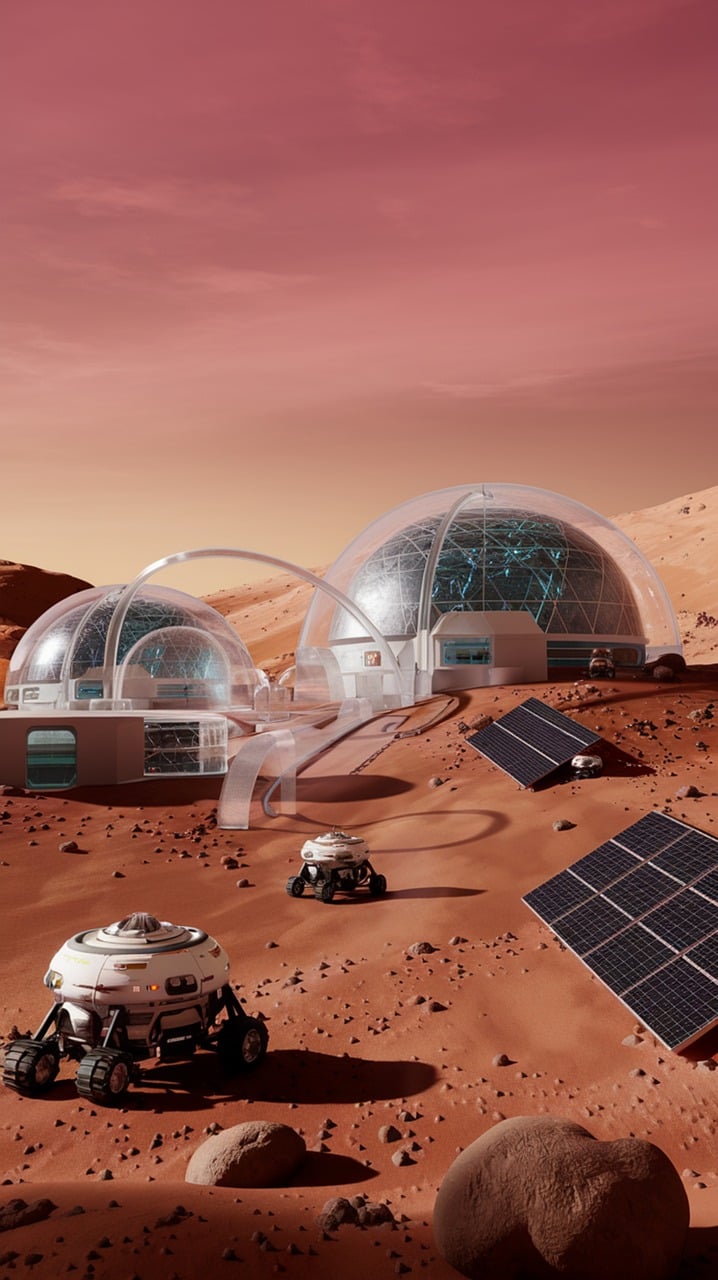
mage (Credit): AI image of a Martian colony. (Yol Gezer from Pixabay)

Do you have some time on your hands? If so, you may want to toss in a submission to the Moon to Mars contest being held by NASA.

Starting this week through October 31, you can submit your artistic interpretation of two topics: “Sustained Lunar Evolution” and “Humans to Mars.” The artist with the best image can win $10,000.

In terms of two categories, more definition from NASA is provided below.

Sustained Lunar Evolution Segment: This segment is an open canvas for exploration of the Moon, embracing new ideas, systems, and partners to grow to a long-term presence on the lunar surface. Sustained lunar evolution means more astronauts on the Moon for longer periods of time, increased opportunities for science, and even the large-scale production of goods and services derived from lunar resources. It also means increased cooperation and collaboration with international partners and the aerospace industry to build a robust lunar economy.

Humans to Mars Segment: This segment will see the first human missions to Mars, building on the lessons we learn from exploring the Moon. These early missions will focus on Martian exploration and establishing the foundation for a sustained Mars presence. NASA architects are examining a wide variety of options for transportation, habitation, power generation, in-situ resource utilization, scientific investigations, and more. How many missions would it take? How many astronauts? What sorts of technologies?

You can learn more about the contest here.

Just in case you were wondering, AI art cannot be submitted. So don’t try to submit something like the image above, nice as it is.

While We Were Watching Polaris Dawn, Just Another Day for the ISS

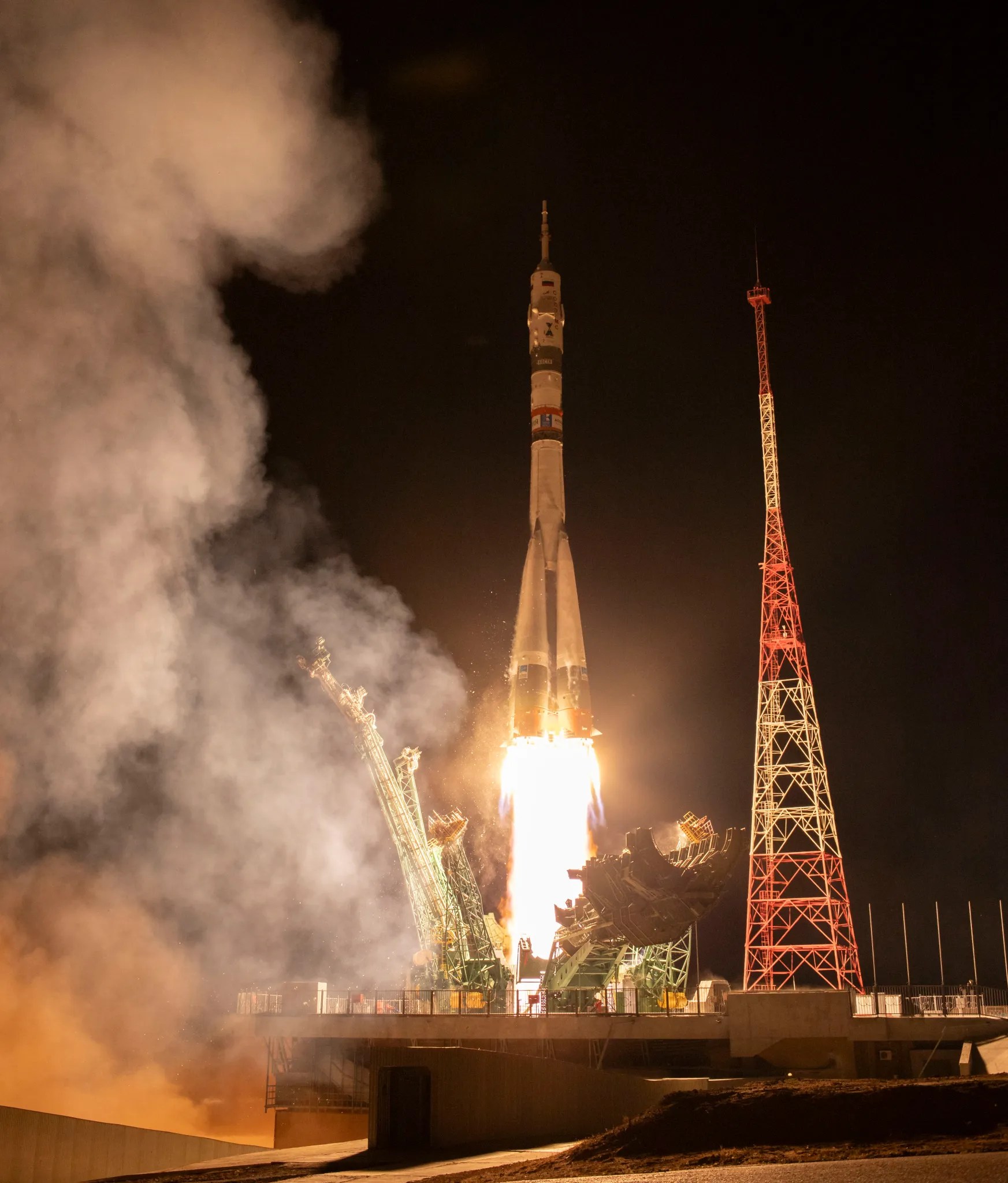
Image (Credit): The Russian Soyuz rocket launching from the Baikonur Cosmodrome in Kazakhstanon September 11 to bring the Expedition 72 crew to the ISS. (NASA/Bill Ingalls)

While all eyes were on the Polaris Dawn mission this week, the Russian Roscosmos Soyuz MS-26 was busy bringing a crew of three cosmonauts and one US astronaut to the International Space Station (ISS). Crewed and uncrewed launches to the ISS have been pretty routine for years, which is a good thing.

NASA reports that its astronaut Don Pettit, accompanied by Roscosmos cosmonauts Alexey Ovchinin and Ivan Vagner, are now safely aboard the space station. Expedition 72 will officially start on Monday, September 23. Members of the Expedition 71 crew – NASA astronaut Tracy C. Dyson and cosmonauts Nikolai Chub and Oleg Kononenko – will be departing the station shortly.

Let’s remember that while the Polaris Dawn crew will be playing in space for about 5 days, these crews are in space for 6-12 months.

Pic of the Week: The First Commercial Spacewalk

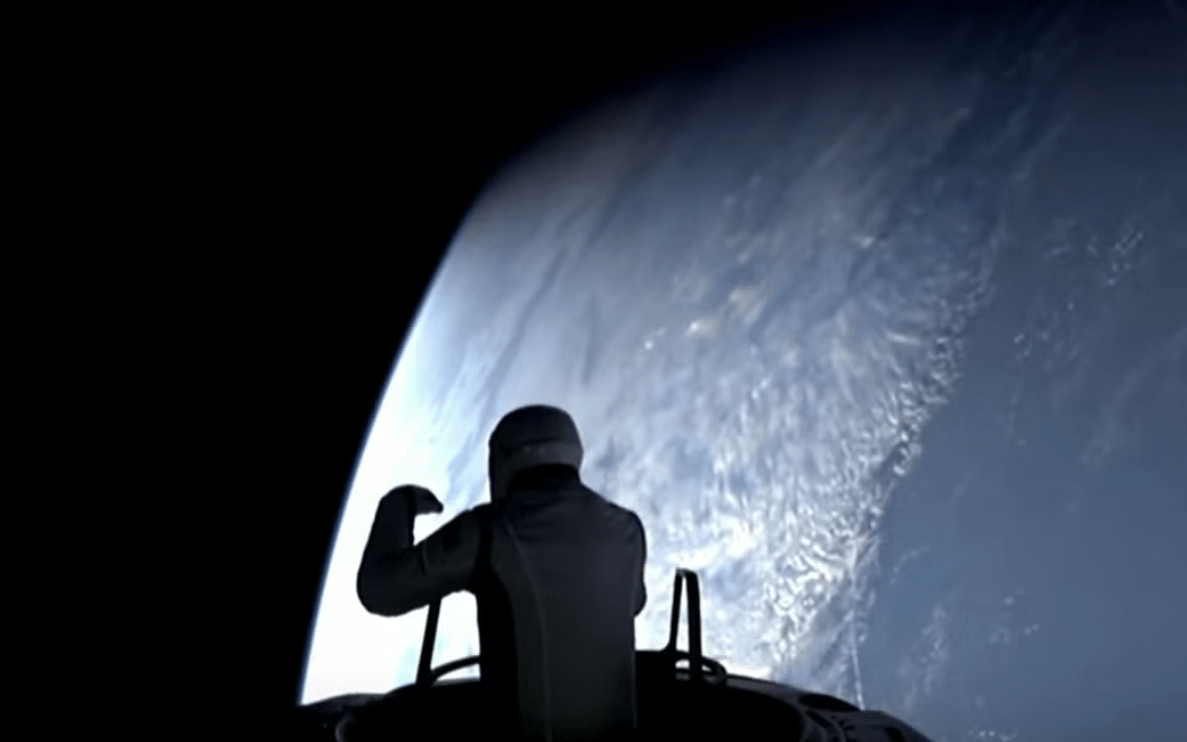
Image (Credit): SpaceX Polaris Dawn crew conducts first private spacewalk. (SpaceX/Polaris)

This week’s image shows the first commercial spacewalk as part of the Polaris Dawn mission launched into space earlier this week by SpaceX. All four crew members were exposed to space as part of the process earlier today, but only two exited the spacecraft. The spacecraft was between 118 to 435 miles above the Earth during the spacewalks.

NASA Administrator Bill Nelson posted this comment to Twitter/X:

Congratulations @PolarisProgram and @SpaceX on the first commercial spacewalk in history!

Today’s success represents a giant leap forward for the commercial space industry and @NASA ‘s long-term goal to build a vibrant U.S. space economy.