NASA is the Place to Work

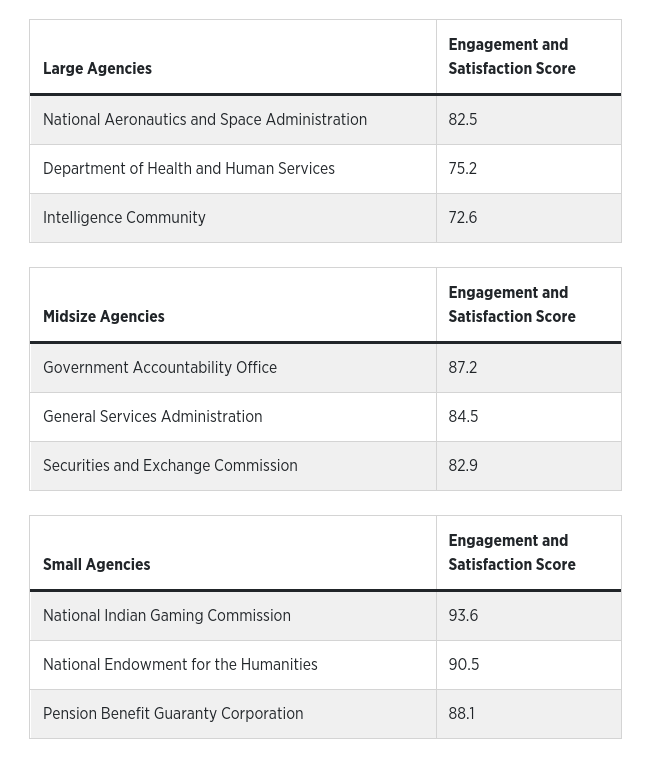
Even with the recent budget-related stress, NASA continues to be a happy place for its workers. The agency was rated by its employees as the best place work for the 12th straight year in the 2023 Best Places to Work in the Federal Government survey, issued by the Partnership for Public Service and Boston Consulting Group. This top ranking was among the larger agencies. A more complete listing based on agency size is shown in the graphic below.
In a press release regarding the survey results, NASA’s Administrator Bill Nelson stated:

Once again, NASA has shown that with the world’s finest workforce, we can reach the stars…Through space exploration, advances in aviation, groundbreaking science, new technologies, and more, the team of wizards at NASA do what is hard to achieve what is great. That’s the pioneer spirit that makes NASA the best place to work in the federal government. With this ingenuity and passion, we will continue to innovate for the benefit of all and inspire the world.

Congrats to the team at NASA that has kept the agency in the lead through interesting work and positive management. A big mission needs an ambitious and happy staff to keep the dream alive.

Pic of the Week: A Triple-Star System

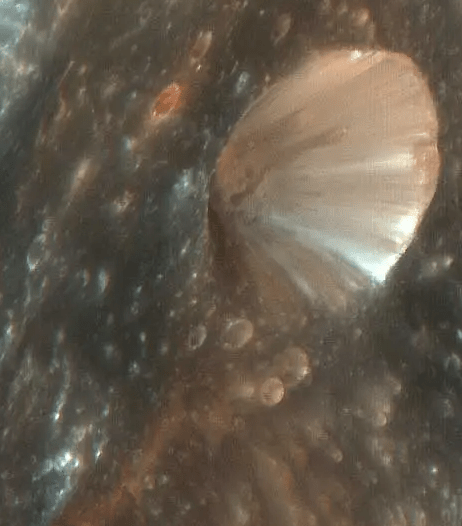
Image (Credit): Hubble image of a triple-star system. (NASA, ESA, G. Duchene (Universite de Grenoble I); Image Processing: Gladys Kober (NASA/Catholic University of America))

This week’s image is from the NASA/ESA Hubble Space Telescope. It shows a triple-star system that consists of the variable star HP Tau, HP Tau G2, and HP Tau G3.

NASA explains:

HP Tau is known as a T Tauri star, a type of young variable star that hasn’t begun nuclear fusion yet but is beginning to evolve into a hydrogen-fueled star similar to our Sun. T Tauri stars tend to be younger than 10 million years old ― in comparison, our Sun is around 4.6 billion years old ― and are often found still swaddled in the clouds of dust and gas from which they formed.

Space Stories: Spaceplane Planned for ISS, AI Assists Astronomy, and Water Older Than the Sun

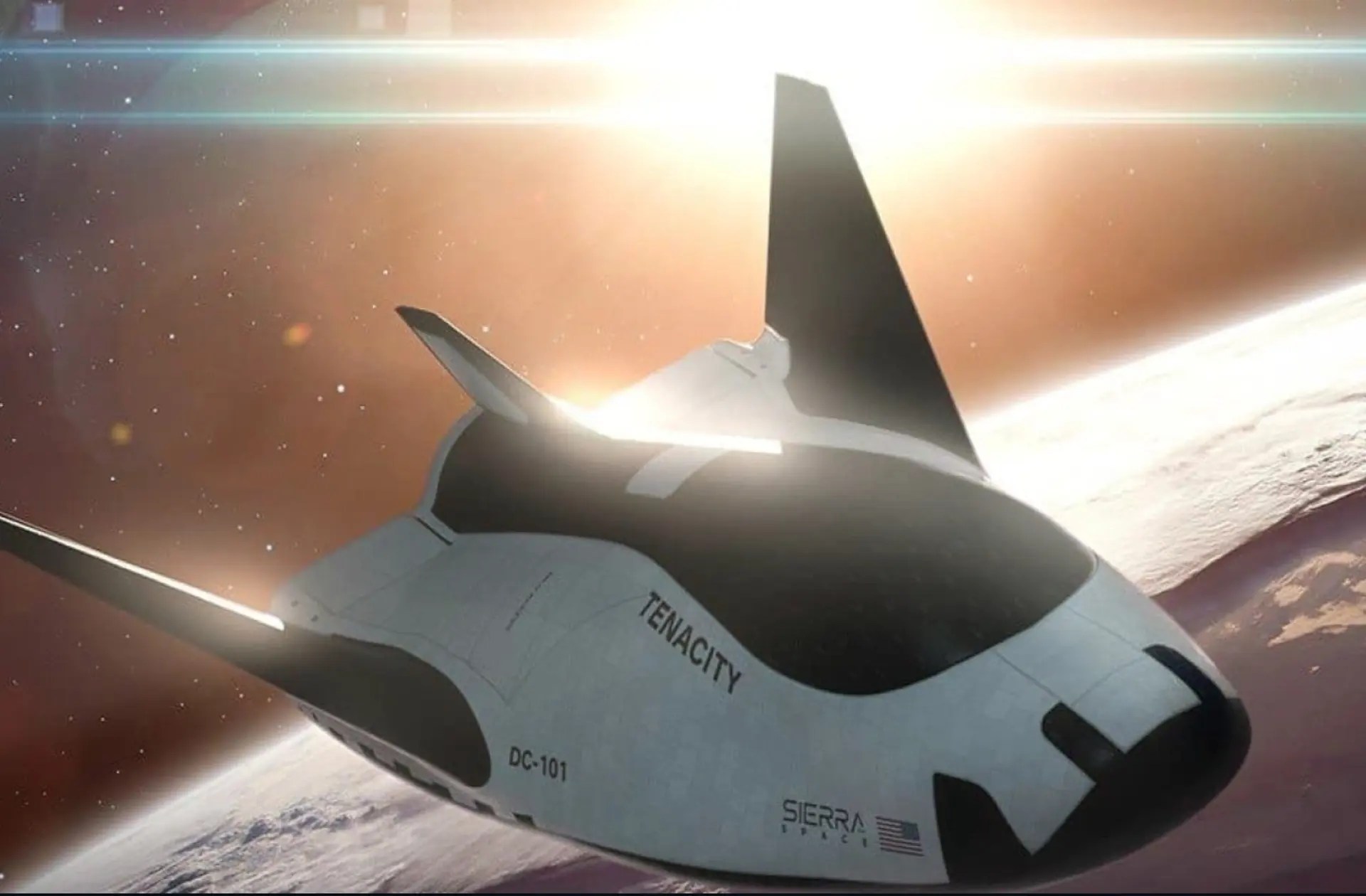
Image (Credit): Artist’s rendering of the Dream Chaser DC-100 spaceplane. (Sierra Space)

Here are some recent stories of interest.

New Atlas: World’s First Commercial Spaceplane in Final Stages Before Debut ISS Flight

The world’s first winged commercial spaceplane has arrived at NASA’s Kennedy Space Center in Florida, its final destination before its first mission to the International Space Station (ISS) later this year. Following rigorous testing at Ohio’s Neil Armstrong Test Facility, the Dream Chaser DC-100 spaceplane named Tenacity got the green light to commence final pre-launch preparations, such as finishing its thermal protection system and payload integration, before it hitches a ride on a United Launch Alliance (ULA) Vulcan rocket to deliver 7,800 pounds (3,540 kg) of food, water and science experiments to the ISS.

MIT Technology Review: Astronomers are Enlisting AI to Prepare for a Data Downpour

In deserts across Australia and South Africa, astronomers are planting forests of metallic detectors that will together scour the cosmos for radio signals. When it boots up in five years or so, the Square Kilometer Array Observatory will look for new information about the universe’s first stars and the different stages of galactic evolution.  But after syncing hundreds of thousands of dishes and antennas, astronomers will quickly face a new challenge: combing through some 300 petabytes of cosmological data a year—enough to fill a million laptops…In preparation for the information deluge, astronomers are turning to AI for assistance, optimizing algorithms to pick out patterns in large and notoriously finicky data sets. Some are now working to establish institutes dedicated to marrying the fields of computer science and astronomy—and grappling with the terms of the new partnership.

BBC Sky at Night: Earth’s Water is Even Older Than the Sun, Having Formed Billions of Years Ago, Say Astronomers

How old is Earth’s water? Could it be older even than the planet itself? A team of astronomers say they’ve found the “missing link” that shows how water is delivered from gaseous star-forming regions in space to planets like Earth. The research suggests that Earth’s water is even older than the Sun. The news comes as a result of studies of a dusty planet-forming disc surrounding a star 1,300 lightyears from Earth

Blue Origin is Open for Tourism Again

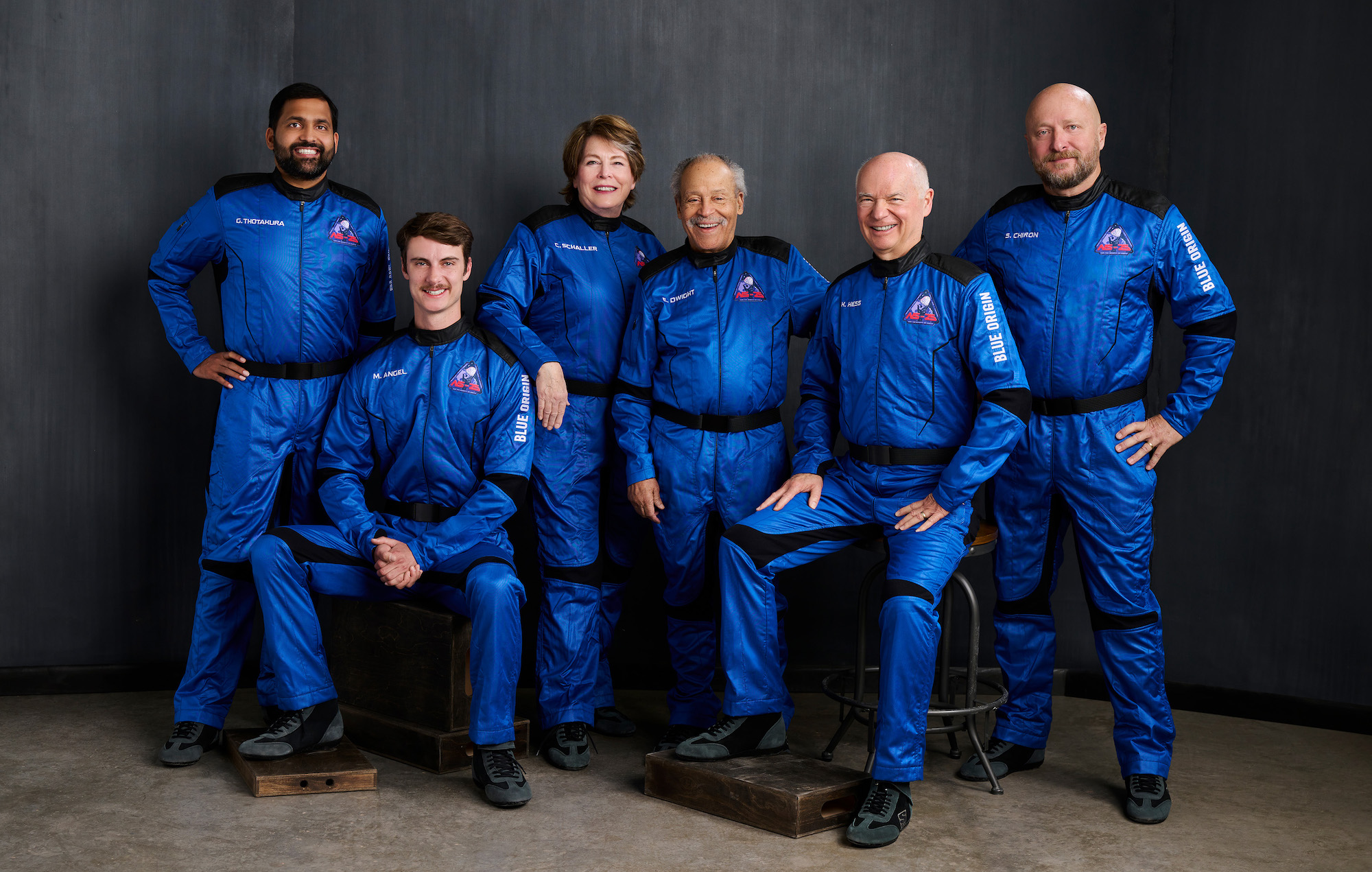
Image (Credit): The crew from Sunday’s NS-25 flight (from left to right): Gopi Thotakura (pilot), Mason Angel, Carol Schaller, Ed Dwight, Ken Hess, and Sylvain Chiron. (Blue Origin)

It has been some time, but Blue Origin is once again bringing tourists into space. Yesterday’s launch from Texas included five passengers and the pilot.

One of the passengers on the New Shepard rocket was former Air Force Captain Ed Dwight. Mr. Dwight was one of the nation’s first Black astronaut candidate, though he never had the opportunity to fly until yesterday. He was also the oldest person to go into space, beating Star Trek’s William Shatner’s age by a few months. After the flight, Mr. Dwight stated, “I thought I really didn’t need this in my life, but now I need it in my life.”

If you are interested in taking such a flight, just visit this Blue Origin link for more information. The site points out that you only need two days to prepare for a flight:

Our on-site astronaut training program is meticulously designed to teach everything you’ll need to know for a safe spaceflight. Over two days, you’ll learn about New Shepard’s mission profile, safety systems, zero-g protocols, and execute mission simulations.

While I am sure plenty of people are happy that this part of the commercial space industry is operational again, I am looking forward to more commercial success with the resupply of the International Space Station, particularly the upcoming launch of the Boeing Starliner.