TV: “Dune: Prophecy”

Credit: Max

You knew it was coming, just as you knew Game of Thrones would be more than a single series.

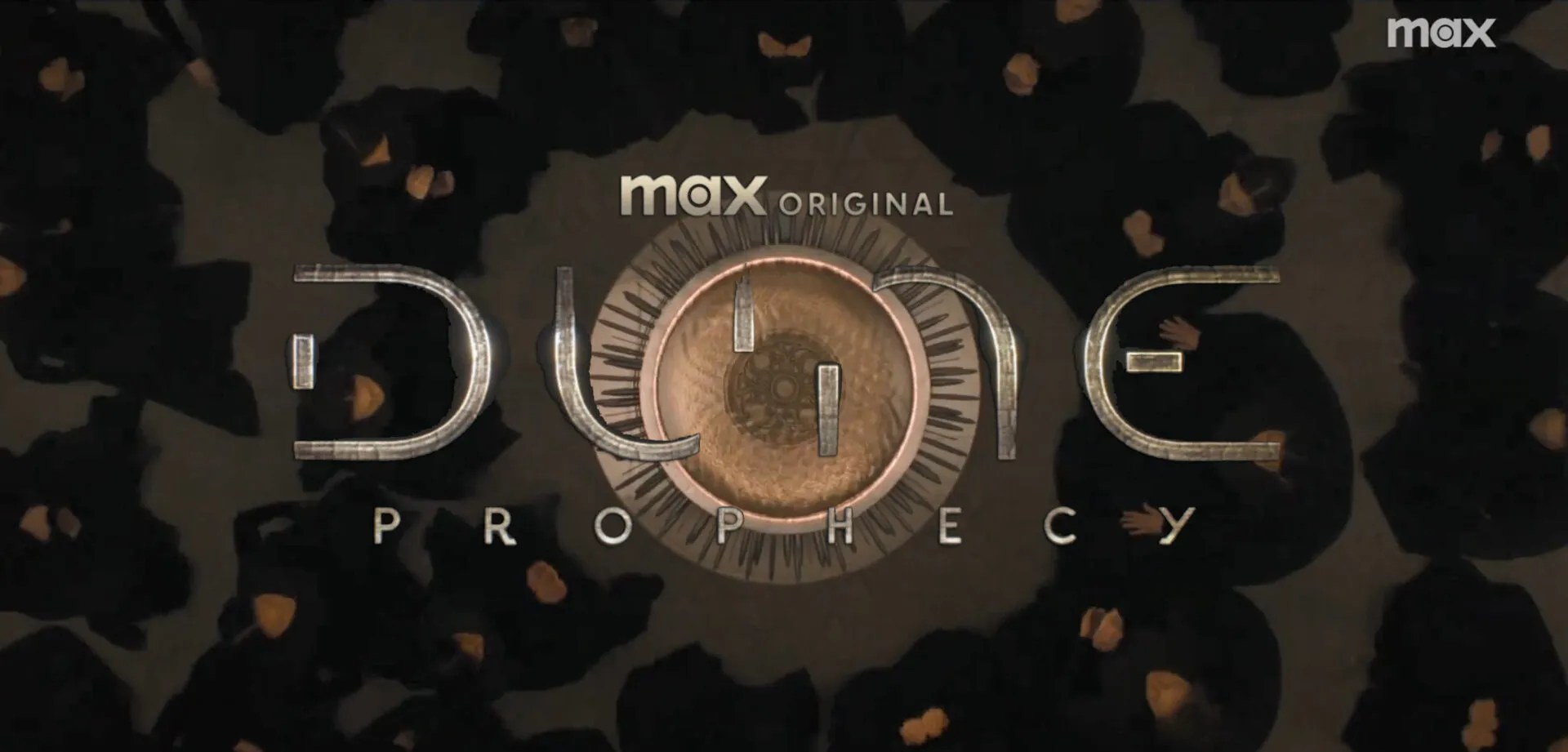
That’s right, the Dune movies will have a new spin-off on Max (formerly HBO Max). It is called Dune Prophecy, and it starts long before the time period of the movies. About 10,000 years earlier when two sisters start the Bene Gesserit.

It is inspired by the book Sisterhood of Dune, written by Brian Herbert and Kevin J. Anderson. The trailer tells you what you need to know, yet here is a little bit from the book if you want to dig a little deeper:

It is 83 years after the last thinking machines were destroyed in the Battle of Corrin, after Faykan Butler took the name of Corrino and established himself as the first Emperor of a new Imperium.

The war hero Vorian Atreides has turned his back on politics and Salusa Secundus. The descendants of the disgraced Abulurd Harkonnen have sworn vengeance against Vor, blaming him for the downfall of their noble family.

Raquella Berto-Anirul has formed the Bene Gesserit School and, through a terrible ordeal, has become the first Reverend Mother.

The descendants of Aurelius Venport and Norma Cenva use mutated, spice-saturated Navigators who fly precursors of Heighliners.

And Gilbertus Albans, ward of the hated thinking machine Erasmus, is teaching humans to become Mentats…while hiding an unbelievable secret.

Led by the fanatic Manford Torondo, the Butlerian movement, fiercely opposed to all forms of “dangerous technology,” sweeps across the known universe in mobs, millions strong, destroying everything in its path.

The 6-episode series will premiere this fall.

Space Quote: More Musk Mayhem on the Ukrainian Front

“Musk has taken on the role of apologist for indicted war criminal Vladimir Putin. “There is no way in hell that Putin is going to lose,” Musk said during an audio event on X. Musk called on social media followers to lobby the Senate not to pass an aid package for Ukraine. Further, Musk is actively working to thwart US foreign policy. Musk is certainly entitled to voice his opinions. However, he is not authorized to conduct foreign policy with FCC issued licenses. This is especially true when his use of those licenses supports the military of a foreign power that is actively engaged in an illegal war and has engaged in countless war crimes including routinely targeting hospitals, schools, and apartment buildings. Musk’s company is licensed to serve the public interest, convenience, and necessity. Musk cannot use FCC licenses to militarily aid Russia, a state that is subject to U.S. sanctions. Musk’s repeated abuse of the Starlink system has placed these licenses in jeopardy.”

-Portion of the Ukrainian Congress Committee of America’s (UCCA) filing with the Federal Communications Commission on April 24, 2024. The UCCA represents four fraternal organizations – the Ukrainian National Association, the Ukrainian Workingmen’s Association, the Providence Association of Ukrainian Catholics, and the Ukrainian National Aid Association.

Starliner Launch Delayed Again

Image (Credit): The Boeing’s CST-100 Starliner spacecraft atop a United Launch Alliance Atlas V during a launch attempt of NASA’s Boeing Crew Flight Test on Monday, May 6, 2024, at Cape Canaveral Space Force Station in Florida. (NASA/Joel Kowsky)

If you were hoping to a Boeing Starliner launch to the International Space Station (ISS) today, then you will be disappointed (again). The launch is not expected until Friday May 25 at the earliest.

In a press release, Boeing noted:

The additional time allows teams to further assess a small helium leak in the Boeing Starliner spacecraft’s service module traced to a flange on a single reaction control system thruster. Pressure testing performed on May 15 on the spacecraft’s helium system showed the leak in the flange is stable and would not pose a risk at that level during the flight. The testing also indicated the rest of the thruster system is sealed effectively across the entire service module. Boeing teams are working to develop operational procedures to ensure the system retains sufficient performance capability and appropriate redundancy during the flight. As that work proceeds, NASA’s Commercial Crew Program and the International Space Station Program will take the next few days to review the data and procedures to make a final determination before proceeding to flight countdown.

All we can do is hope and wait. I expect astronauts Suni Williams and Butch Wilmore, who are ready to crew the Starliner, are even more impatient.

Update: The proposed May 25 launch date is now dead as well. NASA has yet to provide a new date for what will be a historic launch if it ever gets underway.

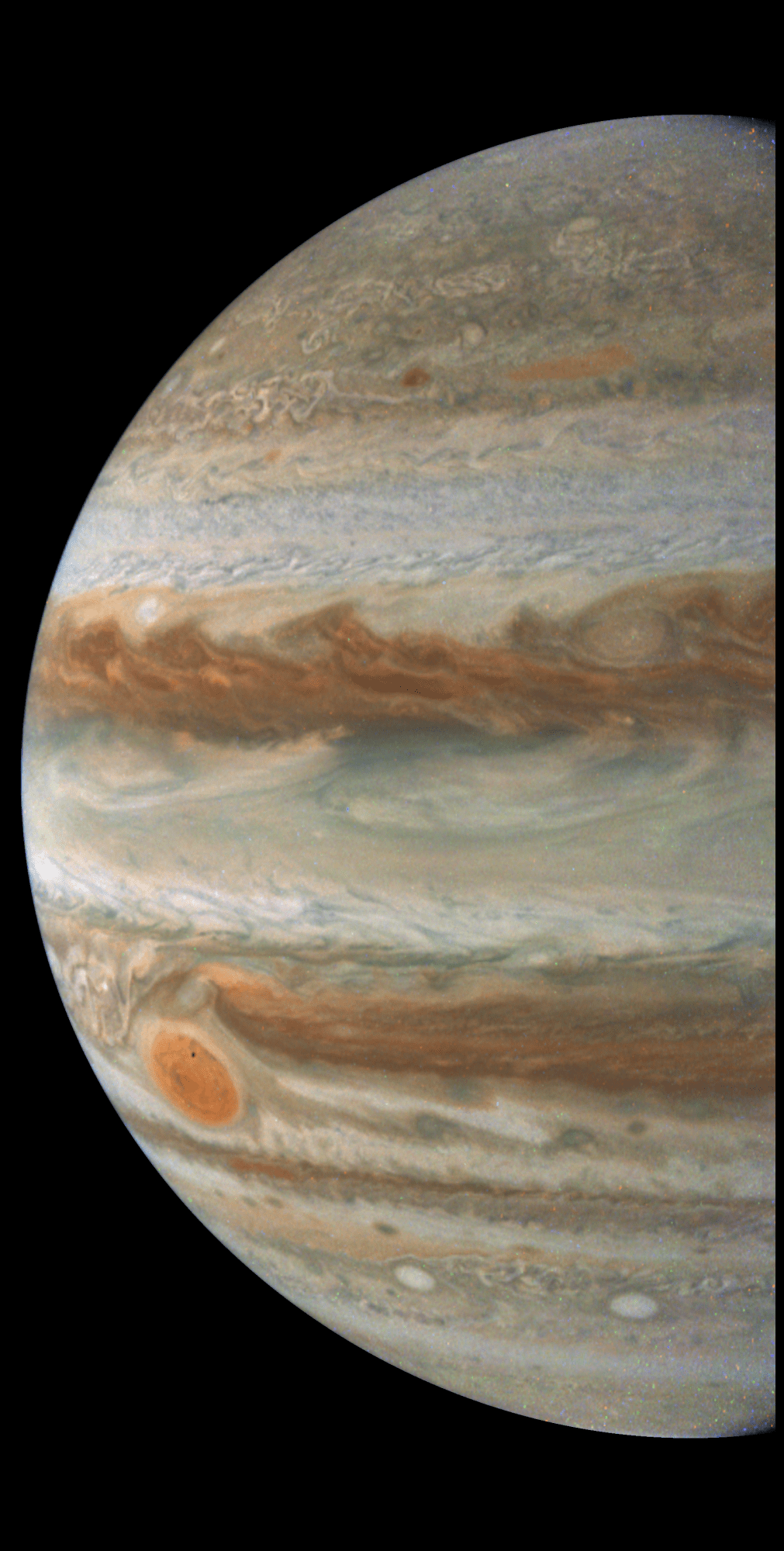
Pic of the Week: Jupiter’s Moon Amalthea

Image (Credit): Jupiter with the small moon Amalthea appearing in its Great Red Spot. (Image data: NASA/JPL-Caltech/SwRI/MSSS. Image processing by Gerald Eichstädt)

This week’s image comes from NASA’s Juno mission during a flyby back in March. It shows Jupiter’s smallest moon Amalthea orbiting Jupiter with the Great Red Spot in the background. The potato-shaped moon has a radius of 52 miles and completes an orbit of the giant planet in about half an Earth day.

You can read more about the photograph at this NASA site.

Image (Credit): Close-up of Jupiter with the small moon Amalthea appearing in its Great Red Spot. (Image data: NASA/JPL-Caltech/SwRI/MSSS. Image processing by Gerald Eichstädt)

It Was Inevitable – NASA Names First Chief AI Officer

David Salvagnini, currently NASA’s chief data officer, will now also hold the title of Chief Artificial Intelligence (AI) Officer. It seems to be the trend these days as AI infiltrates organizations.

With regards to the new position, NASA noted:

This appointment is in accordance with President Biden’s Executive Order on the Safe, Secure, and Trustworthy Development and Use of Artificial Intelligence. Salvagnini now is responsible for aligning the strategic vision and planning for AI usage across NASA. He serves as a champion for AI innovation, supporting the development and risk management of tools, platforms, and training.

How important is AI to the future of the space industry? I asked deepai.org/chat and got back this self-important reply:

Artificial Intelligence (AI) is playing a crucial role in the space industry, transforming various aspects of space exploration, development, and operations. Here are some key areas where AI is making a significant impact:

  • Spacecraft Operations: AI algorithms are used to monitor and control spacecraft systems, enabling autonomous decision-making and reducing the need for human intervention. This improves the efficiency and reliability of spacecraft operations.
  • Data Analysis: AI-powered data analysis tools are used to process vast amounts of data collected from space missions, such as satellite imagery, astronomical observations, and sensor data. This enables scientists to identify patterns, detect anomalies, and make more informed decisions.
  • Robotics and Automation: AI is being used to develop more advanced robotic systems for space missions, such as autonomous robots for planetary exploration and satellite maintenance. This reduces the risk of human error and increases the efficiency of operations.
  • Predictive Maintenance: AI-powered predictive maintenance tools are used to detect potential issues in spacecraft systems, enabling proactive maintenance and reducing the risk of equipment failure.
  • Space Weather Forecasting: AI models are used to predict space weather events, such as solar flares and coronal mass ejections, which can impact satellite communications and navigation systems.
  • Exoplanet Hunting: AI-powered algorithms are used to analyze data from exoplanet-hunting missions, such as NASA’s Kepler space telescope, to identify potential exoplanet candidates.
  • Astronomical Research: AI is used to analyze large datasets from astronomical observations, such as galaxy distributions, star formation rates, and dark matter detection.
  • Space Traffic Management: AI-powered systems are being developed to manage space traffic, ensuring safe and efficient operations in low-Earth orbit.
  • Cybersecurity: AI-powered cybersecurity tools are used to detect and prevent cyber threats in space systems, protecting sensitive data and ensuring mission continuity.
  • Mission Planning: AI algorithms are used to optimize mission planning, taking into account factors such as propulsion systems, communication networks, and terrain analysis.

If this is true, then Mr. Salvagnini will be a very busy man.