A Day in Astronomy: Birth of George Lucas

Image (Credit): George Lucas. (https://static.wikia.nocookie.net/)

On this day in 1944, George Walton Lucas Jr. was born in Modesto, CA. He graduated from the University of Southern California in 1967, co-founded American Zoetrope with another filmmaker Francis Ford Coppola, and started making films that eventually changed America cinema.

He would one day go on to create the Star Wars franchise, one of the most popular space-based science fiction empires in history. The Star Wars franchise now includes the nine primary movies, at lease two additional movie spin-offs, a whole bunch of TV series, both animated and otherwise, and many fan films as well.

Here are a few fun facts about Mr. Lucas:

  • George and his family attended Disneyland during its opening week in July 1955. Disney would later buy his Star Wars film empire, Lucasfilm, for about $4 billion.
  • While the Vietnam War was drawing in many American youth to fight overseas, George was first turned down by the US Air Force because of all his speeding tickets and later by the US Army because of his diabetes. He later taught documentary cinematography a class of U.S. Navy students.
  • A divorce and financial setbacks caused George to step back from making any additional Star Wars films after The Return of the Jedi. Of course, he later came back to direct the first three films of the series (I-III) and hand-picked director J. J. Abrams to direct the last three (VII-IX), even though Disney had thrown out George’s ideas for these last three films.

While Star Trek has probably done more to push viewers towards questions about space travel and exoplanets, Star Wars did introduce some ideas that kept some scientists chattering.

No matter what set of Star Wars films you prefer (my favorites were the three original films), there has been plenty action-packed films and spin-offs since 1977. We are fortunate that Mr. Lucas did not give up on his science fiction dream.

Happy 80th birthday, Mr. Lucas.

Space Stories: Robot Trains on the Moon, Commercial Space Stations, and Russian Lunar Reactors

Image (Credit): Artist’s rendering of the Flexible Levitation on a Track system on the lunar surface with planet Earth on the horizon. (NASA/Ethan Schaler)

Here are some recent stories of interest.

NDTV: NASA Announces Plans To Build First Railway System On Moon

As the National Aeronautics and Space Administration (NASA) readies to return astronauts to the moon, it has announced its plans to build a levitating robot train on the lunar surface. In a blog post, the American space agency provided details about the project called “Flexible Levitation on a Track (FLOAT)”, which aims to provide a “robotic transport system” to support future lunar activities of astronauts visiting the moon. The transport system will be critical to the daily operation of a sustainable lunar base in the 2030s, NASA said in a statement. 

IEEE Spectrum: Commercial Space Stations Approach Launch Phase

A changing of the guard in space stations is on the horizon as private companies work toward providing new opportunities for science, commerce, and tourism in outer space. Blue Origin is one of a number of private-sector actors aiming to harbor commercial activities in low Earth orbit (LEO) as the creaking and leaking International Space Station (ISS) approaches its drawdown. Partners in Blue Origin’s Orbital Reef program, including firms Redwire, Sierra Space, and Boeing, are each reporting progress in their respective components of the program. The collaboration itself may not be on such strong ground. Such endeavors may also end up slowed and controlled by regulation so far absent from many new, commercial areas of space.

Newsweek: Russia Reveals New China Nuclear Moon Base Details

Details about joint plans between Moscow and Beijing to put a lunar nuclear reactor within the next decade have been revealed by the head of Russia’s space agency. In March, Roscosmos announced plans to work with China to build an automated nuclear reactor to power a proposed lunar base that the two countries would operate together within the next decade. To construct the site, Roscosmos director general Yury Borisov said two months ago it was looking at using nuclear-powered rockets to transfer cargo to the moon, but had not yet figured out how to build these spacecraft safely. In an article published Wednesday by state news outlet RIA Novosti, Borisov said that development of the plant was underway and the countries were working on creating experimental and research facilities as part of the project.

Video: Check Out Aeon Astronomy & Space Travel Videos

Aeon is a website of ideas run by Aeon Media. It’s mission is to explore and communicate knowledge that addresses our shared need to make sense of the world.

While it covers quite a few topics, I wanted to highlight some of its videos on astronomy and space travel. Below are just a few I recommend. You should explore the site on your own to learn more.

Check them out and many more. It is a well organized site that operates on donations, so don’t be afraid to contribute if you really enjoy the pieces.

Image (Credit): One of the videos available on the Aeon site. (Aeon)

Don’t Miss the Northern Lights

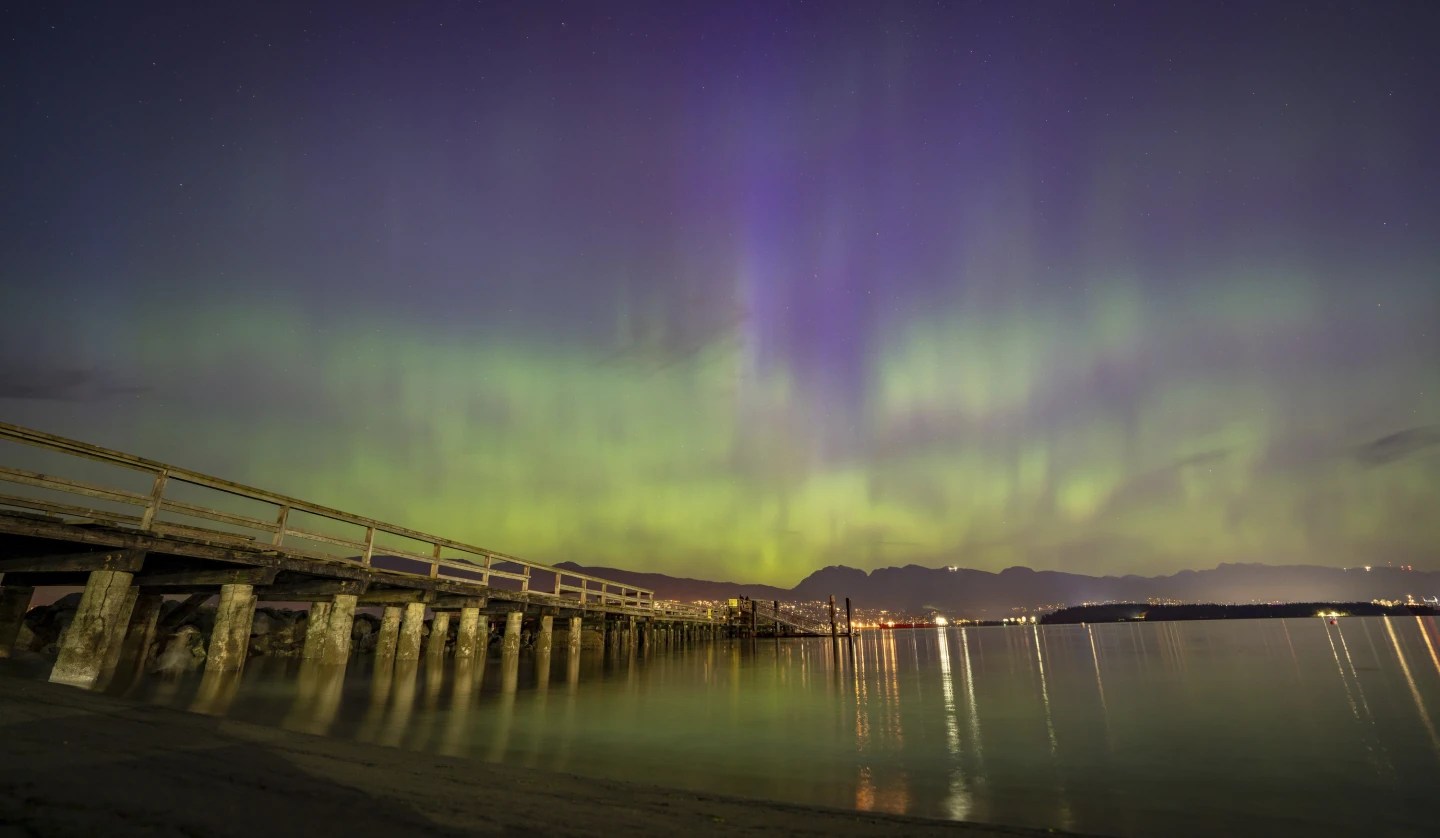
Image (Credit): Northern Lights in Vancouver, British Columbia on May 11. (Ethan Cairns/The Canadian Press via AP)

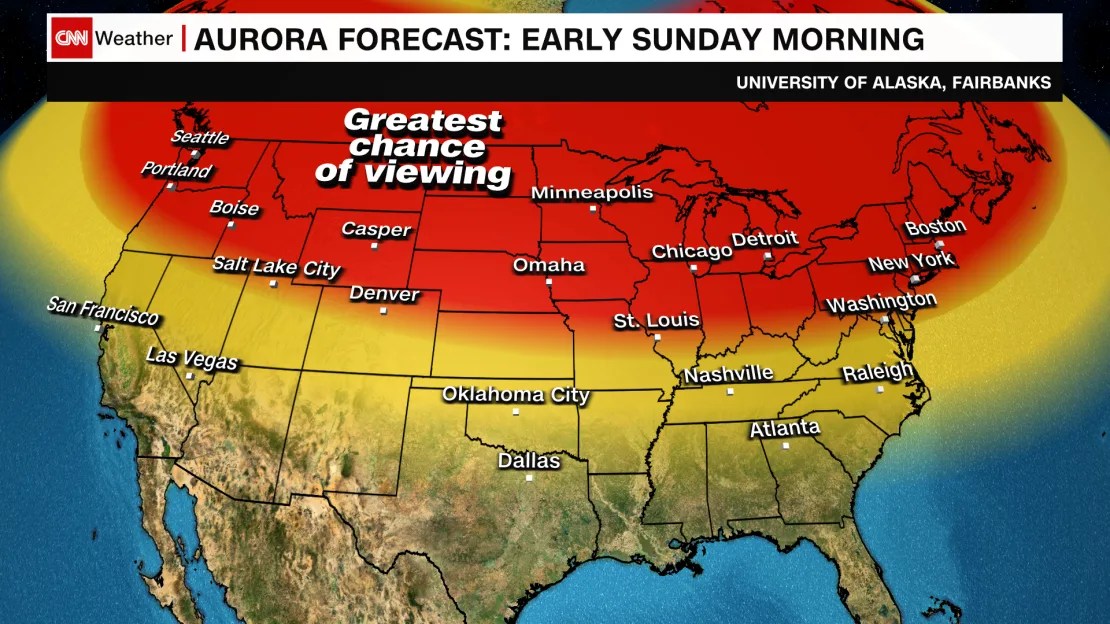
Tonight you can still capture the Northern Lights here in the U.S. After an 11-year absence. The solar event will have the greatest show in the Ohio River Valley through the Midwest and into the Pacific Northwest (see CNN map below). Amazingly, the show was seen as far south as Florida yesterday evening.

The good news is that the solar burst has not been causing damage to the power grid and satellites. Sweden and South Africa were not so lucky in 2003.

Credit: CNN Weather/University of Alaska
Posted in Sun

Space Quote: Congressional Appeal for More NASA Funding

“An improved appropriation for FY 2025 of $9 billion for SMD will give the agency the necessary resources to pursue Decadal priorities such as the Earth System Observatory, Geophysical Dynamics Constellation, Habitable Worlds Observatory, and Mars Sample Return, while maintaining our nation’s highly-skilled workforce and fleet of operating and developing spacecraft including the Chandra X-Ray Observatory, Hubble Space Telescope, Perseverance and Curiosity rovers, among others. These investments in our high-tech STEM workforce and university systems will provide positive value to every congressional district.”

-Statement in a May 1, 2024 letter to the House Appropriations Subcommittee on Commerce, Justice, Science, and Related Agencies from 44 Members of Congress regarding increased funding to NASA related to its Science Mission Directorate (SMD). The letter notes that “…the FY 2025 President’s Budget Request of $7.6 billion for NASA Science represents a $1.1 billion decrease in purchasing power from its peak in FY 2020 and would be the smallest budget in eight years when adjusted for inflation.”