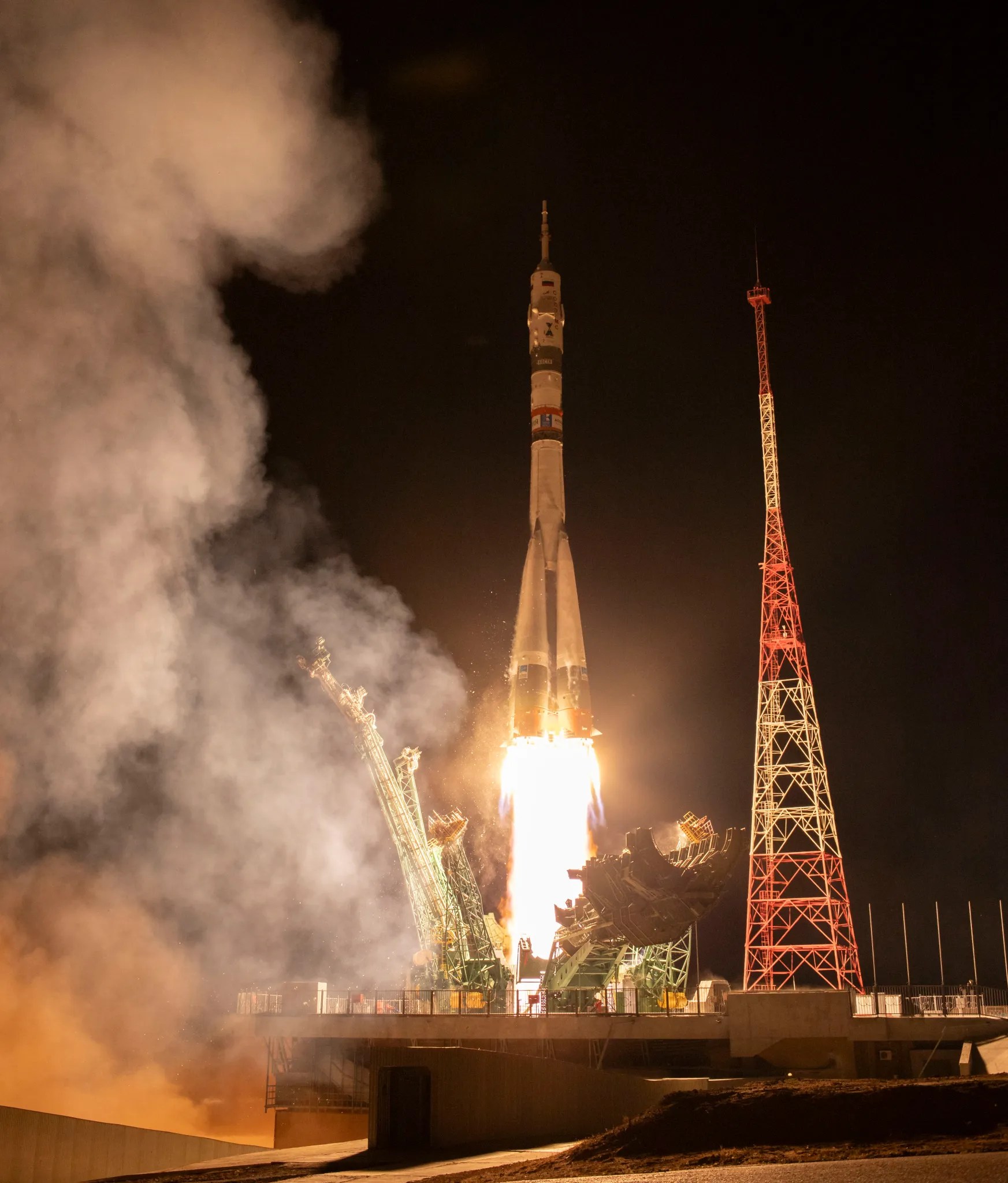
Image (Credit): The Russian Soyuz rocket launching from the Baikonur Cosmodrome in Kazakhstanon September 11 to bring the Expedition 72 crew to the ISS. (NASA/Bill Ingalls)
While all eyes were on the Polaris Dawn mission this week, the Russian Roscosmos Soyuz MS-26 was busy bringing a crew of three cosmonauts and one US astronaut to the International Space Station (ISS). Crewed and uncrewed launches to the ISS have been pretty routine for years, which is a good thing.
NASA reports that its astronaut Don Pettit, accompanied by Roscosmos cosmonauts Alexey Ovchinin and Ivan Vagner, are now safely aboard the space station. Expedition 72 will officially start on Monday, September 23. Members of the Expedition 71 crew – NASA astronaut Tracy C. Dyson and cosmonauts Nikolai Chub and Oleg Kononenko – will be departing the station shortly.
Let’s remember that while the Polaris Dawn crew will be playing in space for about 5 days, these crews are in space for 6-12 months.
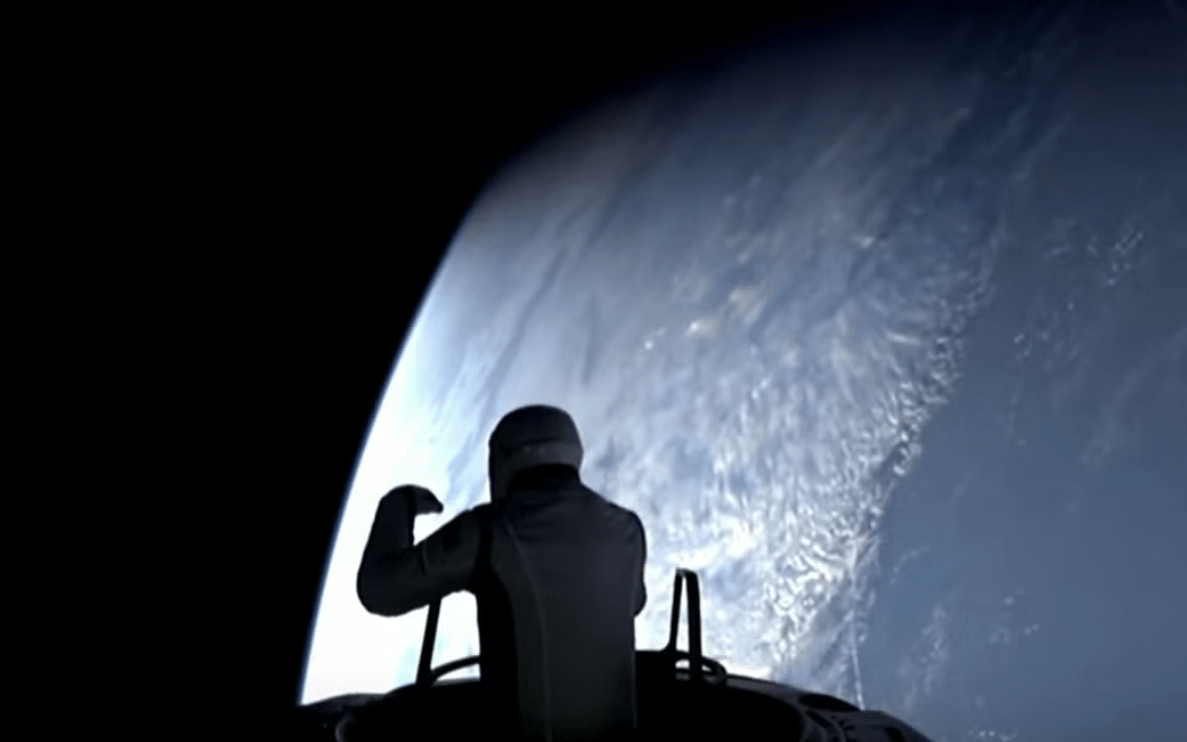
Image (Credit): SpaceX Polaris Dawn crew conducts first private spacewalk. (SpaceX/Polaris)
This week’s image shows the first commercial spacewalk as part of the Polaris Dawn mission launched into space earlier this week by SpaceX. All four crew members were exposed to space as part of the process earlier today, but only two exited the spacecraft. The spacecraft was between 118 to 435 miles above the Earth during the spacewalks.
Image (Credit): The Starliner capsule in White Sands, NM. (Boeing Space)
So now that the Starliner capsule is back here on Earth, some may wonder if it was necessary to return it without a crew.
Here is what Steve Stich, manager of NASA’s Commercial Crew Program, had to say during a post-landing press conference:
If we’d have had a crew on board the spacecraft, we would have followed the same back away sequence from the space station, the same deorbit burn and executed the same entry. And so it would have been a safe, successful landing with the crew on board.
So that is good news for Boeing, but not likely to thrill Boeing stockholders. No matter how you spin it, only a crewed return would have been seen as a success.
It also appears the flight back was not quite as simple as portrayed by Mr. Stich’s initial statement. For instance, a Quartz article noted that during the capsule’s return another thruster failed and the guidance system blacked out for a moment.
Boeing has been pretty quite on the issue. Its latest update had a simple statement about the landing and an uncertain comment about “next steps”:
Boeing’s Starliner landed safely at 12:01 a.m. Eastern time on Saturday, Sept. 7 (10:01 p.m. Mountain time, on Friday, Sept. 6). After an extended stay at the International Space Station, Starliner’s reusable crew module touched down at its designated landing site, White Sands Space Harbor at the U.S. Army’s White Sands Missile Range in New Mexico.
“I want to recognize the work the Starliner teams did to ensure a successful and safe undocking, deorbit, re-entry and landing,” said Mark Nappi, vice president and program manager of Boeing’s Commercial Crew Program. “We will review the data and determine the next steps for the program.”
The Starliner crew module will be transported back to NASA’s Kennedy Space Center in Florida, where Boeing teams will analyze mission data.
Maybe when cooler heads prevail over at Boeing we will learn more. I just hope they are still in the game.
NASA researchers will soon benefit from a suite of experiments flying aboard a new fully-commercial human spaceflight mission, strengthening future agency science as we venture to the Moon, Mars and beyond. The experiments are flying as part of the Polaris Dawn mission which launched aboard a SpaceX Dragon spacecraft and Falcon 9 rocket earlier today…“Each mission, whether the crew is comprised of commercial or NASA astronauts, provides a key opportunity to expand our knowledge about how spaceflight affects human health,” said Jancy McPhee, associate chief scientist for human research at NASA. “Information gathered from Polaris Dawn will give us critical insights to help NASA plan for deeper space travel to the Moon and Mars.”
A report published Tuesday raises serious questions about NASA’s ability to effectively function as the nation’s preeminent space agency. The 218-page document, assembled by the National Academies of Sciences, Engineering, and Medicine (NASEM) at the behest of Congress, warns that NASA is prioritizing short-term missions and commercial contracts over the people and technology that make its out-of-this-world activities possible. Per the report, the space agency’s emphasis on near-term victories and overreliance on private contractors comes at the price of a strained budget, degraded infrastructure, and exodus of talented personnel.
A shroud of gas stretches up to a million light years around every galaxy and is its first interaction with the wider Universe beyond. For the first time, scientists have photographed this halo of matter and examined it pixel by pixel. If this galaxy is typical, then the study, published today in Nature Astronomy, indicates that our galaxy is already interacting with its closest neighbour, Andromeda.
We have all read stories about the enormous about of electricity being soaked up by data centers. These data centers are removing green energy from the grid faster than it can be produced. So what is the solution?
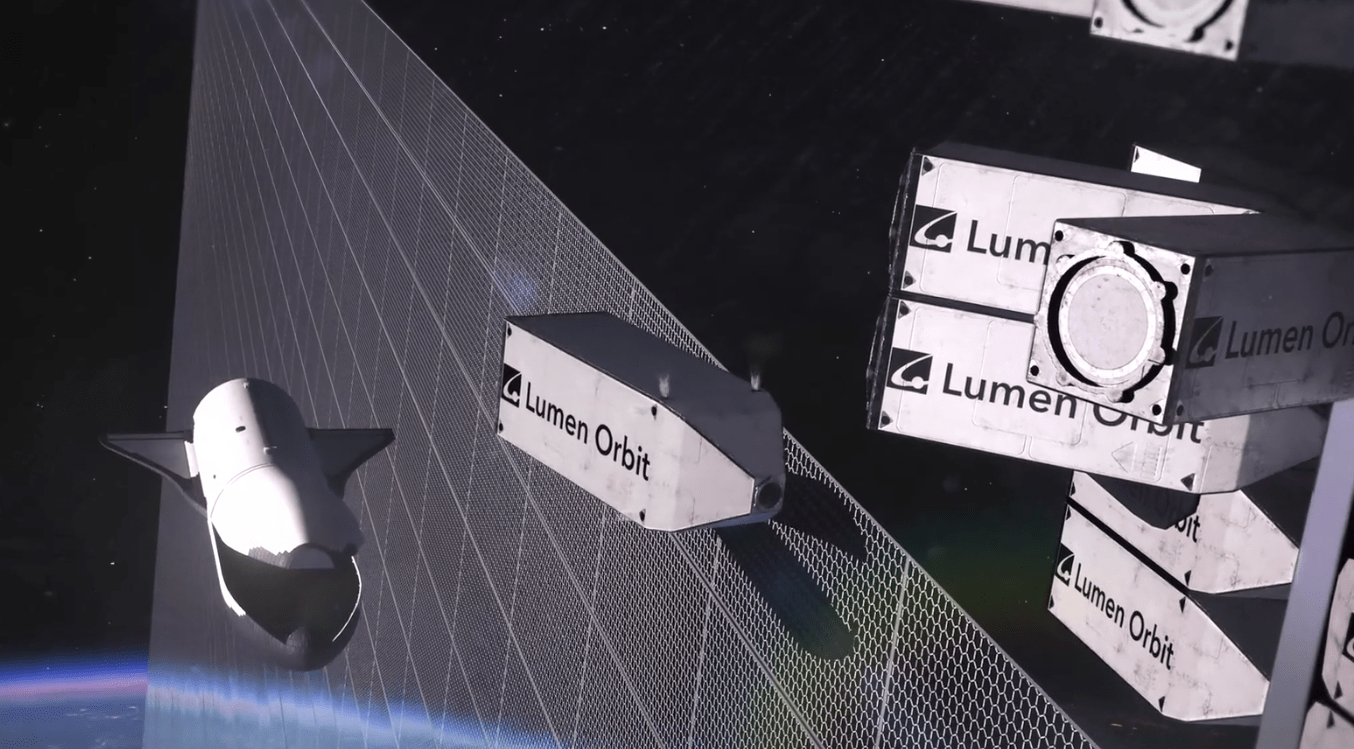
How about solar-powered data centers in space?
In a recent white paper, Lumen Orbit highlights the advantage of such an approach, including the use of renewable energy, the elimination of fresh water cooling, and unlimited scaling up. In the paper, we read:
Significant operational cost savings can be achieved by using inexpensive solar energy without the limitations of terrestrial solar farms discussed below. Orbital data centers can leverage lower cooling costs using passive radiative cooling in space to directly achieve low coolant temperatures. Perhaps most importantly, they can be scaled almost indefinitely without the physical or permitting constraints faced on Earth, using modularity to deploy them rapidly. All of this will have a net benefit on the environment – a recent study by the European Commission concluded that orbital data centers will significantly reduce greenhouse gas emissions from grid electricity and eliminate fresh water usage for cooling.
The European Commission financed the Advanced Space Cloud for European Net zero emission and Data sovereignty (ASCEND) – a 16-month-long study on the feasibility of placing data centers into orbit. The study found that such data centers are technically, economically and environmentally feasible.
Pushing data centers as well as cryptocurrency data mining into space is a great idea as these processes are not going away. Just ask the Texans about the problems of sharing the state’s electricity grid with these centers. Texas may soon as these data centers to find a new home.
This is something that deserves more attention as we hit our energy limits here on Earth.