Astronomer Carl Sagan was born on this day in 1934. It is always worth taking a few moments to remember his contributions to science as a great communicator. You can read more about the man at this informative site from the Center for Inquiry.

Astronomer Carl Sagan was born on this day in 1934. It is always worth taking a few moments to remember his contributions to science as a great communicator. You can read more about the man at this informative site from the Center for Inquiry.

This week’s image is from the European Space Agency’s (ESA) Euclid telescope. It is the famous Horsehead Nebula in all its beauty.
Here is a little more about the image from ESA:
Euclid shows us a spectacularly panoramic and detailed view of the Horsehead Nebula, also known as Barnard 33 and part of the constellation Orion. In Euclid’s new observation of this stellar nursery, scientists hope to find many dim and previously unseen Jupiter-mass planets in their celestial infancy, as well as young brown dwarfs and baby stars.

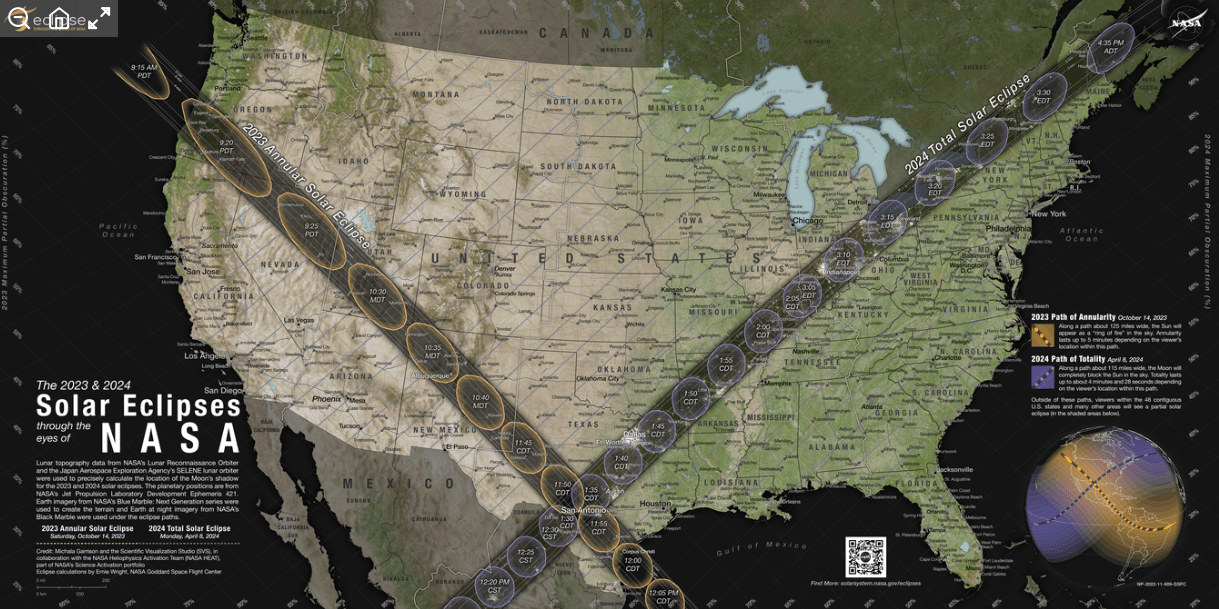
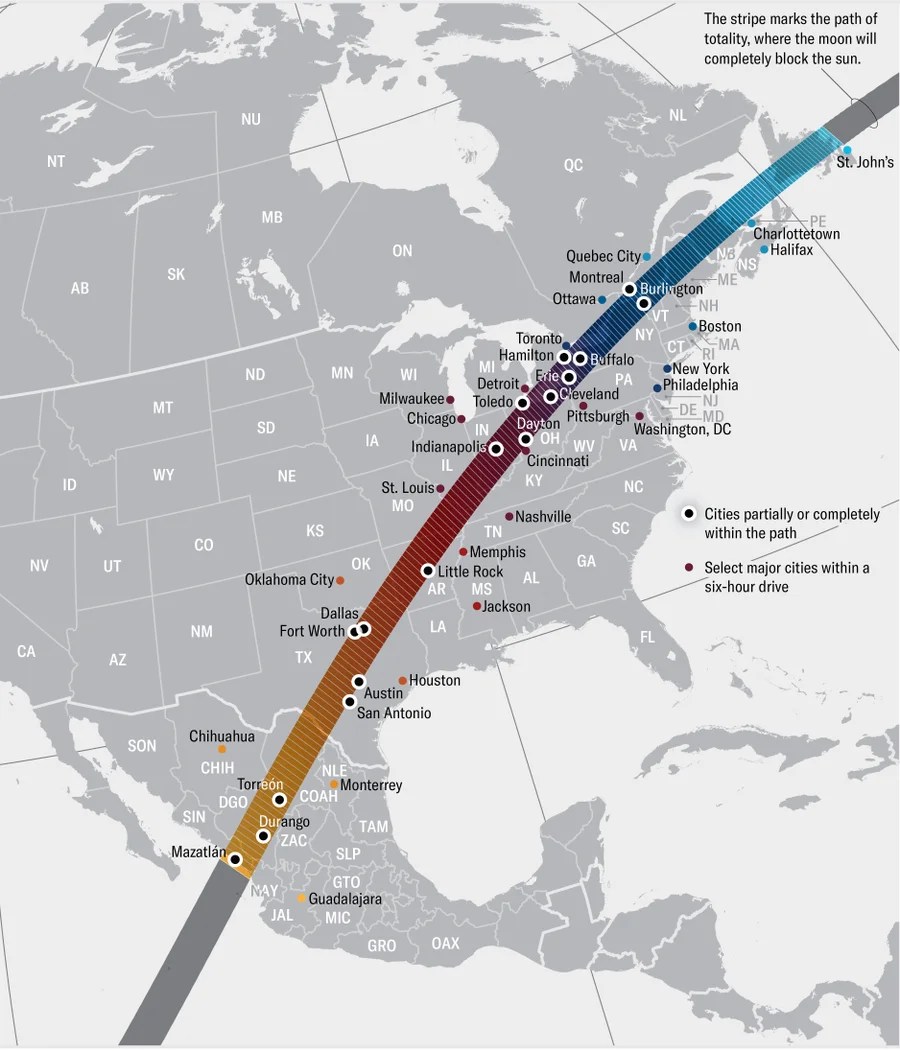
What kind of ambassador, you ask? Well, NASA is looking for what are called “Partner Eclipse Ambassadors.” Volunteers for this position will assist NASA as it prepares communities for the April 2024 solar eclipse.
NASA promises the following to support volunteer ambassadors:
You have plenty of time to prepare for this event, so check it out. You can get all of the details at this link.

Here are some recent stories of interest.
—NASA JPL: “NASA’s Curiosity Rover Clocks 4,000 Days on Mars“
Four thousand Martian days after setting its wheels in Gale Crater on Aug. 5, 2012, NASA’s Curiosity rover remains busy conducting exciting science. The rover recently drilled its 39th sample then dropped the pulverized rock into its belly for detailed analysis. To study whether ancient Mars had the conditions to support microbial life, the rover has been gradually ascending the base of 3-mile-tall (5-kilometer-tall) Mount Sharp, whose layers formed in different periods of Martian history and offer a record of how the planet’s climate changed over time.
—Cornell University: “‘Jurassic Worlds’ Might be Easier to Spot than Modern Earth“
Things may not have ended well for dinosaurs on Earth, but Cornell University astronomers say the “light fingerprint” of the conditions that enabled them to emerge here provide a crucial missing piece in our search for signs of life on planets orbiting alien stars. Their analysis of the most recent 540 million years of Earth’s evolution, known as the Phanerozoic Eon, finds that telescopes could better detect potential chemical signatures of life in the atmosphere of an Earth-like exoplanet more closely resembling the age the dinosaurs inhabited than the one we know today.
—UC Riverside: “Giant Planets Cast a Deadly Pall“
Jupiter, by far the biggest planet in our solar system, plays an important protective role. Its enormous gravitational field deflects comets and asteroids that might otherwise hit Earth, helping create a stable environment for life. However, giant planets elsewhere in the universe do not necessarily protect life on their smaller, rocky planet neighbors. A new Astronomical Journal paper details how the pull of massive planets in a nearby star system are likely to toss their Earth-like neighbors out of the “habitable zone.” This zone is defined as the range of distances from a star that are warm enough for liquid water to exist on a planet’s surface, making life possible.

You may know Bill Maher from his TV show Real Time, but he really lets loose on his podcast Club Random, which can be found in the form of a podcast or Youtube video. If you are interested, then there is not better place to start than with his recent sit down with astrophysicist Neil deGrasse Tyson.
The two friends discuss just about everything, with Bill sometimes barking at Neil, but it is all in good fun (and the drinks probably helped). You can hear about politics, a little bit of science, the state of the world today, and more.
Neil deGrasse Tyson also brought his latest book to the program, To Infinity and Beyond: A Journey of Cosmic Discovery, but the two spend very little time covering the book and its contents. This was a podcast without a clear agenda, which is common for Bill Maher in these settings.
So if you just want to see Neil deGrasse Tyson relaxing with a friend, it is a great show.