Image (Credit): Martian horizon courtesy of NASA’s Mars Odyssey orbiter. (NASA/JPL-Caltech/ASU)
The image this week is what the International Space Station might see if it were traveling over Mars. Instead, this is the view of NASA’s Mars Odyssey orbiter.
You can learn more about this image by watching this video with Laura Kerber, deputy project scientist for NASA’s Mars Odyssey orbiter. You can also read more about the orbiter’s mission and the video of Phobos by visiting this NASA site.
Image (Credit): Artist’s rendering of a proposed Planet Nine. (NASA/JPL-Caltech)
I listened to a recent Cool Worlds Lab podcast where Professor David Kipping interviewed Professor Malena Rice from Yale University’s Department of Astronomy. The episode, titled Planet Nine, Oumuamua, Misaligned Exoplanets, covered a good range of topics, as the title suggests.
Of greatest interest to me was the continued search for a ninth planet in our solar system (sorry, Pluto). Professor Rice was noncommittal on the likelihood of such a planet, but she is hoping NASA’s Transiting Exoplanet Survey Satellite (TESS) can help to bring more light to the topic.
She discussed how this ninth planet is estimated to be a sub-Neptune sized planet, which appears to be common in many other solar systems we have observed. Planet Nine is estimated to be a gas giant about 5-10 times the mass of Earth yet smaller than Neptune lying 300-800 astronomical units from the Sun (or about 10 times more distant that Pluto).
Professor Rice noted that it is pretty amazing that we can discover distant galaxies but not potential planets in our backyard. She attributes this difficulty to the lack of light on such a planet.
The podcast episode dives deep in this topic, and then continues into other fascinating topics such as visitors to our solar system and strange solar systems elsewhere. It is a lot to take in, but well worth the time even if you need to play it more than once.
Note: Of course, it may not be a planet at all. One theory is that it is a black hole at the edge of our solar system. I would like to hear that podcast as well.
Planets with radii between that of the Earth and Neptune (hereafter referred to as ‘sub-Neptunes’) are found in close-in orbits around more than half of all Sun-like stars. However, their composition, formation and evolution remain poorly understood. The study of multiplanetary systems offers an opportunity to investigate the outcomes of planet formation and evolution while controlling for initial conditions and environment. Those in resonance (with their orbital periods related by a ratio of small integers) are particularly valuable because they imply a system architecture practically unchanged since its birth. Here we present the observations of six transiting planets around the bright nearby star HD 110067. We find that the planets follow a chain of resonant orbits. A dynamical study of the innermost planet triplet allowed the prediction and later confirmation of the orbits of the rest of the planets in the system. The six planets are found to be sub-Neptunes with radii ranging from 1.94R⊕ to 2.85R⊕. Three of the planets have measured masses, yielding low bulk densities that suggest the presence of large hydrogen-dominated atmospheres.
Citation: Luque, R., Osborn, H.P., Leleu, A. et al. A resonant sextuplet of sub-Neptunes transiting the bright star HD 110067. Nature 623, 932–937 (2023). https://doi.org/10.1038/s41586-023-06692-3
The Japanese government has said it will establish a $6.6 billion (¥1 trillion) fund to develop the country’s space industry as programs in the U.S., Russia, China and India rush to put men on the moon, build lunar sites and plan for the future of the International Space Station in a renewed race for celestial supremacy...Nikkei, a Japanese newspaper, reported that funding will be given to companies developing technologies that could be used to support national security or those that could rival Elon Musk’s SpaceX by developing rockets and “satellite constellations”—groups of satellites that operate as one system.
With just two Starship integrated test flights under its belt, SpaceX announced last week it is already working on a major overhaul of its second-stage Starship vehicle. The design changes will be significant enough to speciate the ship, giving it the title of Version 2. SpaceX plans to finish and launch four or five additional Starship V1 prototypes before transitioning to its V2 product line, Elon Musk said on X. Insights gained from the upcoming flights will be integrated into the next-gen rocket.
When the US imposed sanctions to degrade Russia’s aerospace industry, including embargoes on semiconductors, lasers, sensors, and navigation equipment, Dmitry Rogozin, then chief of Russia’s space program, warned it might cause the International Space Station to fall on the US or Europe. These comments and others from a supposedly serious scientific organization did cause a crash — the decades-old US-Russia space partnership was effectively ended after decades of joint work, including the Soviet era, that had benefited science, détente, and humanity. The events of 2022-2023 have made it more likely Russia would step away from exploration and, with China, focus on military applications in space.
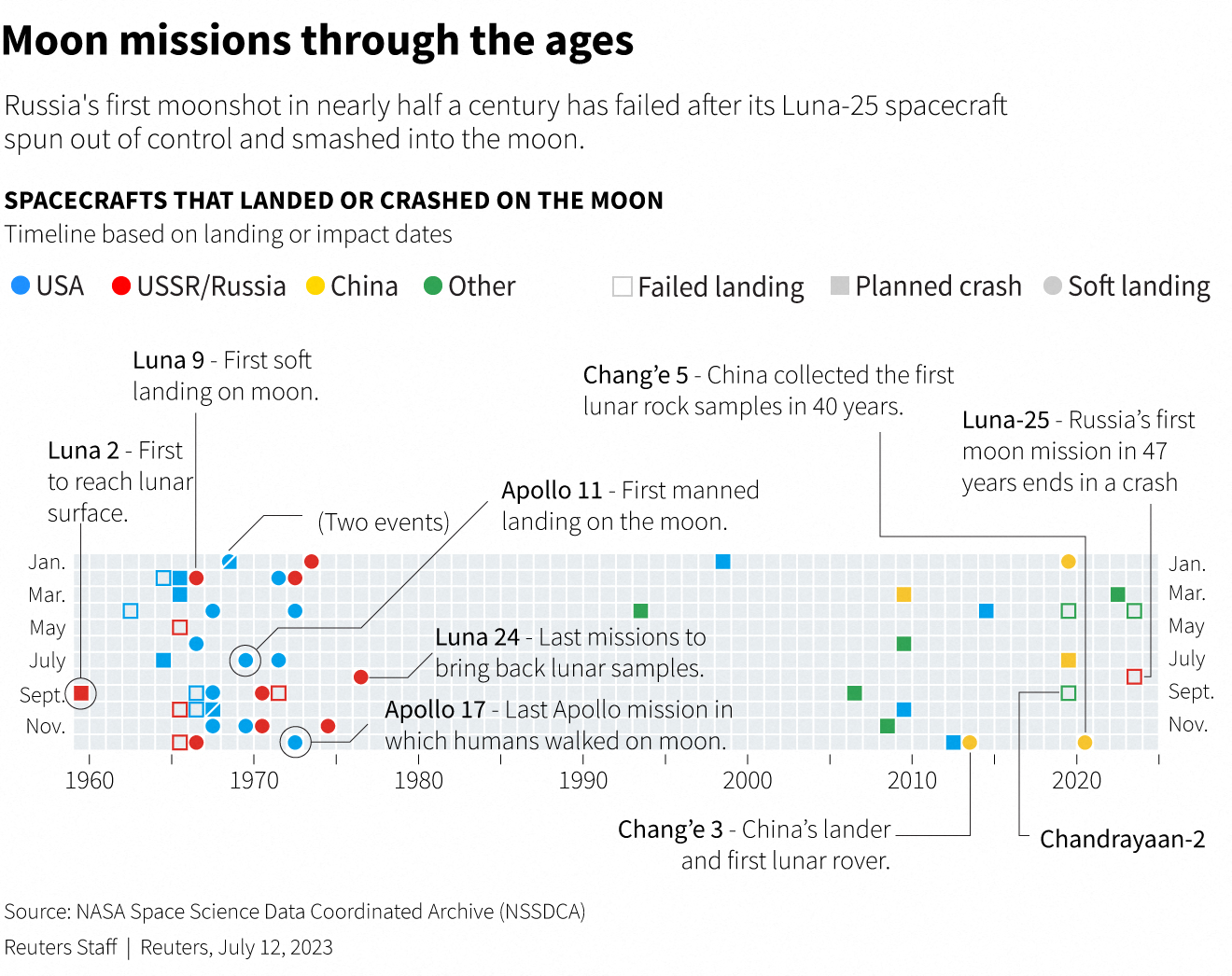
Note: The helpful graphic below is used in the Center for European Policy Analysis story.
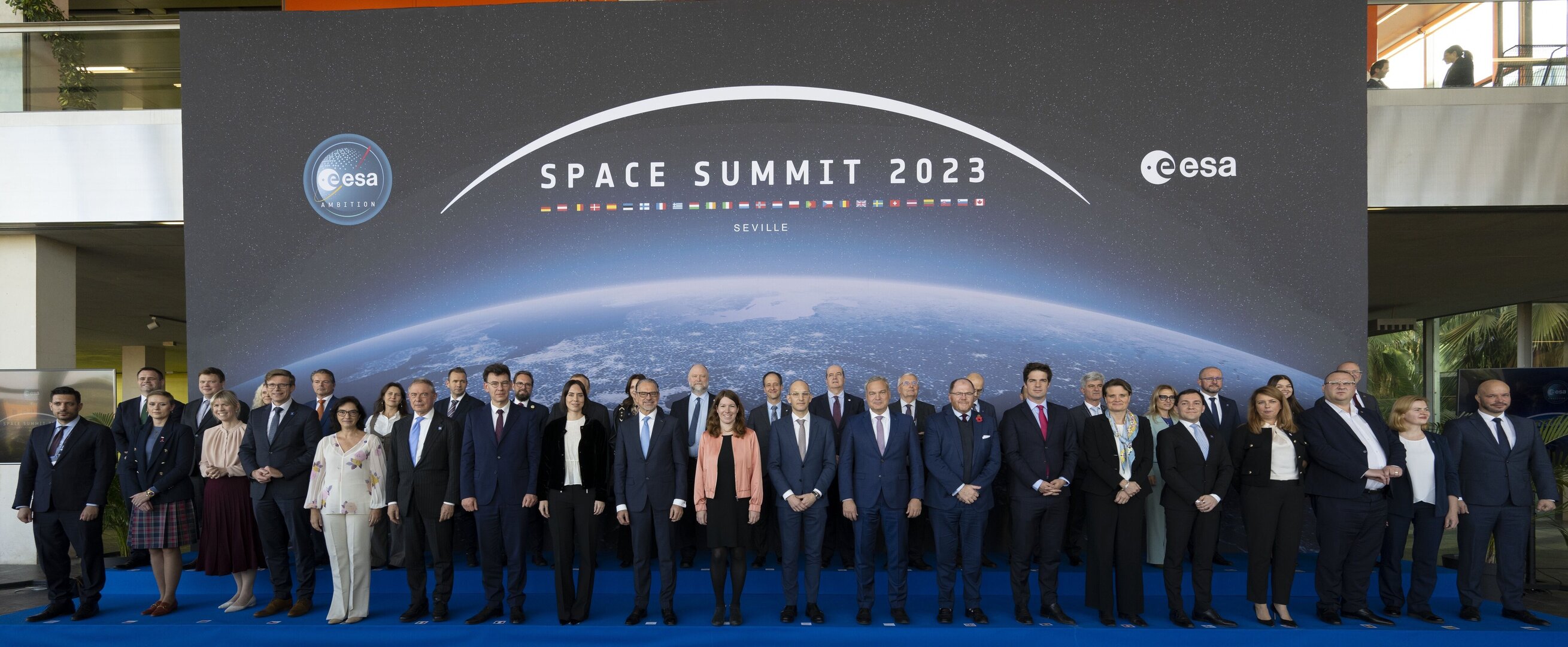
Did you have a chance to attend the European Space Agency’s (ESA) Space Summit 2023 earlier this month in Seville, Spain? Well, neither did I, but from what I hear it appears the Europeans are trying to address some shortfalls in their space program.
We already know that Europe is having difficulties timely developing its own rockets for space missions, and the Russians are no help these days. So SpaceX and others are helping out for now. But the Europeans can see they need to set things right, and soon.
The Guardianreports that the 22 ESA members agreed to encourage competition among private sector companies to build cargo spacecraft to support the International Space Station (ISS). Moreover, the competition may expand to crewed spacecraft.
This is similar to President Obama’s commercial competition initiatives years ago, helping to create a web of companies that NASA now relies on for the ISS and its Artemis program.
A crewed spacecraft would be something new for the ESA and suggests greater investment and involvement in future space missions, which is good for everyone.
Could we see an ESA lunar station one day? It seems more possible now.