Are you looking for that perfect book for a space enthusiast? You may want to take a look at some of the books authored by NASA astronauts in the last few years. Be it inspiration or adventure you are seeking, you can find it with these authors. Below are three books to consider as gift ideas.
—Moonshot by NASA astronaut Mike Massimino:
Mike Massimino achieved his dream of exploring space. Now he distills stories and insights from NASA into an actionable guide to accomplish your biggest goals. Mike reveals how to make possible the seemingly impossible—on Earth. Written with characteristic wit and a big heart, Mike identifies ten hard-earned lessons of spaceflight and his other life experiences, including:
- One in a Million Is Not Zero: The odds are against you. Do it anyway.
- The Thirty-Second Rule: You’re going to make mistakes. Learn how to deal with them.
- Be Amazed: The universe is an incredible place. Stop what you’re doing and look around.
- Know When to Pivot: Change is inevitable. Accept and embrace it.
We all have our own personal “moon shots” we’d like to take in life, but as mission control will tell you, doing one big thing really means getting a thousand little things right along the way. Moonshot is the book that will show you how to do just that, and help set you on the right path to achieve your own personal and professional dreams.
—Back to Earth by NASA astronaut Nicole Stott:
Stott imparts essential lessons in problem-solving, survival, and crisis response that each of us can practice to make change. She knows we can overcome differences to address global issues, because she saw this every day on the International Space Station. Stott shares stories from her spaceflight and insights from scientists, activists, and changemakers working to solve our greatest environmental challenges. She learns about the complexities of Earth’s biodiversity from NASA engineers working to enable life in space and from scientists protecting life on Earth for future generations. Ultimately, Stott reveals how we each have the power to respect our planetary home and one another by living our lives like crewmates, not passengers, on an inspiring shared mission.
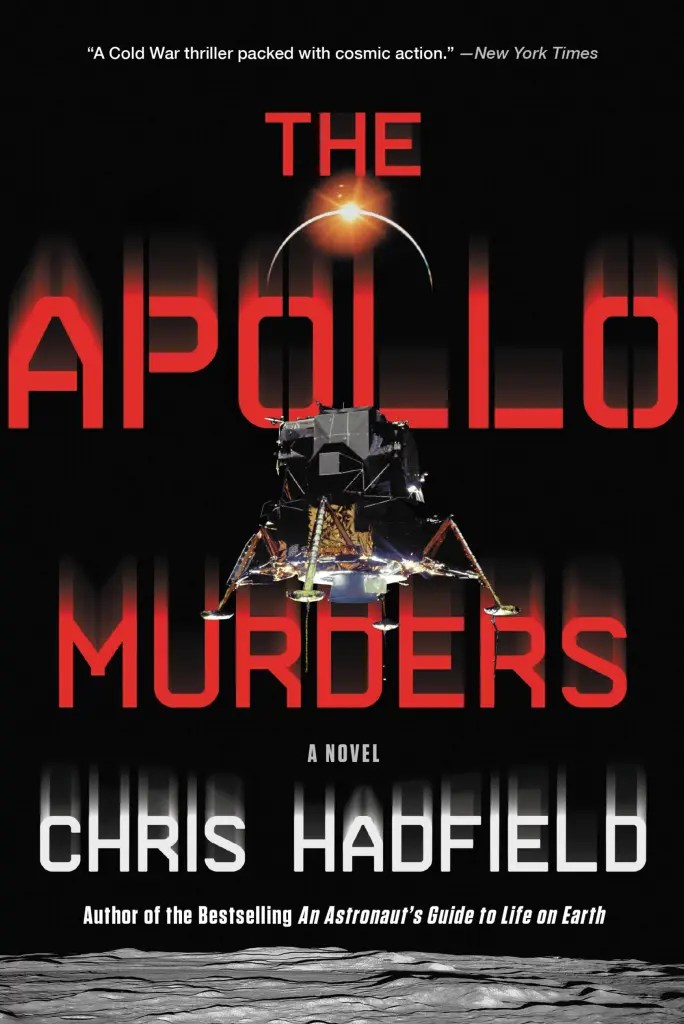
—The Apollo Murders by astronaut Chris Hadfield:
NASA is about to launch Apollo 18. While the mission has been billed as a scientific one, flight controller Kazimieras “Kaz” Zemeckis knows there is a darker objective. Intelligence has discovered a secret Soviet space station spying on America, and Apollo 18 may be the only chance to stop it.
But even as Kaz races to keep the NASA crew one step ahead of their Russian rivals, a deadly accident reveals that not everyone involved is quite who they were thought to be. With political stakes stretched to the breaking point, the White House and the Kremlin can only watch as their astronauts collide on the lunar surface, far beyond the reach of law or rescue.