Image (Credit): The Sun’s coronal mass ejection. (Andrew McCarthy/@cosmic_background)
This week’s image is from LiveScience’s “10 most jaw-dropping space images of 2022.” It is described as a “false-color composite image of a coronal mass ejection measuring around 1 million miles firing away from the sun.” The image, attributed to photographer Andrew McCarthy, was created from hundreds of thousands of individual shots taken over six hours.
Image (Credit): Artist’s rendering of NASA’s New Horizons spacecraft. (NASA/JHUAPL/SwRI)
On this day in 2006, NASA launched the New Horizons spacecraft from Cape Canaveral Space Force Station. The objective of the mission was to explore Pluto and the Kuiper Belt. In 2015, the spacecraft spent six months studying Pluto and its moons. New Horizons is now on an extended mission exploring other parts of the Kuiper Belt.
New Horizons flew past Pluto in 2015 and the Kuiper belt object (KBO) Arrokoth in 2019. In its second extended mission, New Horizons will continue to explore the distant solar system out to 63 astronomical units (AU) from Earth. The New Horizons spacecraft can potentially conduct multi-disciplinary observations of relevance to the solar system and NASA’s Heliophysics and Astrophysics Divisions. Additional details regarding New Horizons’ science plan will be provided at a later date.
Image (Credit): Pluto as seen by the New Horizons spacecraft (with enhanced color). (NASA/JHUAPL/SwRI)
After 30 years in orbit, mission operations for the joint NASA-JAXA Geotail spacecraft have ended, after the failure of the spacecraft’s remaining data recorder. Since its launch on July 24, 1992, Geotail orbited Earth, gathering an immense dataset on the structure and dynamics of the magnetosphere, Earth’s protective magnetic bubble. Geotail was originally slated for a four-year run, but the mission was extended several times due to its high-quality data return, which contributed to over a thousand scientific publications. While one of Geotail’s two data recorders failed in 2012, the second continued to work until experiencing an anomaly on June 28, 2022. After attempts to remotely repair the recorder failed, the mission operations were ended on November 28, 2022.
Astronomers have released a gargantuan survey of the galactic plane of the Milky Way. The new dataset contains a staggering 3.32 billion celestial objects—arguably the largest such catalog so far. The data for this unprecedented survey were taken with the Dark Energy Camera, built by the US Department of Energy, at the NSF’s Cerro Tololo Inter-American Observatory in Chile, a Program of NOIRLab.
While much of the world’s press recently focused on Virgin Orbit’s failed ‘horizontal’ aircraft launch of a batch of 9 small satellites from Spaceport Cornwall, other rivals are gearing up to tap into the growing demand for satellite launches. Sweden has claimed the crown as “mainland Europe’s first orbital launch site”. Ursula von der Leyen, President of the European Commission, helped cut the ribbon at Kiruna, Sweden, saying: “This spaceport offers an independent European gateway to space. It is exactly the infrastructure we need, not only to continue to innovate but also to further explore the final frontier.”
Image (Credit): Singing in the “Domino” episode on The Orville: New Horizons. (Hulu)
I cannot let January end without making one update to my “Top Astronomy Stories in 2022” list. I really need to add Hulu’s The Orville: New Horizons as number 11 on the list. The third season has been much more polished and enjoyable than the first two. After jumping to Hulu and renaming itself, the show has really found its way to being a great addition to the scifi universe.
The last two episodes in particular – “Domino” and “Future Unknown” – were the best of the season. We go through war, sacrifice, death, reconciliation, and even marriage with a crew that is now part of our family. I am still not sure what I think about the role of Dolly Parton in the series, but the Orville’s crew singing in episode 9 (“Flowers Never Bend with the Rainfall” by Simon & Garfunkel) and episode 10 (“Secret o’ Life” by James Taylor) are reason enough to watch these last two episodes.
So what happens next? Do we see a fourth season? It is unclear, even to creator and actor Seth MacFarlane, who had this to say about the future of the series to Den of Geeks:
If we’re lucky, The Orville reaches a stage where we do multiple uninterrupted seasons, and we can end the season knowing that we’re moving into the next. But this was designed to be a wrap up for the season – a bit of an open-ended piece of narrative that allows the various characters any possible number of futures. At the same time, we wanted to tie things up in a nice little bow as much as we could in case we didn’t get picked up.
I hope we can see a fourth season, but as they said in the very title of the last episode – Future Unknown.
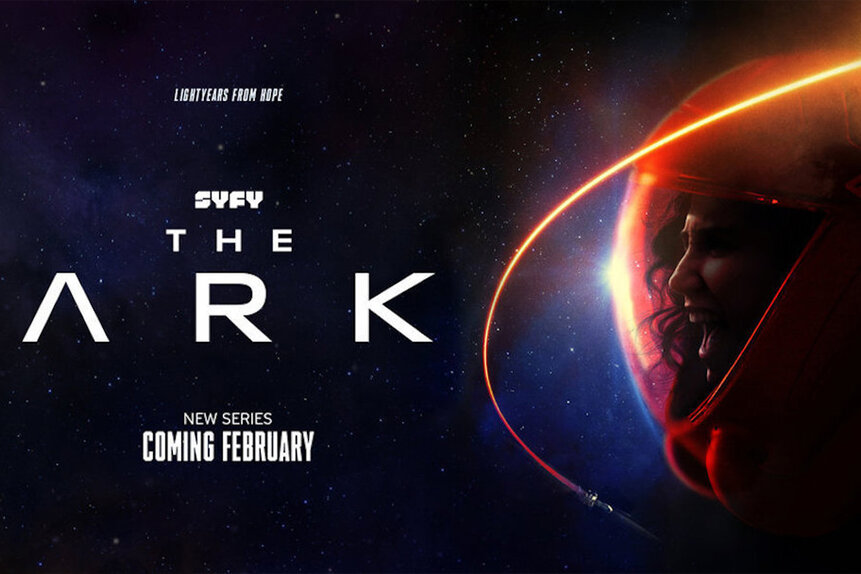
If you are looking for a new space series beyond the Star Trek and Star Wars iterations, then SyFy’s The Arkmay be for you. Premiering February 1st, it has all of the necessary elements: a long space mission, something going wrong, everyone’s fate hanging in the balance, and a heroic effort saving the day. I hope I did not give anything away.
The Ark takes place 100 years in the future when planetary colonization missions have begun as a necessity to help secure the survival of the human race. The first of these missions on a spacecraft known as Ark One encounters a catastrophic event causing massive destruction and loss of life. With more than a year left to go before reaching their target planet, a lack of life-sustaining supplies and loss of leadership, the remaining crew must become the best versions of themselves to stay on course and survive.
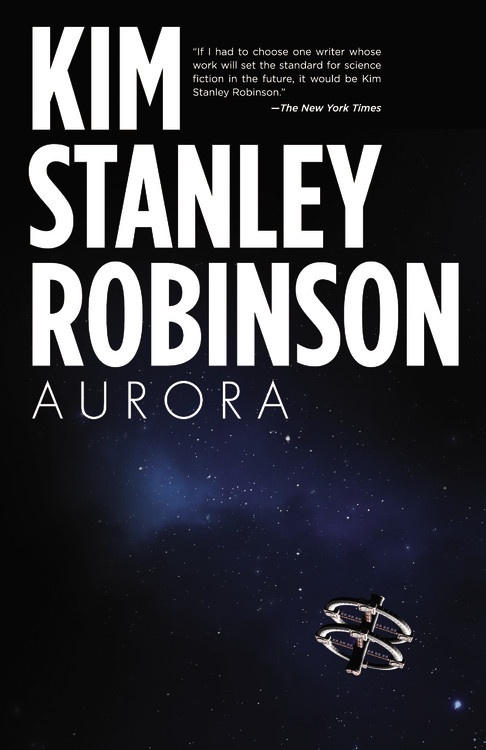
And don’t miss the trailer, which clearly points out that the ship is off course and the captain is dead. The last space series I watched with with this set up was HBO Max’s Avenue 5, but those passengers were only traveling around the solar system. Here the stakes are more like those in Kim Stanley Robinson’s scifi novel Aurora, which involves a multi generation trip to a distant planet. I recommend both the HBO series and novel, but I will need to wait on the roll-out of The Ark to say more about this new series.
I am looking for my next Expanse series, so I will watch The Ark and hope for the best.
Update: My hopes were dashed. The pilot was so bad that I watched the second episode just to be sure. That episode was bad as well. You cannot look at the crew of the Ark and think this is the best hope for humanity. Throughout both episodes all you had was yelling and dysfunctional behavior. Clearly there was no vetting for this crew. If this is the way we ran out submarine fleet then I would expect every sub to be on the bottom of the sea (about three days after launch). The show even has a turtle-necked founder of the Ark mission chatting away as a hologram. I thought we saw this in the movie Don’t Look Up and basically every other movie after that when you need a stand-in villain. I might have continued if SyFy simply billed the TV show as a comedy, yet even that would have problems since no one on the show can act. Oh well, I will await the next series and hope again. I am not giving up.



 Our Awesome Universe