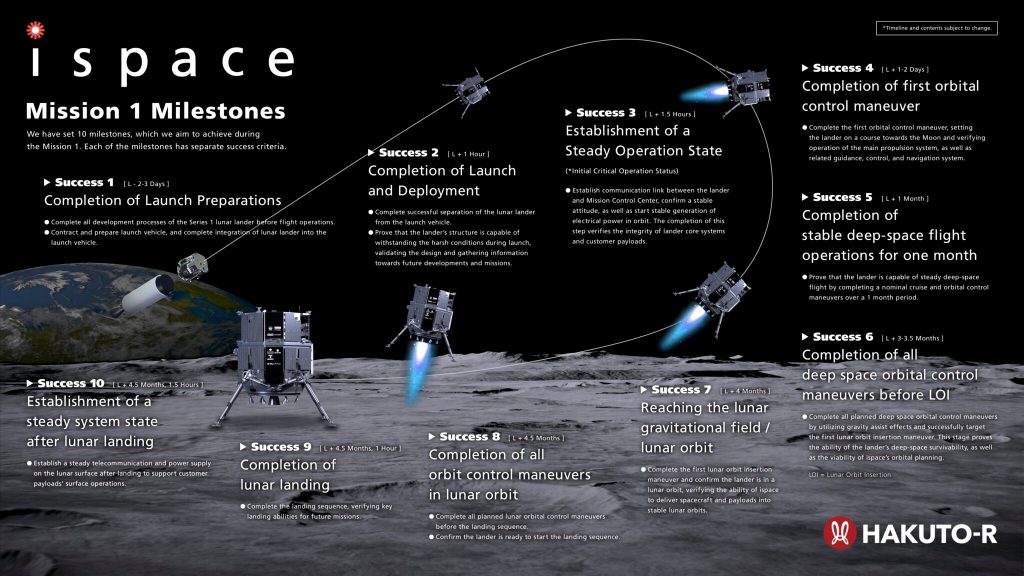
Image (Credit): iSpace mission milestones for the upcoming lunar landing. (iSpace)
While the Orion spacecraft was heading back to Earth, the Japanese HAKUTO-R Mission 1 lunar lander was on its way to the Moon. The name HAKUTO refers to the white rabbit that lives on the moon in Japanese folklore.
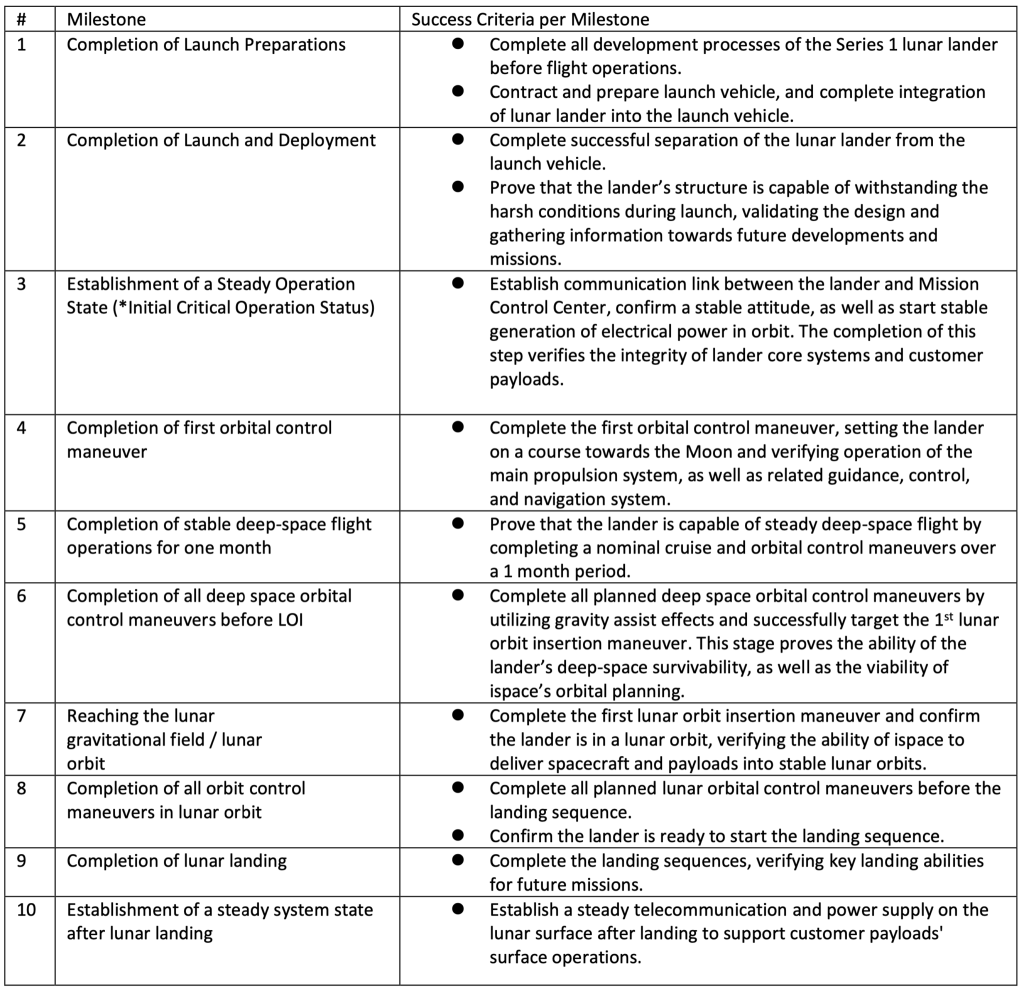
The Japanese private firm iSpace is behind the lunar mission, becoming the first private company to place a lander on the Moon. The lunar lander’s milestones are shown below, with the landing to occur next April.
Both the mission and payload are multinational. Investors in iSpace include the Development Bank of Japan, Suzuki Motor, Japan Airlines, and Airbus Ventures, which the payload includes items from the U.S. (including a NASA satellite looking for water), Canada, Japan (rover), and the United Arab Emirates (rover).
This should be the first of many iSpace lunar missions, demonstrating the role of commercial parties in the ongoing race back to the Moon.
Image (Credit): Milestones for the AKUTO-R Mission 1 lunar lander. (iSpace)
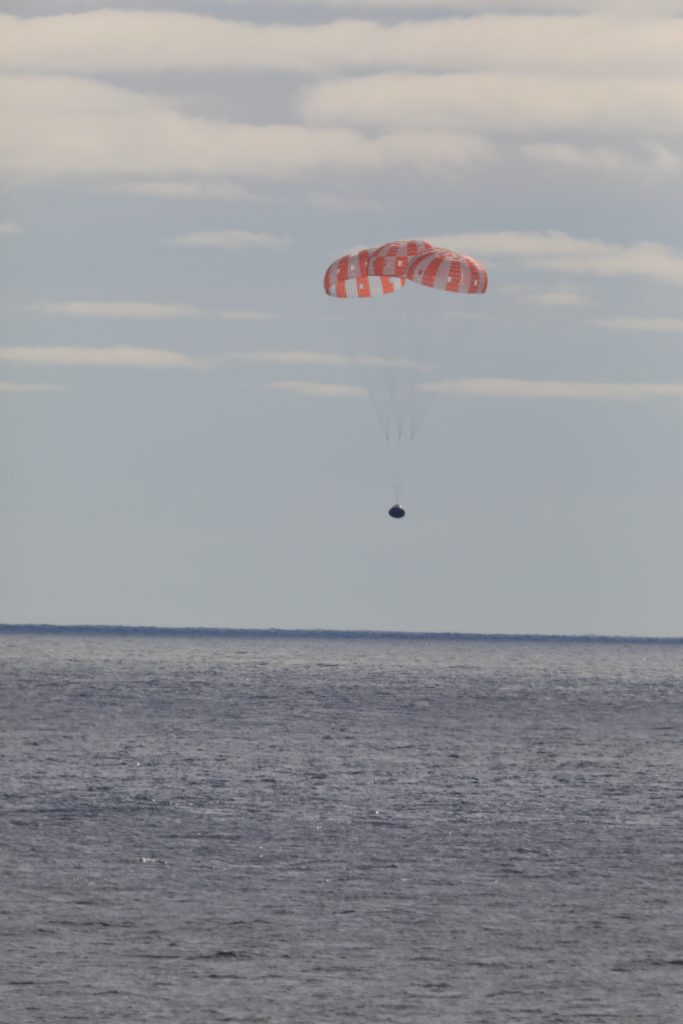
Image (Credit): The return on the Orion capsule over the Pacific Ocean on December 11th. (NASA)
The Orion has landed, or splashed down to be more accurate. The Artemis I mission had a successful finish with the Orion capsule parachuting down into the Pacific at 12:40 p.m. EST today. At the time of this posting, the capsule was still afloat in the water while awaiting a review by engineers before being taken aboard the USS Portland.
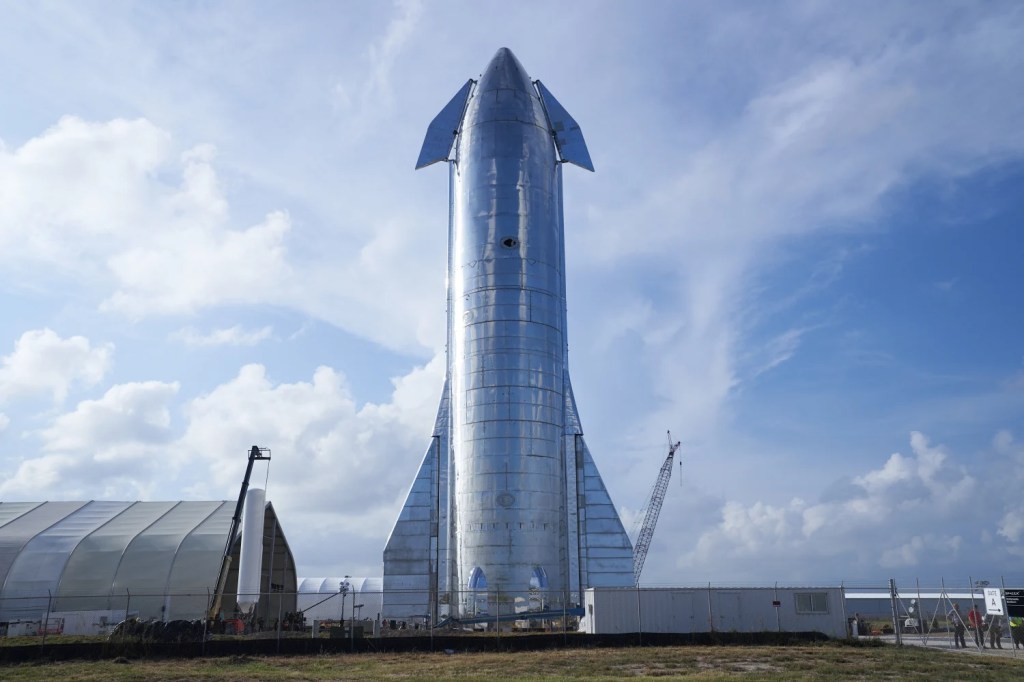
Image (Credit): SpaceX’s Starship rocket to be used for travel to Mars. (SpaceX)
You have probably heard of the new artificial intelligence program ChatGPT, which can compose stories and articles. So what happens when you ask it to do a simple task? I asked the program to compose a poem to cover the following scenario:
Elon Musk has become frustrated with Twitter, so he takes a rocket to Mars to live there forever.
Here is what I received from ChatGSP:
Elon Musk, oh how he tried
To make Twitter work for him,
But in the end, he sighed
Fed up with all the noise
The constant need for attention
He made a bold decision
He’d leave this world behind
And start anew on Mars
Where he could truly shine
With his rocket at the ready
He blasted off to the stars
Leaving Earth and its troubles steady
On the Red Planet he would live
Where he could truly be himself
And all his dreams he could fulfill
No more anger, no more frustration
Just peace and solitude at last
On Mars, he found his new destination.
Not a bad start. Maybe ChatGPS needs to get in touch with the SpaceX engineers working at Twitter to determine whether this adventure can be arranged.
Extra: Here is another poem ChatGTP put together on a 2025 moon landing. It was not perfect. For example, I don’t think we will need to worry about “lunar mud.”
In 2025 we took a trip to the moon
To see what secrets it held in its dune
We strapped on our suits and climbed in our ship
And blasted off into the endless abyss

The stars shone bright as we soared through the sky
And the moon grew larger as we drew nigh
We landed on the surface with a thud
And took our first steps on the lunar mud

We explored the craters and the rocky terrain
And marveled at the view of Earth again
We planted a flag and collected some rocks
And gazed at the stars from a lunar box

We took lots of pictures and had lots of fun
But soon it was time to return to Earth, our home
We climbed back in our ship and took off with a roar
Leaving the moon to shine bright once more

But the memories of our trip will never fade
And the experience will forever be engraved
In our hearts and minds as a wondrous feat
A trip to the moon, a dream complete.
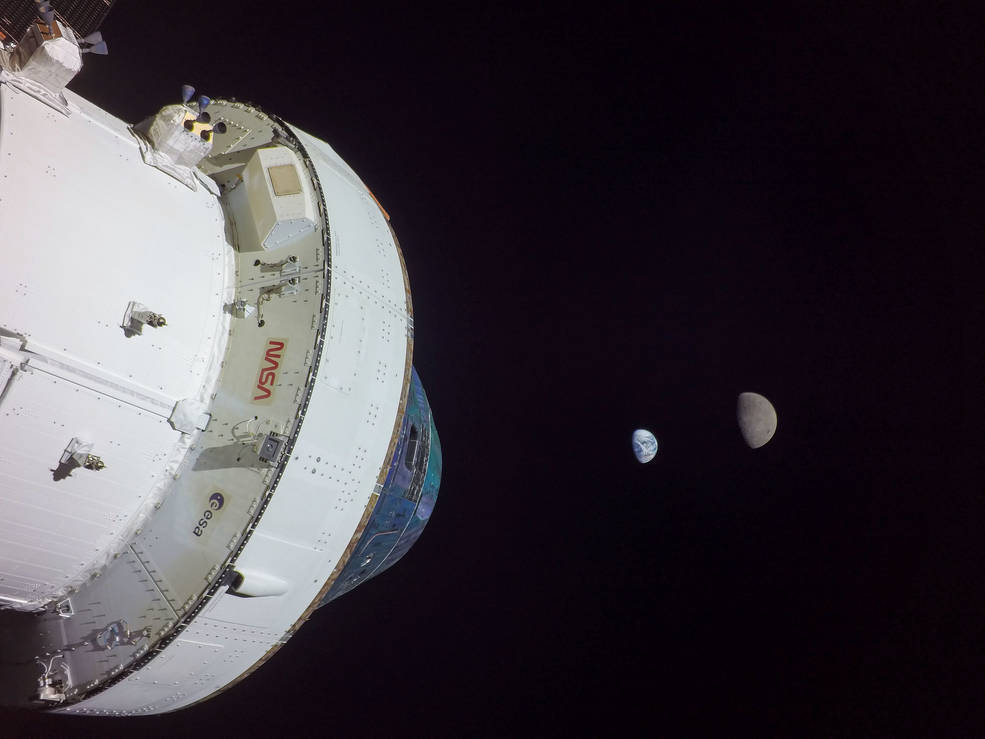
Image (Credit): November 28, 2022 image from NASA’s uncrewed Orion spacecraft when it was nearly 270,000 miles from Earth during the Artemis I flight test. (NASA)
This Sunday, November 11th, will see the return of the Orion spacecraft. Tune into NASA to watch Orion’s re-entry and spashdown. Live splashdown coverage will begin at 11 a.m. EST. The splashdown itself is scheduled for 12:39 p.m. EST. You can watch all of the coverage live on NASA TV, the agency’s website, and the NASA app.
Image (Credit): The Artemis I recovery team aboard the USS Portland in the Pacific Ocean. The team is out at sea ahead of the Dec. 11 Orion splashdown. (NASA)
Image (Credit): Surface of the Moon as captured by the Orion spacecraft. (NASA)
This week’s image of the lunar surface comes from NASA’s Orion spacecraft as it orbited the Moon on December 5th. Orion is now on its way back and is expected to re-enter the Earth’s atmosphere on December 11th.
Regarding the return of the Orion crew module, NASA stated:
Earth’s atmosphere initially will slow the spacecraft to 325 mph, then the parachutes will slow Orion to a splashdown speed in about 10 minutes as it descends through Earth’s atmosphere. Parachute deployment begins at an altitude of about five miles with three small parachutes pulling the forward bay covers away. Once the forward bay cover separates, two drogue parachutes will slow and stabilize the crew module for main parachute deployment. At an altitude of 9,500 feet and a spacecraft speed of 130 mph, three pilot parachutes will lift and deploy the main parachutes. Those 116-foot-diameter parachutes of nylon broadcloth, or “silk,” will slow the Orion crew module to a splashdown speed of 20 mph or less.
The landing point is in the Pacific Ocean near Guadalupe Island. It should be a strong finish to a successful Artemis mission.



 Our Awesome Universe