Astronomy Ideas on Borrowed Time?

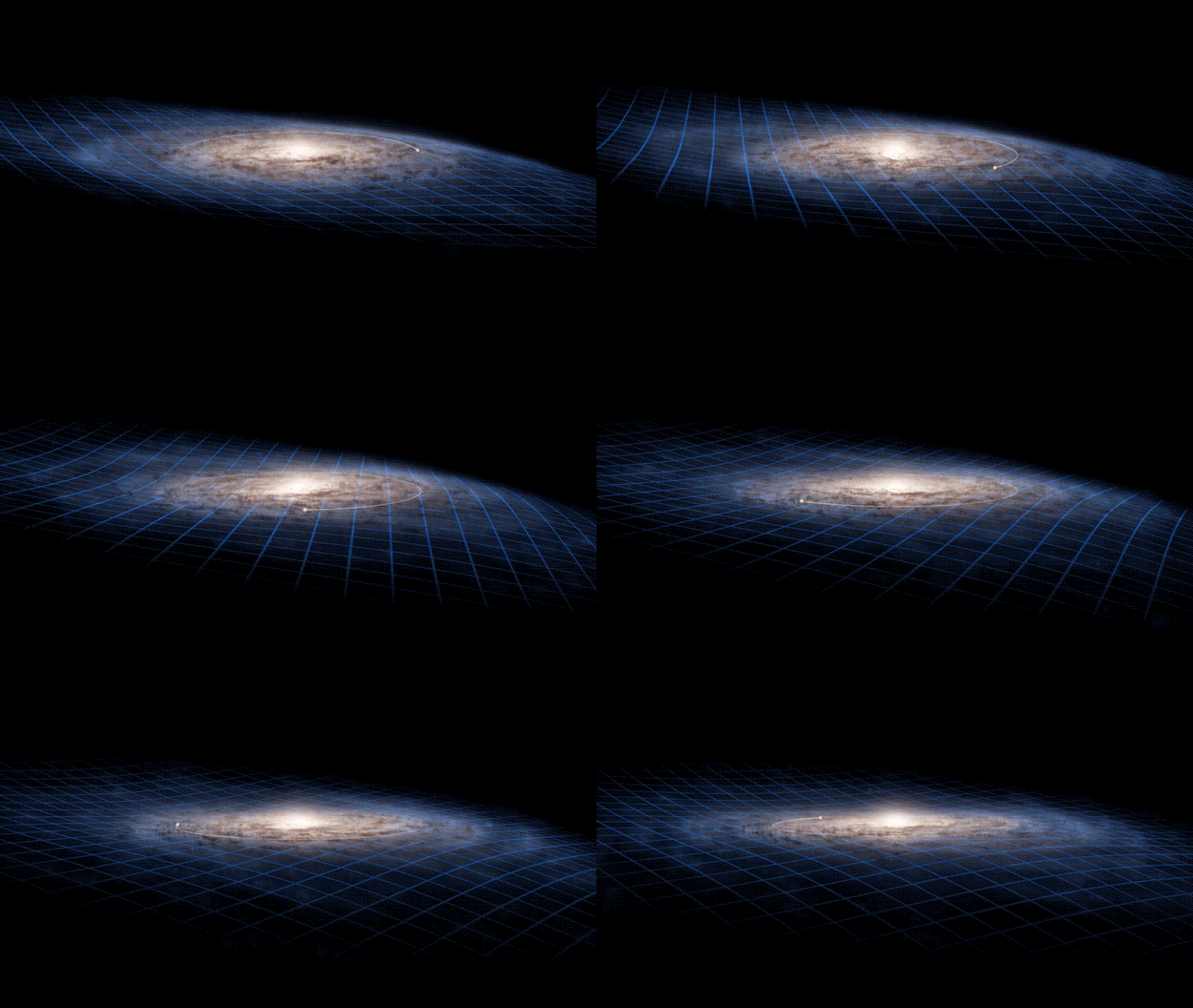
Image (Credit): The position of our Sun as it orbits the Milky Way’s center. (Stefan Payne-Wardenaar)

A recent Big Think story, “5 Consensus Ideas in Astronomy That Might Soon be Overturned,” comes as a good time as we reach further into space and back into time using the James Webb Space Telescope (JWST) and contemplate other telescopes that should come online shortly.

The story highlights these five ideas:

  • Dark energy is a cosmological constant;
  • Stars predate black holes;
  • Jovian planets protect terrestrial ones;
  • Most of the galaxy is uninhabitable; and
  • Globular clusters are planet-free.

For instance, regarding the uninhabitable areas of the galaxy, the Big Think story states:

Among its many discoveries, the ESA’s Gaia mission has found that the Milky Way galaxy not only has a warp to its galactic disk, but that the warp in the disk precesses and wobbles, completing a full rotation for roughly every three revolutions of the Sun [shown in yellow above] around the galactic center. Most astronomers assume that regions with too many stellar cataclysms in them, like the centers of galaxies, may be completely uninhabitable. But this picture is far from certain.

It is worth reading through the list and keeping these ideas in mind, and then following the JWST stories as they unfold. I bet you will be able to make a much longer list as old consensus ideas come apart and new ideas quickly follow.

More Space Travel Offers from China and NASA

Image (Credit): Artist’s impression of the Chinese Space Station. (China Manned Space Program)

The China Global Television Network recently reported that China is looking into offering space rides to commercial passengers by 2025, including suborbital flights, cargo flights, and trips to Chinese Space Station. For instance, suborbital flights are expected to be priced at 2 and 3 million yuan (or $287,200 to $430,800).

Given the growing U.S. space industry with its own range of space flight options, it was only a matter of time that China would enter this commercial space race. Russia has been in the game the longest, having sold seats to U.S. astronauts hoping to reach the International Space Station (ISS) following the demise of the space shuttle.

Not to be outdone, NASA has also announced plans to take commercial passengers to the ISS at $55 million per seat. According to Tech Times, NASA is seeking commercial partners for two such flights per year starting as early as 2023. We have already discussed the Axiom Mission 1 (or AX-1 mission) to the ISS earlier this year at about the same price, so this is not a new idea. I guess the Axiom Mission 1 went well enough for NASA to see this as a regular operation.

A variety of space travel options from a variety of countries and commercial suppliers shows that playing in space can be both fun and profitable. Just ask Captain Kirk.

That is fine, as long as the tourists do not get in the way of the real work that is being conducted. With the taxpayers still footing most of the space-faring bill, we do not want space travel to be seen as only a luxury for the wealthy (similar to electric vehicles in the U.S., up to now). Space and related space travel should be seen as something belonging to everyone.

Royal Observatory Greenwich Winning Space Images

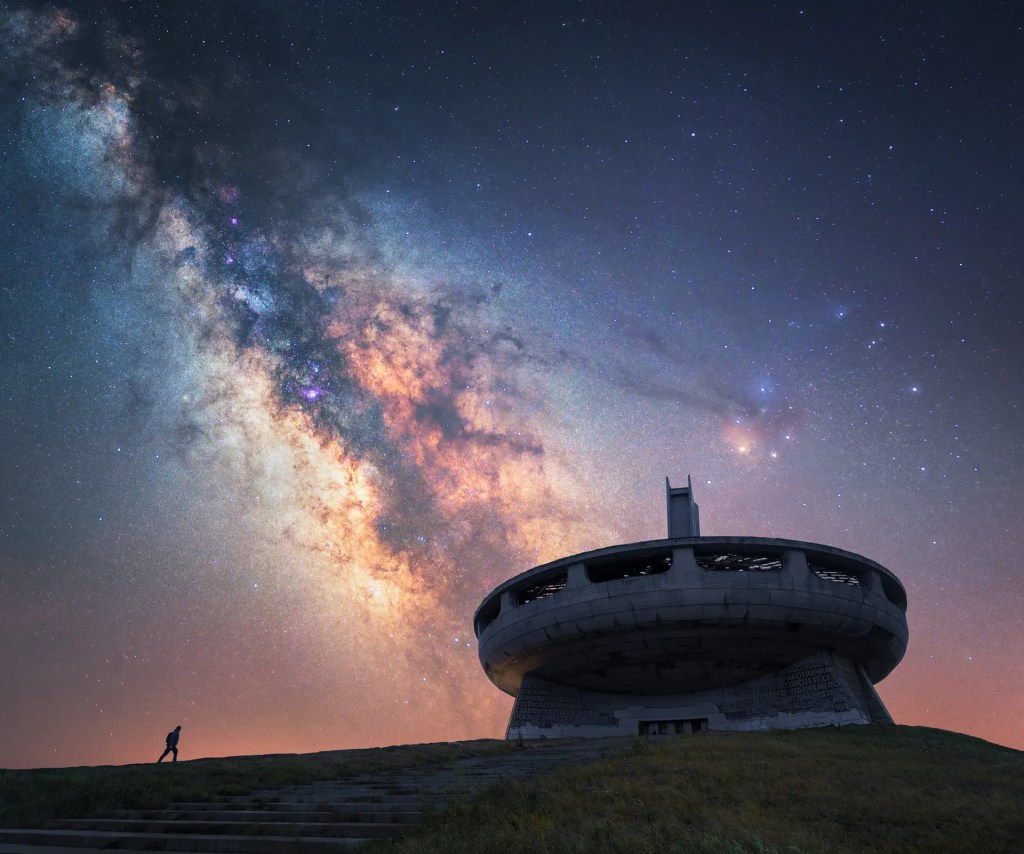
Image (Credit): “Back to the Spaceship” by Mihail Minkov. (Royal Observatory Greenwich)

London’s The Guardian newspaper recently reported on the winners in the Royal Observatory Greenwich’s 14th Astronomy Photographer of the Year competition. Once of the runner-up images, shown above, is titled “Back to the Spaceship” by Mihail Minkov. Located on Mount Buzludzha in Bulgaria, it was built as the House Monument of the Bulgarian Communist Party.

Here is a little more about the structure in the image from The Guardian:

Built between 1974 and 1981, this spaceship-like structure was designed by Georgi Stoilov and involved the removal of more than 15,000 cubic metres of rock from the peak of Buzludzha, reducing the mountain’s height by 9 metres.

Visit The Guardian to see all of the images selected by judges.

Extra: Just in case you are interested in that “space ship” shown above, I have provided another image below showing what it looks like in daylight. Not as scary, is it?

Image (Credit): House Monument of the Bulgarian Communist Party in Bulgaria. (SocialistModernism1 on Reddit)

The State of the Space Industry

Credit: The Space Foundation

A recent report by the Space Foundation shared the following figures:

  • The global space economy hit $469 billion in 2021;
  • The space sector saw 9 percent revenue growth since 2020; and
  • 1,022 spacecraft placed in orbit during the first six months of 2022.

In a troubling time around the globe, those are some pretty positive numbers. Just in terms of launched spacecraft, we can also see the commercial sector is playing a large role:

The [second quarter] edition also looks at the record pace of successful launches from Jan. 1 to June 30, with 72 rockets inserting 1,022 identified spacecraft into space. That is more spacecraft attaining orbit in just six months than were launched in the first 52 years of the Space Age. Most of those new satellites came from the commercial sector, which launched 958 spacecraft in the first half of 2022.

It is clearly not just a government space game, though the report also notes that government spending increased since 2020 around the globe, such as the U.S. (18 percent), China (23 percent), and India (36 percent).

As you can also see from the graphic above, 90 nations are now operating in space. We cannot pretend that all of this is for space exploration. While much of it relates to defense and commercial spacecraft looking downward, it still leaves plenty of spacecraft to explore our awesome universe.

Pic of the Week: Martian Polygons

Image (Credit): (NASA/JPL-Caltech/University of Arizona)

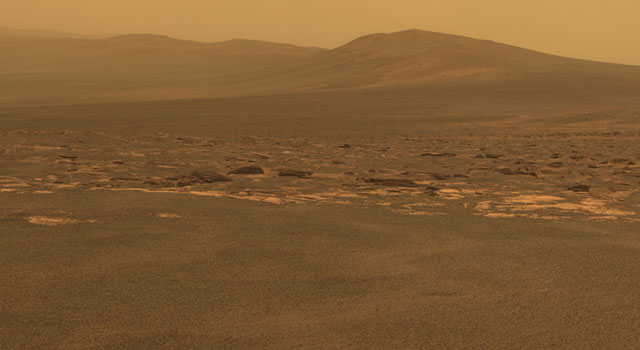
This week’s image is from NASA’s Mars Reconnaissance Observer. The Martian surface looks magical as we see the effects of water and ice. We tend to see Mars in one way – the view from a lander or rover showing a plain desert-like horizon (shown below) – but from above we can see it is so much more.

NASA has this to say:

Both water and dry ice have a major role in sculpting Mars’ surface at high latitudes. Water ice frozen in the soil splits the ground into polygons. Erosion of the channels forming the boundaries of the polygons by dry ice sublimating in the spring adds plenty of twists and turns to them.

Spring activity is visible as the layer of translucent dry ice coating the surface develops vents that allow gas to escape. The gas carries along fine particles of material from the surface further eroding the channels. The particles drop to the surface in dark fan-shaped deposits. Sometimes the dark particles sink into the dry ice, leaving bright marks where the fans were originally deposited. Often the vent closes, then opens again, so we see two or more fans originating from the same spot but oriented in different directions as the wind changes.

Image (Credit): The view from NASA’s Mars Exploration Rover Opportunity showing a portion of the west rim of Endeavour crater. (NASA/JPL-Caltech/Cornell/ASU)