Even though Tesla is having valuation issues these days as Mr. Musk pursues Twitter, SpaceX seems to be doing well. Nasdaq news reports that the company had no issues raising $1.5 billion in new funding. The valuation for the company is now $125 billion, up from $100 billion last year.
While the company is earning a good fee for its resupply missions to the International Space Station, it has other ventures to fund as well, including the Starship rocket for deep-space missions and the Starlink satellite system being used around the world (including Ukraine). SpaceX is able to build about 45 Starlink satellite per week.
The company has plenty of openings on its website, such as those listed below. Let’s hope SpaceX can stay out of the fray as Mr. Musk continues to kick up dust.
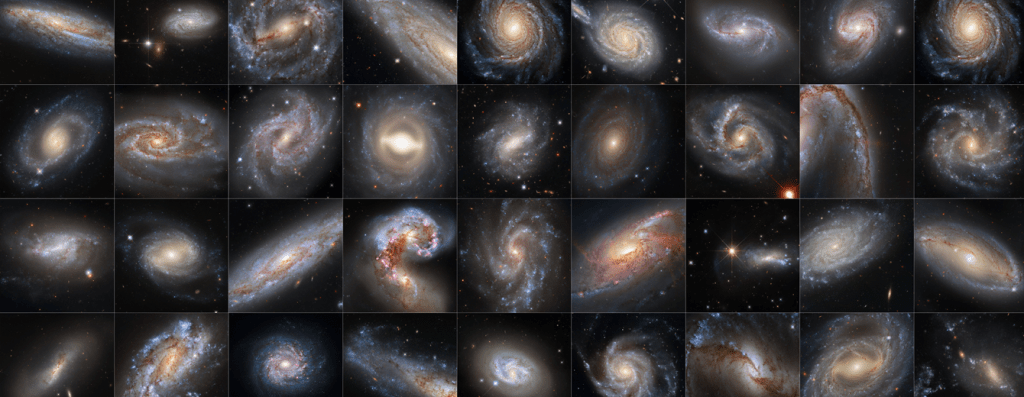
Astronomers using data from the Hubble Space Telescope have determined that the universe is expanding at a faster rate than estimated earlier. Using the Hubble data, the press release stated:
After 30 years of meticulous work using the Hubble telescope’s extraordinary observing power, numerous teams of astronomers have narrowed the expansion rate to a precision of just over 1%. This can be used to predict that the universe will double in size in 10 billion years.
I like another line in the Hubble press release following the discussion of another discovery showing that “the present expansion rate is different than it is expected to be as the universe appeared shortly after the big bang.” The press release noted:
You think this would frustrate astronomers, but instead it opens the door to discovering new physics, and confronting unanticipated questions about the underlying workings of the universe. And, finally, reminding us that we have a lot more to learn among the stars.
That’s the spirit. And yes, that galaxy far, far away is just getting ever further away every day.
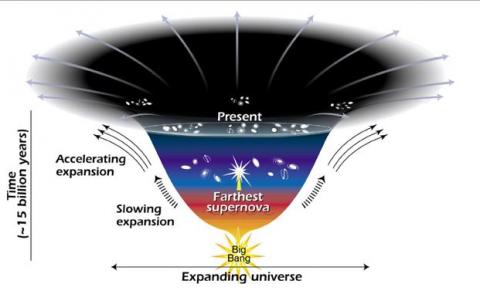
Image (Credit): This NASA diagram reveals changes in the rate of expansion since the universe’s birth 15 billion years ago. The more shallow the curve, the faster the rate of expansion. The curve changes noticeably about 7.5 billion years ago, when objects in the universe began flying apart as a faster rate. Astronomers theorize that the faster expansion rate is due to a mysterious, dark force that is pulling galaxies apart. (NASA)
ScienceDaily reports that astrophysicists found some small galaxies lack Dark Matter after encounters with larger galaxies. In the article, “How Galaxies Can Exist Without Dark Matter,” we learn that the astrophysicists found seven galaxies stripped of dark matter after collisions with galaxies about 1,000 times more massive.
Astrophysicist James Bullock from the University of California, Irvine and Pomona College, who was part of the team that made the discovery, stated:
The observation that there are dark matter-free galaxies has been a little bit worrying to me…We have a successful model, developed over decades of hard work, where most of the matter in the cosmos is dark. There is always the possibility that nature has been fooling us.
Just when we think we have figured things out, a wrench is thrown into the works. It does keep things interesting.
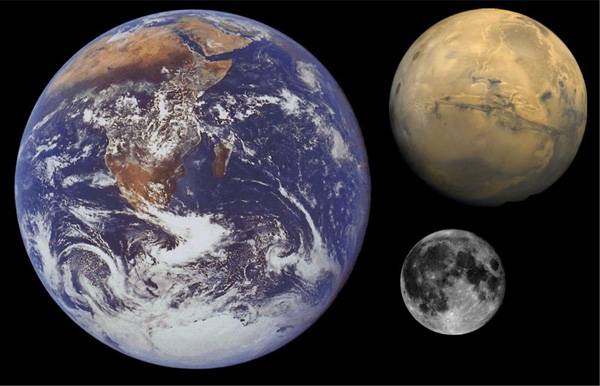
Image (Credit): Size of the Earth compared to Mars and the Moon. (hyperphysics.phy-astr.gsu.edu/)
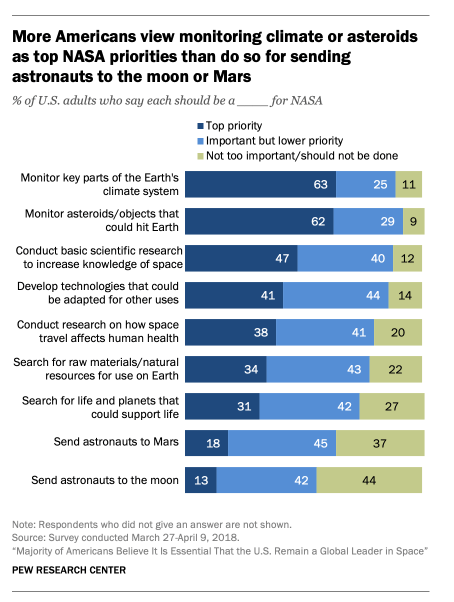
Back in July 2019, the Pew Research Institute issued the results of earlier surveys about the US space program. Let’s look at the answers to six of the questions:
Most Americans think sending astronauts to Mars or the Moon should be a lower priority for NASA – or say it should not be done at all (see graphic below).
Americans see priorities other than a Moon or Mars landing as more pressing for NASA.
Half of Americans think space travel will become routine during the next 50 years of space exploration.
A majority of Americans say the U.S. must remain a global leader in space exploration, and that NASA’s continued involvement is essential.
Americans have little confidence that private space companies will minimize space debris.
Americans are not enthusiastic about the idea of creating a military Space Force.
NASA may not be listening given that a trip back to the Moon was the lowest priority of Americans and yet is it the largest program currently in the U.S. space program, with a Moon satellite and trip to Mars as part of future plans. As far as minimizing space debris, the public seemed right on the mark regarding private space companies. If Elon Musk is any indicator, the commercial sector will not be deterred as it adds thousands of new satellites and related debris. And the ship has sailed on the Space Force question with the creation of the US Space Force in December 2019.
This would not be the first time Washington, DC goes down its own path regardless of public sentiment.
Image (Credit): Second question on the Pew survey on the space program. (Pew Research Institute)
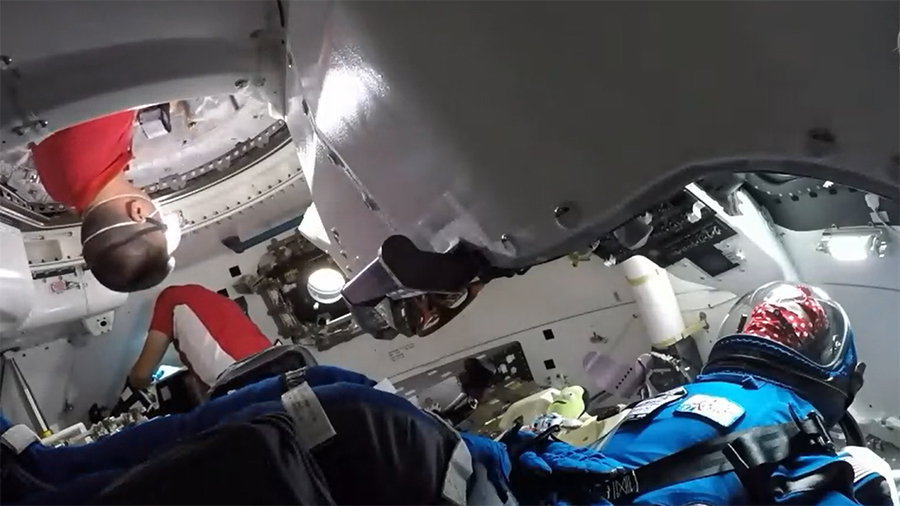
Image (Credit): NASA astronauts Bob Hines and Kjell Lindgren greet “Rosie the Rocketeer” inside the Boeing Starliner spacecraft shortly after opening its hatch. (NASA)
Finally, we have another spacecraft that appears capable of bringing astronauts into orbit. After two earlier tries, Boeing’s Starliner was successfully launched on Thursday and then connected with the International Spaced Stations (ISS) today. Now we just need it to undock on Wednesday and safely return.
In a press release, Jim Chilton, Boeing’s senior vice president for Space and Launch, stated:
Starliner has proven safe, autonomous rendezvous and docking capability…We’re honored to join the fleet of commercial spacecraft capable of conducting transportation services to the space station for NASA.
We needed this redundancy in our ISS program and now we have it.
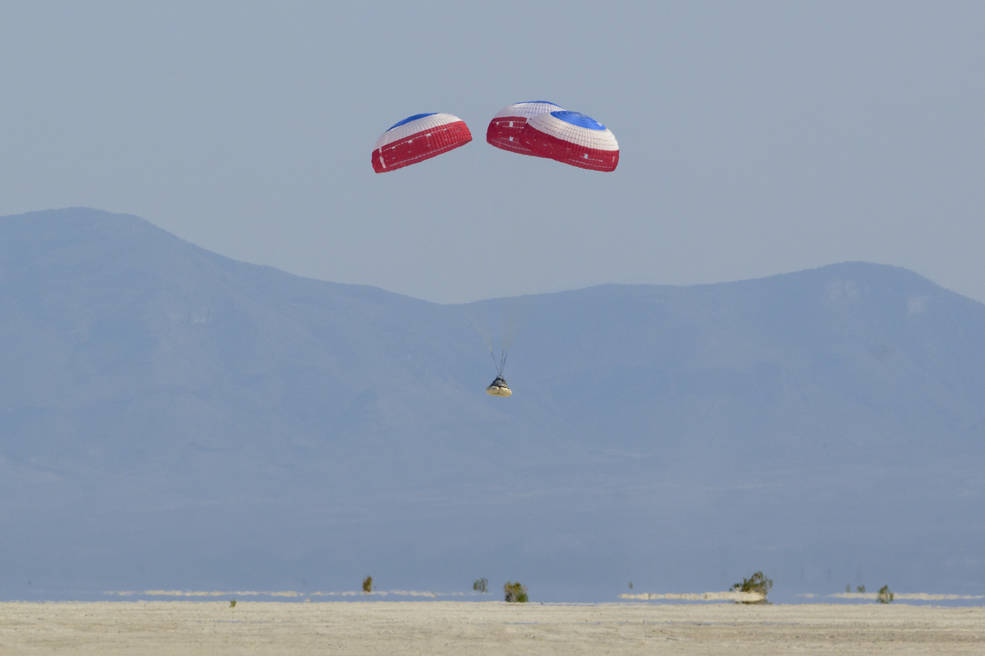
Update: The Starliner spacecraft safely returned to Earth on Wednesday, May 22nd. Joel Montalbano, manager of NASA’s International Space Station Program, stated:
Congratulations to the NASA and Boeing teams…I am excited to see the completion of a critical step in bringing another system online to transport long-duration crew members to and from the International Space Station. Soon, we hope to see crews arrive to the space station on Starliner to continue the important microgravity scientific research and discovery made possible by the orbiting laboratory.
Image (Credit): Boeing’s CST-100 Starliner spacecraft lands at White Sands Missile Range’s Space Harbor, Wednesday, May 25, 2022, in New Mexico. (NASA/Bill Ingalls)