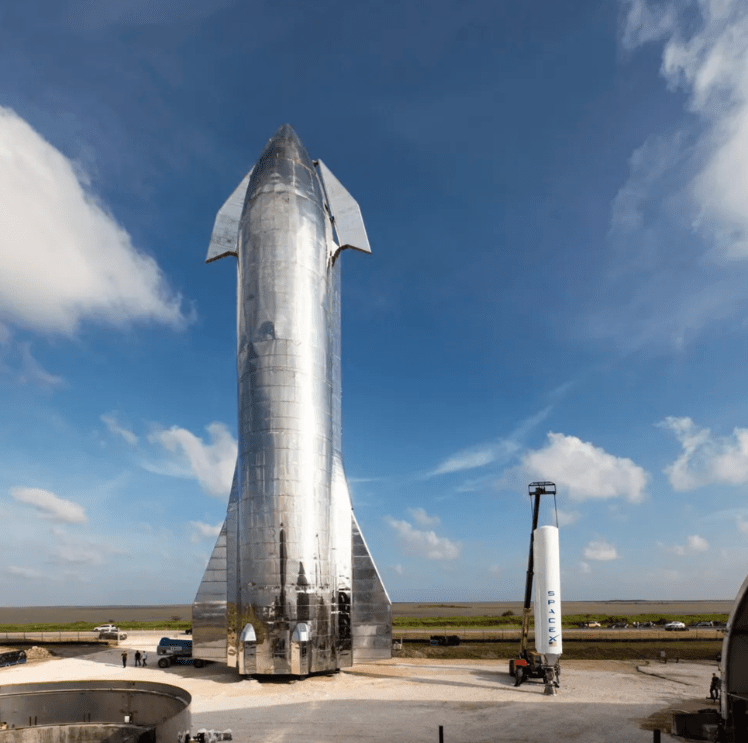
Image (Credit): Image from 2019 showing the SpaceX’s Starship prototype (left) next to a Falcon 1 rocket. (SpaceX)
Elon Musk is eager to get his Starship launches back on track, but the 10th launch scheduled for yesterday had to be scrubbed due to “ground system” issues. The launched was pushed by a day or two.
The most recent reminder of the difficulties getting this rocket into orbit came in June, when a pre-flight engine test ended in an explosion.
Even with all of the acrimony between Musk and President Trump, NASA and the White House are depending on the Starship rocket to make the Artemis program a reality.
Like him or not, the US space program’s success is locked in with Musk’s company at the moment.
We can only hope for a successful test.
Update: The launch was scheduled for late Monday, August 25th, but cancelled again, this time due to the weather.
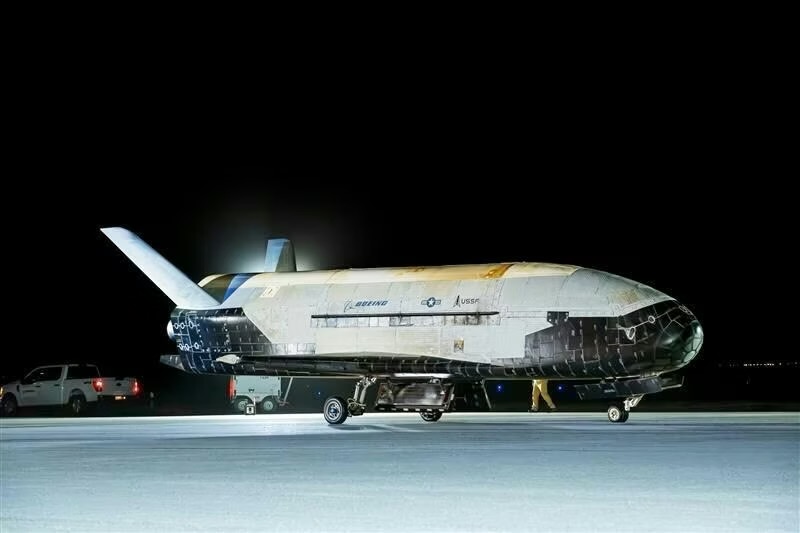
Image (Credit): The X37-B space plane. (US Space Force)
While the space shuttles are all safely stored in space museums around the country, the U.S. Space Force’s X37B space plane (or uncrewed mini-shuttle) is still in business.
The spacecraft returned to Earth orbit late last week, launched from the Kennedy Space Center. The X-37B can stay in orbit for multiple years, powered by both batteries and solar cells. The latest launch is the eighth such mission.
While the missions are generally classified, they are thought to be basic experiments to enhance the U.S. Space Forces capabilities. For example, the latest mission is testing a quantum navigation sensor that can detect a spacecraft’s location without GPS. Of course, other have said the spacecraft are spying on the Chinese space station and Russian satellites. It is certainly possible that the little shuttle has been busy with all of this.
The two X-37Bs, called autonomous, reusable orbital test vehicles, were built by Boeing and started flying in 2010, one year before the end of the crewed space shuttles servicing the International Space Station (ISS).
It is odd that Boeing has done so well with this shuttle yet so poorly getting a manned capsule safely to and from the ISS, but maybe it has more to do with the skills of Rockwell International, which build the manned shuttles and was later acquired by Boeing.
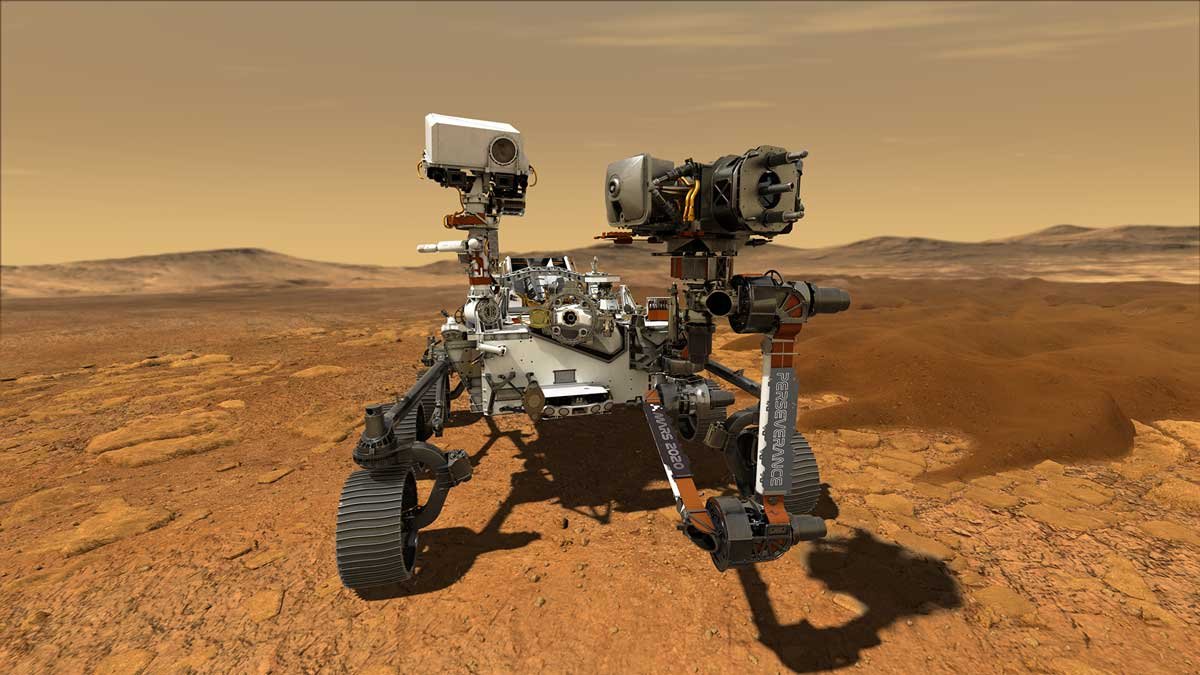
Image (Credit): Artist’s rending of the Perseverance Mars rover on the Martian surface. (NASA/JPL-Caltech)
”Based on data from the last 20 years, we found that if an extraterrestrial intelligence were in a location that could observe the alignment of Earth and Mars, there’s a 77% chance that they would be in the path of one of our transmissions — orders of magnitude more likely than being in a random position at a random time.”
Ceres’s surface mineralogy and density structure indicate an aqueous past. Observations from the Dawn mission revealed that Ceres likely hosted a global subsurface ocean in its early history, which was the site of pervasive aqueous alteration of accreted material. Subsurface environmental constraints inferred from Ceres’s surface mineralogy, combined with Ceres’s high abundance of carbon, suggest that the dwarf planet may have been habitable for microbial life. We present a coupled chemical and thermal evolution model tracking Ceres’s interior aqueous environment through time. If the rocky interior reached ≳550 K, then fluids released by rock metamorphism would have promoted conditions favorable for habitability by introducing redox disequilibrium into the ocean, a source of chemical energy for chemotrophs. We find that this period would have been between ~0.5 and 2 billion years after Ceres’s formation. Since then, Ceres’s ocean has likely become a cold, concentrated brine with fewer sources of energy, making it less likely to be habitable at present.
Citation: Samuel W. Courville, S.W., Castillo-Rogez J.C., Daswani, M.M. et al. Core metamorphism controls the dynamic habitability of mid-sized ocean worlds—The case of Ceres, Science Advances, Vol 11, Issue 34 (August 20, 2025).
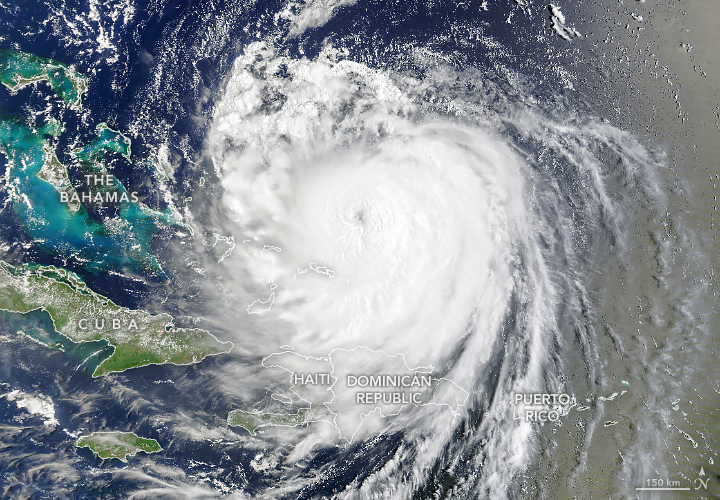
Image (Credit): Hurricane Erin in the Caribbean Sea on August 18, 2025. (NASA Earth Observatory images by Michala Garrison, using MODIS data from NASA EOSDIS LANCE and GIBS/Worldview, and the Suomi National Polar-orbiting Partnership)
This week’s image is from the NASA Earth Observatory. It shows Hurricane Erin, the first Atlantic hurricane in the 2025 season, as it travels through the Caribbean Sea earlier this week. The image below labels the various islands in the image.
Image (Credit): Hurricane Erin in the Caribbean Sea on August 18, 2025 (with island identifiers). (NASA Earth Observatory images by Michala Garrison, using MODIS data from NASA EOSDIS LANCE and GIBS/Worldview, and the Suomi National Polar-orbiting Partnership)