A Day in Astronomy: First Spaceflight Fatality

Image (Credit): Soviet cosmonaut Vladimir Komarov. (RIA Novosti)

On this day in 1967, the Soviet Union’s Vladimir Komarov became the first spaceflight fatality when his Soyuz 1 spacecraft crashed during reentry as the result of a failed parachute. The accident occurred during what was his second trip to space, his first being aboard the Voskhod 1. Yuri Gagarin served as the backup cosmonaut on the Soyuz 1 flight.

The Soyuz 1 mission was already experiencing problems before reentry, particularly with its solar panels. These problems were enough to end the mission early and delay the launch of a second Soyuz spacecraft that would have met up with the orbiting Soyuz 1. The spacecraft was not up to the mission. Before the crash, Komarov could be heard stating, “This devil ship! Nothing I lay my hands on works properly.”

This fellow cosmonauts had this to say via Pravda:

For the forerunners it is always more difficult. They tread the unknown paths and these paths are not straight, they have sharp turns, surprises and dangers. But anyone who takes the pathway into orbit never wants to leave it. And no matter what difficulties or obstacles there are, they are never strong enough to deflect such a man from his chosen path. While his heart beats in his chest, a cosmonaut will always continue to challenge the universe. Vladimir Komarov was one of the first on this treacherous path.

Image (Credit): Burkina Faso stamps commemorating cosmonaut Vladimir Komarov. (stamps-world.eu)

A Day in Astronomy: Birth of Wernher von Braun

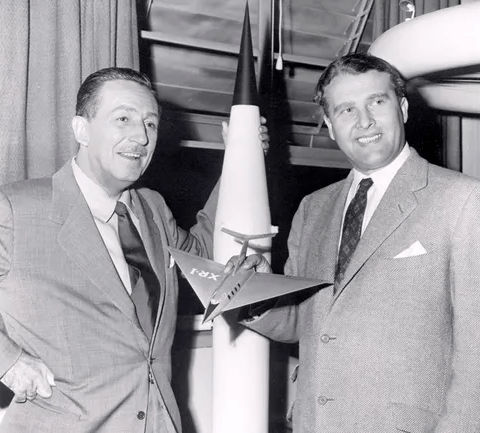
Image (Credit): Walt Disney (left) and Wernher von Braun. (NASA)

On this day in 1912, German-American aerospace engineer Wernher von Braun was born in Wyrzysk, which was part of Germany at the time and later became a Polish city. His full name was Wernher Magnus Maximilian, Freiherr von Braun.

Mr. Braun is best remembered for his part in the construction of Nazi Germany’s V-2 rockets as well as his later participation in development of the Saturn V rocket that became the workhorse of the U.S. Apollo space program.

In the above photo from 1954, you can see Walt Disney with Mr. Braun at the Guided Missile Development Operation Division at Army Ballistic Missile Agency in Redstone Arsenal, Alabama. Mr. Braun served as a technical consultant on a few Disney space films.

A Day in Astronomy: The Mariner 6 Heads to Mars

Image (Credit): The Mariner 6 spacecraft. (NASA)

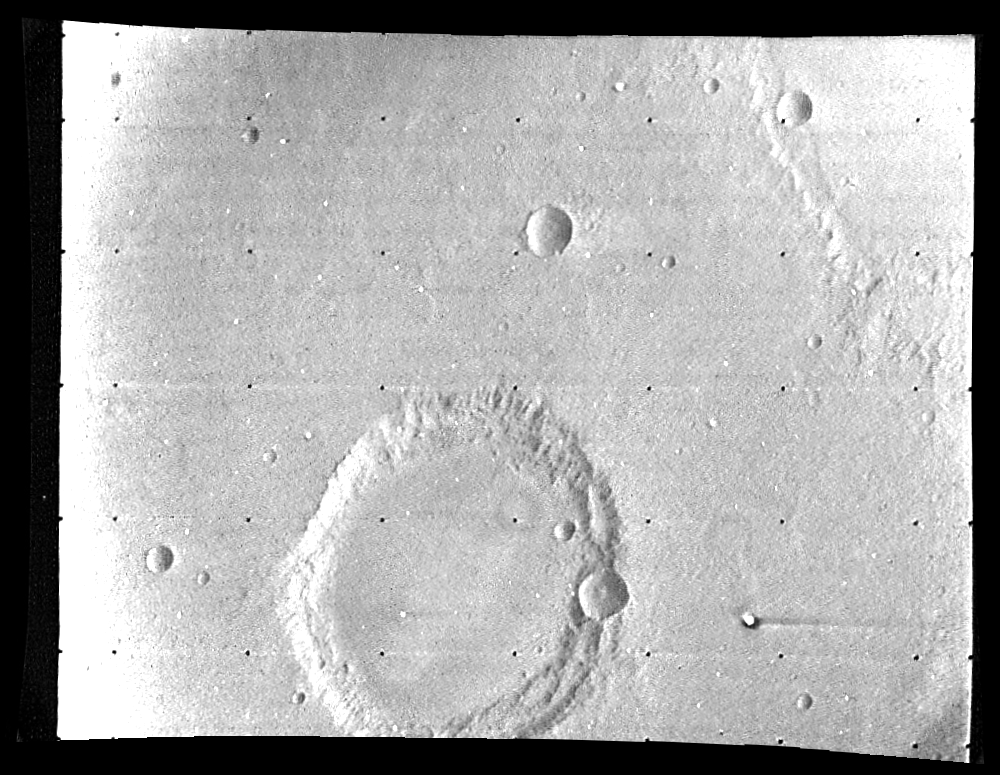
On this day in 1969, NASA’s Mariner 6 was launched from Cape Canaveral using the Atlas-Centaur AC-20 rocket. The mission of Mariner 6 was to conduct a flyby of Mars and analyze the Martian atmosphere and surface with remote sensors.

This mission, as well as the Mariner 7 launch the following month, provided solid evidence that the dark features on the planet’s surface were not canals (as astronomer Percival Lowell and other had proposed).

You can find NASA’s Mariner information here.

Image (Credit): Close up of Mars taken by Mariner 6. (NASA)

A Day in Astronomy: Loss of the Apollo 1 Astronauts

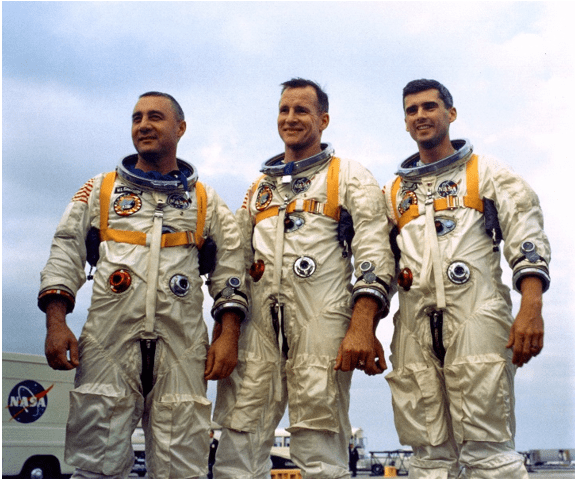
Image (Credit): Apollo 1 astronauts Virgil I. “Gus” Grissom, left, Edward H. White, and Roger B. Chaffee. (NASA)

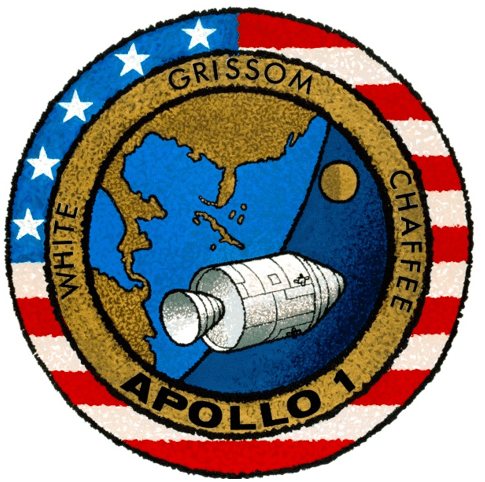
On this day in 1967, the Apollo 1 capsule caught fire on the launchpad, killing the three astronauts in the capsule – Virgil “Gus” Grissom, Ed White, and Roger Chaffee.

A frustrated Gene Kranz, NASA flight director, had this to say shortly after the fire and tragic loss of three astronauts:

Spaceflight will never tolerate carelessness, incapacity, and neglect. Somewhere, somehow, we screwed up. It could have been in design, build or test. Whatever it was, we should have caught it. We were too gung-ho about the schedule, and we locked out all of the problems we saw each day in our work. Every element of the program was in trouble and so were we. The simulators were not working, Mission Control was behind in virtually every area, and the flight and test procedures changed daily. Nothing we did had any shelf life. Not one of us stood up and said, “Dammit, stop!” I don’t know what Thompson’s committee will find as the cause, but I know what I find. We are the cause! We were not ready! We did not do our job. We were rolling the dice, hoping that things would come together by launch day, when in our hearts we knew it would take a miracle. We were pushing the schedule and betting that the Cape would slip before we did.

Did the Apollo space program recover? Absolutely. Did NASA avoid deaths on future space missions. Not at all. Do we give up on human space missions or keep moving forward? I think you know the answer to that one.

Credit: NASA

A Day in Astronomy: Birth of Steven Spielberg

Image (Credit): Scene from the film E.T. the Extra-Terrestrial. (Universal Studios)

On this day in 1946, Steven Spielberg was born in Cincinnati, Ohio. The American film director is best known for his many science fiction films, such as Jaws as well as the Indiana Jones and Jurassic Park series. However, he has a special place in the hearts of space fans for his other films, including:

  • Close Encounters of the Third Kind (1977);
  • E.T. the Extra-Terrestrial (1982); and
  • War of the Worlds (2005).

You may wonder what he plans to work on next. So does he. In a Deadline interview earlier this year, Mr. Spielberg stated this when asked about his next project:

It’s kind of a nice feeling. And it’s also a horrible feeling. It’s nice that I can actually have control of my life again and makes my own choices in my real life. But I need to work and I love to work and that’s the biggest question I’m going to have with the rest of the year trying to figure this out.

Let’s hope he considers something space-related again.