A Day in Astronomy: Birth of Edgar Allan Poe

Image (Credit): Illustration for Edgar Allan Poe’s “The Unparalleled Adventure of One Hans Pfaall” in Jules Verne’s “Edgar Poe et Ses Oeuvres.” (Musée des Familles magazine from Pari in 1864, courtesy of the Bibliothèque Nationale de France)

On this day in 1809, Edgar Poe was born in Boston, MA. “Allan” was added later as his middle name after he lost both parents and was taken in by the Allan family. He would only live for 40 years, but in that short time he created a wealth of stories that are still fresh in the minds of all of us, be it The Raven or The Fall of the House of Usher.

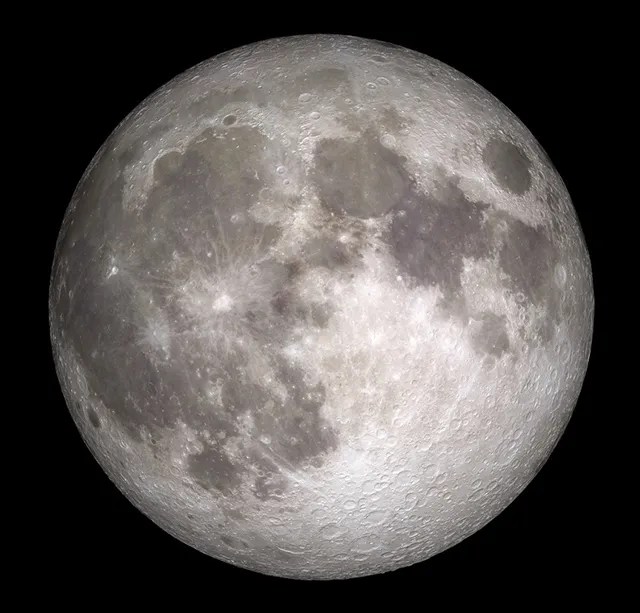
While many may think only of Gothic fiction when hearing the name Edgar Allan Poe, you should add astronomy to that list given Mr. Poe 1835 short story titled The Unparalleled Adventure of One Hans Pfaall. In this tale, his main character spends 19 days traveling to the Moon in a balloon and sends back a letter detailing his exploits.

This simple story may have inspired the Great Moon Hoax in 1935 about a massive telescope sighting strange beasts on the lunar surface, including zebras and unicorns. More importantly, it may have inspired Jules Verne to write From the Earth to the Moon, which was published in 1865.

The short story itself is somewhat dry and filled with calculations, as is the case with From the Earth to the Moon. As far as Mr. Pfaall’s findings once arriving on the Moon, you will learn little about the lunar inhabitants he discovered nor the Moon itself (you can read the entire story here).

This is just an example of how he defines the Moon’s inhabitants:

I had barely time to observe that the whole country, as far as the eye could reach, was thickly interspersed with diminutive habitations, ere I tumbled headlong into the very heart of a fantastical-looking city, and into the middle of a vast crowd of ugly little people, who none of them uttered a single syllable, or gave themselves the least trouble to render me assistance, but stood, like a parcel of idiots, grinning in a ludicrous manner, and eyeing me and my balloon askant, with their arms set a-kimbo.

While it’s not The Martian Chronicles, it still represents Poe’s curiosity about lunar travel distilled into a single tale. It also became the starting point for all of the fantastic science fiction that followed to this day.

A Day in Astronomy: The Birth of Philip K. Dick

Credit: Gollancz

On this day in 1928, American science fiction writer Philip Kindred Dick was born in Chicago, IL. He would go on to write some of the best known books on science fiction, including:

  • The Man in the High Castle (1963), which won the Hugo Award;
  • Do Androids Dream of Electric Sheep? (1968), later made into the film Blade Runner; and
  • Flow My Tears, the Policeman Said (1974), which won the John W. Campbell Memorial Award for Best Science Fiction Novel and was nominated for both a Hugo Award and a Nebula Award.

Mr. Dick had a troubled life with multiple wives, yet he created some of the most memorable characters and fiction. You may recall some of his other books and stories that became films in recent years, including Total Recall with Arnold Schwarzenegger, Minority Report with Tom Cruise, and A Scanner Darkly with Keanu Reeves.

In his last interview of his life, Mr. Dick discussed how he left behind his writing in the late 1950s:

Many writers had left the field. We could not make a living. I had gone to work making jewelry with my wife. I wasn’t happy. I didn’t enjoy making jewelry. I had no talent whatsoever. She had the talent. She is still a jeweler and a very fine one, making gorgeous stuff which she sells to places like Neiman-Marcus. It’s great art. But I couldn’t do anything except polish what she made.

Fortunately, he returned to writing, thereby provided all of us with amazing stories that live on today.

A Day in Astronomy: The Birth of Edwin Hubble

Image (Credit): Edwin Hubble at the Mount Wilson Observatory in California. (Edwin P. Hubble Papers, Huntington Library, San Marino, California)

On this day in 1889, Edwin Powell Hubble was born in Marshfield, Missouri. He would go on to become an important astronomer who found that the “nebulae” in his time were actually galaxies far beyond our Milky Way. He also determined that the galaxies were moving away from one another, indicating an expanding universe. Of course, name is probably most recognizable to the pubic today as it relates to the Hubble Space Telescope.

Edwin Hubble knew he was part of long list of astronomers seeking answers about our universe when he said:

From our home on the Earth, we look out into the distances and strive to imagine the sort of world into which we were born. Today, we have reached far into space. Our immediate neighborhood we know rather intimately. But with increasing distance our knowledge fades … The search will continue. The urge is older than history. It is not satisfied and will not be suppressed.

You can read more about Edwin Hubble here.

A Day in Astronomy: The Birth of Ursula Le Guin

On this day in 1929, Ursula K. Le Guin was born in Berkeley, California. She would gain her masters degree in French only to later become a well known author of many fantasy and science fiction stories, including the Earthsea series and stories set in a Hainish universe of her making. She would go on to win eight Hugo Awards and six Nebula Awards.

Her style was different from many other authors of her period, focusing more on planetary culture than spacecraft hardware. When asked about her style, she stated the following:

The “hard”–science fiction writers dismiss everything except, well, physics, astronomy, and maybe chemistry. Biology, sociology, anthropology—that’s not science to them, that’s soft stuff. They’re not that interested in what human beings do, really. But I am. I draw on the social sciences a great deal. I get a lot of ideas from them, particularly from anthropology. When I create another planet, another world, with a society on it, I try to hint at the complexity of the society I’m creating, instead of just referring to an empire or something like that.

Given that her mother an anthropologist, it is not surprising that she saw a different way of telling story.

Her books represented a unique part of the science fiction genre that has only expanded over time as the writing community has expanded.

If you need an entry point to her work, you cannot go wrong starting with the short story “The Ones Who Walk Away from Omelas.” However, one of my favorite short stories is “The Island of the Immortals,” which you can find here.

I doubt you will be able to stop with one short story.

A Day in Astronomy: The Birth of Ray Bradbury

On this day in 1920, Ray Douglas Bradbury was born in Waukegan, Illinois. Mr. Bradybury would grow up to be a famous American author and screenwriter.

One of his science fiction works,The Martian Chronicles stories, tells the story of mankind’s colonization of Mars and the ultimate effect on the colonizers.

He wrote numerous other famous books and short story collections, including Fahrenheit 541, Something Wicked This Way Comes, The Illustrated Man, and Dandelion Wine.

Speaking on science fiction, Mr. Bradbury once stated:

Science fiction is any idea that occurs in the head and doesn’t exist yet, but soon will, and will change everything for everybody, and nothing will ever be the same again. As soon as you have an idea that changes some small part of the world you are writing science fiction. It is always the art of the possible, never the impossible.

Asked in a 2004 interview what he thought about the US space program, he stated:

It’s too late, isn’t it? We’ve let 30 years go by. It’s stupid. It’s stupid. We should have stayed on the moon. We should have made moon the base, instead of building space stations, which are fragile and which fly apart. The moon is a good, solid base to build a space travel organization in the community. Then we take off from the moon and we go to Mars. But it’s terribly late. We’ve let too much time go by. We’ve been busy with war instead of being busy with peace. And that’s what space travel is all about. It’s all about peace and exploration and wonder and beauty.

Fortunately, it is not too late to visit the Moon or Mars, as demonstrated by NASA’s Artemis program. It’s the art (and science) of the possible.