A Day in Astronomy: First Operation of the International Space Station

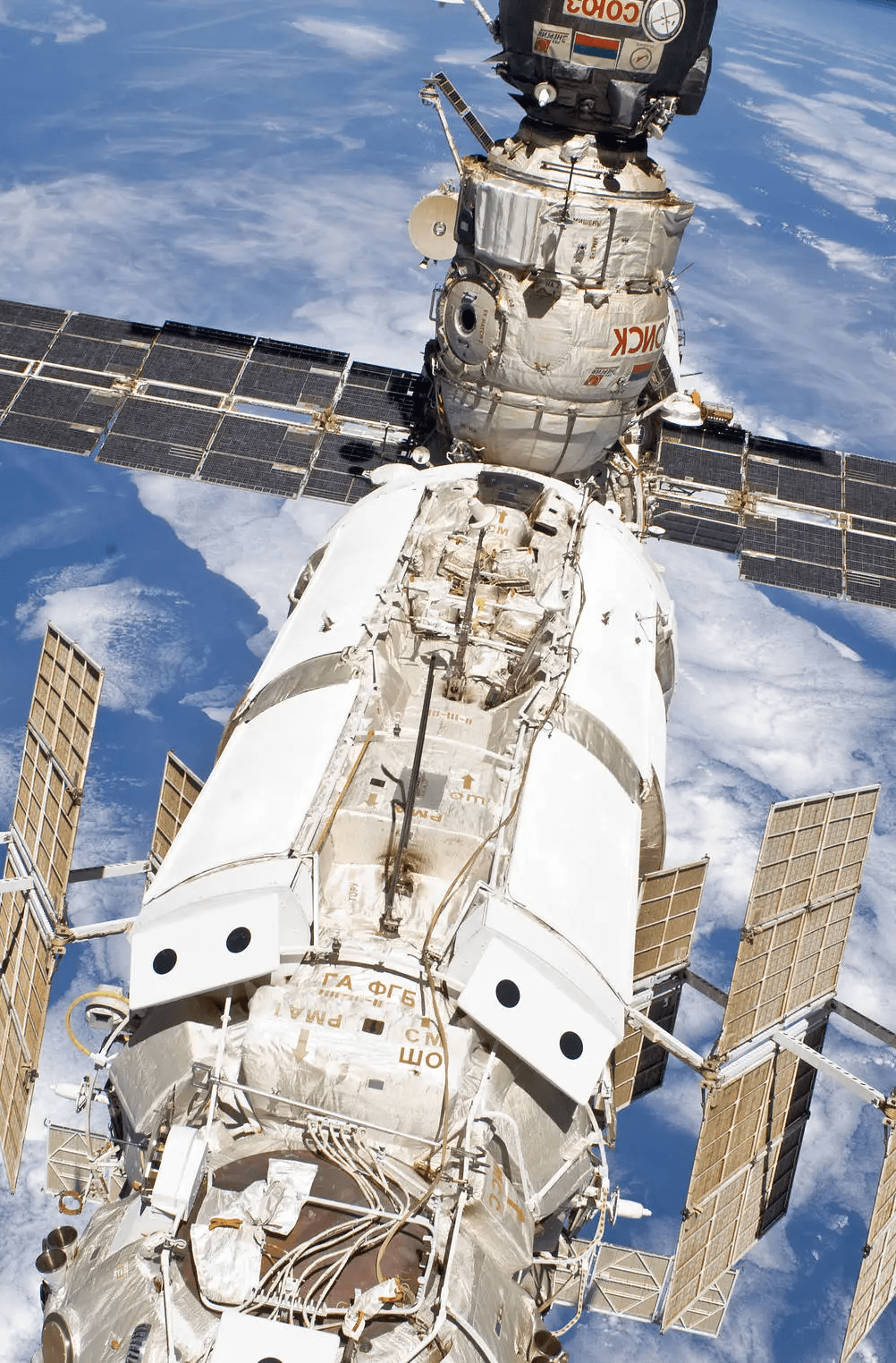
Image (Credit): The ISS’s Zarya module (in the image bottom to center). (NASA)

On this day in 1998, two modules, the Russian Zarya and American Unity, were joined in Earth orbit to create the International Space Station (ISS).

The ISS was built by five space agencies involving 15 nations. NASA notes that 273 people from 21 countries have visited the ISS over the years to assist with more than 3,300 research and educational investigations. The station has been busy, and pretty expensive at more than $150 billion to design and build.

Back in 2012, Astrophysicist Neil DeGrasse Tyson stated:

If the United States commits to the goal of reaching Mars, it will almost certainly do so in reaction to the progress of other nations – as was the case with NASA, the Apollo program, and the project that became the International Space Station.

Eleven years later, the ISS continues to orbit the Earth while plans are still being made to return to the Moon and visit Mars. Maybe Dr. Tyson was right given our current race with China to the Moon. We sometimes need that extra push to move towards the stars (as least in terms of crewed flights).
A Day in Astronomy: Pioneer 10 Approaches Jupiter

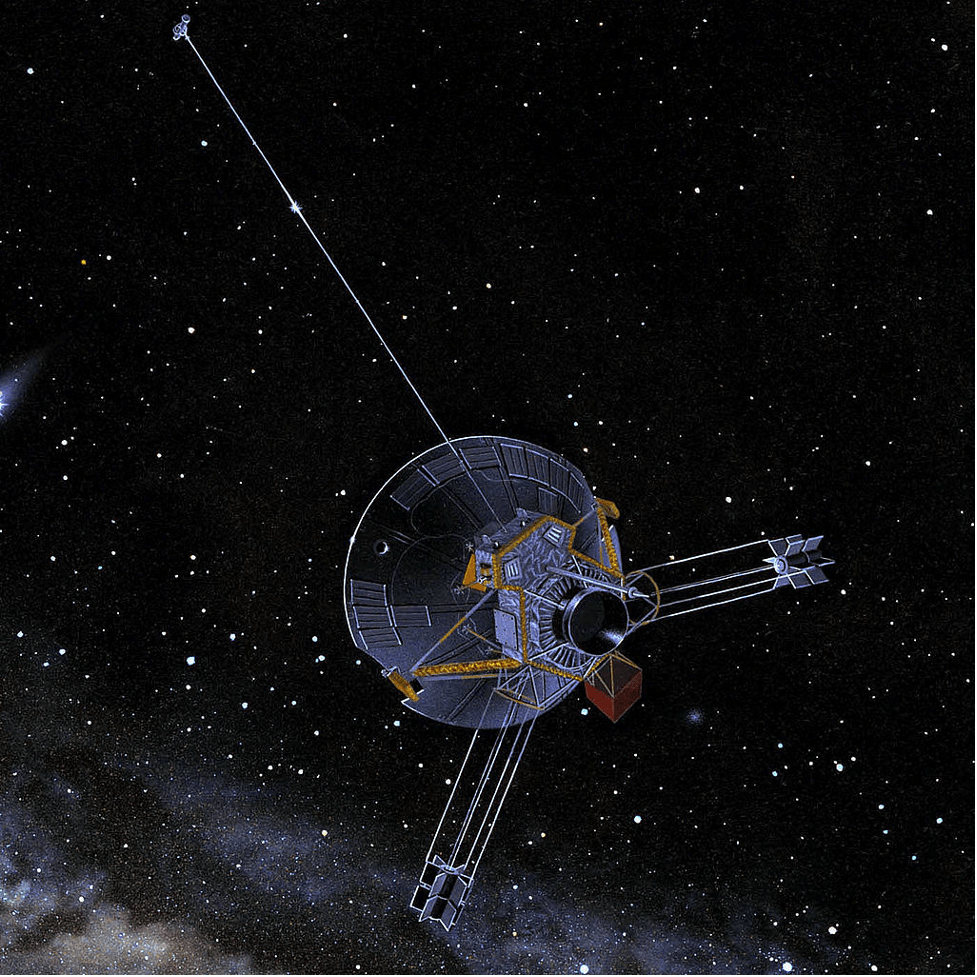
Image (Credit): Artist’s rendering of the Pioneer 10 spacecraft. (Don Davis for NASA)

We may have missed the date of the story in this piece (the anniversary was November 6), but this is an opportunity to share another site that brings astronomical history to life. The American Astronomical Society, which brings together professional astronomers, astronomy educators, and amateur astronomers, has its own blog on astronomical anniversaries that I wanted to highlight. It is called This Month in Astronomical History.

The November article is about the 50th anniversary of NASA’s Pioneer 10 mission as it came in contact with Jupiter. The article notes that the spacecraft first started imaging Jupiter on November 6, 1973 when it was still 16 million miles away from the planet. Overall, it sent back about 500 images of Jupiter and its moons.

You can read the article itself for information on the success of the mission. The author also noted the fate of the spacecraft:

Originally slated for 21 months of operation — sufficient to complete the Jupiter observations — its official science mission was ended on 31 March 1997. Its last signal was sent on 23 January 2003; from a distance of about 12.2 billion km (7.6 billion miles) from home, Pioneer’s swansong took over 11 hours to reach us.

The spacecraft was still communicating with us about 50 years after its Jupiter mission. That is impressive.

A Day in Astronomy: Flyby of Asteroid Gaspra

Image (Credit): Asteroid Gaspra as photographed by the Galileo spacecraft. (NASA)

On this day in 1991, NASA’s Galileo spacecraft conducted a flyby of asteroid Gaspra, an asteroid that orbits in the asteroid belt between Mars and Jupiter. The asteroid is about 10.5 miles long. Gaspra was discovered in 1916 by Russian astronomer G. N. Neujmin, who named it after a famous Russian spa retreat in Crimea.

The Galileo spacecraft’s primary mission was to visit Jupiter and its moons, but it also conducted other observations along the way, including flybys of asteroids Gaspra and Ida.

Here are a few facts about the Galileo mission from NASA:

  • Galileo was the first spacecraft to orbit an outer planet.
  • It was the first spacecraft to deploy an entry probe into an outer planet’s atmosphere.
  • It completed the first flyby and imaging of an asteroid (Gaspra, and later, Ida).
  • It made the first, and so far only, direct observation of a comet colliding with a planet’s atmosphere (Shoemaker-Levy 9).
  • It was the first spacecraft to operate in a giant planet magnetosphere long enough to identify its global structure and to investigate its dynamics.

A Day in Autonomy: The Discovery of Neptune

Image (Credit): Neptune as captured by Voyager 2 on August 31,1989. (NASA/JPL-Caltech/Kevin M. Gill)

On this day in 1846, astronomer Johann Gottfried Galle discovered the ice giant Neptune, the eighth and most distant planet in the solar system. Two other astronomers are credited with coming up with the mathematical calculations related to the discovery – France’s Urbain Le Verrier and England’s John Couch Adams.

Here are some interesting facts about the planet:

  • It is more than 30 times as far from the Sun as Earth;
  • It takes 165 Earth years to orbit the sun, meaning it has only completed one full orbit since it was discovered;
  • It is about four times wider than Earth;
  • It has at least five main rings and four prominent ring arcs; and
  • It lacks a solid surface.

A Day in Astronomy: The Launch of Voyager 2

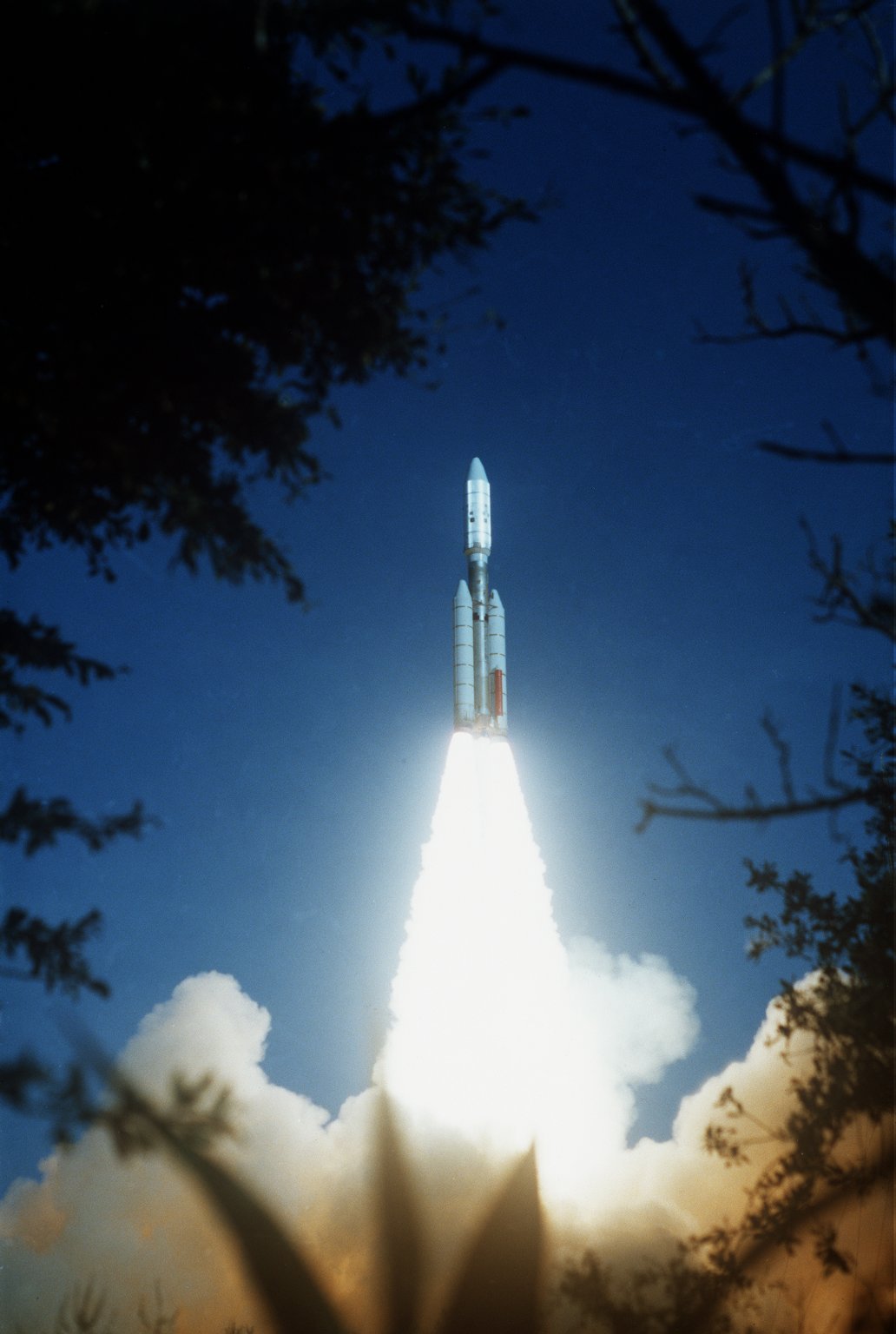
Image (Credit): The launch of Voyager 2. (NASA)

On this day in 1977, NASA launched the Voyager 2 space probe from the Kennedy Space Center at Cape Canaveral in Florida to study the solar system’s outer planets as well as interstellar space beyond the Sun’s heliosphere.

The Voyager 2 space probe is still talking to us as it continues its journey beyond the planets with a special message for anyone it may encounter.

During its initial mission, the space probe provided us with many images from an little known region of our solar system, including the image below of Jupiter’s moon Europa.

Image (Credit): Europa during Voyager 2’s closest approach. (NASA)