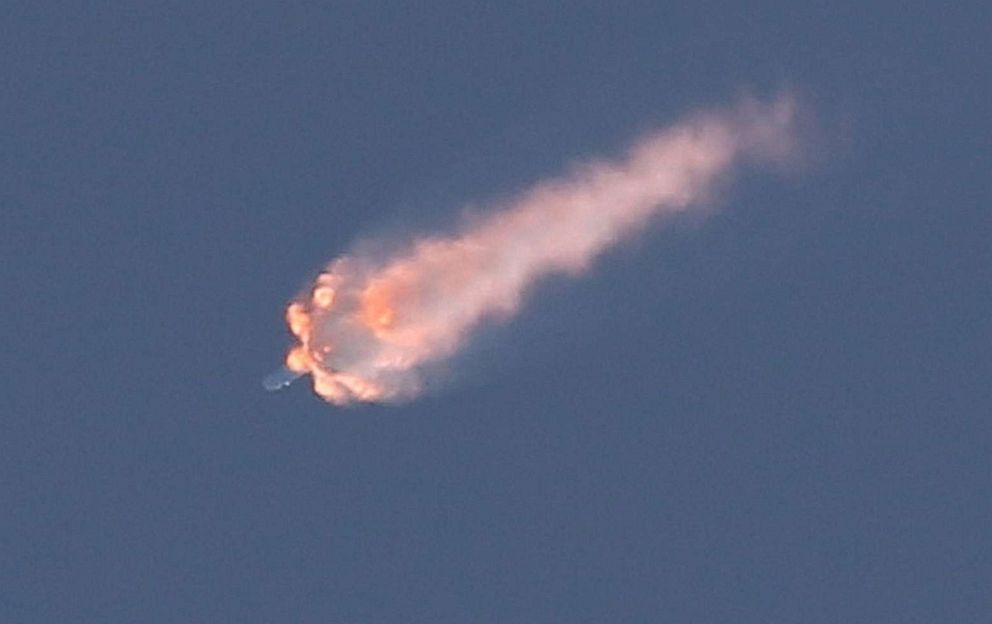
“We really are trying to get in the details of that schedule because when we come up with a date, December of 2025, or whatever that date might be, we want to have confidence for our teams, that we all have a realistic path to get there.”
-Statement by Jim Free, NASA associate administrator of Exploration Systems Development, regarding the launch date of the Artemis III mission, as reported in Florida Today. The story highlights the potential delays related to SpaceX’s Starship and Axiom’s space suits.
The length of Mars’ day is shortening by three-quarters of a millisecond each year as the planet’s rotation spins up, according to new results from NASA’s InSight lander…Planetary scientists are not entirely sure why this is happening, but it is likely related to the redistribution of Mars’ mass, which can have an effect on the planet’s rotation like an ice skater pulling in their arms to spin faster. This redistribution might be caused by the accumulation of ice on Mars’ polar caps, experts believe, or by the surface itself slowly rebounding from residing under the weight of immense glaciers that existed at equatorial latitudes during the world’s most recent ice ages, which ended about 400,000 years ago.
NASA has left the door open for changing the scope of Artemis 3, currently set to be the first crewed lunar landing of the program, if key elements suffer major delays. Speaking at an Aug. 8 briefing at the Kennedy Space Center, Jim Free, NASA associate administrator for exploration systems development, said the Artemis 3 mission still has a formal launch date of December 2025 but that he was monitoring potential delays in hardware needed for the mission. “We may end up flying a different mission if that’s the case,” he said. “If we have these big slips out, we’ve looked at if can we do other missions.” Artemis 3 could also change based on the outcome of Artemis 2, he added.
One of the oldest known objects in the universe is wandering around the Milky Way. Star cluster M92, a densely packed ball of stars roughly 27,000 light-years from Earth, is about 13.8 billion years old, researchers report in a paper submitted June 3 to arXiv.org. The newly refined age estimate makes this clump of stars nearly the same age as the universe. Refining the ages of clusters like M92 can help put limits on the age of the universe itself. It can also help solve cosmic conundrums about how the universe evolved.
Image (Credit): Astronaut Edwin E. (Buzz) Aldrin Jr., Lunar Module (LM) pilot, climbs down the LM ladder, preparing for his first steps on the Moon. (NASA)
On this day in 1969, the Apollo 11 crew stepped on the Moon for the first time, showing that mankind could actually travel to another world. The image above shows Astronaut Buzz Aldrin preparing the step on the Moon as the second human to ever walk on the lunar surface.
Buzz Aldrin has plenty of quotes related to his Moon mission and life in general, but I like his quotes about our next trip to Mars, like this one:
When we set out to land people on the surface of Mars, I think we should as a nation, as a world, commit ourselves to supporting a growing settlement and colonization there. To visit a few times and then withdraw would be an unforgivable waste of resources.
NASA’s Artemis mission is retracing Buzz Adrin’s steps, which is a good sign given that we visited only a few times and then withdrew for decades. Let’s hope Artemis gets us settlements on both the Moon and Mars.
As noted in an earlier post, India left for the moon’s south pole last week, but it won’t be alone for long. Russia is planning to launch its Luna-25 spacecraft, also called the Luna-Glob-Lander, next month. According to NASA, the mission has two primary scientific objectives at the Moon’s south pole:
to study composition of the polar regolith, and
to study the plasma and dust components of the lunar polar exosphere.
The last Luna mission was Luna-24 back in 1976 and involved the return of lunar samples to Earth.
The European Space Agency was planning to be part of this latest mission until the invasion of Ukraine, so Russia is on its own now.
I imagine simpler missions like this will be necessary if Russia plans to eventually build a moon base, though finding a partner may be tough. It is clear that the US and Russia are no longer in a neck-to-neck race back to the Moon. Only China seems to have the stamina to compete with NASA’s Artemis program, though the US is still in the lead for now.
The Luna-25 launch is planned for August 10 if all goes well.
Image (Credit): June 26, 2023 Starship engine test viewed from above. (SpaceX)
The image above shows the SpaceX Ship 25 rocket from above as it tested it engines on June 26, 2023. Presumably, Elon Musk was tweeting out this and other such shots, but given the restrictions placed on Twitter these days, you may not be able to acquire this on your own without an account.
As far as the next Starship launch, the exact date has yet to be shared. However, NASA is already talking about delaying the Artemis III lunar mission, which will use the Starship, from 2025 to 2026.