Space Stories: More Quality Control Issues at Boeing, Blue Origin’s Planned Lunar Landing, and Citizen Scientists Assisting with Exoplanet Research

Image (Credit): Artist’s rendering of the SLS in flight. (NASA)

Here are some recent stories of interest.

NBC NewsNASA Inspector General Gives Damning Assessment of Boeing’s Quality Control in New Report

The report, released Thursday by NASA’s Office of Inspector General, calls into question Boeing’s standards and quality control for its part in NASA’s efforts to return astronauts to the moon. In NASA’s development of its next-generation megarocket, known as the Space Launch System, it gave Boeing the contract to build the rocket system’s powerful upper stage. But according to the report, Boeing’s quality control systems fall short of NASA’s requirements, and some known deficiencies have gone unaddressed. What’s more, the workers on the project are not, as a whole, sufficiently experienced or well trained, according to the inspector general.

Space NewsNASA Payload to Fly on First Blue Origin Lunar Lander Mission

A NASA payload will hitch a ride to the moon on Blue Origin’s first lunar lander mission, scheduled to launch as soon as next March. In an Aug. 6 procurement filing, NASA revealed it selected Blue Origin to fly a camera system to study how engine plumes interact with regolith at south polar regions of the moon, collecting data to support future crewed landing missions. The payload, called Stereo Cameras for Lunar Plume Surface Studies (SCALPSS), will fly through NASA’s Commercial Lunar Payload Services (CLPS) program.

NASAHow NASA Citizen Science Fuels Future Exoplanet Research

NASA’s upcoming flagship astrophysics missions, the Nancy Grace Roman Space Telescope and the Habitable Worlds Observatory, will study planets outside our solar system, known as exoplanets. Over 5,000 exoplanets have been confirmed to date — and given that scientists estimate at least one exoplanet exists for every star in the sky, the hunt has just begun. Exoplanet discoveries from Roman and the Habitable Worlds Observatory may not be made only by professional researchers, but also by interested members of the public, known as citizen scientists.

Audit Report: Concerns about the Gateway Space Station

Credit: NASA

In a recent audit report, Artemis Programs: NASA Should Document and Communicate Plans to Address Gateway’s Mass Risk, the Government Accountability Office (GAO) expressed some concerns about NASA’s Gateway space station, which will orbit the moon as part of Artemis IV . Specifically, the concerns relate to the first components of the space station to be launched in December 2027 —the Power and Propulsion Element (PPE) and the Habitation and Logistics Outpost (HALO).

In the report, GAO states:

The Gateway program’s projects—including PPE and HALO—made varying degrees of progress over the last year. However, the PPE and HALO projects face several significant challenges. For example, their combined mass is greater than their mass target. Mass is one of many factors that the program considers in its overall design. If they cannot meet their mass target, it may affect their ability to reach the correct lunar orbit.

The report goes on to state:

For example, program officials estimate that the mass of the lunar lander Starship is approximately 18 times greater than the value NASA used to develop the PPE’s controllability parameters.

NASA agrees with the single GAO recommendation in this report, which recommends that a mass management be ready for an upcoming review in September 2024.

There is a lot to read in the 52 page report, but the real question is whether NASA will be ready for the 2027 Gateway launch. This is a ongoing concern given that we are already seeing delays in other parts of the Artemis program.

Space Stories: Redefining Planets, Second Thoughts About Crashing the ISS, and NASA Preparing for Artemis II

Credit: AdisResic at Pixabay

Here are some recent stories of interest.

Space.com: What Exactly is a Planet?’ Astronomers Want to Amend the Definition

Three astronomers last week proposed expanding the official definition of a planet to encompass worlds orbiting stars other than our own, a nuance not currently included in the formal definition of the term established in 2006 by the International Astronomical Union, or IAU. If the trio’s new definition pans out, thousands of celestial bodies across the universe could be confirmed as formal planets.

Forbes: U.S. Plan To Crash Space Station Is Condemned By Space Agency Leaders

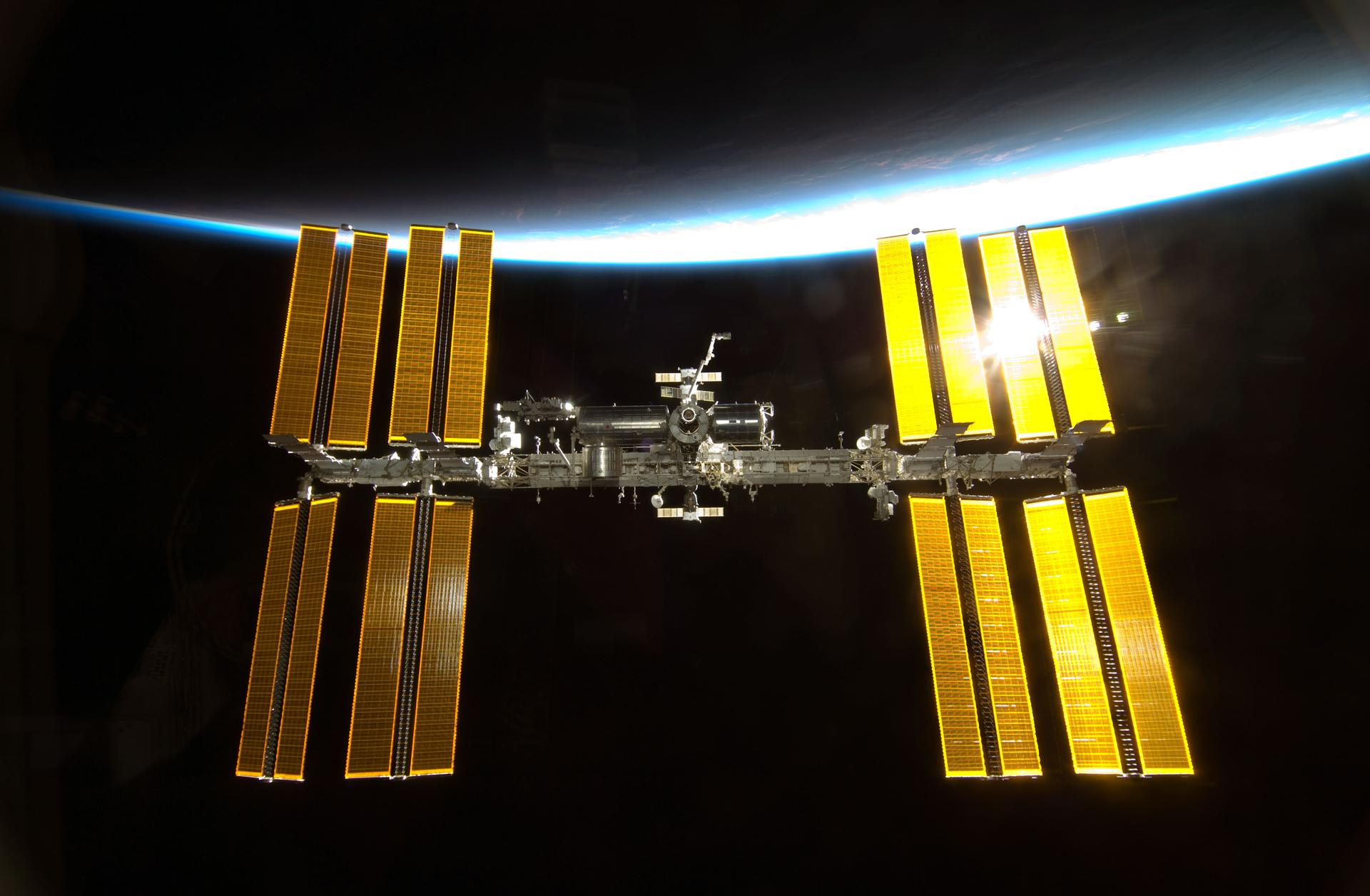
An American plan to destroy the International Space Station by propelling it to burn through the atmosphere, and then crashing it into the Pacific Ocean, would rob citizens of the future of one of civilization’s greatest technological masterworks, and should be halted, say one-time leaders of NASA and of the European Space Agency. NASA’s draft blueprints to send the ISS on a peacetime kamikaze mission, to explode on impact with Antarctic waters, would obliterate a pole star of human ingenuity, says Jean-Jacques Dordain, Director General of the European Space Agency when the ISS was being built and expanded.

NASA: NASA Barge Preparations Underway for Artemis II Rocket Stage Delivery

Team members are installing pedestals aboard NASA’s Pegasus barge to hold and secure the massive core stage of NASA’s SLS (Space Launch System) rocket, indicating NASA barge crews are nearly ready for its first delivery to support the Artemis II test flight around the Moon. The barge will ferry the core stage on a 900-mile journey from the agency’s Michoud Assembly Facility in New Orleans to its Kennedy Space Center in Florida…Measuring 212 feet in length and 27.6 feet in diameter, the core stage is the largest rocket stage NASA has ever built and the longest item ever shipped by a NASA barge.

Television: PBS Documentary on Space Travel

Credit: Greenwich Entertainment)

If you are looking for a television show on the hazards of space travel, PBS has created a worthwhile documentary titled Space: The Longest Goodbye. It is playing on your local PBS station as well as online.

Here is a little more about the series:

NASA’s goal to send astronauts to Mars would require a three-year absence from Earth, during which communication in real time would be impossible due to the immense distance. Meet the psychologists whose job is to keep astronauts mentally stable in outer space, as they are caught between their dream of reaching new frontiers and the basic human need to stay connected to home.

The series covers various attempts to understand the human mind when constrained to a small place, be it a rocket, a space station, or a planetary/moon base.

The PBS website also has more information on the series as well as comments from the participants. For example, the story “How Science Fiction Confronts the Real Isolation of Space” touches on our favorite movies and television shows to see what they say on the issue, from Black Mirror and For All Mankind to 2001: A Space Odyssey and Alien.

We still have a lot to learn about the human mind before we go any real distance into space or simply sit in place on the Moon or Mars. We may find that equipment challenges are the easiest challenges to resolve in future Artemis missions.

Space Stories: Truncated Artemis III Mission, Origins of a Local Galaxy, and Chandra X-ray Observatory Exoplanet Efforts

Image (Credit): The launch of a Starship. (SpaceX)

Here are some recent stories of interest.

Ars Technica: As NASA Watches Starship Closely, Here’s What the Agency Wants to See Next

NASA and SpaceX are planning for the possibility of modifying the Artemis III mission. Instead of landing on the Moon, a crew would launch in the Orion spacecraft and rendezvous with Starship in low-Earth orbit. This would essentially be a repeat of the Apollo 9 mission, buying down risk and providing a meaningful stepping stone between Artemis missions. Officially, NASA maintains that the agency will fly a crewed lunar landing, the Artemis III mission, in September 2026. But almost no one in the space community regards that launch date as more than aspirational. Some of my best sources have put the most likely range of dates for such a mission from 2028 to 2032. A modified Artemis III mission, in low-Earth orbit, would therefore bridge a gap between Artemis II and an eventual landing.

Sci.News: Astrophysicists Offer Explanation for Origin of One of Milky Way’s Largest Satellites

The satellite galaxy Crater II (or Crater 2) of the Milky Way is located approximately 380,000 light-years away from Earth in the constellation of Crater. This galaxy is extremely cold and exceptionally diffuse, and has low surface brightness. According to new research, Crater II exists thanks to a self-interacting dark matter.

Harvard-Smithsonian Center for Astrophysics: Coming in Hot: NASA’s Chandra Checks Habitability of Exoplanets

Using NASA’s Chandra X-ray Observatory and ESA’s (European Space Agency’s) XMM-Newton, astronomers are exploring whether nearby stars could host habitable exoplanets, based on whether they emit radiation that could destroy potential conditions for life as we know it. This type of research will help guide observations with the next generation of telescopes aiming to make the first images of planets like Earth. A team of researchers examined stars that are close enough to Earth that future telescopes could take images of planets in their so-called habitable zones, defined as orbits where the planets could have liquid water on their surfaces. Any images of planets will be single points of light and will not directly show surface features like clouds, continents, and oceans. However, their spectra — the amount of light at different wavelengths — will reveal information about the planet’s surface composition and atmosphere.