Queen’s Brian May and Bennu?

Credit: University of Arizona Press.

I was surprised to hear from Queen’s Brian May regarding the recent landing of the asteroid Bennu sample in the Utah desert. Here is what he posted and stated on his page:

“Today is the day – the long awaited day – when the sample of a piece of material From Bennu – the asteroid most likely to hit the Earth in the future, is recovered to Earth. This box when it is opened of material from the surface of Bennu can tell us untold secret of the origins of the universe, the origins or our planet and the origins of life itself. What an incredibly exciting day. Tune into Nasa TV. Go to the OSIRIS-REx website. Read my new book for the full story – Bennu 3-D – written with leader of the mission, Dante Lauretta. And enjoy this wonderful forward step in our knowledge of the universe.”

As you can see above, Brian May is named on the book about the asteroid. He is also credited with assisting NASA with the location of the sample landing. I was not aware of his deep involvement with the Bennu mission, or astronomy in general. In addition to the points above, it is worth noted that Mr. May (per Wikipedia):

  • earned a PhD degree in astrophysics from Imperial College London in 2007;
  • was a “science team collaborator” with NASA’s New Horizons Pluto mission;
  • is a co-founder of the awareness campaign Asteroid Day; and
  • has an asteroid named after him – Asteroid 52665 Brianmay.

Pretty impressive for a guy with a singing day job.
Space Missions: Good News for an Asteroid Sample, But Bad News for a Lunar Rover

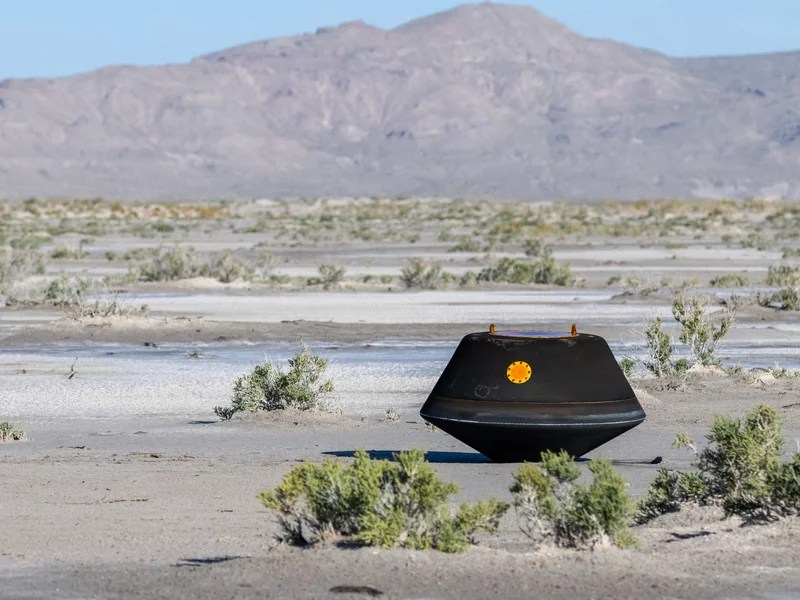
Image (Credit): NASA’s OSIRIS-REx sample capsule safely situated in the Utah desert earlier today. (Keegan Barber/NASA)

First, let discuss the good news. The capsule carrying the sample material from the asteroid Bennu successfully landed in the Utah desert earlier today, as planned. NASA’s Origins, Spectral Interpretation, Resource Identification, Security, Regolith Explorer (OSIRIS-REx) mission was a success. The space agency has plenty to celebrate.

And now for the bad news. India’s Chandrayaan-3 moon lander as well as its lunar rover were supposed to wake up around September 22 with the return of sunlight to the Moon’s South Pole. Unfortunately, neither craft showed any signs of coming back online. That said, the India space agency still has plenty to celebrate given its ability to successfully explore the South Pole before night set in.

Asteroid Sample Coming to Earth This Weekend

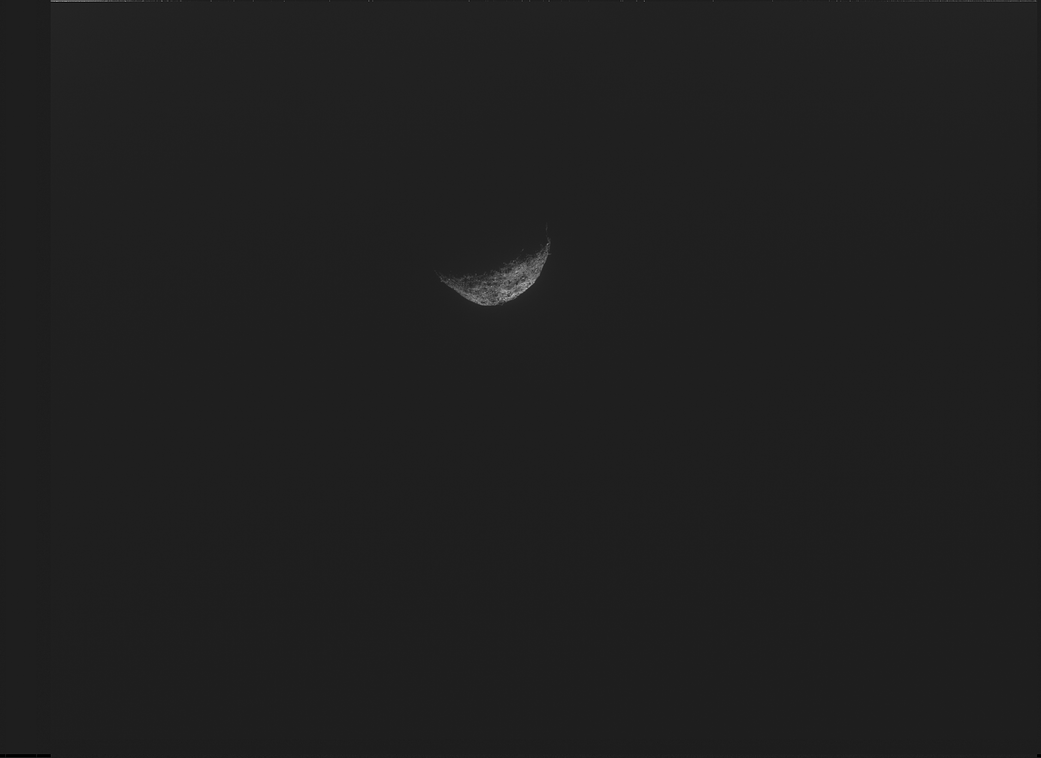
Image (Credit): Asteroid Bennu as seen by the OSIRIS-REx as it begins its return to Earth back in May 2021. (NASA/Goddard/University of Arizona; Writer Daniel Stolte, University of Arizona)

This weekend will should see the safe landing of a asteroid sample from far away. On Sunday, NASA’s Origins, Spectral Interpretation, Resource Identification, Security, Regolith Explorer (OSIRIS-REx) spacecraft will return to Earth with sample material from asteroid Bennu, which it encountered two years ago.

Launched on Sept. 8, 2016, the spacecraft spent about two years getting to Bennu and then more than two years studying the asteroid and collecting a 250-gram sample that should be in the hands of NASA scientists shortly. The graphic below shows the return path of the sample as it heads for the Utah desert. You can also watch this NASA video for more information on the overall mission and keep abreast of mission highlights via this mission blog. NASA also has a recent podcast discussing the spacecraft’s adventures and trip back to Earth.

And what about OSIRIS-REx after it makes this deposit? It will become OSIRIS-APEX (APEX for “Apophis Explorer”) and go back into the inner solar system before encountering asteroid Apophis in 2029.

We talk about rocket reuse, but this is a terrific example of spacecraft reuse.

The timing could not be better as NASA awaits 2024 budget decisions from Congress and further discussions about another sample return, this one from Mars.

Credit: NASA

Space Stories: Strange Asteroid Behavior, Another Earth in Our Solar System, and the Study of Galaxy Clusters

Image (Credit): Photo of Dimorphos taken by the DATA spacecraft. (NASA)

Here are some recent stories of interest.

Futurism: “Something Weird is Going On with the Asteroid NASA Smashed

Nearly a year ago, NASA successfully smashed an asteroid for the first time, in a landmark test to see whether we could divert a killer space rock before disaster — but now, the asteroid in question is behaving strangely. As New Scientist reports, a schoolteacher and his pupils seem to have discovered that the orbit of Dimorphos, the space rock socked by the Double Asteroid Redirection Test (DART) last September, has apparently continued slowing down, unexpectedly, in the year since the refrigerator-sized craft smashed into it.

Kindai University: “Possible Existence of Earth-Like Planet Predicted in the Outskirts of the Solar System

Researchers from Japan predict, based on computer simulations, the likely existence of an Earth-like planet in the distant Kuiper Belt. There are many unexplained anomalies in the orbits and distribution of trans-Neptunian objects, small celestial bodies located at the outer reaches of the solar system. Now, based on detailed computer simulations of the early outer solar system, researchers from Japan predict the possibility of an undiscovered Earth-like planet beyond Neptune orbiting the Sun. Should this prediction come true, it could revolutionize our understanding of the history of the solar system.

European Space Agency:X-ray mission lifts off to study high-energy Universe

The Japan Aerospace Exploration Agency’s (JAXA) X-Ray Imaging and Spectroscopy Mission (XRISM) lifted off on a H-IIA rocket from the Tanegashima Space Center in Japan at 08:42 JST / 00:42 BST / 01:42 CEST on 7 September 2023. The successful launch marks the beginning of an ambitious mission to explore the growth of galaxy clusters, the chemical make-up of the Universe, and the extremes of spacetime. XRISM is a collaboration between JAXA and NASA, with significant participation from ESA.

Two Space Probes will be Mothballed

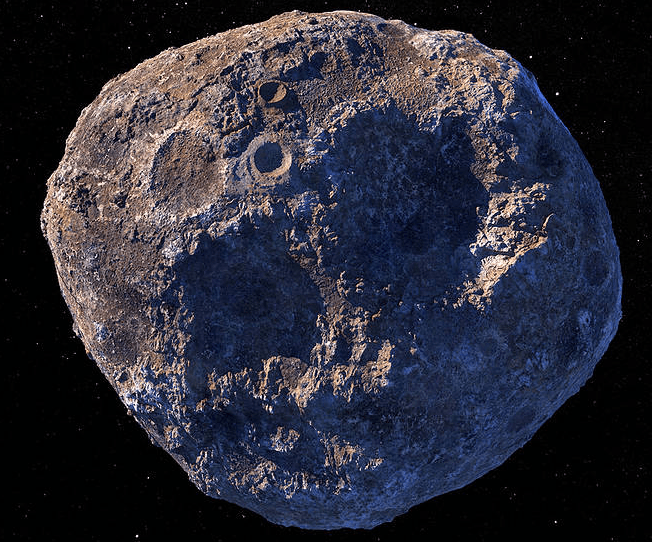
Image (Credit): Illustration of the asteroid Psyche. (NASA)

The delay in the launch of the Psyche spacecraft to visit the asteroid Psyche is having ripple effects on another NASA mission. The $50 million Janus mission with its two probes was supposed to accompany Psyche on the mission to observe two binary asteroid. However, too much time has passed for this separate mission be be accomplished due to the binary asteroids now being too distant from the main mission. Hence, the Janus probes will have to sit this one out. ARSTechnica has a full story on this development.

The good news is that the Psyche spacecraft should be launched this October. So not all is lost.

This will be a tough budget year under this Congress, so NASA will be lucky if it can keep most of its missions on track.